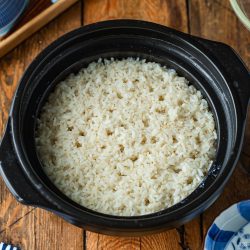
How To Cook Japanese Brown Rice in a Donabe
Learn how to cook tender, pleasantly chewy Japanese short-grain brown rice in a donabe (Japanese clay pot). Includes precise rice-to-water ratios, soaking tips, and step-by-step instructions for both HARIO Gohangama and regular donabe rice cooker pots.For a white rice version, see my How to Cook Rice in a Donabe guide.
Equipment
- HARIO Gohangama, my go-to donabe rice cooker
Ingredients
Servings:
★ HARIO Gohangama (1:1.5 Rice-to-Water Ratio)
For 4 Rice Bowls (2 rice cooker cups):
- 1½ US cups uncooked Japanese short-grain brown rice (2 rice cooker cups, 360 ml)
- 2¼ US cups water (540 ml)
For 6 Rice Bowls (3 rice cooker cups):
- 2¼ US cups uncooked Japanese short-grain brown rice (3 rice cooker cups, 540 ml)
- 3½ US cups water (810 ml)
★ Regular Donabe Rice Cooker (1:1.6 Rice-to-Water Ratio)
For 4 Rice Bowls (2 rice cooker cups):
- 1½ US cups uncooked Japanese short-grain brown rice (2 rice cooker cups, 360 ml)
- 2½ US cups water (575 ml)
For 6 Rice Bowls (3 rice cooker cups):
- 2¼ US cups uncooked Japanese short-grain brown rice (3 rice cooker cups, 540 ml)
- 3⅔ US cups water (865 ml)
Instructions
Before You Start
- Do not scale this recipe (2 x or 3 x). Important: Do not skip soaking! Brown rice needs 6–12 hours to absorb enough water before cooking. Soak for 6 hours in summer or up to 12 hours in winter when the water is colder. This is essential for tender, evenly cooked grains.
- Measure rice: Level off a rice-cooker cup (¾ US cup / 180 ml) of short-grain brown rice and add to a rice washing bowl. Repeat until you have the desired amount. Note: Some photos below show white rice for demonstration purposes.
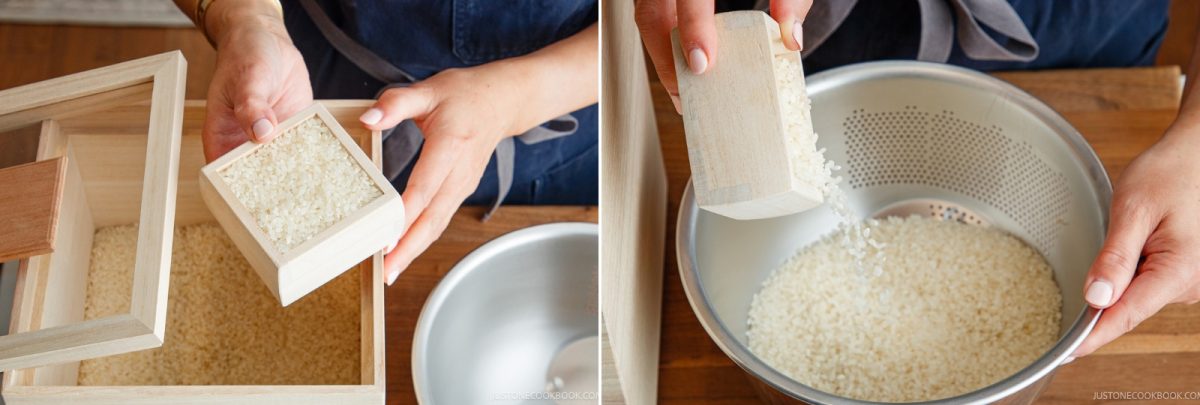
To Wash the Rice
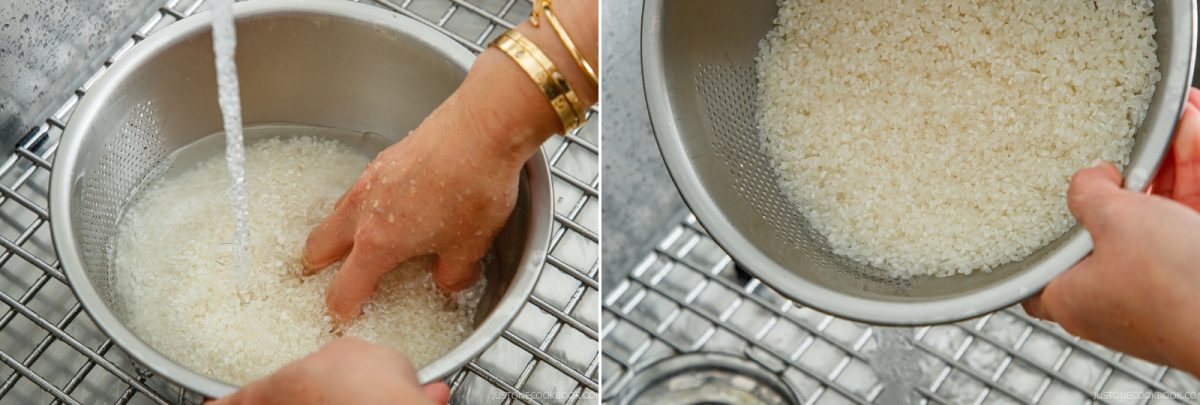
- Quick Rinse: Cover with water, swirl briefly, and drain immediately. Repeat once to prevent the rice from absorbing stale starch water.
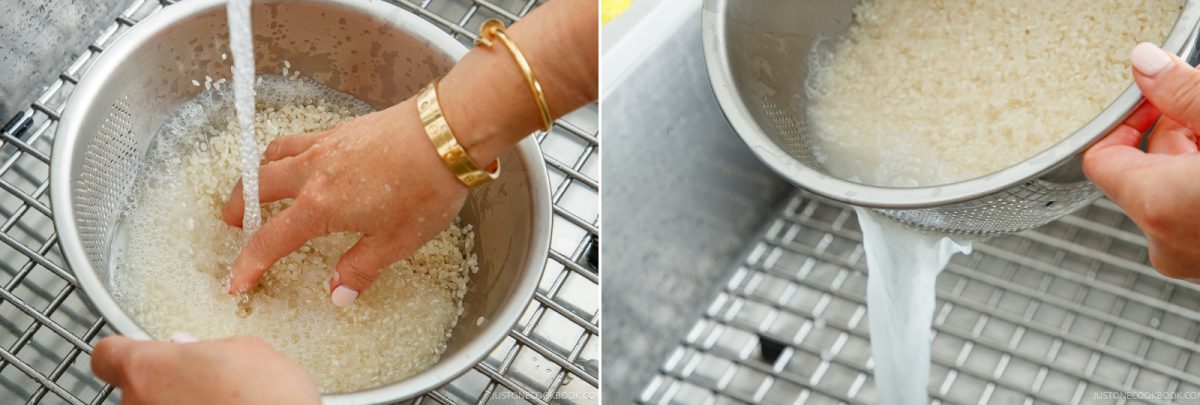
- Wash: Gently rub the wet rice in a circular motion with minimal water for 10–15 seconds so the grains scrub each other.Rinse: Add fresh water, swirl, and drain immediately.
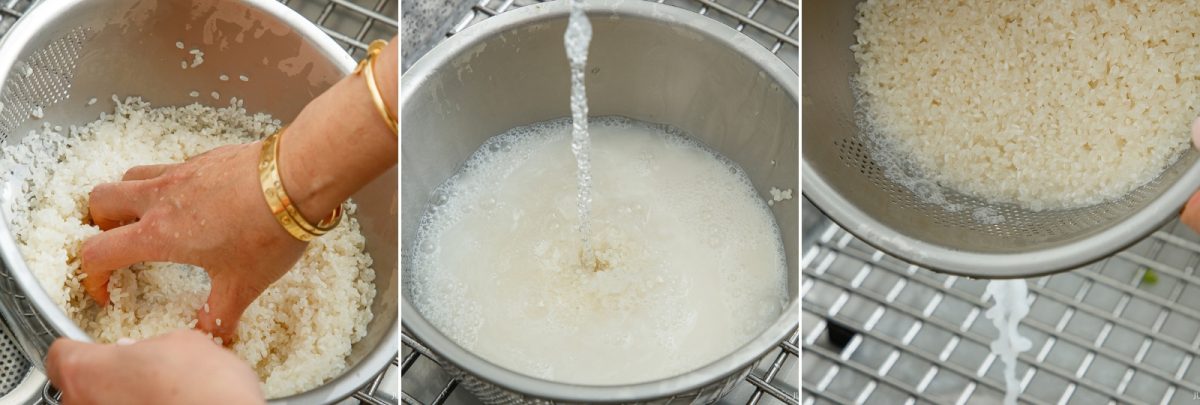
- Repeat: Repeat the Wash and Rinse steps two more times until the water runs mostly clear.Drain: Drain thoroughly, gently shaking off excess water.
To Soak the Rice
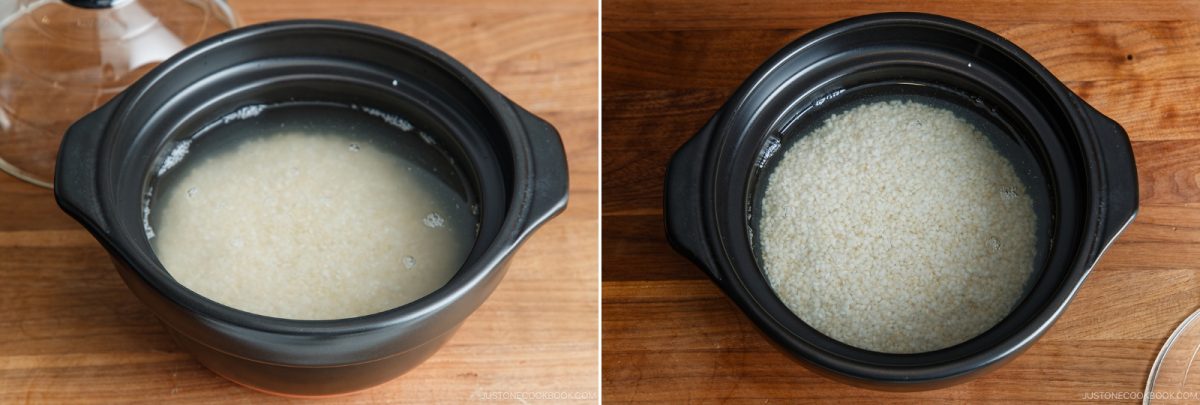
- Transfer well-drained rice to the donabe and add room-temperature water. Level the rice evenly and cover with the lid(s). For a double-lid donabe, position the steam vent holes 90 degrees apart to help retain steam.Soak rice for 6–12 hours. Use the longer soaking time in winter when the water is colder.Food Safety Tip: In summer, transfer the well-drained rice to a bowl or food-safe container. Add the measured amount of water and soak for 6–12 hours in the refrigerator. After soaking, transfer the rice and all the soaking water to the donabe so your measured rice-to-water ratio stays consistent.
To Cook the Rice
★ HARIO Gohangama (about 30–35 minutes)
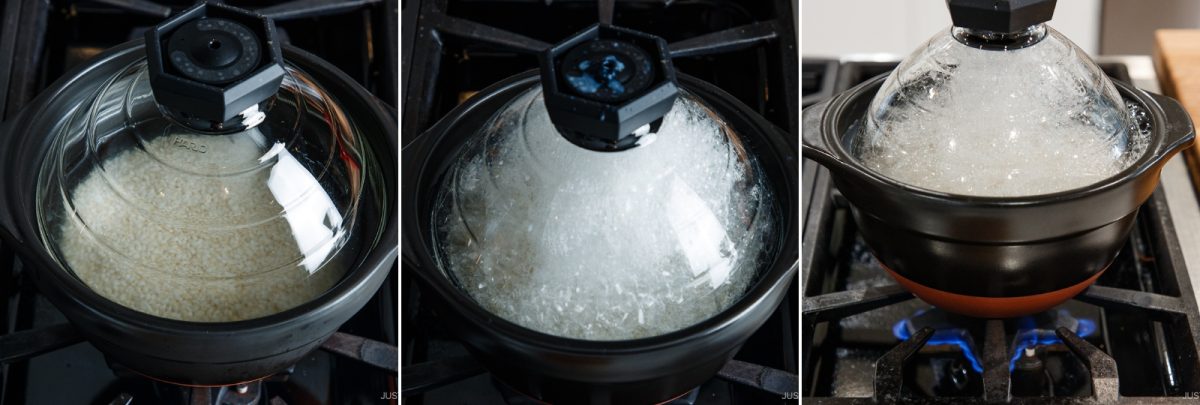
- Cook over medium-high to high heat until the pot whistles, about 10–13 minutes.(10–11 minutes for 2 rice cooker cups or 12–13 minutes for 3 cups)Reduce to low heat and cook for 20 minutes.Nami's Tip: The manufacturer recommends high heat, but I use medium-high heat (just below high) on my stove. The goal is for the whistle to sound within the recommended time. If it sounds too early or too late, adjust the heat slightly next time.
★ Regular Donabe Rice Cooker (about 37–46 minutes)
- Cook over medium heat until steam escapes vigorously, about 12–16 minutes.Reduce to low heat and cook for 25–30 minutes. For okoge (crispy, scorched rice at the bottom), increase to high heat for the last 10 seconds.
To Steam the Rice
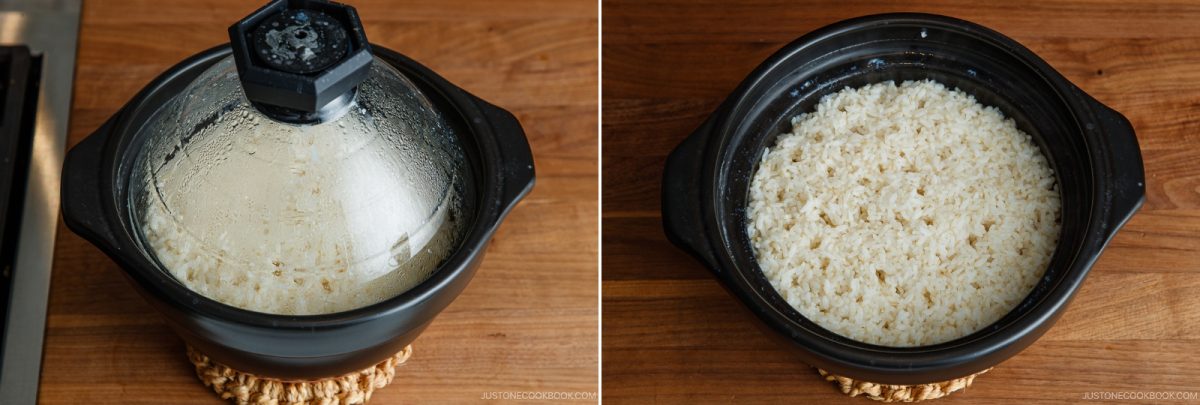
- Turn off the heat and remove the donabe from the hot stove. Keep the lid on and let it steam, undisturbed, for 20 minutes. Do not lift the lid, as this releases the steam needed to finish cooking.After 20 minutes, open the lid. You may notice small holes across the surface of the rice called kani-ana (カニ穴), or "crab holes." These form as steam escapes through the rice during cooking and are a traditional sign of well-cooked rice.
To Serve
- Gently fluff the rice with a rice paddle, scooping from the bottom to release excess steam. It's ready to serve.
To Store
- Divide the freshly cooked rice into individual portions in microwave-safe, airtight containers while still hot to retain moisture. Cool promptly, then freeze for up to 1 month. See my How to Freeze Rice guide for details.
Notes
Cook 2–3 rice cooker cups at a time. I find that cooking 2–3 cups produces better-tasting rice than just 1 cup. Even if you're cooking for one, make extra and freeze individual portions for later.
Optional salt: You can mix in ⅛–¼ tsp kosher salt to help reduce bitterness (I do not add).
