
Japanese Tomato Curry
Juicy, fruity tomatoes are the star of this Japanese Tomato Curry with tender pieces of beef and pork simmered in a rich, savory sauce. Served over Japanese steamed rice, it‘s a hearty stew that makes a perfect weekend lunch or dinner! {Vegetarian options included}
Ingredients
Servings:
- 3 tomatoes (1 lb, 454 g; use round and firm tomatoes that are juicy, fruity, and full of flavor; vine-ripened and heirloom varieties work well; avoid beefsteak tomatoes for their mild flavor)
- 3 russet potatoes (¾ lb, 340 g; you can also use Yukon gold potatoes)
- 3 onions (1 lb, 454 g)
- 2 carrots (½ lb, 227 g)
- 2 cloves garlic
- 1 tsp ginger (grated, with juice; from a 1-inch, 2.5-cm knob)
- 1 lb boneless beef chuck roast (stew beef is slightly more economical but not as tender; for vegetarian, substitute king oyster mushrooms and/or eggplants)
- ½ lb pork tenderloin (use king oyster mushrooms and/or eggplants for vegetarian)
- ½ tsp Diamond Crystal kosher salt
- ¼ tsp freshly ground black pepper
For Cooking the Curry
- 2 Tbsp neutral oil (divided for the beef and onions)
- 2 cups beef stock/broth (½ QT; store-bought beef stock is often salted; for less sodium intake, use 1 cup/240 ml beef stock + 1 cup/240 ml tomato blanching water; for vegetarian, use vegetable stock or reserved tomato blanching water)
- 2 cups reserved tomato blanching water (plus more to dilute the curry sauce, as needed)
- 1 Tbsp soy sauce
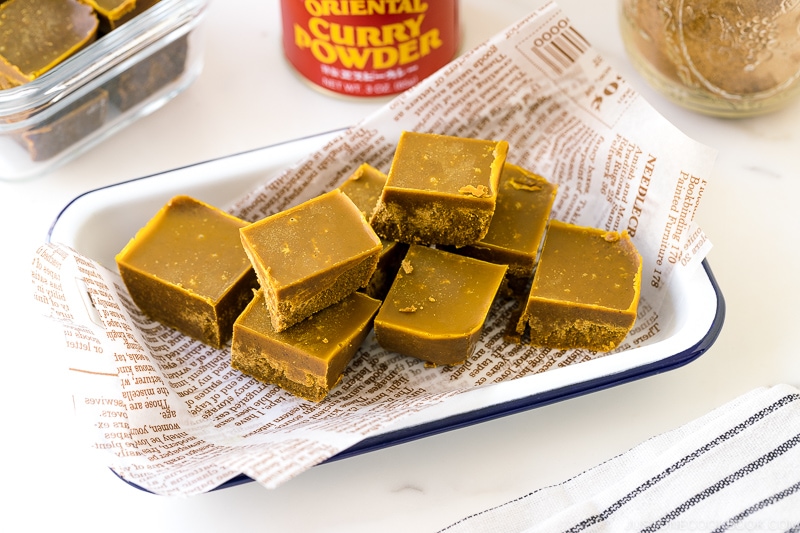
- 1 box Japanese curry roux (7–8.4 oz, 200–240 g store-bought sauce mix; or make your own with my homemade Japanese Curry Roux recipe)
- Diamond Crystal kosher salt (optional; add only if using my homemade Japanese Curry Roux recipe, which is unsalted)
For Serving
- fukujinzuke (Japanese red pickled vegetables) (optional; you can make my Homemade Fukujinzuke recipe)
Instructions
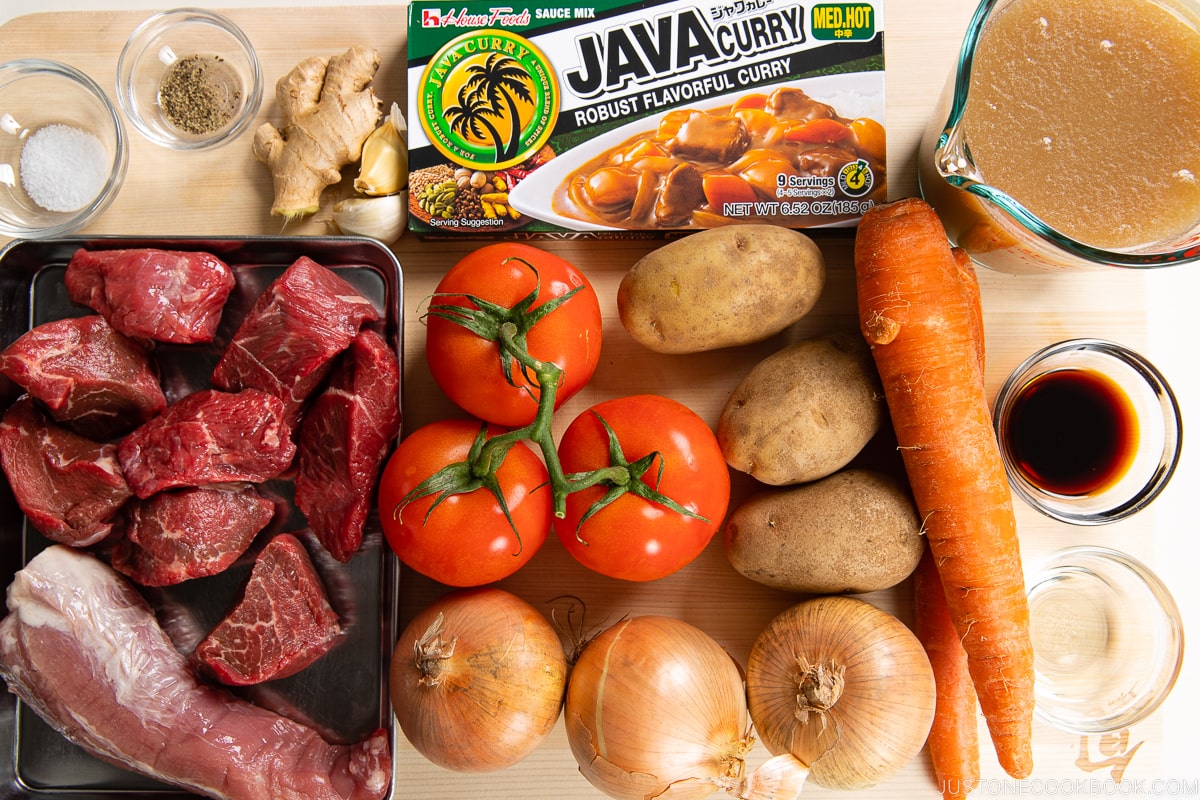
- Gather all the ingredients.
To Peel the Tomatoes
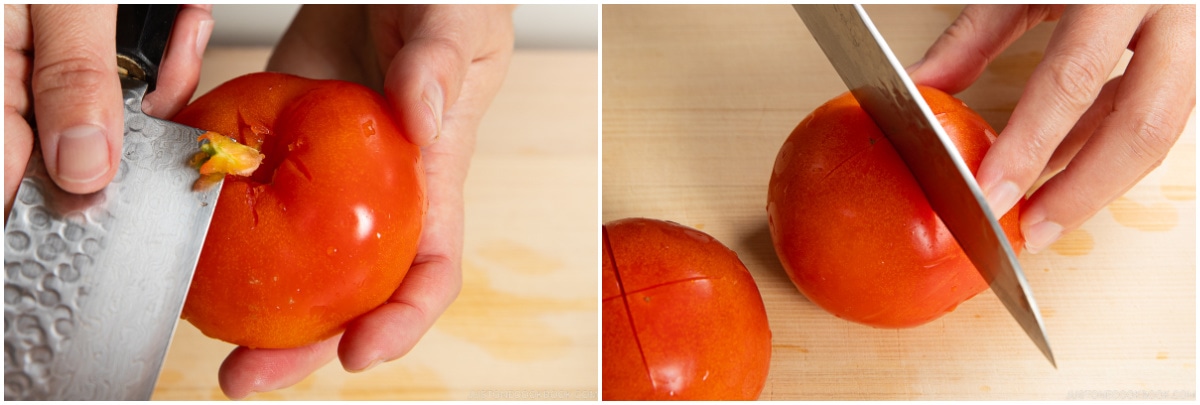
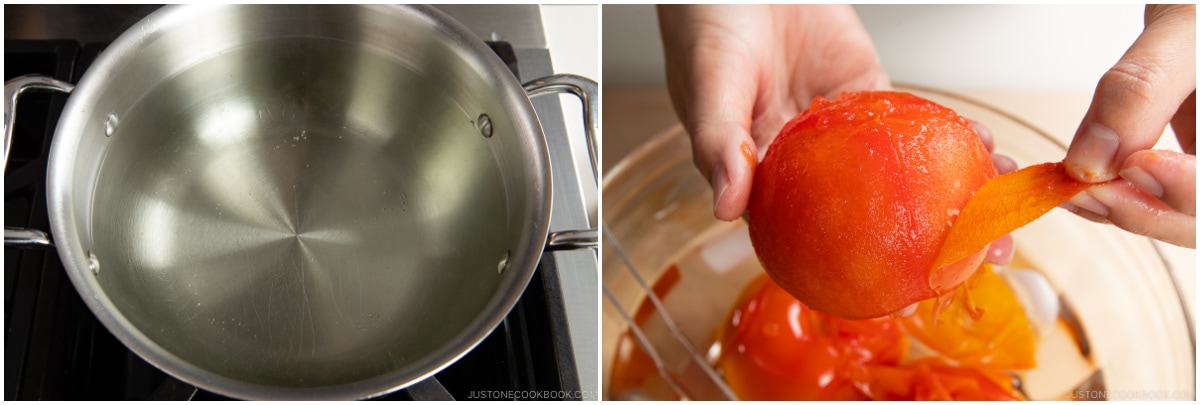
- Bring a medium pot of water to a boil.Core 3 tomatoes. Insert a paring knife at the stem end about ½ inch (1.25 cm) deep and cut around it in a circle to remove the hard core. Score an X about 2 inches (5 cm) across the bottom of each tomato.
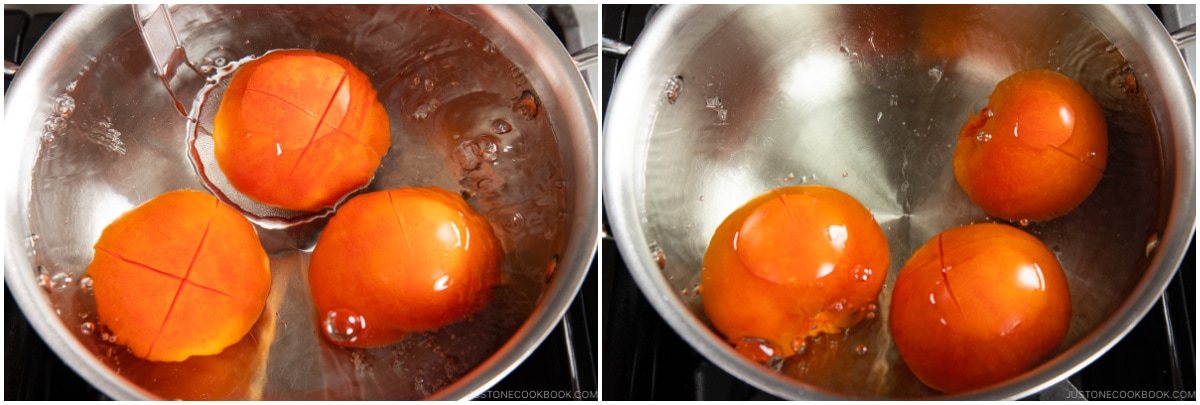
- Lower the tomatoes into the boiling water, making sure they're fully submerged. Blanch for 15 seconds, until the skins start to peel back at the X.Nami's Tip: The skins don't need to lift completely—a curl at the X is enough. Larger tomatoes take a few seconds longer, but don't overdo it or the flesh turns mushy.
- Lift the tomatoes out with a fine-mesh skimmer or slotted spoon and transfer them straight into a bowl of ice water to stop the cooking.
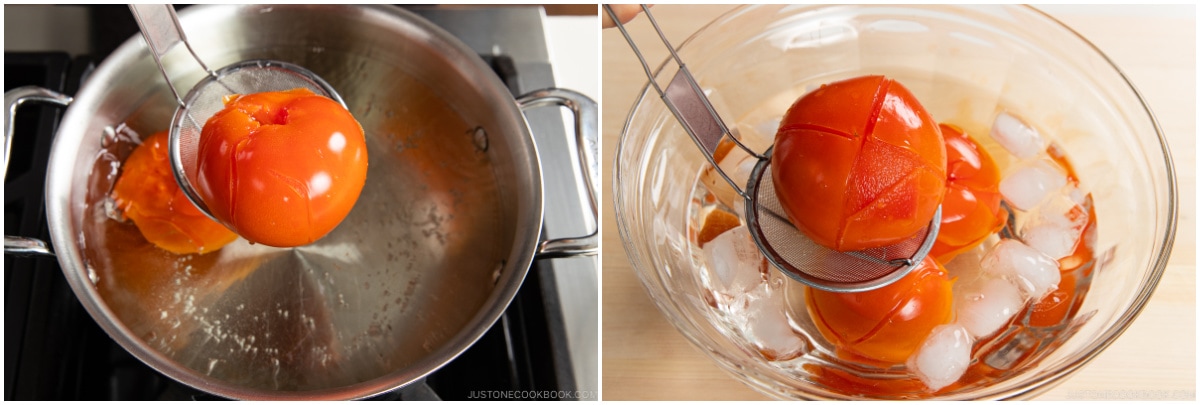
- Reserve the blanching water. It goes into the curry later. Once the tomatoes are cool enough to handle, peel off the skins with a knife or your fingers.Nami's Tip: The blanching water is an ingredient.
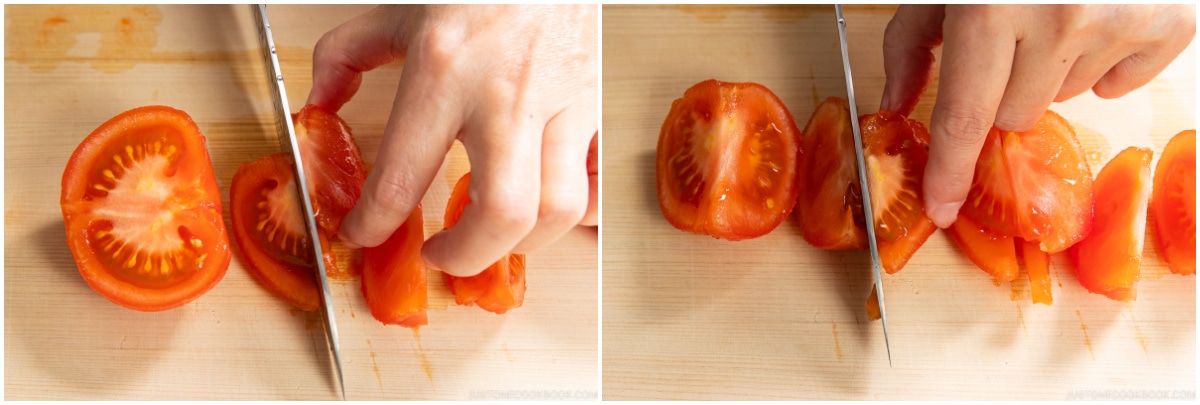
- Cut each tomato into 8 wedges. Set aside.
To Prepare the Other Ingredients
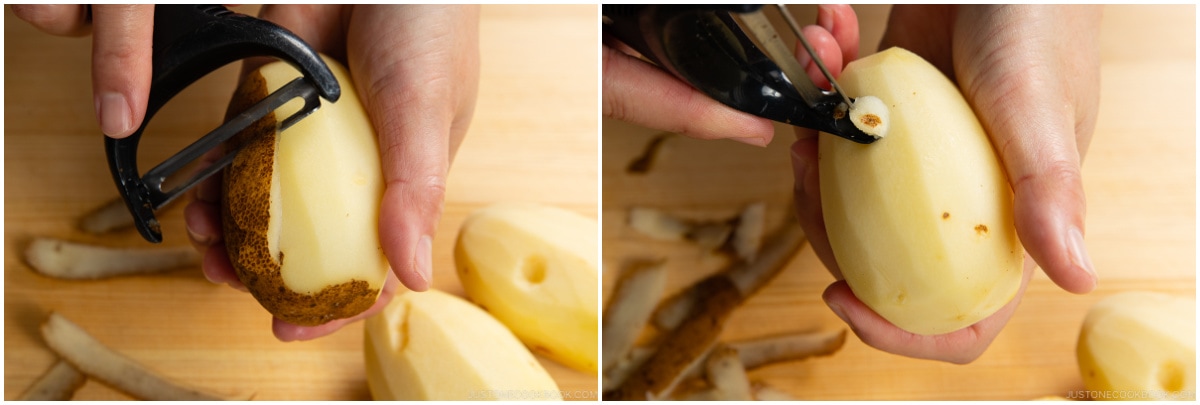
- Peel 3 russet potatoes and remove the eyes.
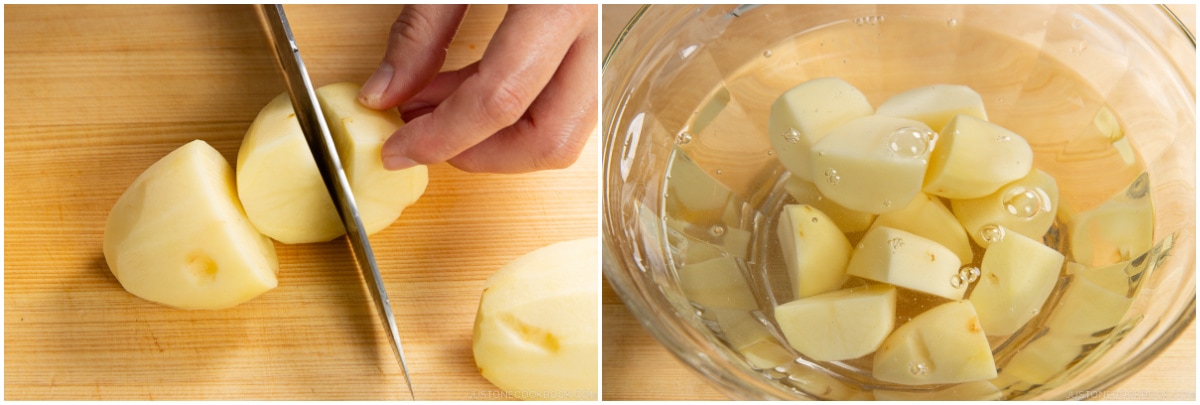
- Cut them into 1½-inch (3.8-cm) pieces and soak in water for 15 minutes to draw out the starch. Drain. Drain and set aside. Nami's Tip: My russet potatoes run small, so I quarter them. For typical ones, cut into thirds, then halve or quarter each piece.
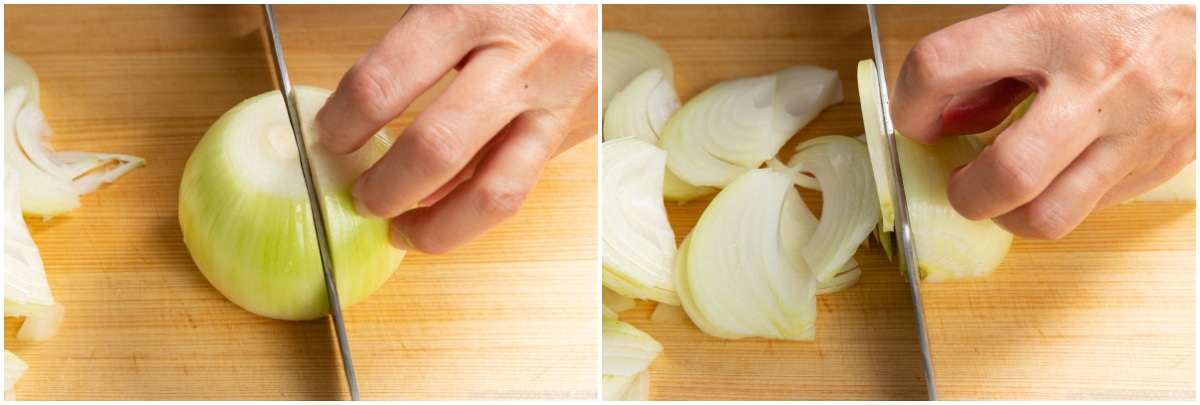
- Halve 3 onions lengthwise, then slice each half thinly lengthwise.
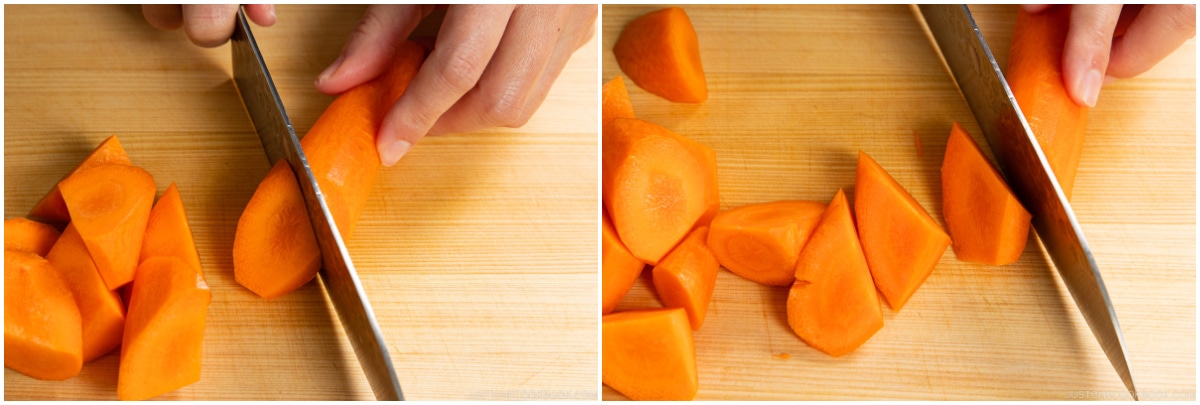
- Peel 2 carrots and cut them on the diagonal, rotating a quarter turn between cuts. This cut is called rangiri.
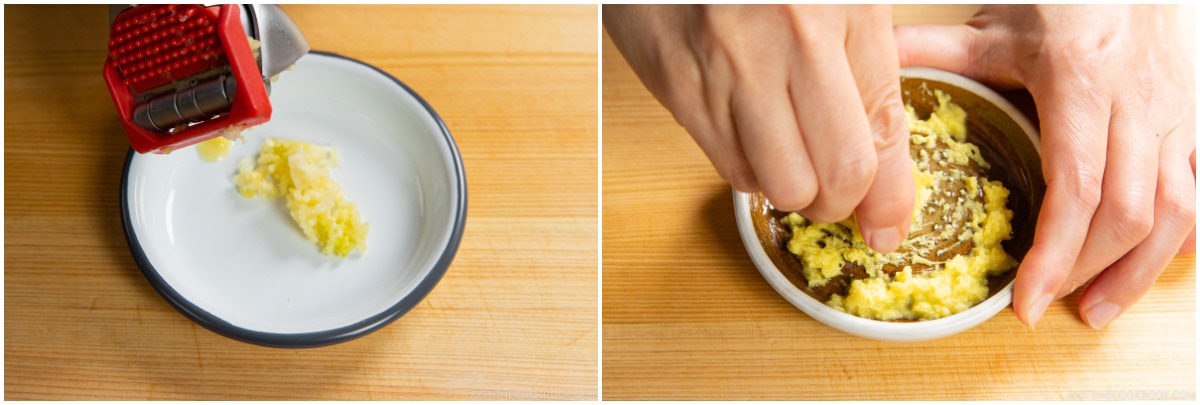
- Mince 2 cloves garlic (I use this garlic press). Peel and grate the ginger, then measure out 1 tsp ginger with its juices.
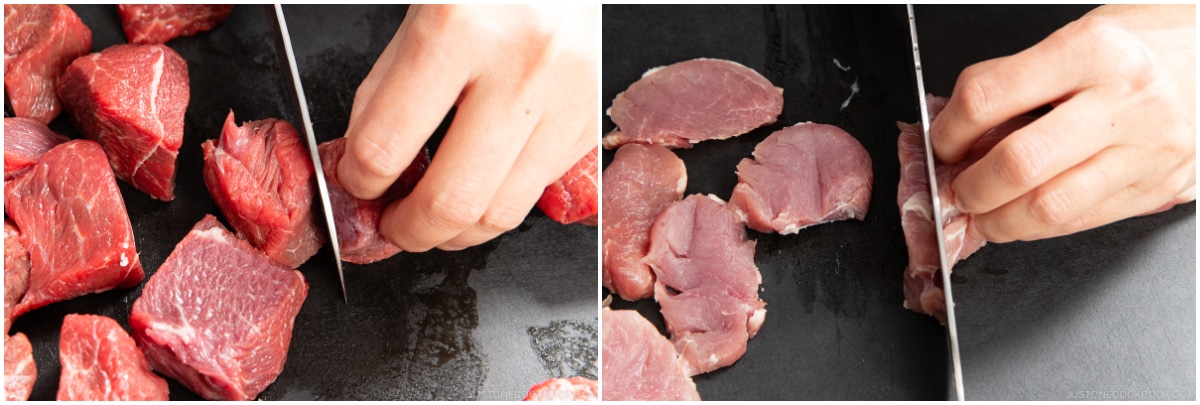
- Cut 1 lb boneless beef chuck roast into 1½-inch (3.8-cm) cubes. Cut ½ lb pork tenderloin into ¼-inch (6.3-mm) slices.
- Lightly sprinkle the beef and pork with ½ tsp Diamond Crystal kosher salt and ¼ tsp freshly ground black pepper.
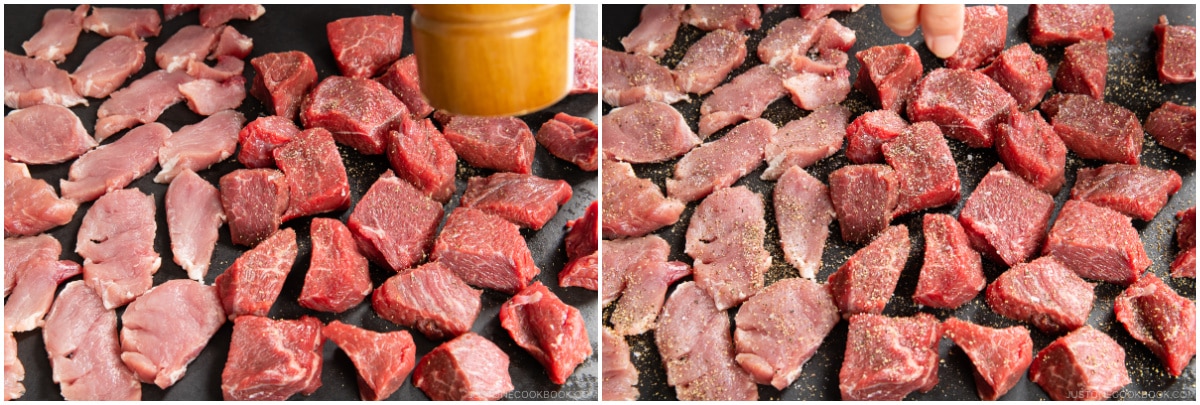
To Cook the Meat and Onions
- Heat a large heavy-bottomed pot (I used a 5.5-QT Staub) over medium to medium-high heat. Add 1 Tbsp neutral oil. Lay some of the beef cubes in a single layer with space between them, working in 2–3 batches.Nami's Tip: Don't crowd the pot. Packed-in meat releases moisture and steams instead of browning, and those browned bits are what the onions deglaze into flavor later.
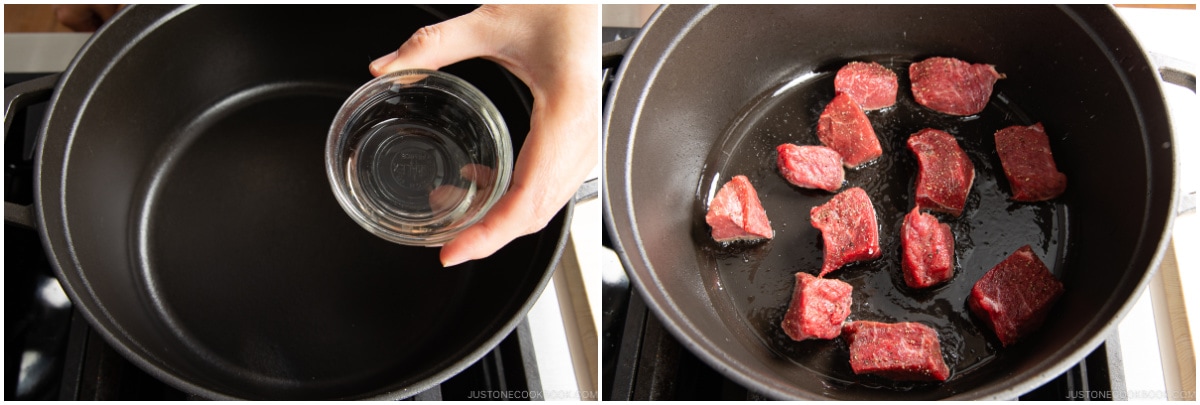
- Sear the beef without moving it, 3–4 minutes, until brown and crusty. Flip and sear the other side. Transfer to a plate and repeat with the next batch.Nami's Tip: The meat releases from the pan on its own once it's properly seared. If it sticks, give it another minute.
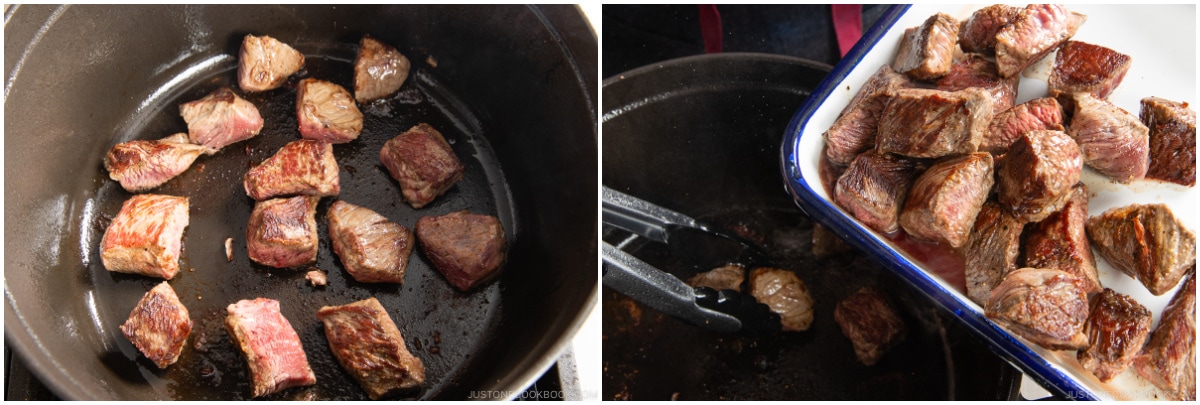
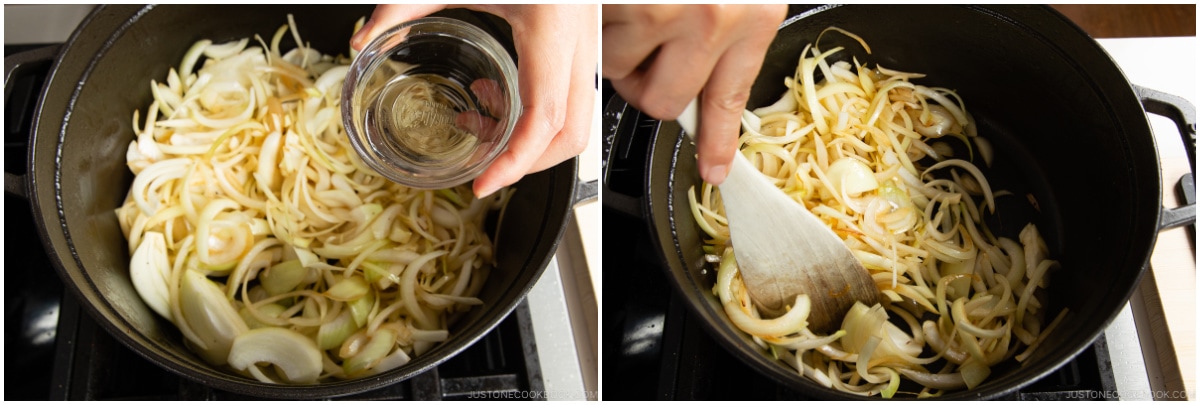
- Lower the heat to medium. Add the onions to the pot and deglaze the bottom, scraping up the browned bits.
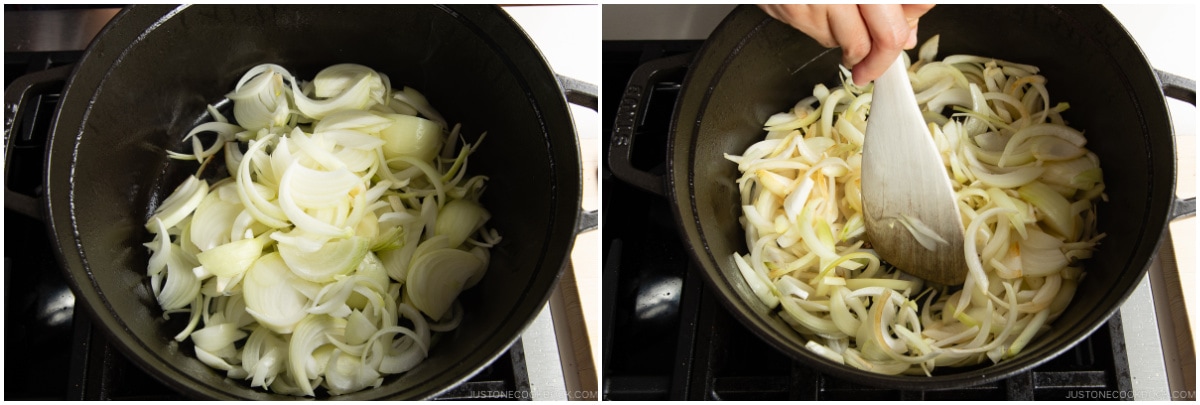
- Add the remaining 1 Tbsp neutral oil if the pot looks dry. Sauté the onions for 6–8 minutes, stirring now and then. Once they wilt, lower the heat to medium-low.Nami's Tip: I usually need only about ½ Tbsp more oil. Onions burn quickly once they soften, so drop the heat as soon as they wilt.
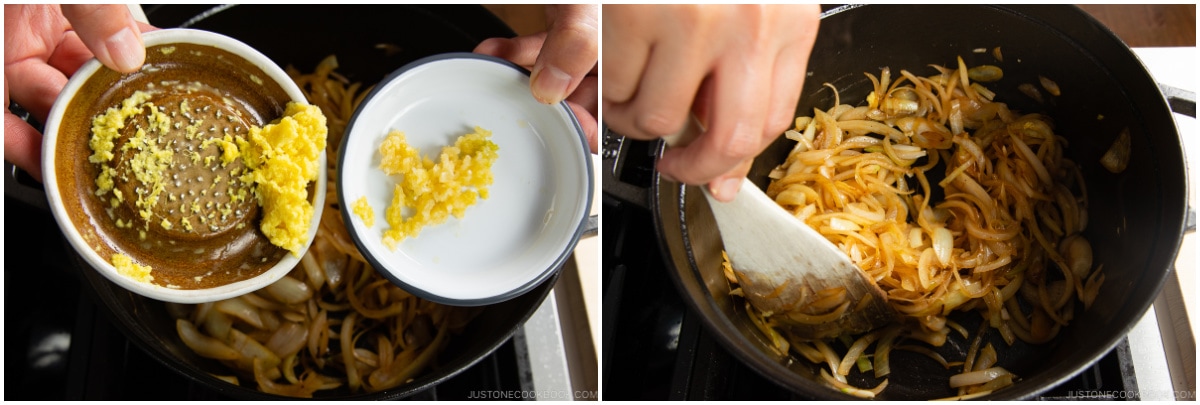
- Once the onions are tender, translucent, and lightly caramelized, add the ginger and garlic. Stir to combine.
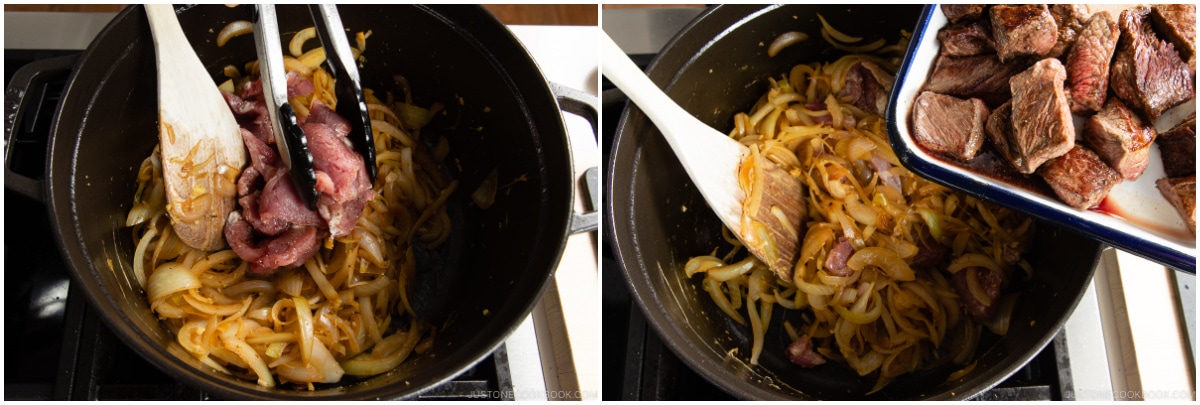
- Add the pork tenderloin and stir for a minute to let it start cooking. Add the seared beef and any juices from the plate, then stir to combine.
To Simmer the Ingredients
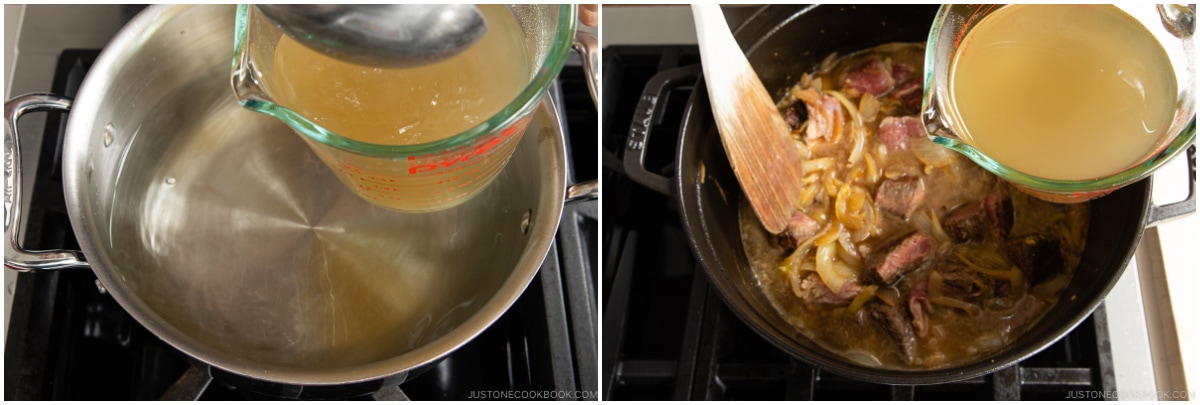
- Pour in 2 cups beef stock/broth.
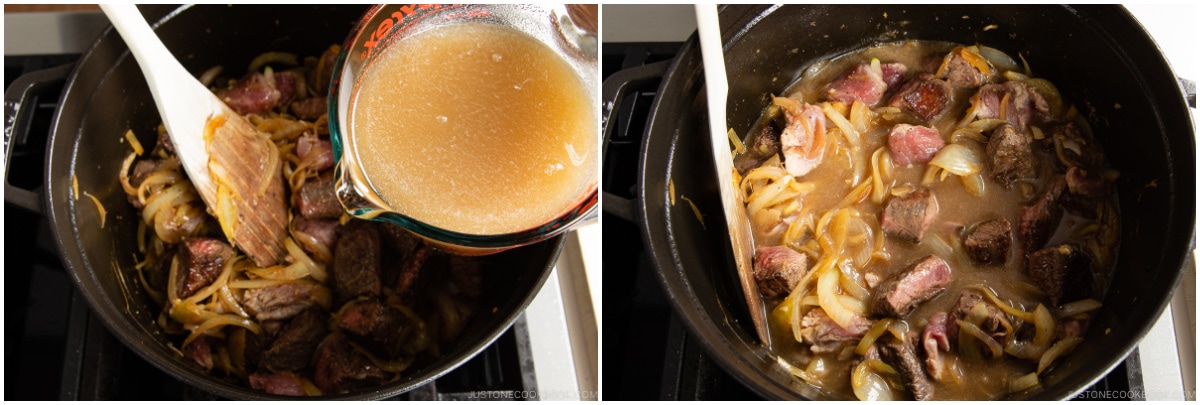
- Add 2 cups reserved tomato blanching water to the pot.
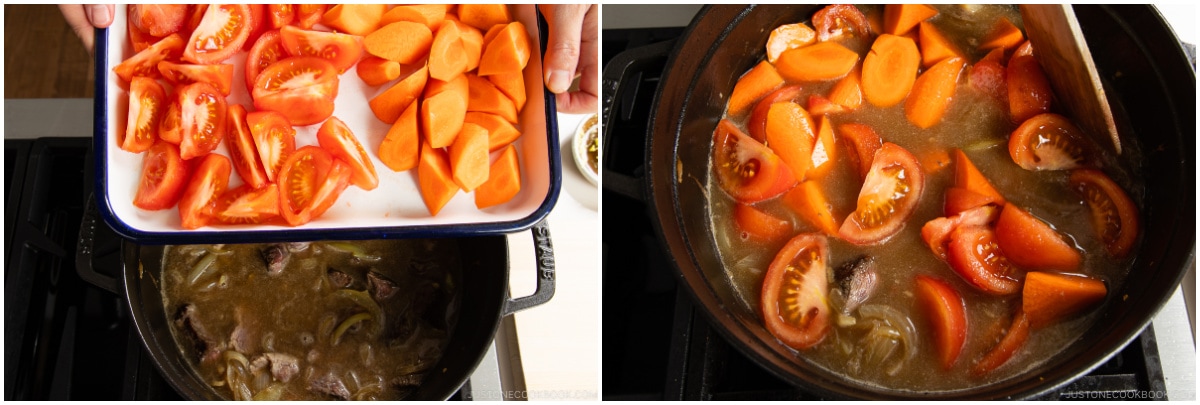
- Add the tomatoes and carrots. The liquid should just cover everything. Top up with blanching water if it doesn't.Nami's Tip: Yukon gold potatoes can go in now. Russet potatoes break down over a long simmer, so they wait until the beef is tender.
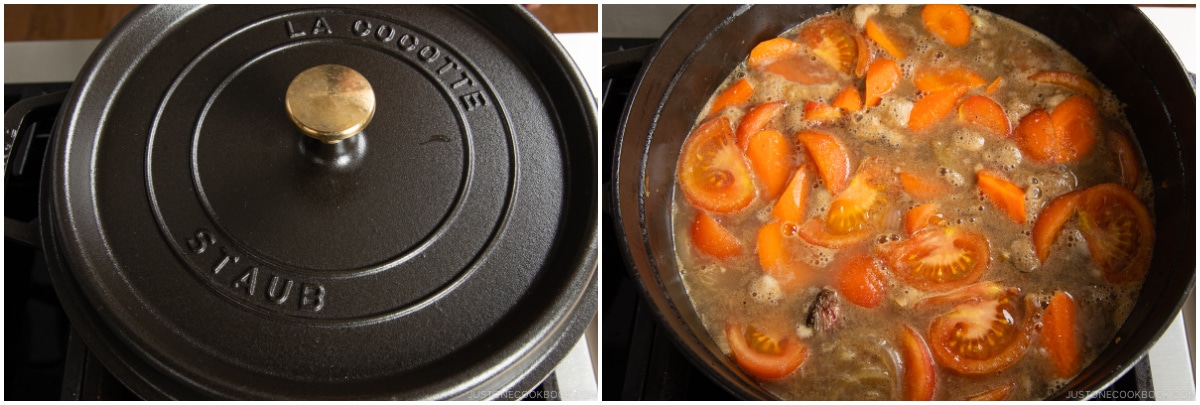
- Cover the pot with a tight-fitting lid and bring it to a boil. Nami's Tip: A tight lid matters over a two-hour simmer. I find Staub seals better than Le Creuset and loses less liquid.
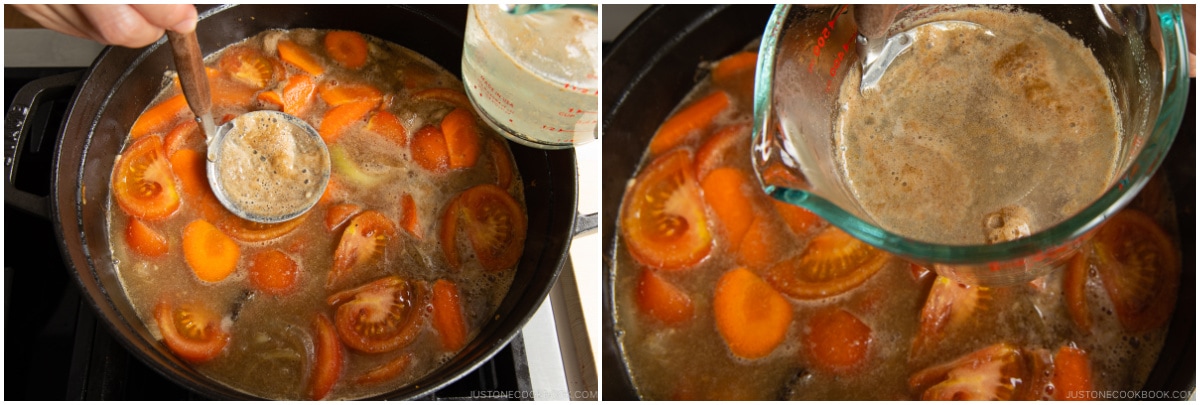
- Once boiling, skim the scum and fat off the broth with a fine-mesh skimmer.Nami's Tip: Keep a measuring cup of water beside the pot and rinse the skimmer in it as you go. The scum lifts straight off instead of clogging the mesh.
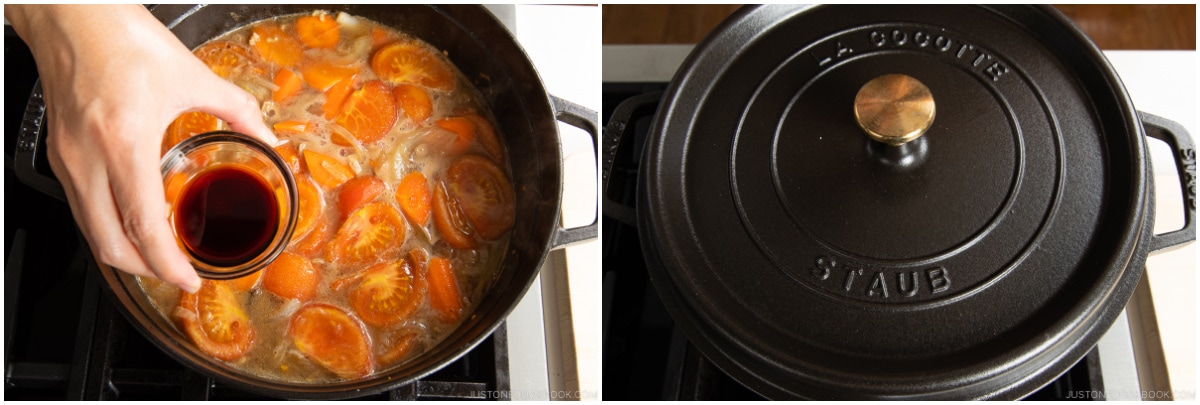
- Add 1 Tbsp soy sauce. Cover and simmer on low heat, stirring occasionally, until the meat is tender. Nami's Tip: The beef may be edible after one hour, but fork-tender usually takes two hours. If the liquid drops below the ingredients, top it up with stock or blanching water.
- Add the russet potatoes once the beef is tender. Cover and simmer 15 more minutes.
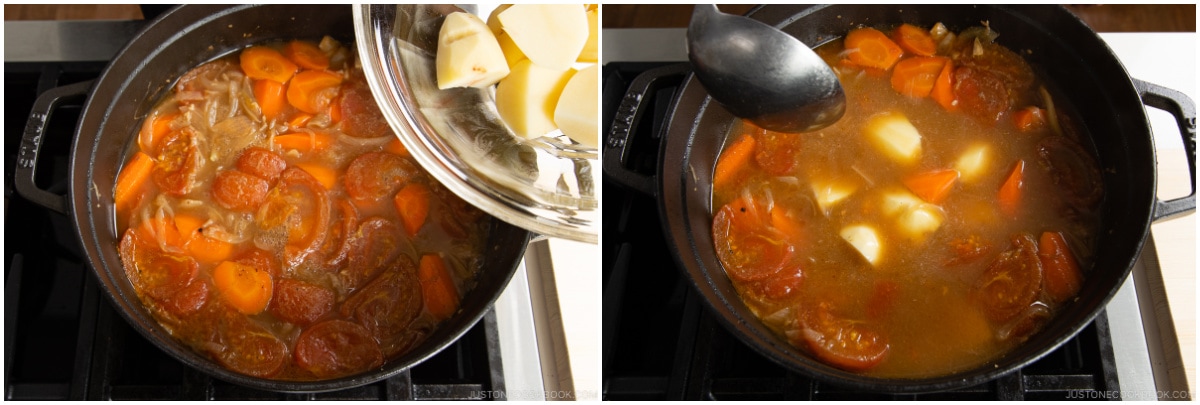
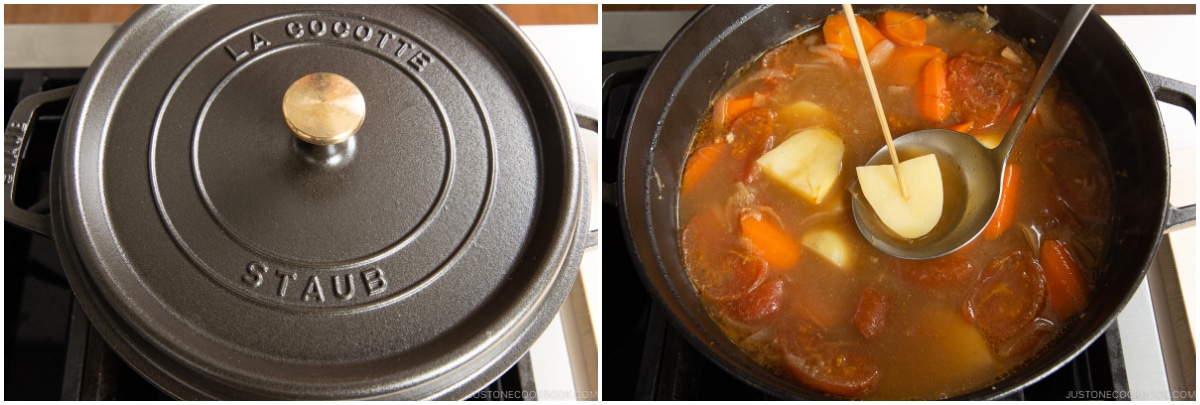
- Turn off the heat once a wooden skewer slides into a potato easily.
To Add the Curry Roux
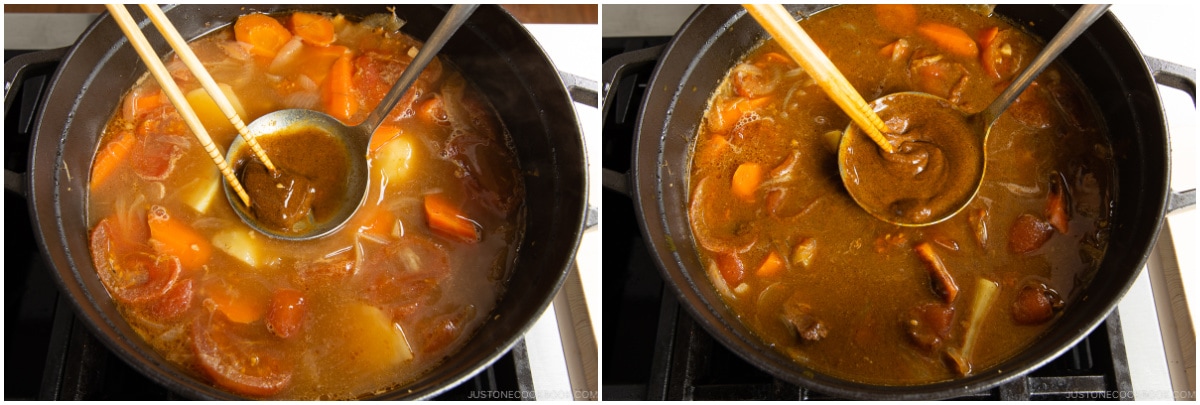
- Drop 1–2 cubes of the 1 box Japanese curry roux in a ladleful of cooking liquid and let them dissolve, stirring with a spoon or chopsticks. Stir it back into the pot. Repeat with the rest, two cubes at a time.Nami's Tip: Adjust the roux to your taste—you won't necessarily need the whole box. Keep any spare cubes for another curry.
To Thicken the Sauce
- Simmer on the lowest heat, stirring often, for 3–5 minutes until the sauce thickens. If it gets too thick, loosen it with tomato blanching water. If it's too thin, uncover and simmer a little longer.Nami's Tip: Curry sauce burns easily on the bottom once the roux is in. Keep the heat low and stir often.
- If you‘re using my homemade Japanese Curry Roux, which is unsalted, season the sauce with an additional 2–4 tsp Diamond Crystal kosher salt, to taste.
To Serve
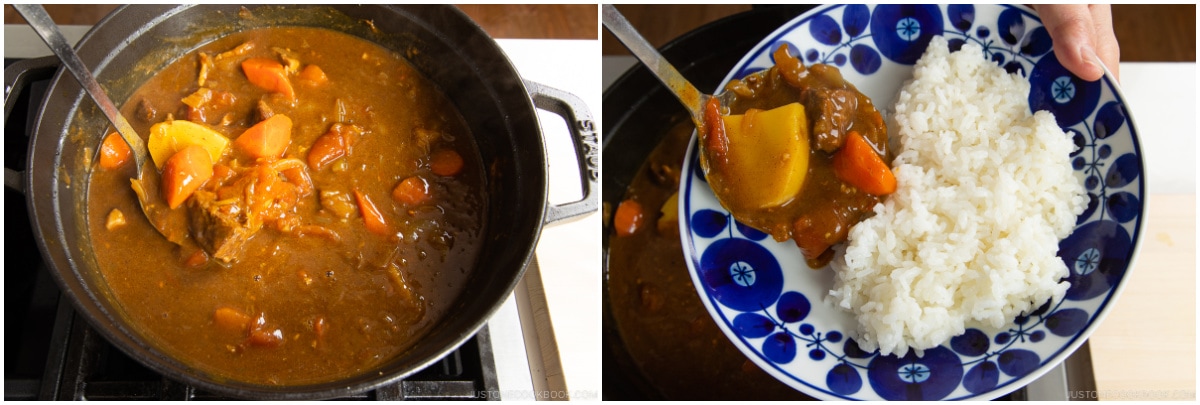
- Serve hot over Japanese steamed rice, topped with fukujinzuke (Japanese red pickled vegetables). Nami's Tip: In The Makanai, Kiyo serves tomato curry with suage vegetables — deep-fried eggplant and shishito peppers. Follow the frying method in my Sapporo Soup Curry to put some on top.In The Makanai, Kiyo serves tomato curry with suage vegetables—deep-fried eggplant and shishito peppers. Follow the frying method in my Sapporo Soup Curry to put some on top.
To Store
- Store leftovers in an airtight container for up to 3 days in the refrigerator, or a month in the freezer. Remove the potatoes before freezing, since their texture changes. Defrost in the refrigerator for 24 hours before reheating.Nami's Tip: Leftover curry roux cubes keep in an airtight container in the refrigerator or freezer for 1–3 months.
To Reheat
- Leftover curry thickens into a paste as it cools and burns easily on the bottom. Stir in ½ cup (120 ml) water or more to loosen it, then reheat gently on low. If it turns out thin, simmer uncovered to reduce.
Notes
Vegetarian – Swap the beef and pork for king oyster mushrooms and eggplant. Use vegetable stock or the reserved tomato blanching water in place of beef stock.
Tomatoes – Round, firm, fruity varieties work best. Vine-ripened and heirloom are ideal. Avoid beefsteak, which is milder.
Curry roux – Store-bought works, or make my Homemade Japanese Curry Roux. If you use mine, it's unsalted, so season at the end.
Nutrition
Calories: 342kcal, Carbohydrates: 23g, Protein: 21g, Fat: 14g, Saturated Fat: 7g, Polyunsaturated Fat: 3g, Monounsaturated Fat: 4g, Trans Fat: 0.4g, Cholesterol: 59mg, Sodium: 1003mg, Potassium: 805mg, Fiber: 3g, Sugar: 8g, Vitamin A: 5223IU, Vitamin C: 16mg, Calcium: 49mg, Iron: 2mg
