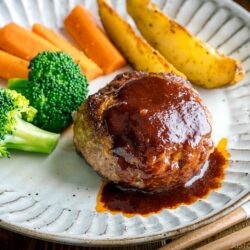
Japanese Hamburger Steak (Hambagu)
Served with a red wine reduction sauce, this Japanese Hamburger Steak (Hambagu) is big on flavors. The meat is juicy and melts in your mouth. It‘s perfect to make in a hot frying pan either in the kitchen or on the grill!
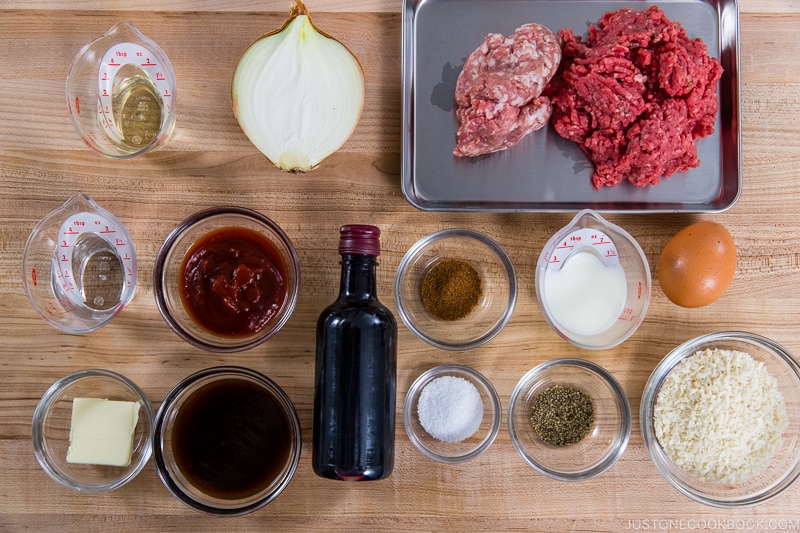
Ingredients
Servings: hambagu steaks (4 oz patty each)
For the Hambagu Patties
- ½ yellow onion (5 oz, 142 g)
- 1 Tbsp neutral oil
- ¾ lb ground beef and pork combination (a 2:1 ratio (8 oz beef to 4 oz pork) or 3:1 ratio (9 oz beef to 3 oz pork) works well; see Notes below)
- ½ tsp Diamond Crystal kosher salt
- freshly ground black pepper
- ½ tsp nutmeg
- ⅓ cup panko (Japanese breadcrumbs)
- 2 Tbsp milk
- 1 large egg (50 g each w/o shell)
For Cooking the Hambagu
- 1 Tbsp neutral oil
- 3 Tbsp red wine (for steaming; see Notes for the wine I use; you can substitute beef or chicken stock)
For the Sauce
- 1 Tbsp unsalted butter
- 3 Tbsp ketchup (to taste)
- 3 Tbsp tonkatsu sauce (or make Homemade Tonkatsu Sauce)
- 3 Tbsp red wine (you can substitute beef or chicken stock)
- 1–3 Tbsp water (start with 1 Tbsp)
Instructions
Before You Start...
- This recipe needs 30 minutes for the patties to rest in the fridge, plus active prepping and cooking time.If doubling the recipe, cook in two batches of 4 (or use two pans)—8 patties won't fit in one pan at once. Gather all the ingredients.
To Make the Hambagu Patties
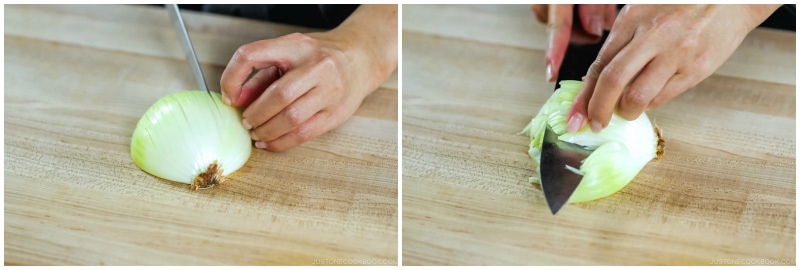
- Cut the onion: Finely mince ½ yellow onion (this technique is called mijingiri in Japanese). Lay it flat side down, then make ⅛-inch vertical cuts toward the root, stopping ½ inch before the end. Repeat with horizontal cuts, keeping the root intact.
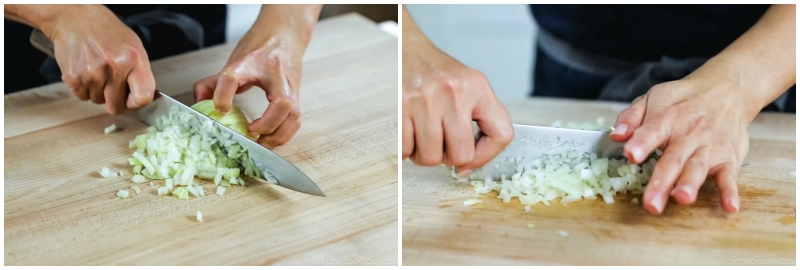
- Cut perpendicular to the vertical slices you made. Keep the knife tip anchored on the cutting board with one hand, and rock the blade up and down with your other hand on the handle to mince.
- Cook the onion: Heat a large pan over medium heat until hot. Add 1 Tbsp neutral oil and the onions.
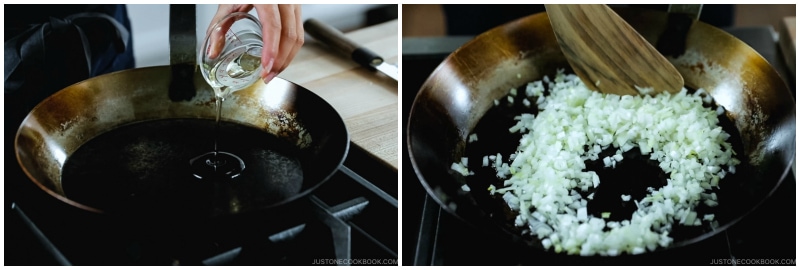
- Sauté until tender and almost translucent. Transfer to a large bowl and let it cool.
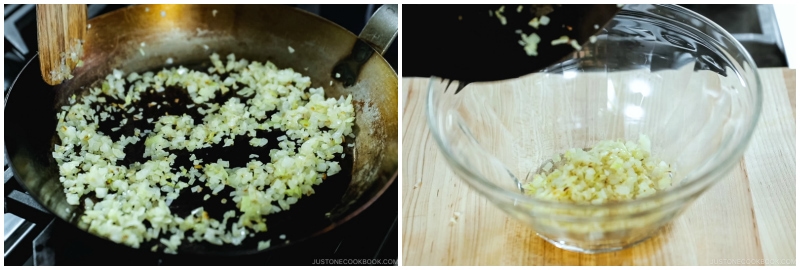
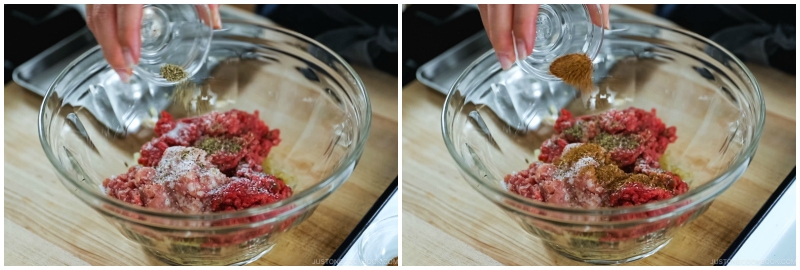
- Mix the patty mixture: Once the onion is cool, add ¾ lb ground beef and pork combination to the bowl. Add ½ tsp Diamond Crystal kosher salt, freshly ground black pepper as you like, and ½ tsp nutmeg.
- Add the ⅓ cup panko (Japanese breadcrumbs), 2 Tbsp milk, and 1 large egg (50 g each w/o shell).
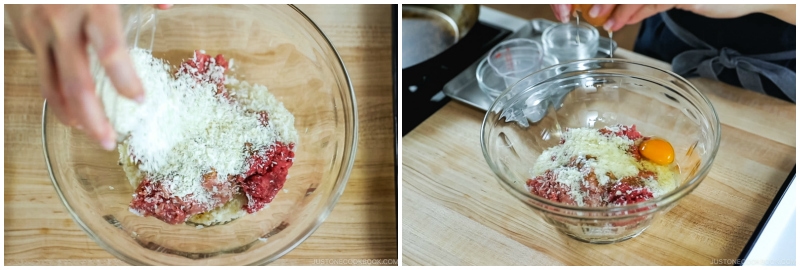
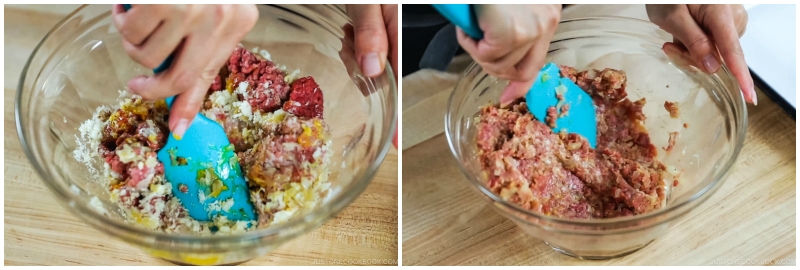
- Mix the mixture all together with a silicone spatula or spoon.
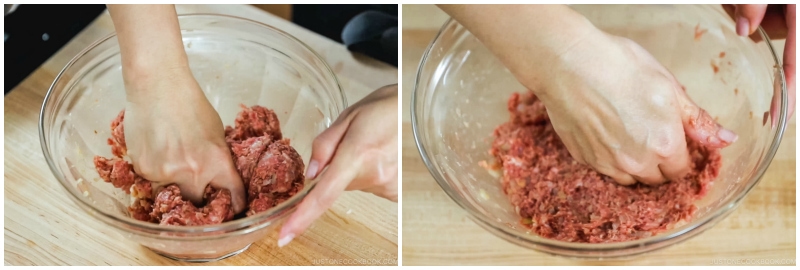
- Switch to mixing by hand and knead until it‘s sticky and pale.
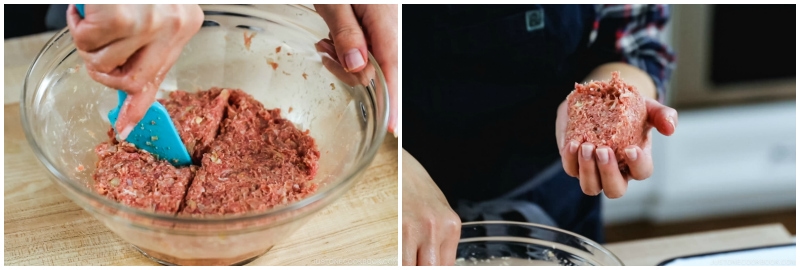
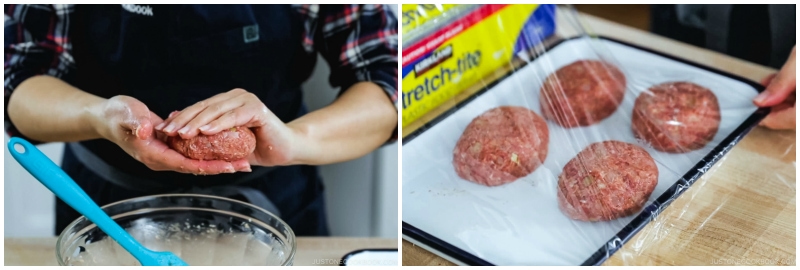
- Shape into patties: Divide the mixture into 4 portions (4 oz, 113 g each). Scoop out one portion.
- Toss it from one hand to the other about five times to release any air inside (see the video link above).Nami's Tip: Without releasing the air, the patties will likely crack while cooking.
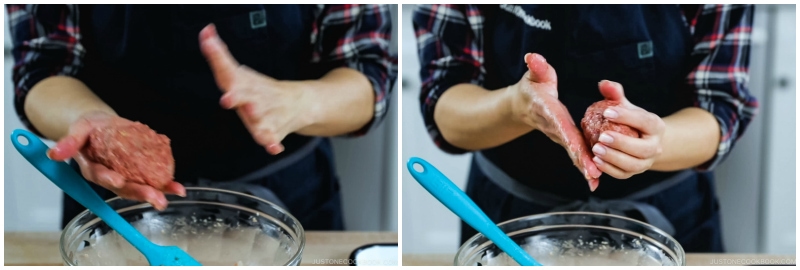
- Make an oval-shaped patty and place on a tray or plate. Repeat with the remaining portions.Cover the patties with plastic wrap and refrigerate for at least 30 minutes before cooking, so the meat combines well and the fat solidifies.
To Cook the Hambagu
- Heat a large pan over medium heat until hot. (If you‘re doubling the recipe, cook in two batches of 4 or use two pans.) Add 1 Tbsp neutral oil and gently place the patties into the pan. Indent the center of each patty with two fingers—the centers will rise as they cook.
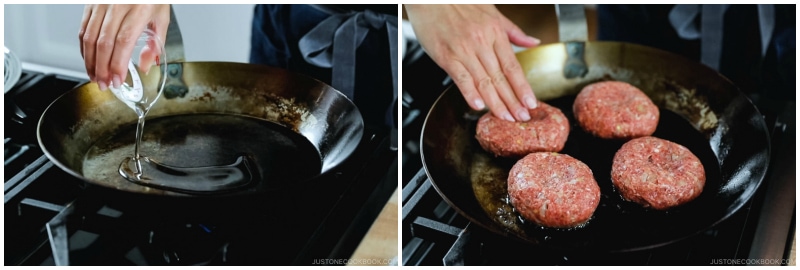
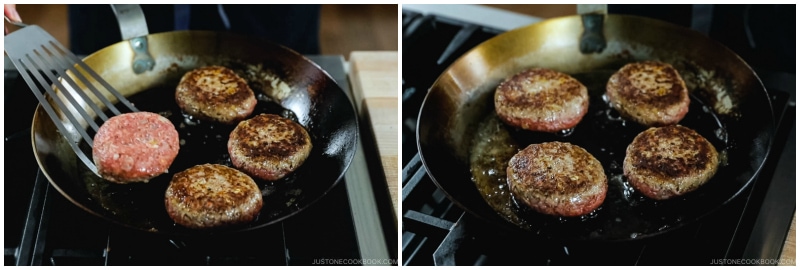
- Cook the patties until browned on the bottom, about 3 minutes. Flip carefully and cook another 3 minutes until browned.
- Add 3 Tbsp red wine and reduce the heat to low. Cover and cook for 5–7 minutes until cooked through. Adjust the cooking time depending on how thick the patties are.
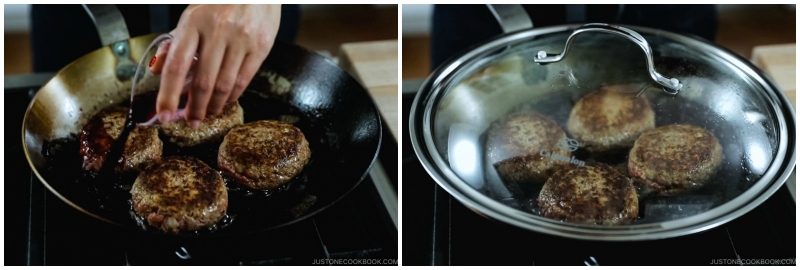
- Uncover and check doneness by inserting a skewer into the center of a patty—if the juices run clear, they're done. Increase the heat to medium to finish evaporating the alcohol, then transfer the patties to serving plates. Do not wash the pan; You'll use the drippings for the sauce.
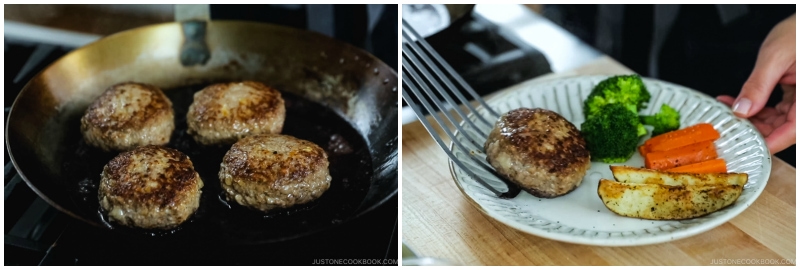
To Make the Sauce
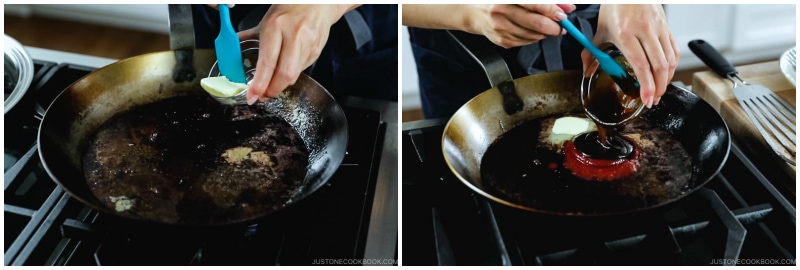
- To the same frying pan, add the sauce ingredients (for one batch): 1 Tbsp unsalted butter, 3 Tbsp ketchup, and 3 Tbsp tonkatsu sauce. Nami's Tip: Since some ketchup is sweeter than others, adjust the amount to taste. For the tonkatsu sauce, you can substitute Worcestershire sauce and sugar in a pinch.
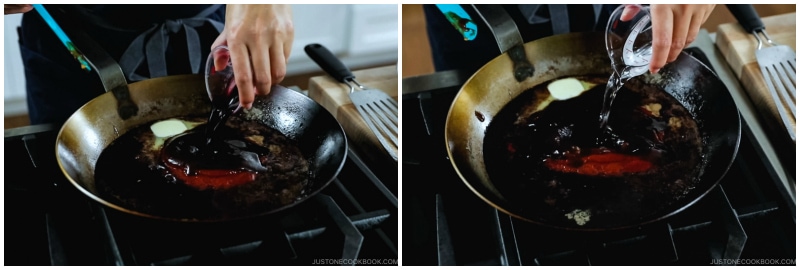
- Add 3 Tbsp red wine and 1 Tbsp water to the pan, adding more water as needed (up to 3 Tbsp total).
- Stir well and bring the sauce to a simmer over medium heat; let the alcohol evaporate.
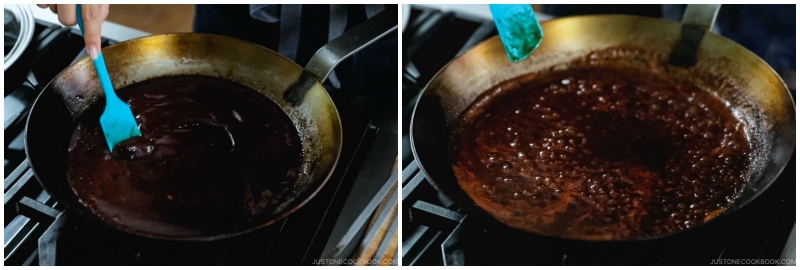
- When the sauce thickens (and you can draw a line on the bottom of the pan with a spatula), remove from the heat. Drizzle some sauce over the patties.
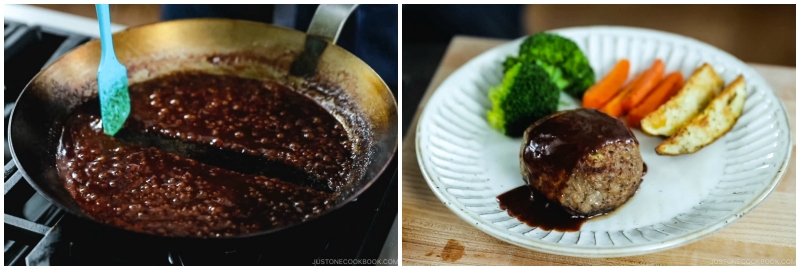
To Serve
- Pour the remaining sauce into a small bowl or jar and bring it to the table. We typically serve Steamed Rice, Homemade Miso Soup, Crispy Baked Potato Wedges, sautéed carrots, and steamed broccoli or a salad with this meal. Hambagu also goes well with Japanese Potato Salad and Corn Potage (Japanese Corn Soup).
To Store
- Transfer the leftover patties to an airtight container and let them cool completely. You can store them in the refrigerator for up to 3 days, or in the freezer for up to a month.
Notes
Ingredients
- Combined ground beef & pork: You can make hambagu with 100% beef, but it will not be as juicy and tender as combining the two meats.
- Red wine: I keep this mini wine in my pantry just for cooking.
Nutrition
Calories: 286kcal, Carbohydrates: 11g, Protein: 21g, Fat: 15g, Saturated Fat: 10g, Trans Fat: 1g, Cholesterol: 105mg, Sodium: 494mg, Potassium: 427mg, Fiber: 1g, Sugar: 6g, Vitamin A: 181IU, Vitamin C: 3mg, Calcium: 45mg, Iron: 3mg
The nutrition facts shown are generated by an online calculator and are estimates only. Please consult a professional nutritionist for specific dietary needs.
