
Yaki Udon (Japanese Stir-Fried Udon Noodles)
In my satisfying Yaki Udon, we pan-grill thick and chewy Japanese wheat noodles with crisp vegetables and protein in a savory sauce. This popular udon dish is incredibly delicious and ready in just 25 minutes. It's easily vegetarian or vegan adaptable, too.
Ingredients
Servings: (could be 3, depending on the extra ingredients you add)
- ½ yellow onion (3.5 oz, 100 g)
- 2–3 leaves green cabbage (8 oz, 227 g)
- 2 inches carrot (1.8 oz, 50 g)
- 2 shiitake mushrooms (0.7 oz, 20 g)
- 2 green onions/scallions
- 6 oz sliced pork belly (or your choice of meat or seafood; substitute tofu puffs, mushrooms, or extra vegetables for vegetarian/vegan)
- 2 servings udon noodles (1.1 lb/500 g frozen or parboiled udon noodles)
- 1 Tbsp neutral oil (for cooking)
- ⅛ tsp Diamond Crystal kosher salt (plus more to taste)
- ⅛ tsp freshly ground black pepper (plus more to taste)
For the Seasonings: Option A (I use in the recipe)
- ½ tsp dashi powder (use kombu dashi powder for vegetarian/vegan or skip)
- 2 Tbsp soy sauce
- 1 Tbsp sake
- 1 tsp mirin (or a pinch of sugar)
For the Seasonings: Option B
- 3 Tbsp mentsuyu (concentrated noodle soup base) (for mentsuyu that is 3-times concentrated; if you use non-concentrated mentsuyu, please add more to achieve the same flavor; you can make my Homemade Mentsuyu)
- 1 tsp soy sauce
For the Garnish (optional)
- 3 Tbsp katsuobushi (dried bonito flakes) (or 1–2 small packages of katsuobushi; skip for vegetarian/vegan)
- 2 Tbsp pickled red ginger
Instructions
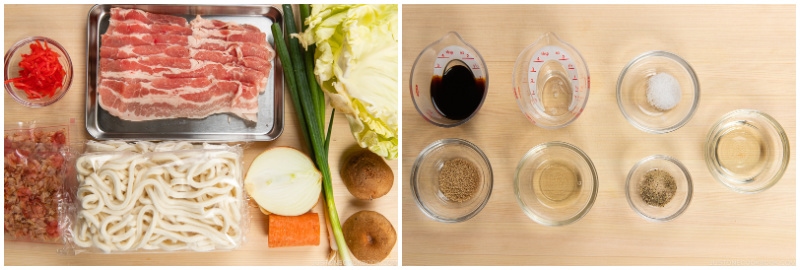
- Gather all the ingredients. Bring a large pot of water to a boil over medium heat, and prepare the rest of the ingredients while it heats.
To Prepare the Ingredients
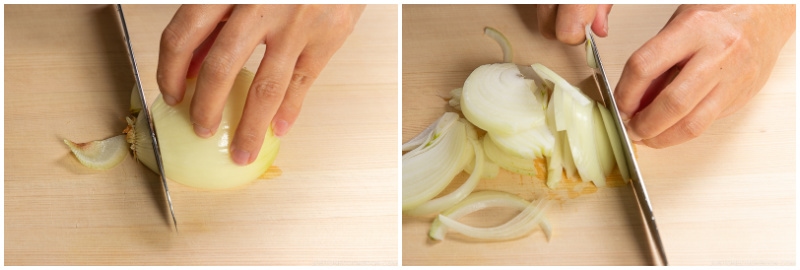
- Slice ½ yellow onion thinly.
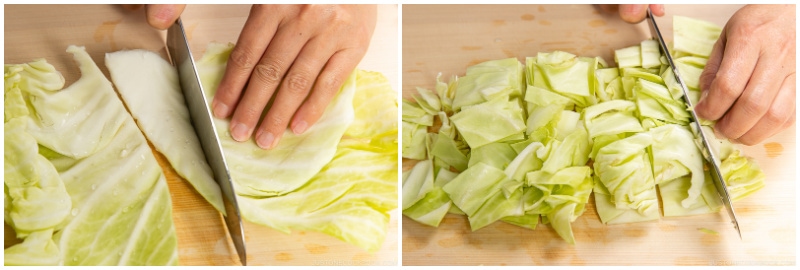
- Remove the tough core of 2–3 leaves green cabbage and cut the leaves into 1-inch (2.5 cm) squares.
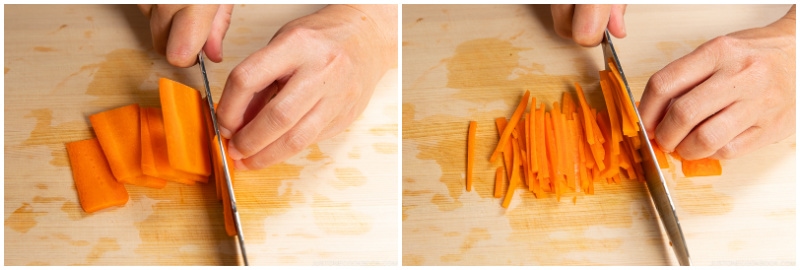
- Peel 2 inches carrot and cut into thin slabs, then, julienne them into thin strips 2 inches (5 cm) long.
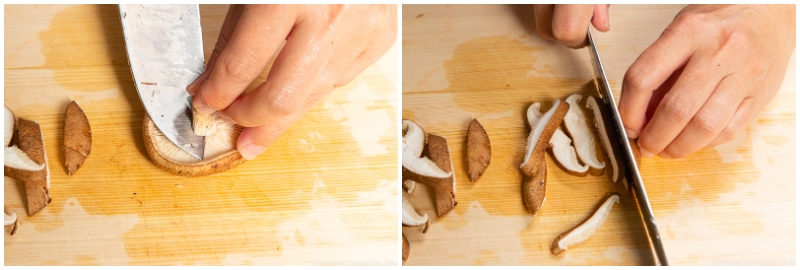
- Discard the tough stems of 2 shiitake mushrooms and slice the mushroom caps.
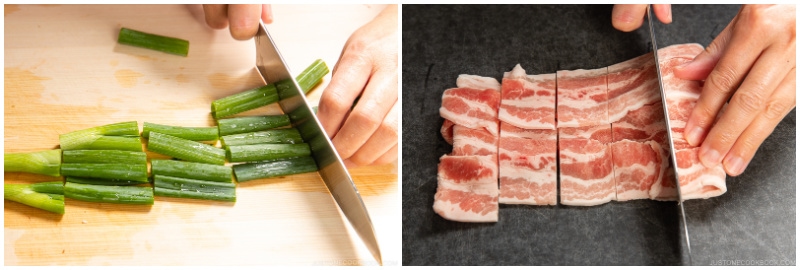
- Cut 2 green onions/scallions into 2-inch (5 cm) pieces. Cut 6 oz sliced pork belly into 1-inch (2.5 cm) pieces.
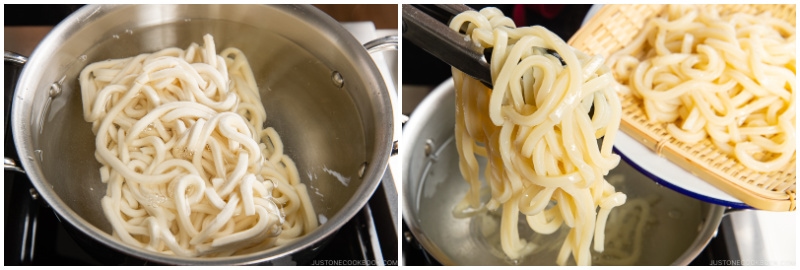
- Blanch 2 servings udon noodles for 30–40 seconds once the water boils, until they just start to loosen. Transfer them to a plate and set aside.Nami's Tip: For dry udon noodles, boil them according to the package instructions instead.
To Stir-Fry the Yaki Udon
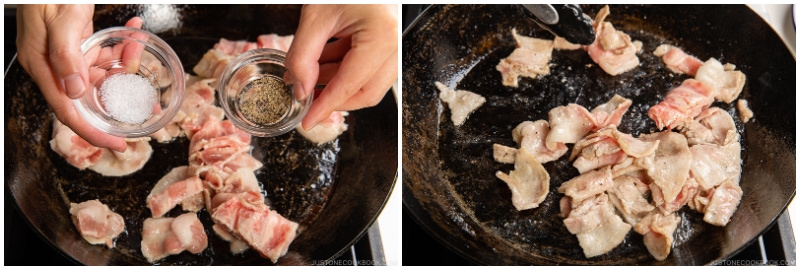
- Preheat a large frying pan over medium heat. Add 1 Tbsp neutral oil and distribute it evenly. Add the pork belly and stir-fry.
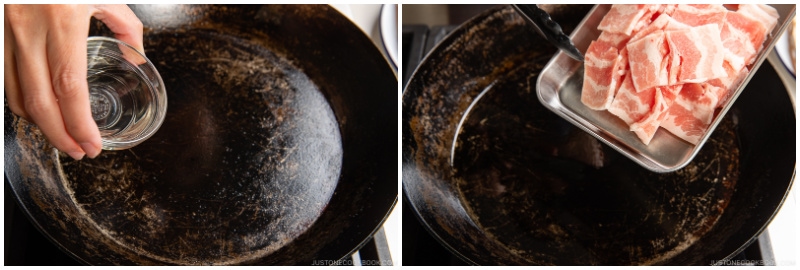
- Season the pork with ⅛ tsp Diamond Crystal kosher salt and ⅛ tsp freshly ground black pepper. Cook until it‘s no longer pink.
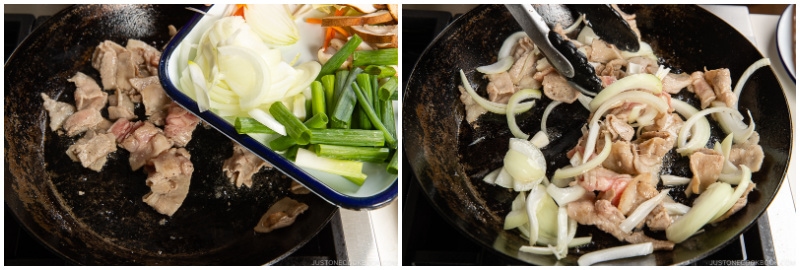
- Add the onion slices and stir-fry until tender.
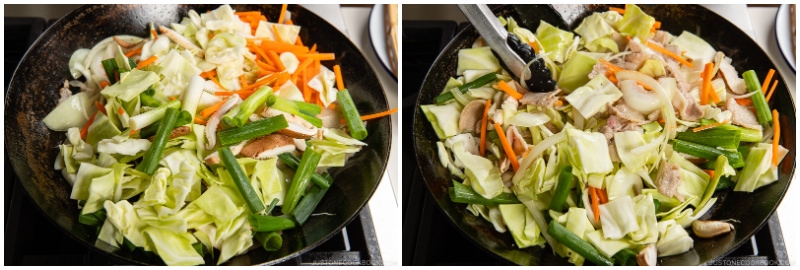
- Add the cabbage, carrot, shiitake mushrooms, and green onions. Toss until everything is coated with oil.
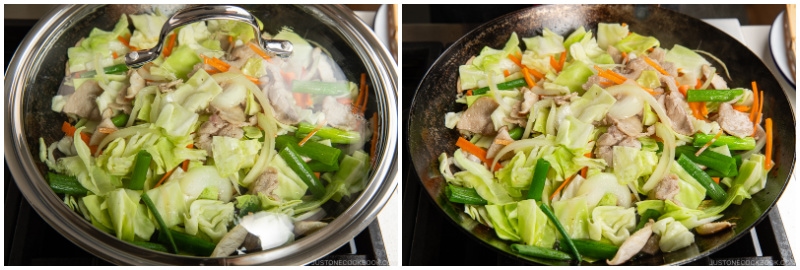
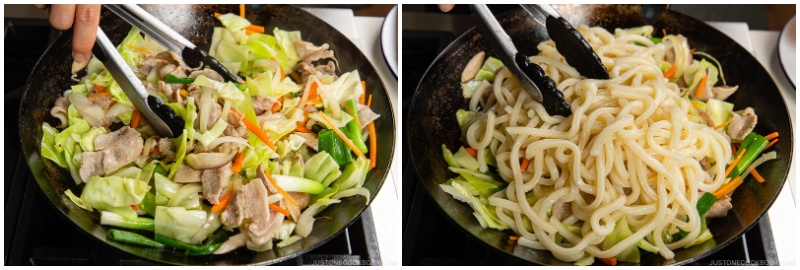
- Cover with a lid and reduce the heat to medium-low. Steam for 3 minutes, until the vegetables are slightly wilted.
- Increase the heat to medium-high. Add the udon noodles to the pan and toss to combine. Nami's Tip: Tongs lift the whole tangle at once. Chopsticks and spatulas drag the noodles instead, and udon breaks easily.
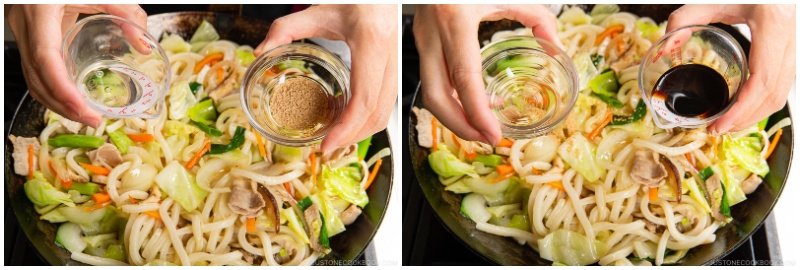
- Add the Option A seasonings: ½ tsp dashi powder, 2 Tbsp soy sauce, 1 Tbsp sake, and 1 tsp mirin. Nami's Tip: Pour the soy sauce against the side of the pan, not over the noodles. The metal there is hotter than the food, so the soy toasts for a second as it lands — that's where the aroma comes from. Let it sizzle, then toss everything together.For Option B, add 3 Tbsp mentsuyu (concentrated noodle soup base) and 1 tsp soy sauce instead.Nami's Tip: Option B is my go-to whenever there's mentsuyu in the house. One bottle does the work of four seasonings.
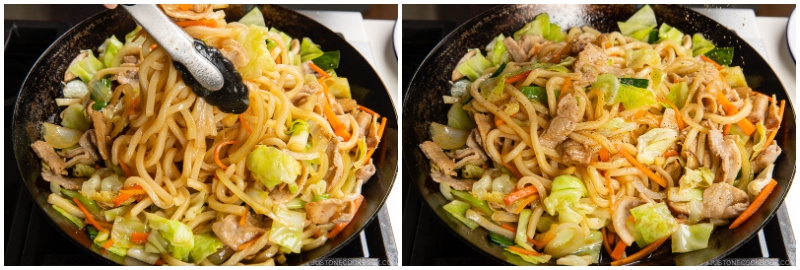
- Mix it all together. Taste and adjust the seasoning, adding more ground black pepper and salt to your liking.Nami's Tip: If any liquid is left in the pan, raise the heat and shake the pan until it cooks off.
To Serve
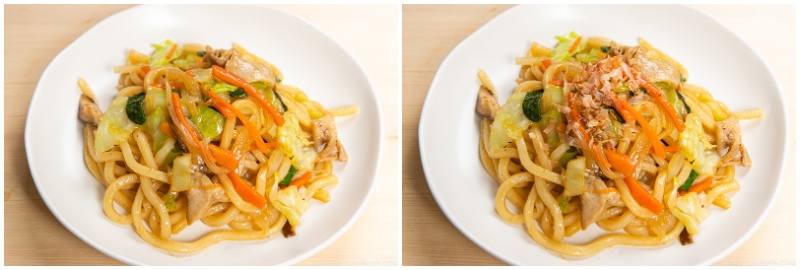
- Transfer the yaki udon to individual plates. Sprinkle 3 Tbsp katsuobushi (dried bonito flakes) over the top and set 2 Tbsp pickled red ginger alongside, if using.
To Store
- Store leftovers in an airtight container in the refrigerator for 3–4 days, or in the freezer for 1 month.
Notes
Seasoning options – Option A uses dashi powder, soy sauce, sake, and mirin. Option B uses mentsuyu and soy sauce. The photos show Option A.
Udon noodles – Frozen or parboiled udon works best. For dry udon, use 6.3 oz (180 g) and boil according to the package.
Vegetarian and vegan – Swap the pork for tofu puffs, mushrooms, or extra vegetables. Use kombu dashi powder in Option A, and skip the katsuobushi garnish.
Nutrition
Calories: 976kcal, Carbohydrates: 59g, Protein: 26g, Fat: 67g, Saturated Fat: 23g, Polyunsaturated Fat: 10g, Monounsaturated Fat: 30g, Trans Fat: 1g, Cholesterol: 82mg, Sodium: 938mg, Potassium: 445mg, Fiber: 6g, Sugar: 6g, Vitamin A: 5228IU, Vitamin C: 7mg, Calcium: 51mg, Iron: 2mg
The nutrition facts shown are generated by an online calculator and are estimates only. Please consult a professional nutritionist for specific dietary needs.
