

Why Using Brown Butter?
Brown butter is liquid gold! It’s nutty, toasty, and deeply aromatic. You can whisk it into sauces, bake it into cookies and brownies, or drizzle it over veggies and noodles for a big flavor boost.
Here’s why I love using brown butter:
- Deep, nutty flavor – Just one ingredient, huge flavor payoff.
- Quick – Ready in about 10 minutes.
- Versatile – Works beautifully in both sweet and savory dishes.
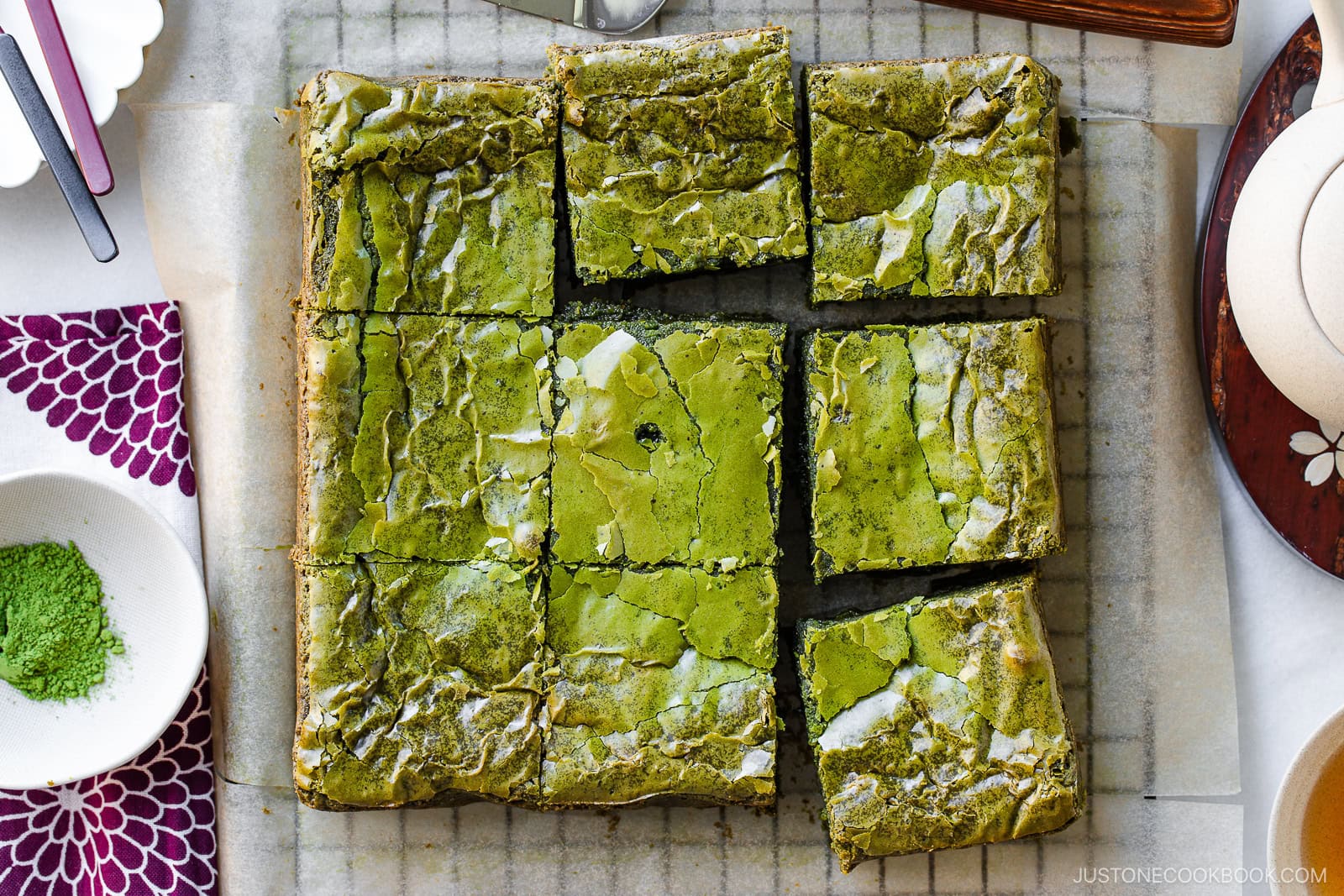
In this recipe, I’ll show you How to Brown Butter in just a few minutes so you can use it in my Matcha Brownies, Best Cherry Bars with Brown Butter and Chocolate Chip Cookies with Nutella recipes next!
What is Brown Butter?
Brown butter (French: beurre noisette) is butter cooked until the milk solids toast and turn golden brown. The result smells like toasted hazelnuts with a caramel-like depth. Cooks use it to boost the taste of baked goods (cookies, cakes, bars), quick sauces for fish and vegetables, and simple pasta.
The technique comes from French cuisine but is now loved worldwide. This toasty butter pairs beautifully with Japanese flavors like soy sauce, miso, and yuzu.
Ingredients for Brown Butter
You’ll need a light-colored frying pan or skillet.
- unsalted butter – I typically make 1 cup (227 g) at a time
Find the printable recipe with measurements below.
Jump to RecipeHow to Brown Butter
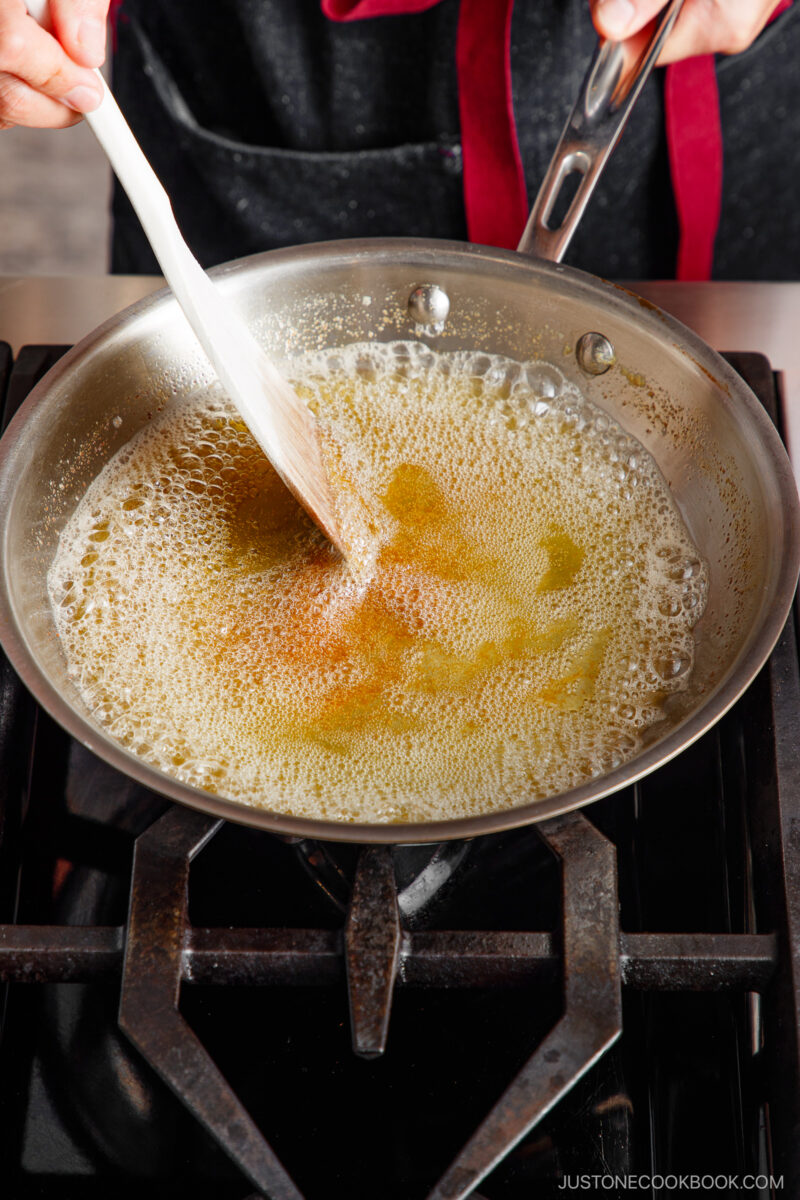
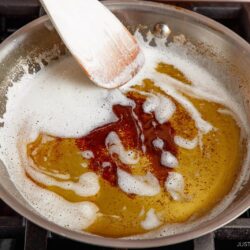
- Slice, melt, and foam. Cut butter into thick pats. Add to a light-colored pan or skillet (avoid dark cast iron). Melt over medium heat until it bubbles and foams.
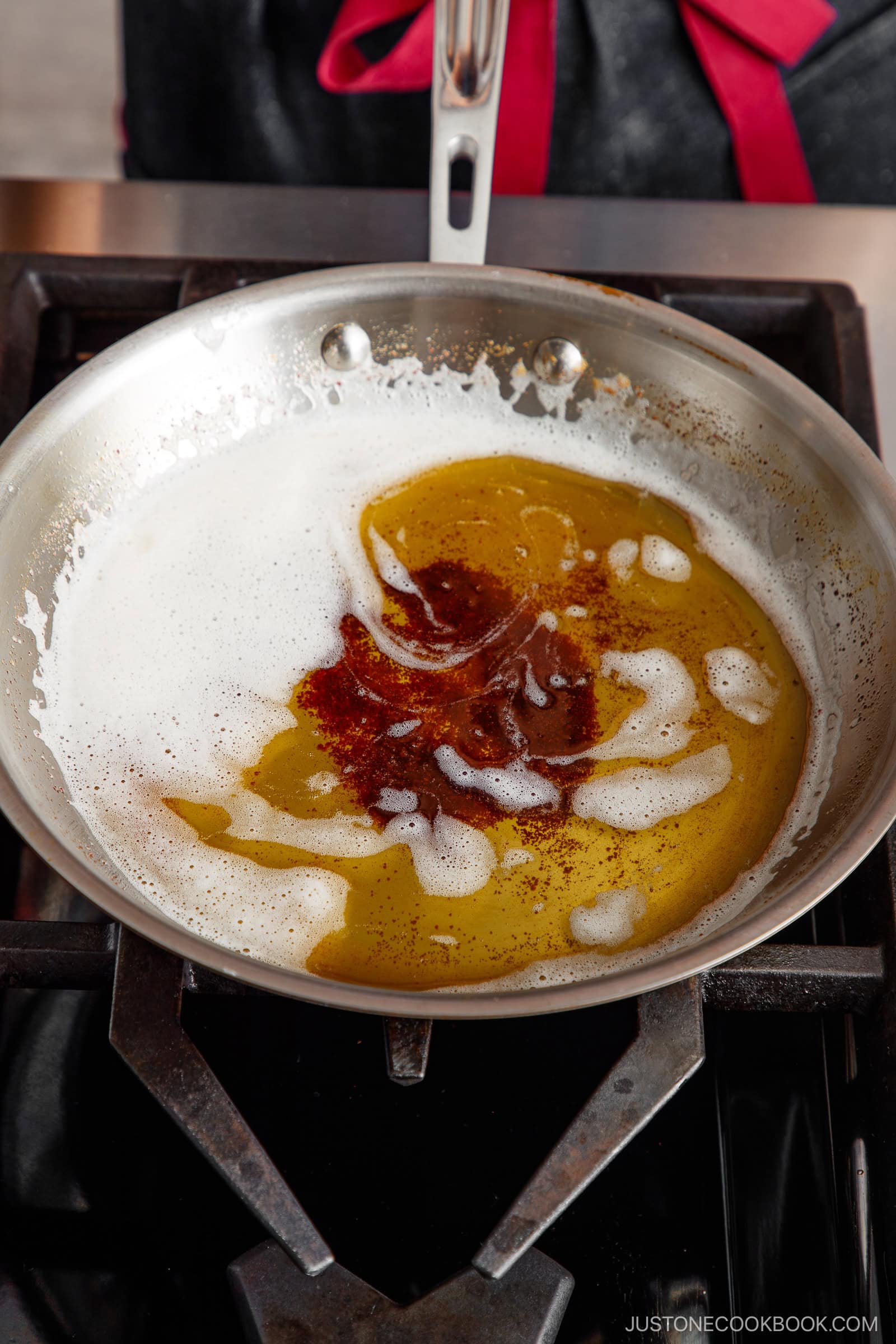
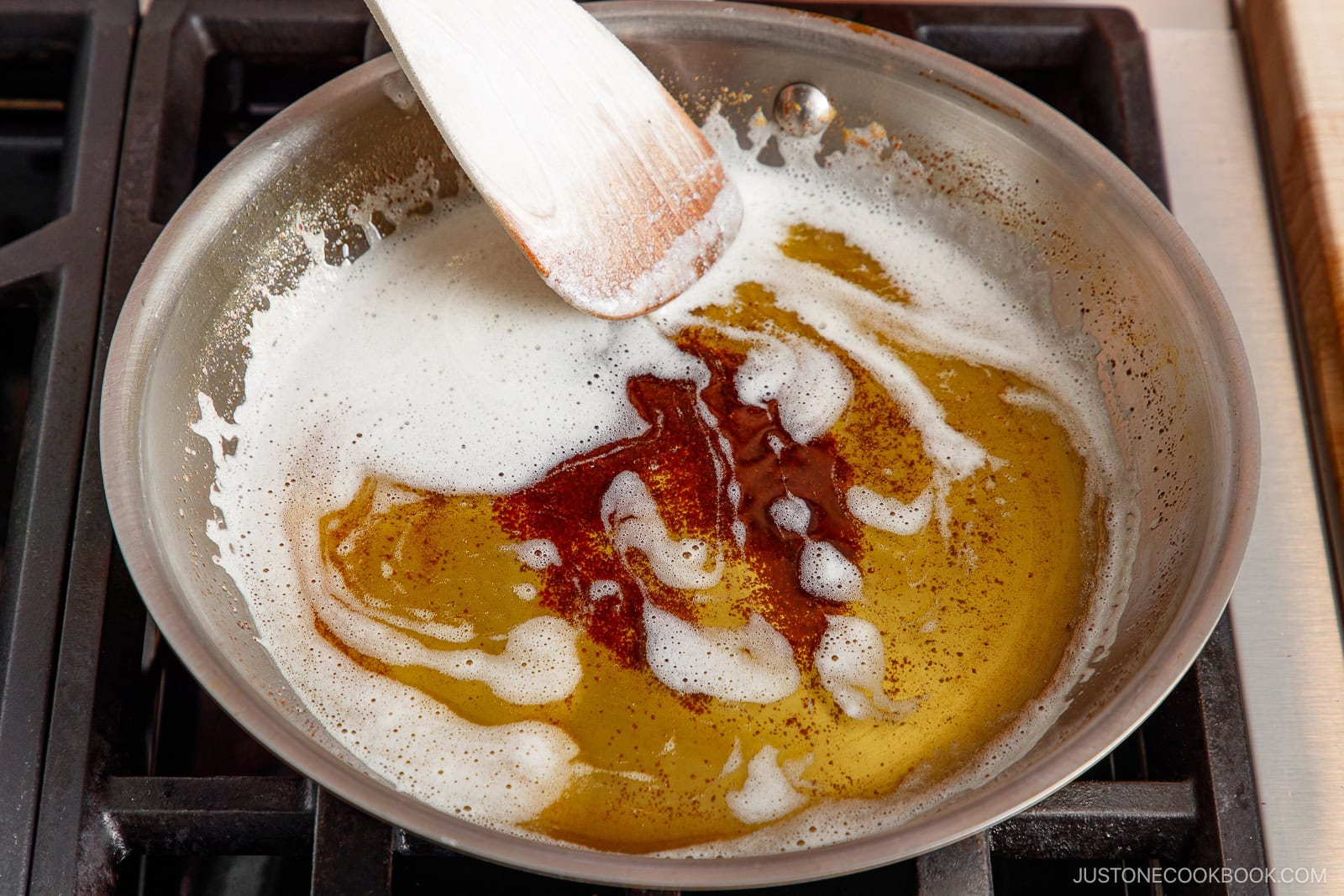
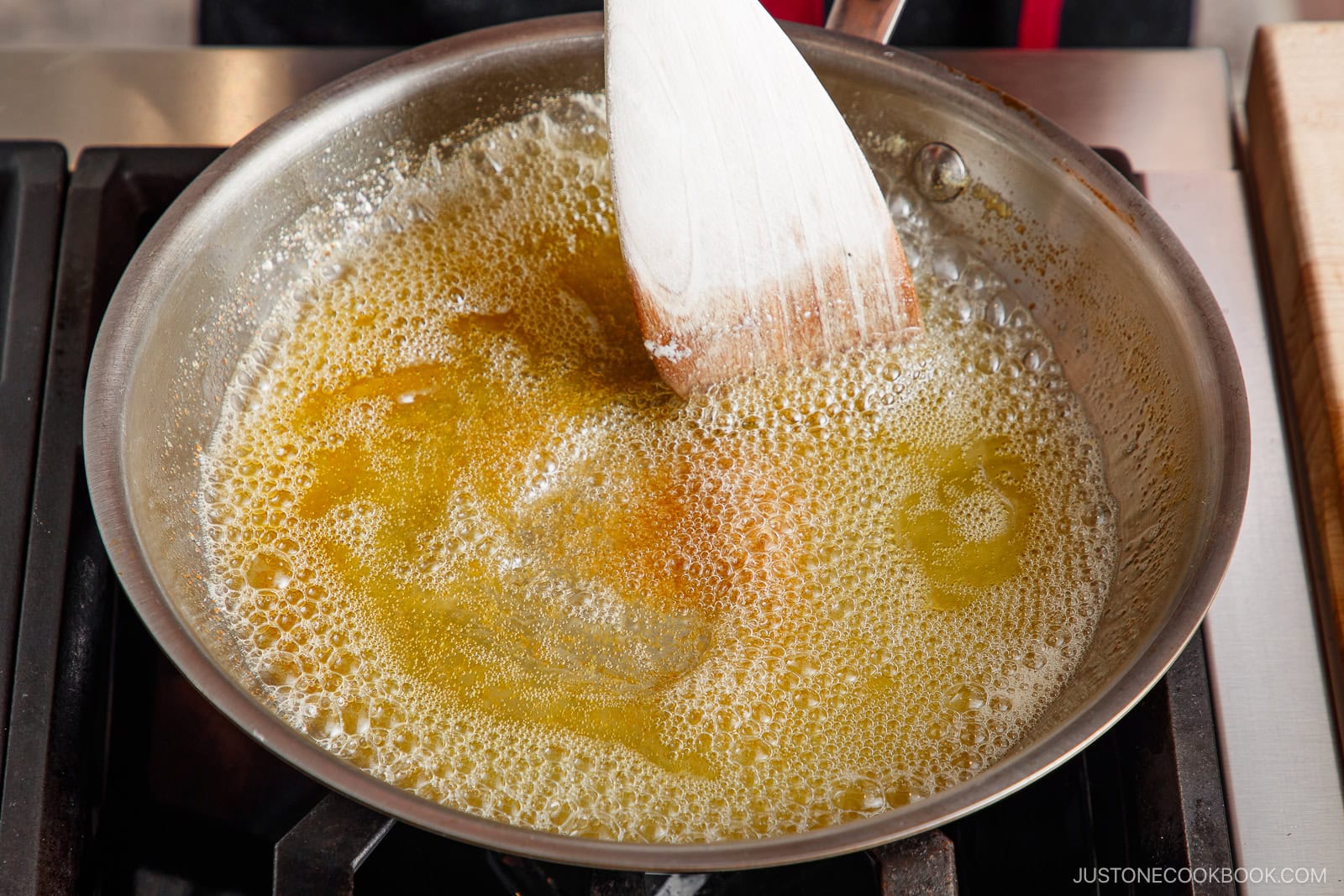
- Cook, stirring occasionally. You’ll begin see pale, toasty particles (milk solids) on the bottom of the pan.
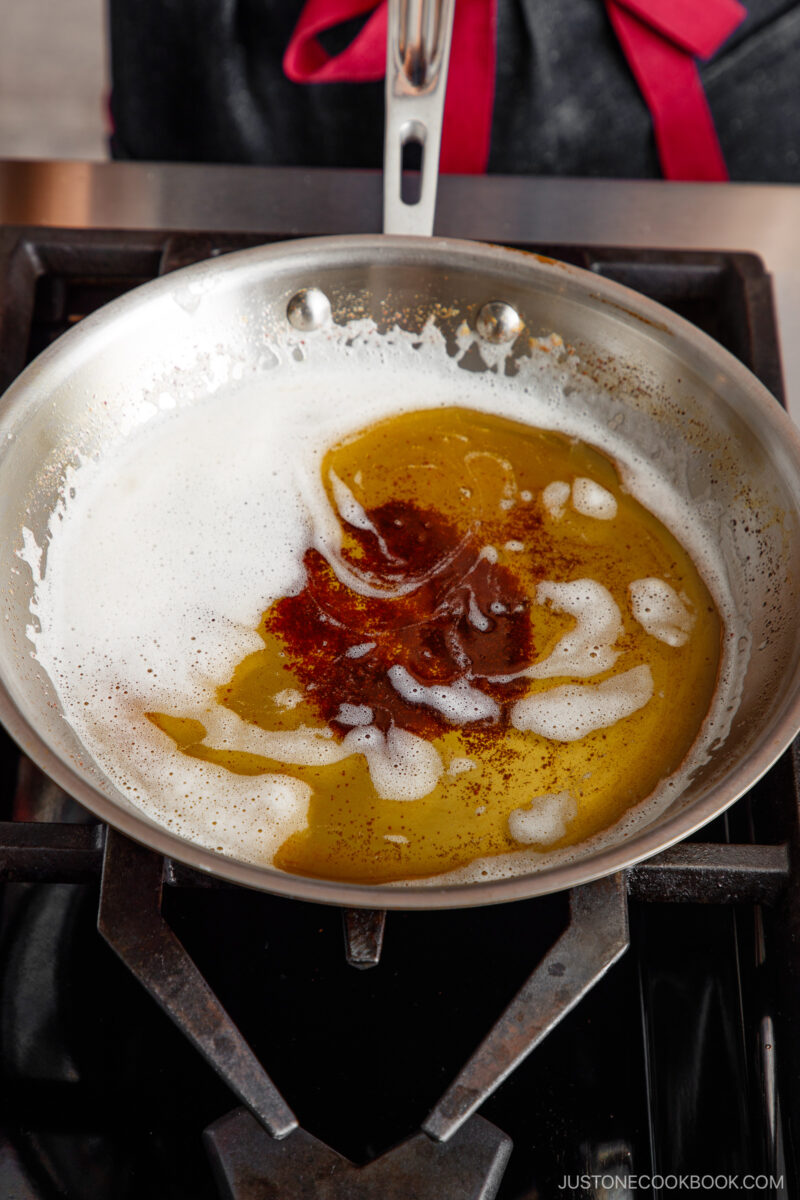
- Brown the bits. Continue cooking, stirring more frequently, as the foam subsides and the specks turn golden brown and produce a nutty aroma. Remove from heat immediately. Pour into a heatproof bowl (include the browned bits!) and use right away or cool for later.

Nami’s Recipe Tips
- Use a light-colored pan – Stainless or enamel lets you see the color change.
- Stir occasionally at early stage to let the milk solids brown.
- Stir more frequently as the milk solids start turning lightly golden and produce nutty aroma. Watch closely as they burn fast.
- Take it off the heat once brown bits form and pour into a bowl to prevent carryover cooking.
- Cool to warm room temperature (at least 3 minutes) before mixing into batters for baking.
Variations and Customizations
- Vanilla brown butter: Add scraped vanilla bean or a tiny splash of vanilla off heat.
- Soy sauce brown butter: Whisk in ½–1 tsp soy sauce off heat for a savory glaze.
- Miso brown butter: Whisk in 1–2 tsp white miso until smooth; great on veggies or fish.
- Citrus twist: Finish with a little yuzu or lemon zest.
Storage and Reheating Tips
To store: Store in a airtight jar up to 2 weeks in the refrigerator. You can also freeze it for up to 3 months; cool and pour into ice cube tray for easy portions.
To reheat: Melt gently over low heat or in short microwave bursts. Stir to reincorporate the browned bits.
FAQs
Can I use salted regular butter?
Yes, but reduce added salt elsewhere in your recipe. Unsalted gives better control.
Why avoid cast iron?
It’s dark, so it’s hard to see color changes. You may over- or under-brown the butter.
How do I know it’s done?
The foam subsides, the little brown bits are toasty brown (not black), and it smells nutty.
I burned it. Now what?
If the specks turn black and smell acrid, start over. Burnt butter tastes bitter.
How much does the volume change?
You’ll lose a little water weight. From 1 cup (227 g) butter, expect about ¾ cup (170–180 g) brown butter.
How to substitute brown butter for regular butter in the recipe?
Brown butter adds a nutty, caramelized flavor that’s amazing in baked goods, sauces, and even savory dishes.
When you brown butter, some of its water evaporates. So 1 cup (227 g) regular butter becomes about 3/4 cup (170–180 g) brown butter.
For every 1 cup (227 g) of regular butter the recipe calls for:
- Use 3/4 cup (170–180 g) brown butter, or
- Brown 1 cup of butter, then use all the browned result (the easy method; about 3/4 cup).
- Re-solidify the brown butter in these cases:
- Cookies and cake recipes that require creaming softened butter
- Scones, biscuits, pie crusts that rely on cold, solid fat to create a tender, flakey texture
- No need to solidify the brown butter when the recipe uses melted butter, such as brownies, bars, muffins, and quick breads.
I’d love to hear how yours turned out! 💛 Please leave a star rating and comment below to share your experience. Your feedback not only supports Just One Cookbook but also helps other home cooks discover recipes they can trust.
How to Brown Butter
Ingredients
- 1 cup unsalted butter
Instructions
- Slice 1 cup unsalted butter into thick pats and place in a light-colored skillet (not cast iron). Cook on medium heat, stirring occasionally with a wooden spatula, until the butter bubbles and foams, about 3 minutes.
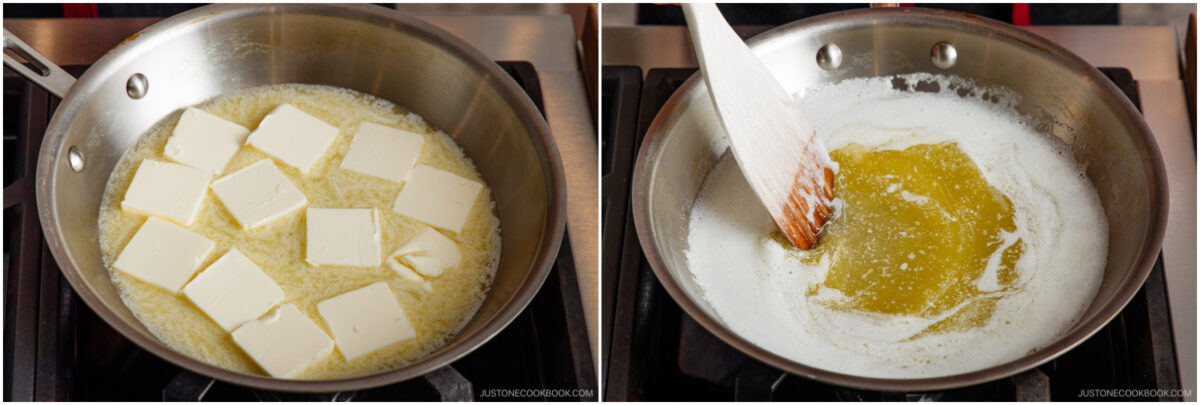
- Continue cooking, stirring occasionally, as the foam subsides and the milk solids starts to form on the bottom of the pan. Once they begin to turn lightly golden, stir more frequently to to prevent from burning—this entire stage takes about 5 minutes.
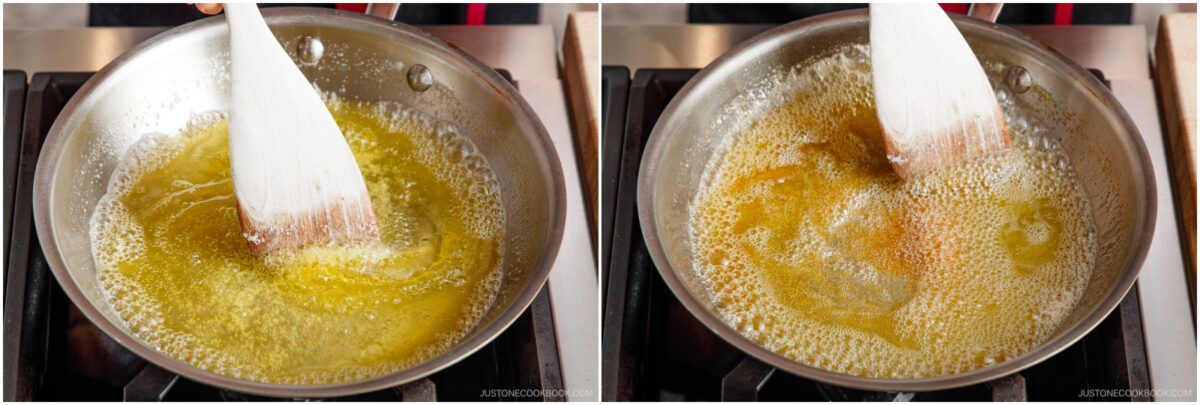
- Cook until the butter turns a warm amber color and milk solids are dark golden brown, about 2 minutes. You'll smell a toasty, nutty aroma when it's ready. Remove from the heat immediately.Nami's Tip: Keep in mind that only the milk solids turn a dark golden brown, not the butter itself.
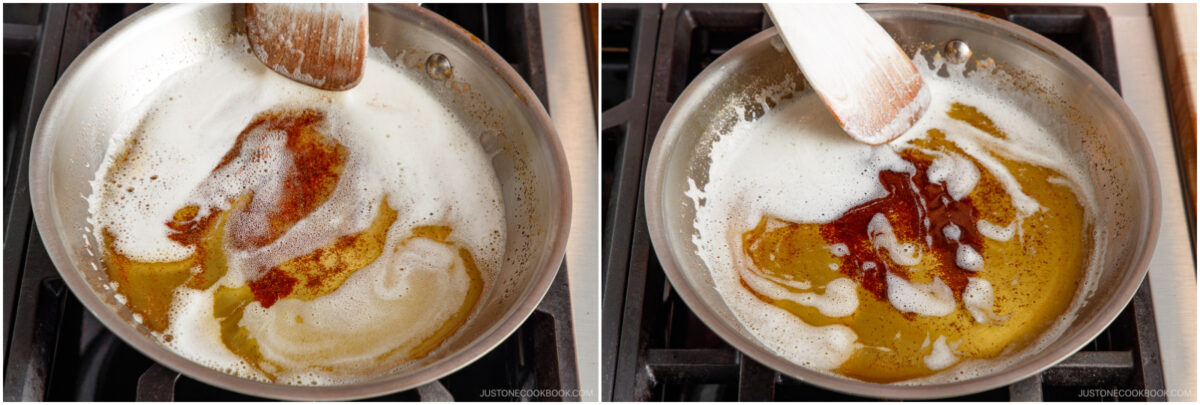
- Transfer into a heatproof bowl, scraping up all the browned bits in the pan. Stir it to let cool for 3 minutes.Alternatively, stop cooking slightly earlier, remove from the heat, and stir—scraping up the browned bits—as it cools in the pan for 3 minutes.Nami's Tip: The brown bits hold the most flavor!
To Store
- Cool and store in a airtight jar up to 2 weeks in the fridge. To freeze, cool and pour into ice cube tray for easy portions and freeze up to 3 months. To reheat, melt gently over low heat or in short microwave bursts. Stir to reincorporate the browned bits.
Nutrition
Did you make this recipe?
Tag @justonecookbook on Instagram so we can see your delicious creation!