

This post may contain affiliate links. Please read my disclosure policy.
Recipe Highlights
Black sesame is one of my favorite flavors for both sweet and savory dishes. If you don’t have easy access to a Japanese or Asian grocery store, you can make my Black Sesame Paste (kuro neri goma, 黒練りごま) at home and keep at batch in the fridge. With this recipe, you’ll always have some on hand to transform desserts and savory dishes.
Here’s why I keep coming back to this recipe:
- Ready in 10 minutes with one ingredient and a food processor
- Versatile addition to both sweet and savory dishes
- Naturally vegan and gluten-free
Try using this black sesame paste in my Black Sesame Cookies, Black Sesame Dan Dan Noodles, and Black Sesame Ice Cream recipes next!
What is Black Sesame Paste?
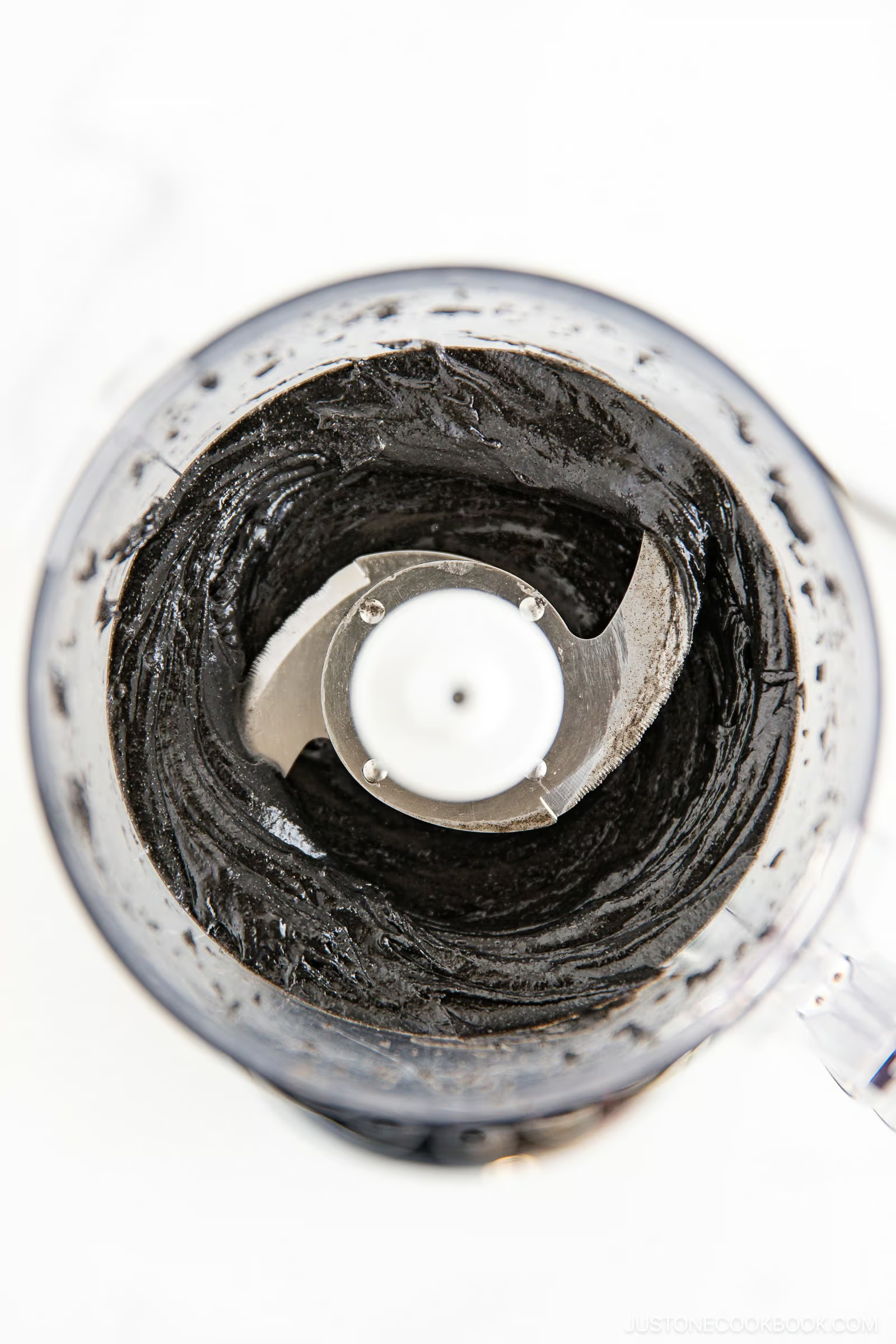
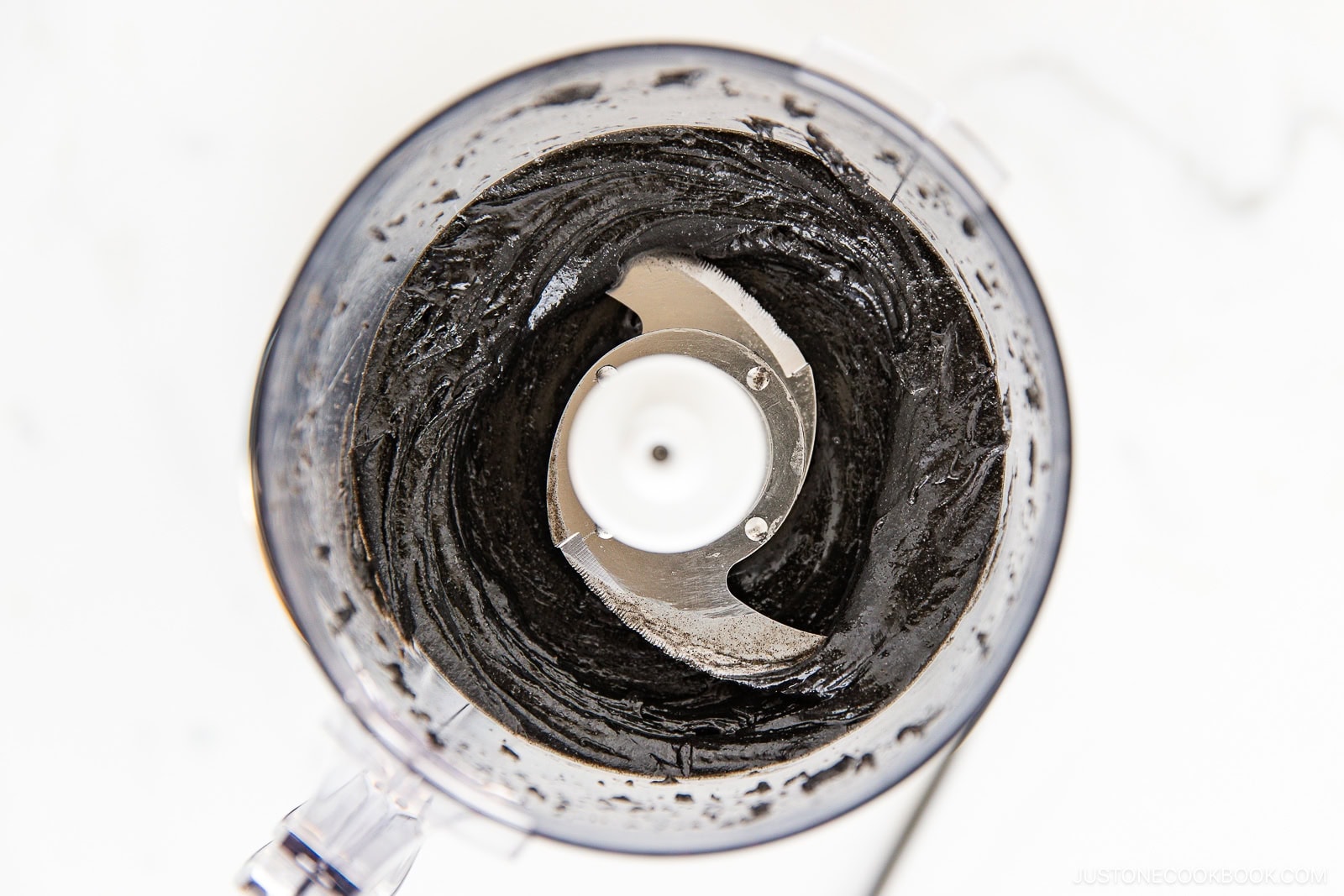
Black sesame paste(kuro nerigoma, 黒練りごま) is made by grinding toasted, unhulled black sesame seeds into a thick, smooth purée. The result is glossy and jet black, with a rich, nutty, mildly bitter flavor.
It’s used across Japanese and East Asian cooking in sweets like mochi and ice cream as well as savory sauces and noodle dishes. You can find jarred black sesame paste in most Japanese or Asian grocery stores, or on Amazon. If you have a high-powered food processor, it’s easy to make at home.
Ingredients for Black Sesame Paste
- black sesame seeds
- honey (for a sweet version) or toasted sesame oil (for a savory version) – optional
Find the printable recipe with measurements below.
Jump to RecipeHow to Make Black Sesame Paste
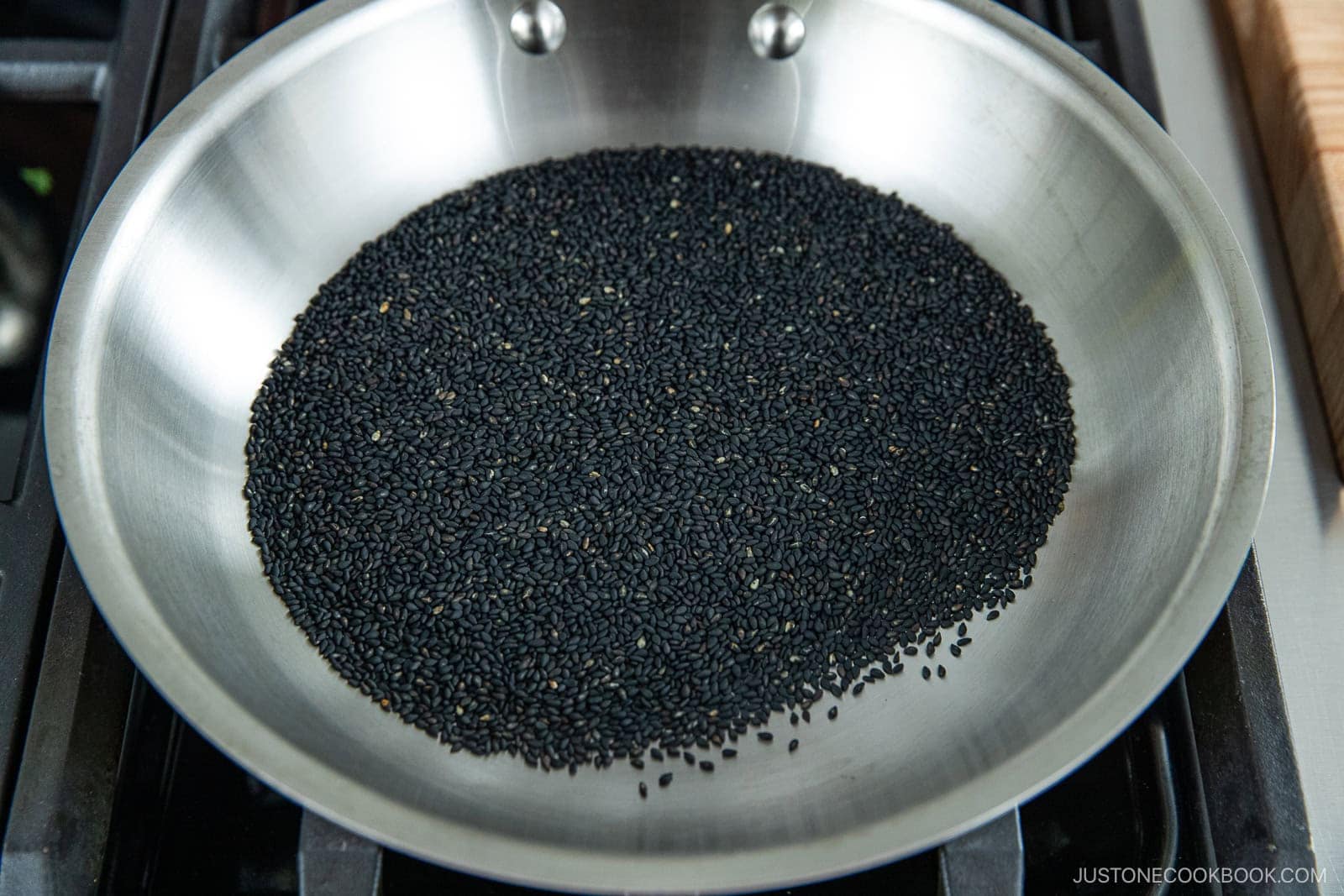
- Toast the sesame seeds. Add the sesame seeds to a dry pan and toast over medium heat to enhance their aroma. Even pre-toasted seeds benefit from this step.
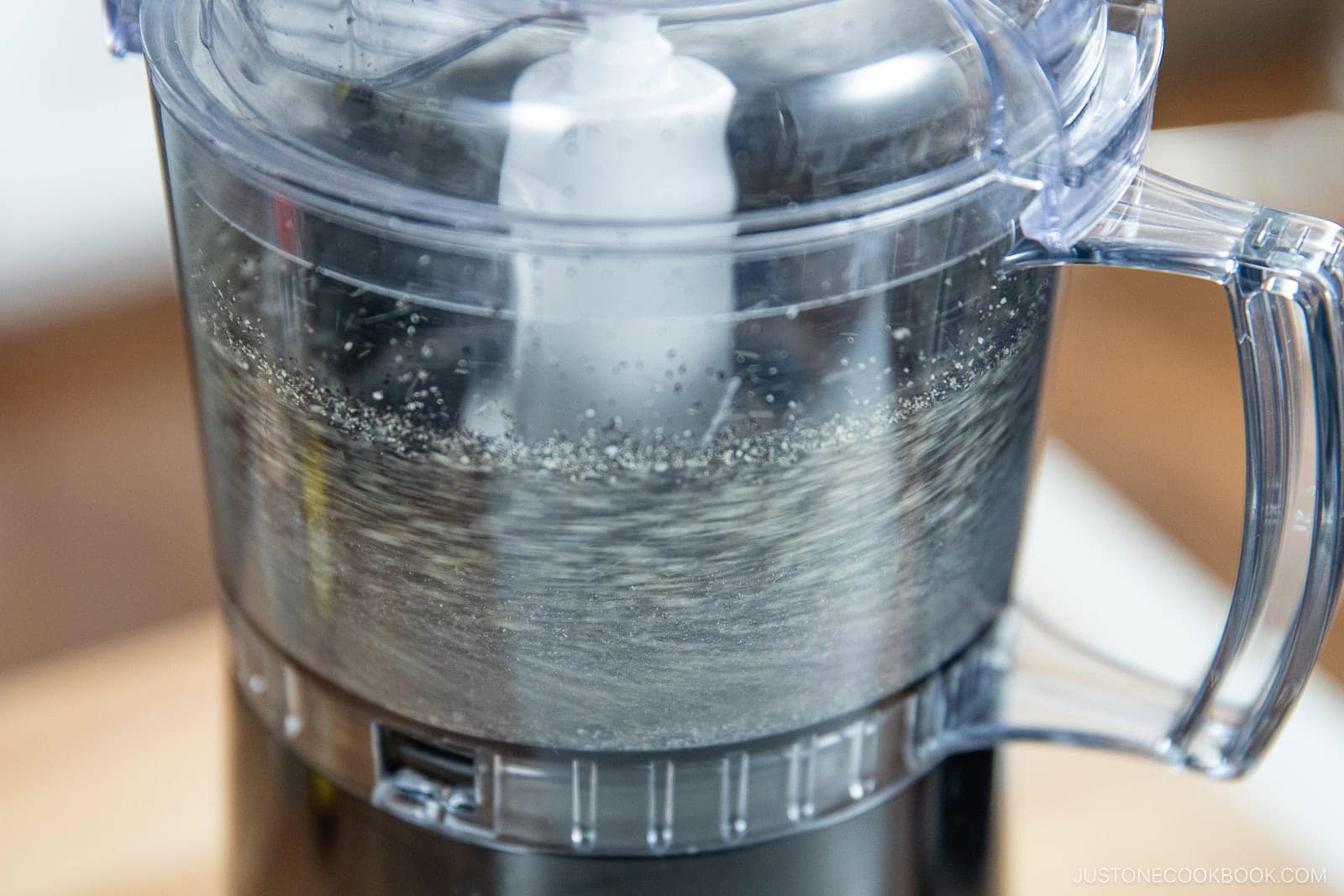
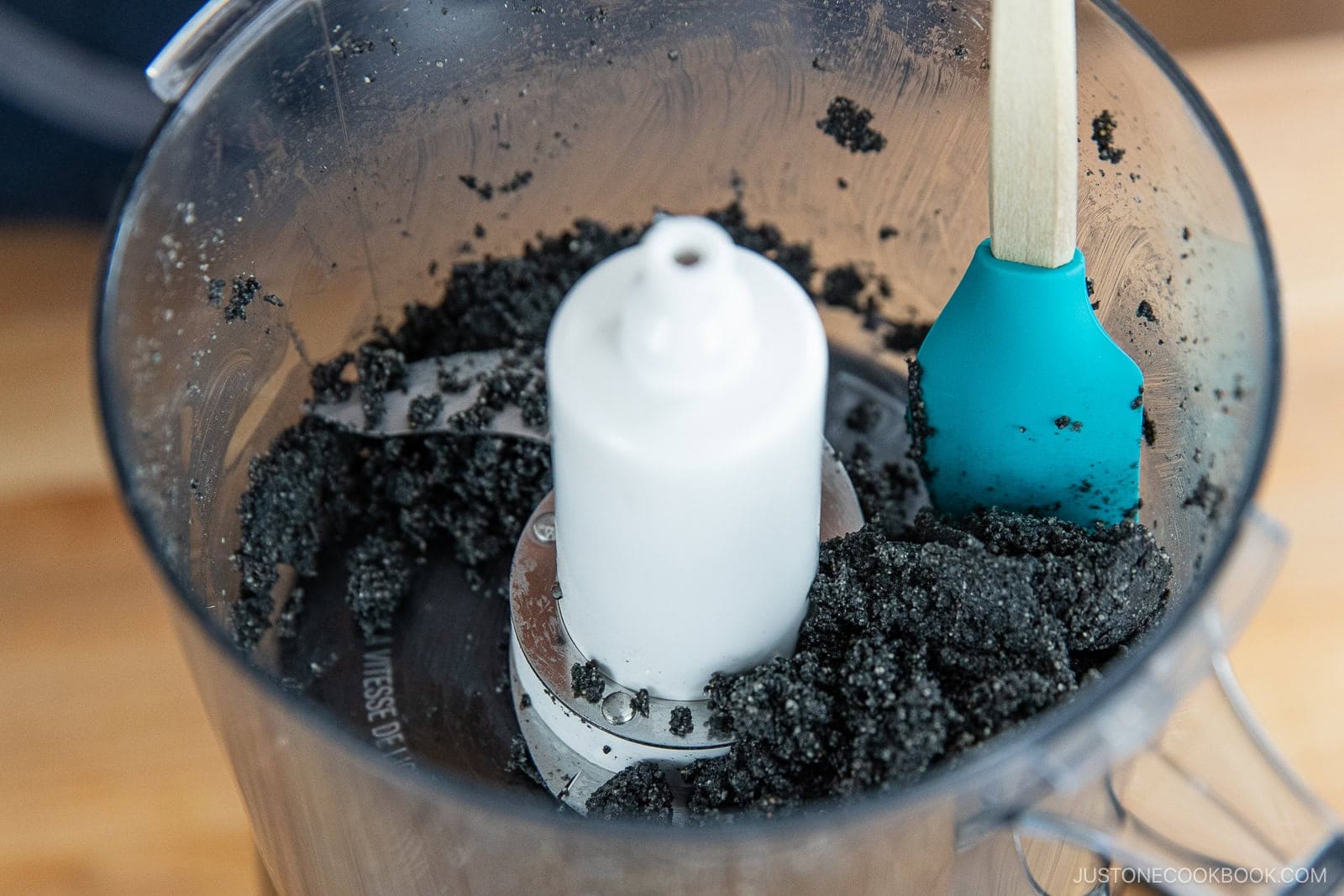
- Transfer to a food processor. Put the toasted sesame seeds in a food processor and blend until the seeds release their natural oil. The seeds will look dry at first—that’s normal. You can also use a mortar and pestle.
- Scrape and blend again. Scrape down the sides of the bowl and continue blending until the mixture looks evenly ground. Take breaks to avoid overheating the motor.
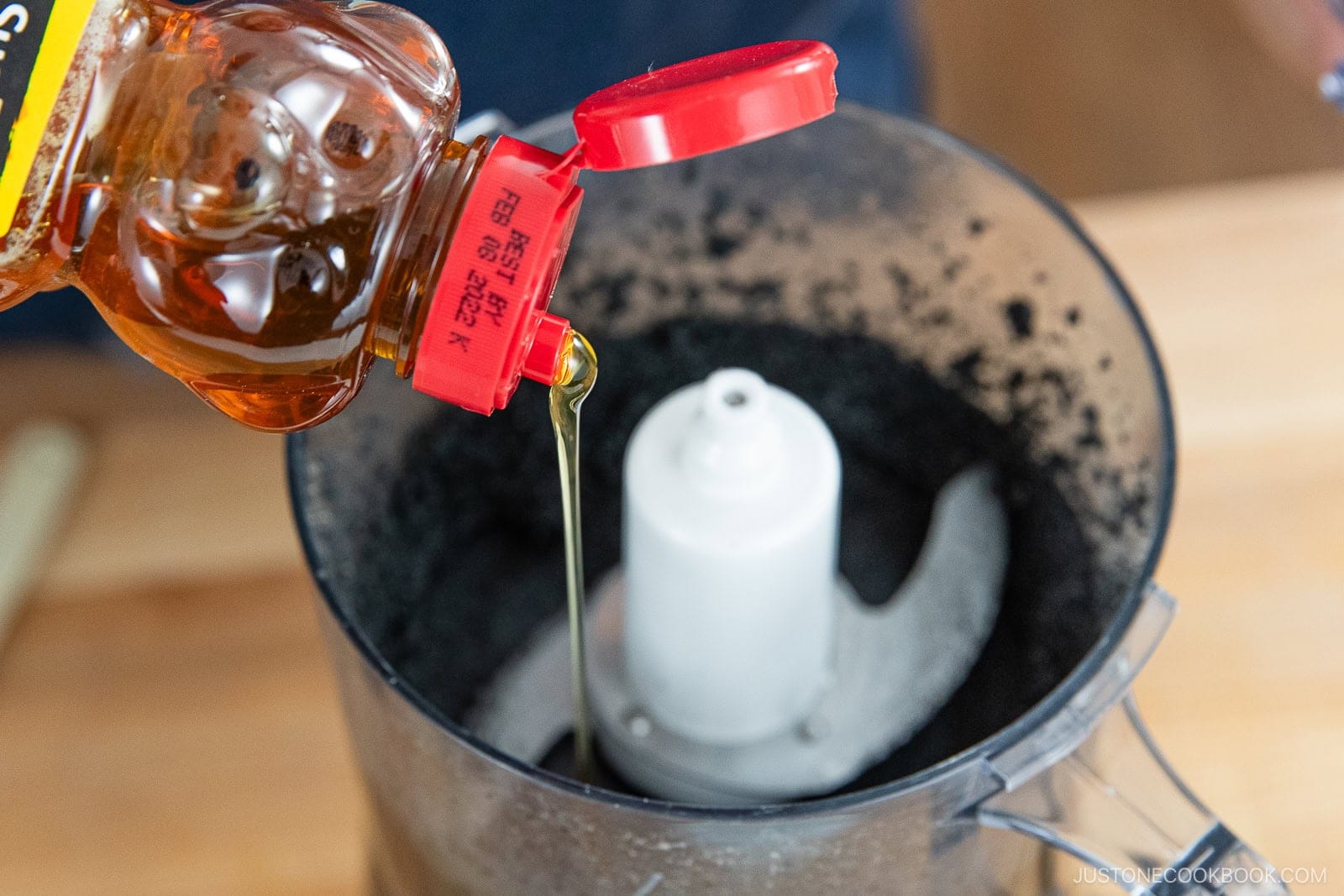
- Add honey or sesame oil if needed. Only if the food processor is struggling, add a small dollop of honey or toasted sesame oil.
- Use or store. Once the paste is smooth, glossy, and liquidy, transfer it to a sterilized mason jar.


Nami’s Recipe Tips
Keep these tips in mind for the best results every time.
- Use a high-powered food processor – An underpowered machine will struggle with the density of the seeds and may burn out. Look for a motor of at least 500W. A high-powered blender like Vitamix works too, but needs a larger batch for the blades to catch properly.
- Use the small bowl attachment – The small bowl keeps the seeds packed tightly around the blade—a larger bowl won’t engage them properly and you’ll get powder instead of paste. Make sure the blade sits flush to the bottom. I use the 3-cup bowl attachment on my Cuisinart blender-food processor combo (discontinued).
- Always toast your sesame seeds – Even if yours are pre-toasted, a quick dry-pan toast deepens their nutty aroma.
- Be patient – It takes time for the seeds to release their natural oils. Scrape down the sides, give the motor short rest breaks, and keep going.
- Add oil or honey only if needed – The seeds have enough natural oil to form a paste on their own. Add a small amount only if your food processor is struggling.

Variations
This recipe is flexible—here are some ideas to get you started.
- Make a sweet spread. Whip paste together with honey and heavy cream for a fluffy toast topping.
- Make a savory dipping sauce. Mix with soy sauce, sugar, rice vinegar, and a pinch of salt for a dipping sauce great for hot pot and noodles.
- Add toasted nuts. A handful of walnuts will increase the paste’s nutty flavor.
- Use white sesame. Check out my Sesame Paste recipe to learn how to make this Japanese pantry staple.

How to Use Black Sesame Paste
Here are some of my favorite ways to use this homemade black sesame paste:
- In mochi – Mix into the dough for a striking black color, or use as a filling for Daifuku.
- In a smoothie – Use sesame paste instead of peanut butter for a toasted, nutty twist.
- As a latte – Stir into your favorite coffee or matcha for a creamy black sesame drink.
- In desserts – Mix into crème brûlée, custard, pudding, or Japanese Cheesecake.
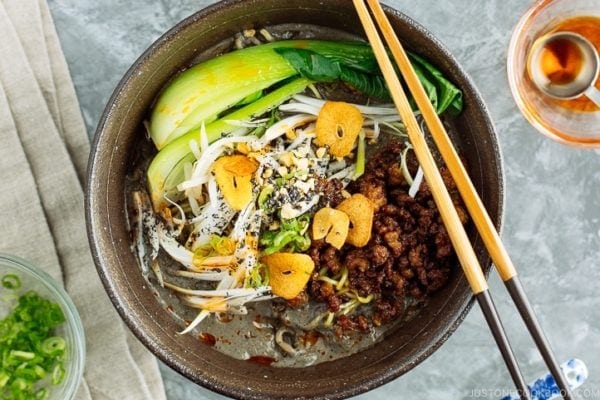
- Black Sesame Dan Dan Noodles – Black sesame paste is the star of this Japanese take on a classic savory, creamy, slightly spicy, Sichuan noodle soup.
- Black Sesame Ice Cream – A classic Japanese flavor and one of my family’s favorite summer treats.

Storage Tips
To store: Refrigerate for up to 1 month, or freeze for up to 6 months.
To use from frozen: Thaw at room temperature, then stir well if the oil has separated.
FAQs
Can I use a blender instead of a food processor?
A high-powered blender like Vitamix can work in a pinch if you use a large batch of sesame seeds, but a small food processor is the better tool. The wide base spreads the seeds too thin for the blades to engage them properly. I haven’t tried a mortar and pestle myself, but it may work—just expect it to take much longer, and you may only get ground sesame rather than a true paste.
Is black sesame paste the same as tahini?
No. Tahini is made from hulled white sesame seeds and has a milder flavor. This recipe uses unhulled black sesame seeds, which give a stronger, earthier taste.
I’d love to hear how yours turned out! 💛 Please leave a star rating and comment below to share your experience. Your feedback not only supports Just One Cookbook but also helps other home cooks discover recipes they can trust.
Black Sesame Paste Recipe
Equipment
- High-powered food processor, with a small bowl
Ingredients
For Black Sesame Paste for Savory Dishes
- 1 cup toasted black sesame seeds
- ½ tsp toasted sesame oil (optional; as needed)
For Black Sesame Paste for Sweets
- 1 cup toasted black sesame seeds
- ½ tsp honey (optional; as needed)
Instructions
Before You Start
- Use a high-powered food processor with a small bowl for this recipe. I used my Cuisinart blender-food processor combo with a 3-cup bowl.Increase the amount of sesame seeds if your food processor has a larger bowl. You need enough seeds to engage the blades so they can form a paste.Gather all the ingredients.

To Make the Paste
- Place 1 cup toasted black sesame seeds in a cold, dry pan over medium-high heat. Shake the pan constantly until fragrant, then remove from the heat.Nami's Tip: Even pre-toasted seeds benefit from a quick dry-pan toast. It deepens their nutty aroma.

- Transfer the toasted sesame seeds to the food processor and process until they break down into a coarse ground.

- Continue processing until the seeds begin releasing their oil, about 1–2 minutes.Nami's Tip: Give the motor a short rest break if it starts to feel warm—don't let it overheat.

- Scrape down the sides of the bowl with a spatula and process again until the mixture looks evenly ground. Nami's Tip: If the motor feels warm, pause and let it cool before continuing. Running continuously for 10 minutes can be too much for most machines.

- If your food processor is struggling, add up to ½ tsp toasted sesame oil for savory dishes or ½ tsp honey for sweet dishes to help the paste come together. Nami's Tip: The seeds release enough natural oil during grinding to form a thick paste on their own—so be patient and keep going before reaching for extras.

- Continue processing until the mixture clumps together and turns glossy and smooth.

- Process until the paste is thick, smooth, and glossy, about 10–15 minutes total. Transfer to a sterilized mason jar.

To Use
- Use this homemade paste to make savory dishes like Black Sesame Dan Dan Noodles or sweets like Black Sesame Ice Cream.
To Store
- Transfer to an airtight container and refrigerate for up to 1 month, or freeze for up to 6 months. Bring to room temperature before using.
Nutrition
The nutrition facts shown are generated by an online calculator and are estimates only. Please consult a professional nutritionist for specific dietary needs.
Did you make this recipe?
Tag @justonecookbook on Instagram so we can see your delicious creation!
Editor’s Note: This post was originally published on 7/29/2012, and was updated with more helpful information on May 22, 2026.