


This post may contain affiliate links. Please read my disclosure policy.
Have you tried Sautéed Yam before? The recipe was featured on the popular Japanese TV program called Shinya Shokudo (深夜食堂) or ’Midnight Diner: Tokyo Stories‘ now available on Netflix. The show features Japanese dishes that are more representative of home-cooked recipes than Japanese Restaurant menu items in the US.
Since the drama doesn’t provide detailed ingredients and step by step instructions, I started to share these copycat recipes on my blog. Today’s recipe – sautéed yam (長芋のソテー) was featured in Season 1, Episode 8.
What is Nagaimo?
First thing first. You probably wonder what type of yam is being used in this recipe. It is not the sweet potato “yam” you might be thinking of. If you’re not sure what’s the difference between a yam and a sweet potato, this article might be helpful. So this particular yam used in this recipe is called Nagaimo (長芋) and it looks like this.

Sounds or looks familiar? You might have researched this ingredient for Okonomiyaki recipe because grated nagaimo in the Okonomiyaki batter is important for the fluffy texture. Also, if you have traveled in Japan, you might have tried Tororo Gohan (とろろご飯). That white gooey and slimy thing on top of rice, that’s also grated nagaimo.

Why You Should Try This Recipe
To be honest, I was quite surprised at how delicious this simple dish was. If it wasn’t for Midnight Diner inspiring me to recreate the recipes from the show, I probably wouldn’t have come up with a dish like this using nagaimo. I used to only buy nagaimo for making Okonomiyaki and hadn’t made any other nagaimo recipes that my mom used to make for us when growing up. In short, I’m not a fan of nagaimo by itself.
So, this dish was a total surprise for me (in a good way). I want to emphasize that if you look at the ingredient list, you see only four ingredients. Besides nagaimo, you only use olive oil, salt, and soy sauce. I was delighted and totally awed by the deliciousness of this dish with my not-so-favorite nagaimo.
I think the key “yum” factors come from 3 parts: 1) a nice crunchiness from nagaimo, 2) burnt/charred soy sauce flavors, and 3) the right amount of saltiness that brings bland nagaimo to the next level.
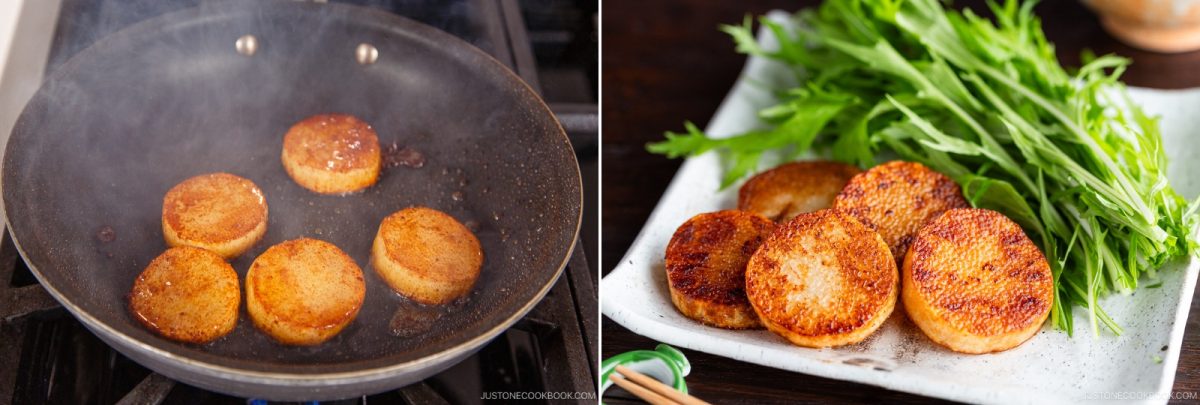
I know it’s hard to convince people to enjoy nagaimo, so I pray that my photographs of this simple dish did it justice. The lighting on this day was perfect so I am really happy with the way the pictures turned out. I hope that these sauteed yam looks delicious enough for you to give it a try!
Can’t Find Nagaimo?
Lastly, if you can’t get nagaimo where you live, it’s really difficult to substitute ingredients for it. I cannot recommend using potatoes or other root vegetables as a replacement. Nagaimo cooks very quickly compared to other thick root vegetables and has a unique texture unlike anything else.

Wish to learn more about Japanese cooking? Sign up for our free newsletter to receive cooking tips & recipe updates! And stay in touch with me on Facebook, Pinterest, YouTube, and Instagram.
Sautéed Yam

Ingredients
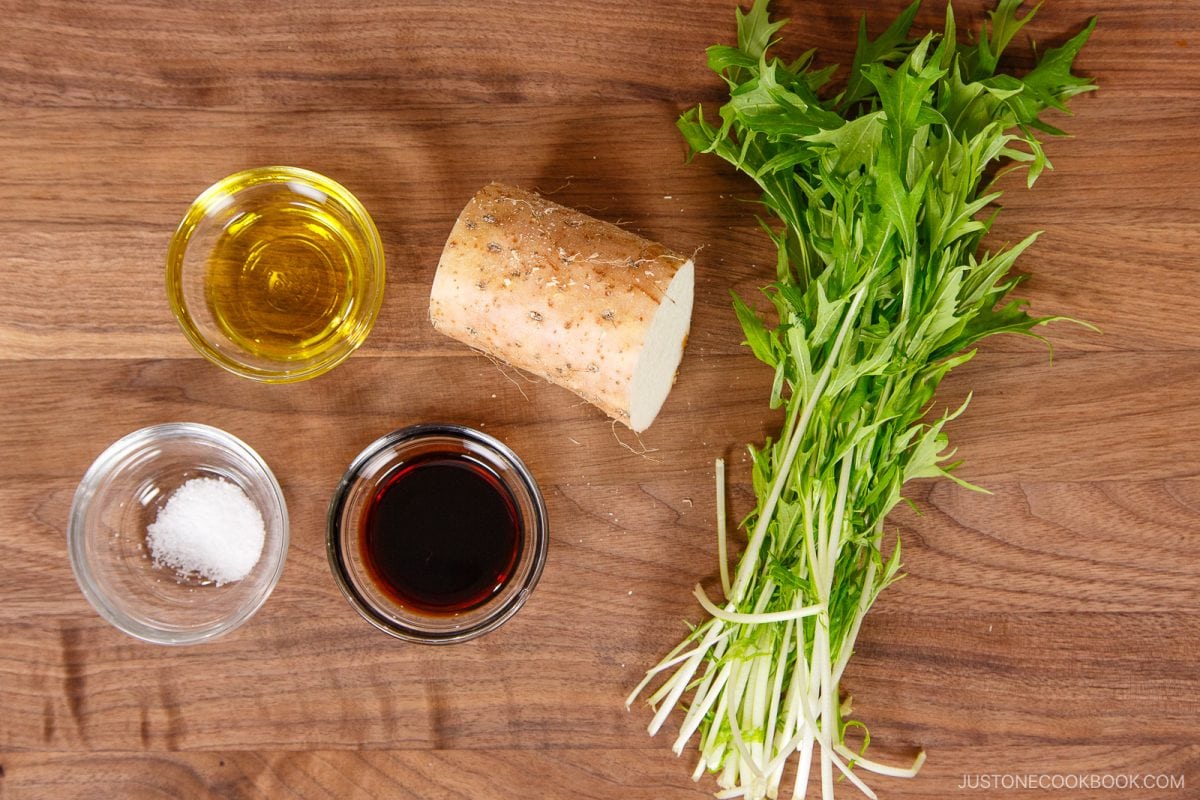
- 2½ inches nagaimo/yamaimo (mountain yam)
- 2 tsp soy sauce
- ⅛ tsp Diamond Crystal kosher salt (use half the amount or the same weight for table salt)
- 1 Tbsp extra virgin olive oil
For Serving
- mizuna (Japanese mustard green) (optional)
Instructions
- Gather all the ingredients.
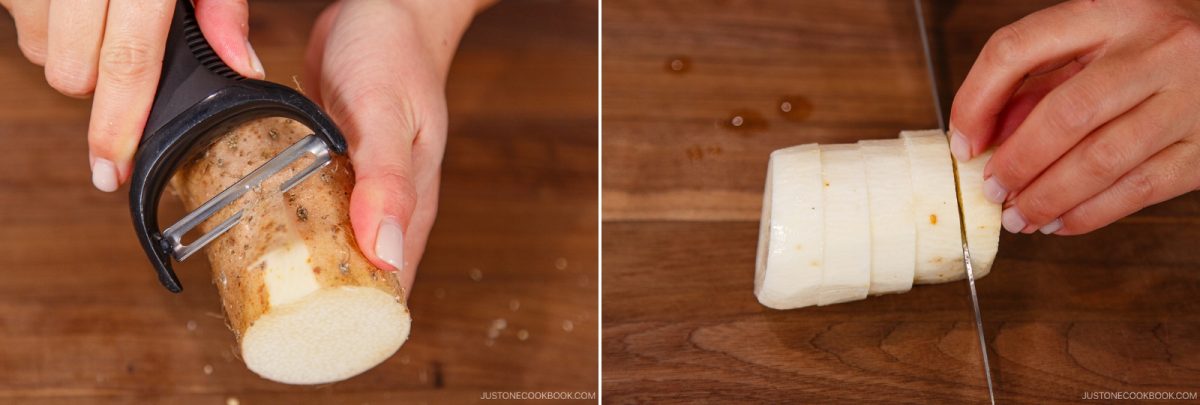
- Peel 2½ inches nagaimo/yamaimo (mountain yam) and cut into ½-inch (1.3-cm) slices. Nami's Tip: Nagaimo can irritate skin and cause itchiness. Wear kitchen gloves if you're not sure, and rinse your skin with vinegar if it becomes itchy. Nagaimo gets slippery and slimy once peeled, so be careful when slicing.
To Cook
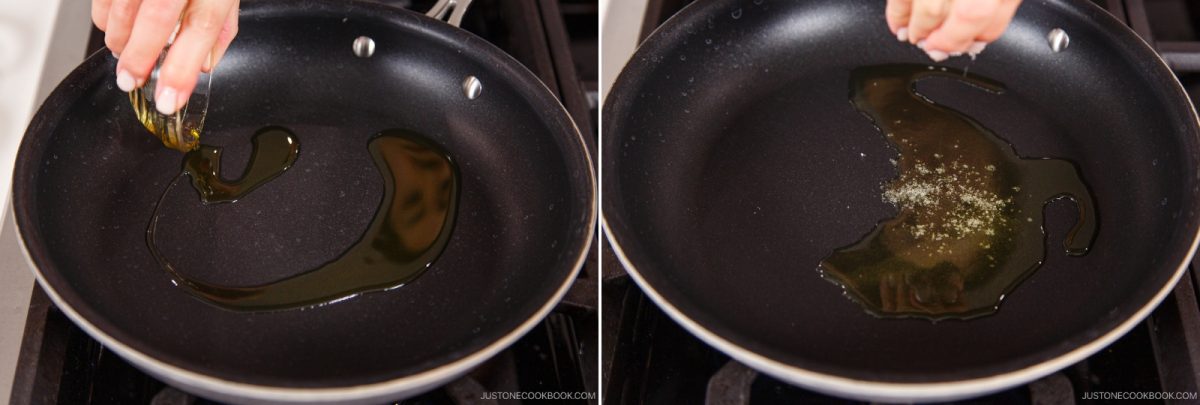
- Heat a large frying pan over medium heat. Add 1 Tbsp extra virgin olive oil, then sprinkle ⅛ tsp Diamond Crystal kosher salt (use half the amount or the same weight for table salt) over the oil.
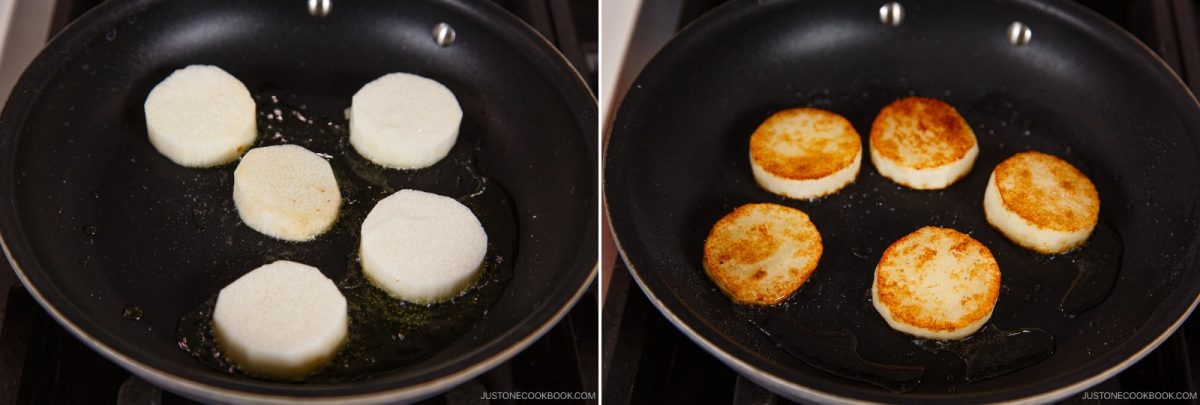
- Place the nagaimo slices in the pan in a single layer. Leave undisturbed and fry for 3–4 minutes, until the bottom chars a bit. Flip and fry the other side for 3–4 minutes until it chars, too.
- Add 2 tsp soy sauce. Quickly lift the pan and swirl it to evenly coat the nagaimo in the sauce.Nami's Tip: The sauce might splatter a little bit, so be careful. Moving around the nagaimo keeps it from burning and creates a delicious charred soy sauce flavor.

To Serve
- Cook briefly until the sauce thickens and the nagaimo develops a nice char, then turn off the heat. Serve immediately with optional mizuna (Japanese mustard green), just like in the Midnight Diner episode.
To Store
- Keep in an airtight container and store in the refrigerator for up to 3–4 days. I do not recommend freezing nagaimo, as it changes the texture.
Notes
- Add a chili kick. Finish with a pinch of shichimi togarashi (Japanese seven-spice) for heat.
- Swap the salt. Try a pinch of yuzu kosho instead of kosher salt for a citrusy, spicy edge.
- Skip the mizuna. Serve plain, or swap in your favorite greens like mesclun or arugula, scallion, or shiso for the garnish.
- Turn it into a bowl. Toss the charred nagaimo over hot steamed rice for a fast donburi meal.
Nutrition
The nutrition facts shown are generated by an online calculator and are estimates only. Please consult a professional nutritionist for specific dietary needs.
Did you make this recipe?
Tag @justonecookbook on Instagram so we can see your delicious creation!
