Enjoy the comforting flavors of Japanese hot pots you can make right in your kitchen. They’re simple, satisfying, and ideal for cold nights.
Quick Overview
Steamy and heartwarming, Japanese hot pots are perfect for cold nights, cozy weeknights, or festive gatherings. I love not only savoring these comforting dishes, but also the joy of preparing and sharing them with family and friends.
There are so many styles to explore, and each one is packed with flavor. In this roundup, I’m sharing my favorite hot pots—from shabu-shabu to Hokkaido salmon hot pot—to warm your heart and your home!
Nami’s Cooking Tips for Hot Pots
Cutting tips: Many hot pot and stew recipes call for plenty of vegetables and thinly sliced meats. If you’d like to improve both the flavor and presentation of your dishes, take a look at my guide on Japanese Cutting Techniques.
Equipment you need:
I use a donabe pot (traditional Japanese earthenware) or heavy-bottomed pots like a Dutch oven.
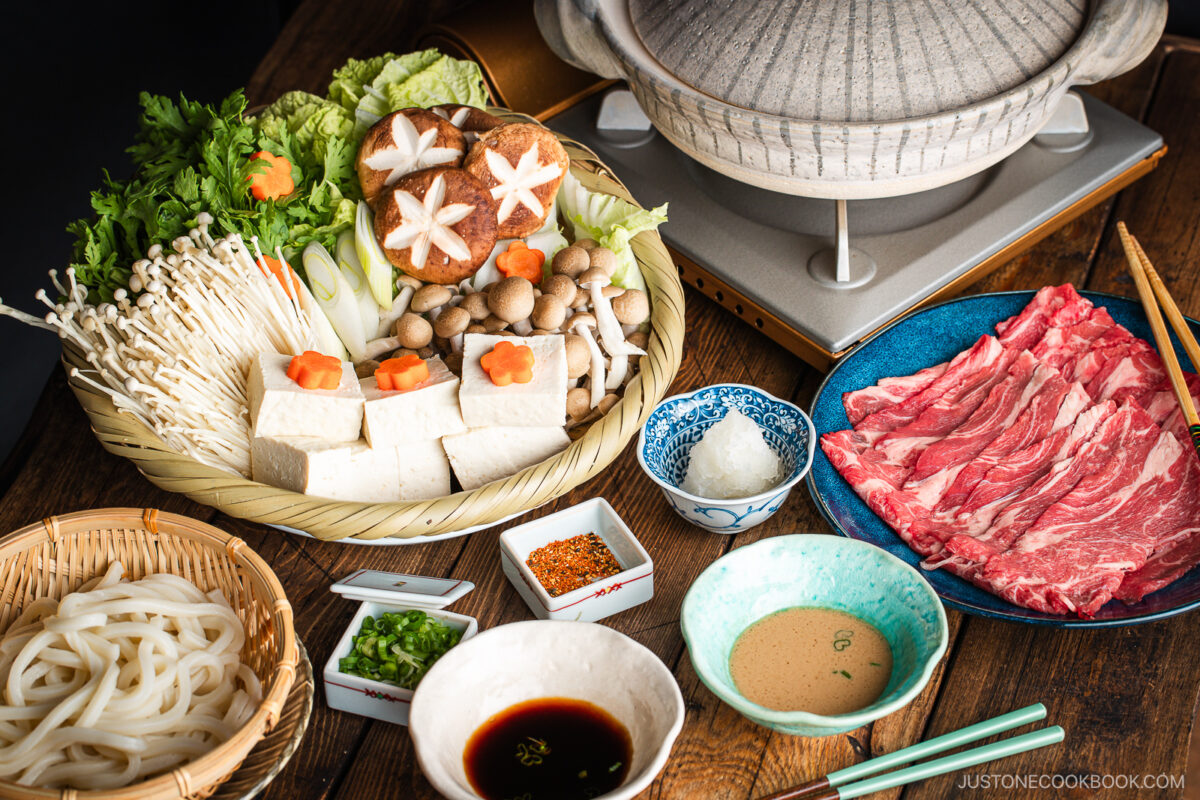
Shabu Shabu is one of the most iconic Japanese hot pots to enjoy at home. The name comes from the Japanese onomatopoeia shabu-shabu, mimicking the gentle “swish-swish” of thinly sliced meat and vegetables as they’re cooked in a light, savory dashi broth. It’s surprisingly simple to prepare, naturally low in fat, and a delicious way to load up on vegetables and tofu.
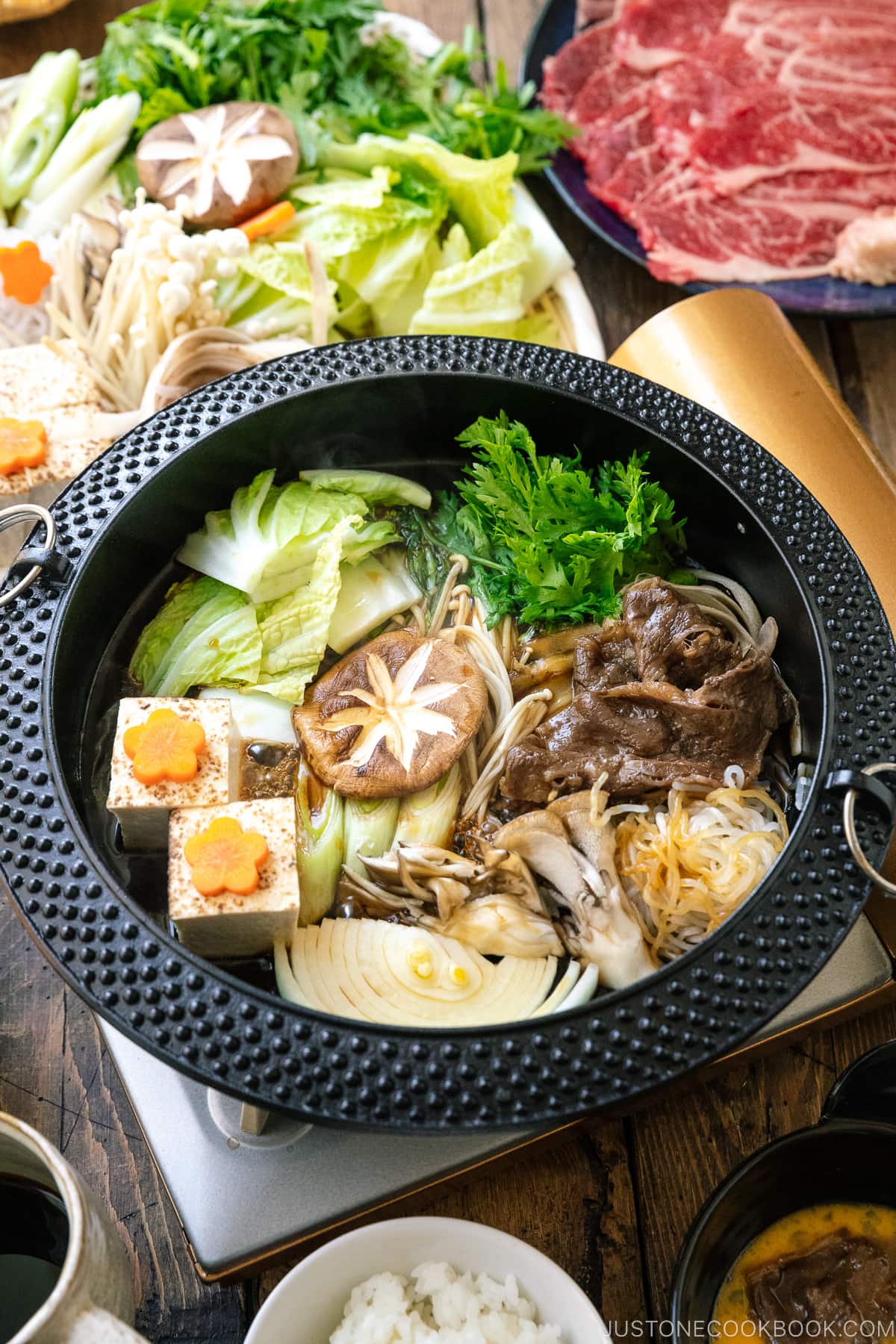
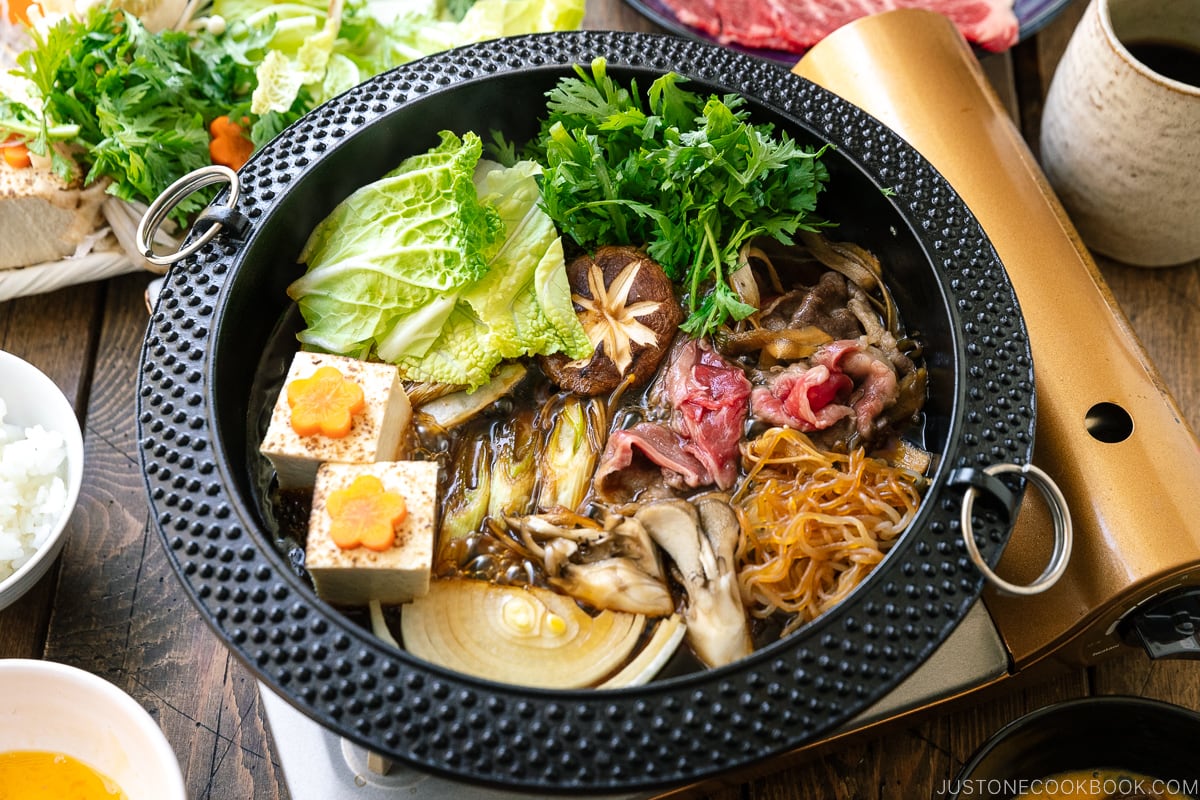
Besides Shabu Shabu, I often make Sukiyaki at our table because it’s such a flavorful hot pot to share. I start by lightly grilling or simmering well-marbled beef in a shallow cast-iron pot, then add vegetables, tofu, and mushrooms. Everything cooks together in a sweet, salty, and savory broth that smells incredible and tastes even better.
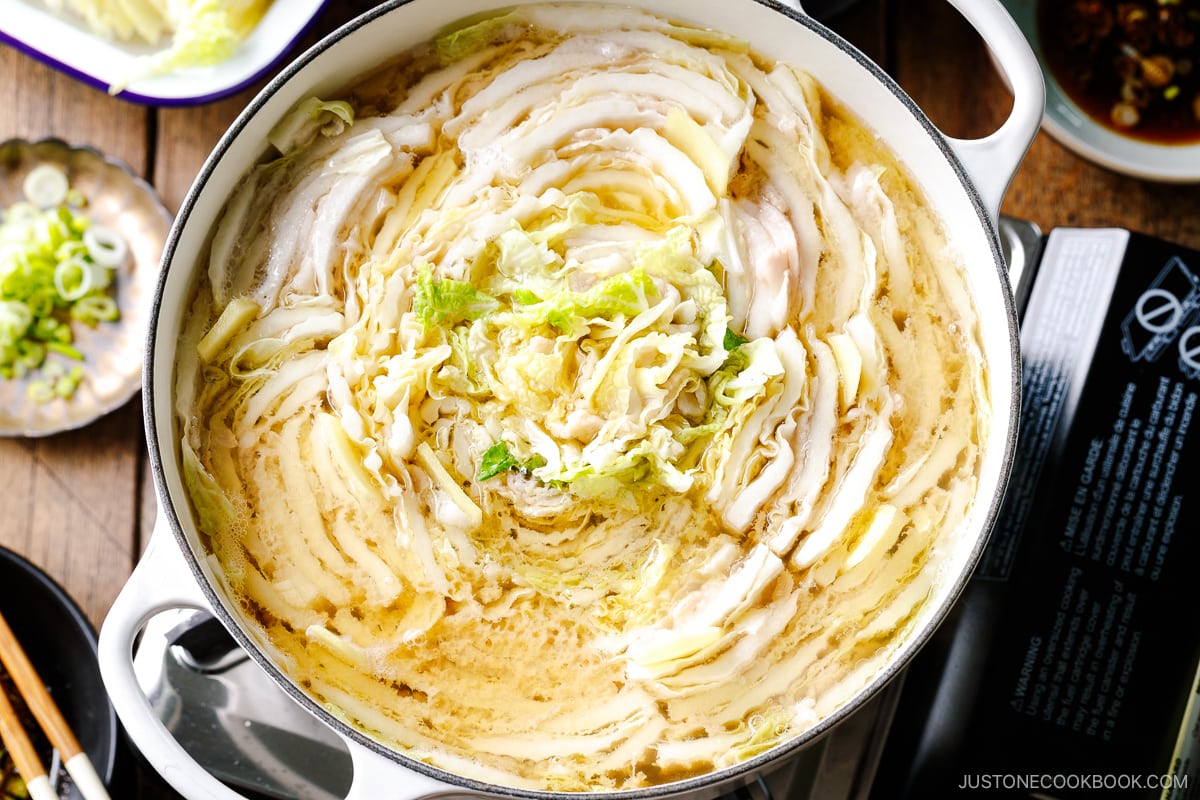
Named after the French mille-feuille (“a thousand leaves”), this comforting hot pot comes together by layering napa cabbage and thin pork belly slices, then simmering them in a savory dashi broth. In my recipe, I'll show you how to create a beautiful, layered presentation and a harmonious flavor with just a handful ingredients.
Chanko Nabe, also known as Sumo Stew, is a hearty hot pot packed with vegetables and protein, all simmered in a rich dashi and chicken broth. I love how versatile it is—you can load it with your favorite ingredients! Traditionally eaten by sumo wrestlers, this well-balanced, comforting meal is also a favorite in Japanese homes and restaurants alike.
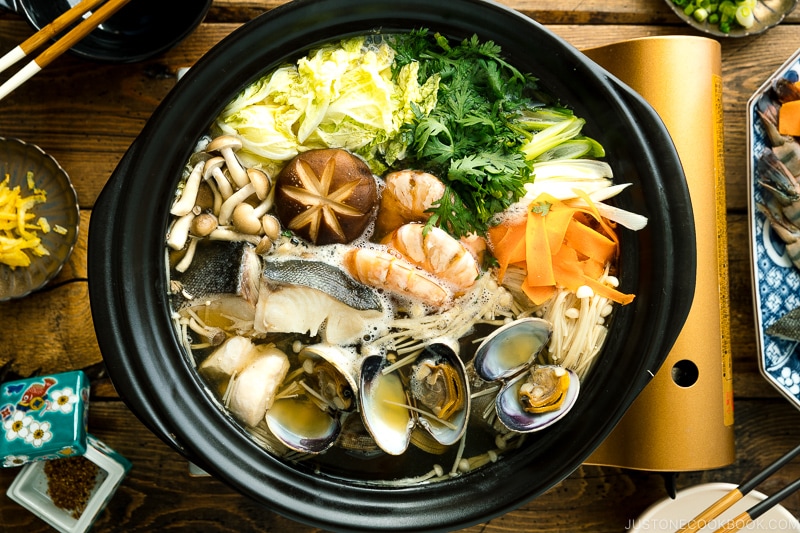
Yosenabe is a basic Japanese hot pot where you can cook whatever ingredients—chicken, seafood, tofu, and all kinds of vegetables—in a delicious dashi broth.
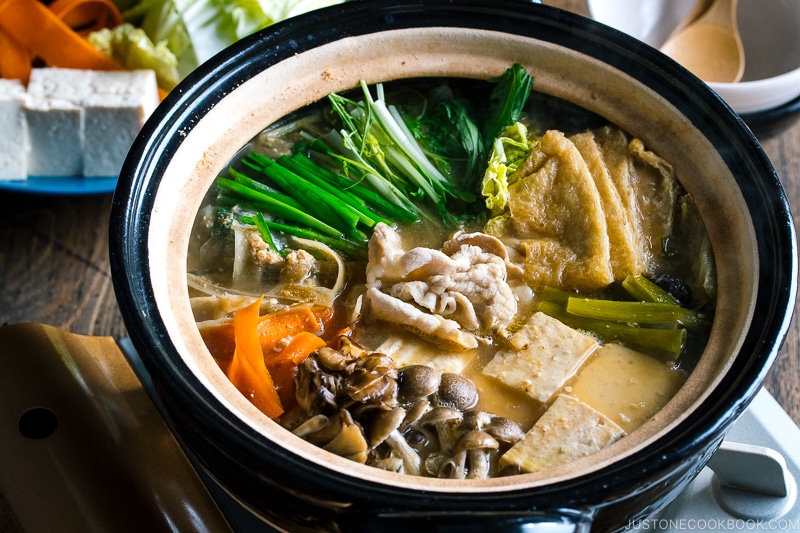
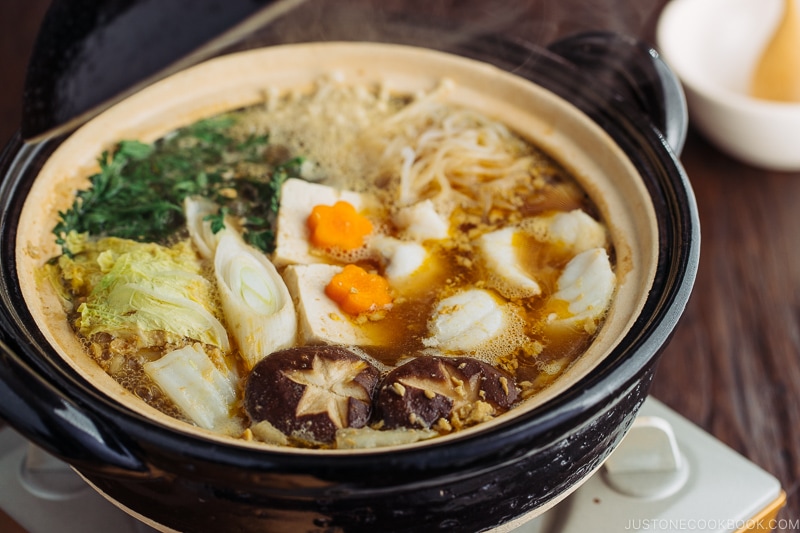
For a different twist, I like making Sesame Miso Hot Pot, which brings a rich, nutty, and savory flavor to the table. I pile in lots of fresh vegetables and finish it with a sprinkle of shichimi togarashi (Japanese seven-spice) for a spicy kick.
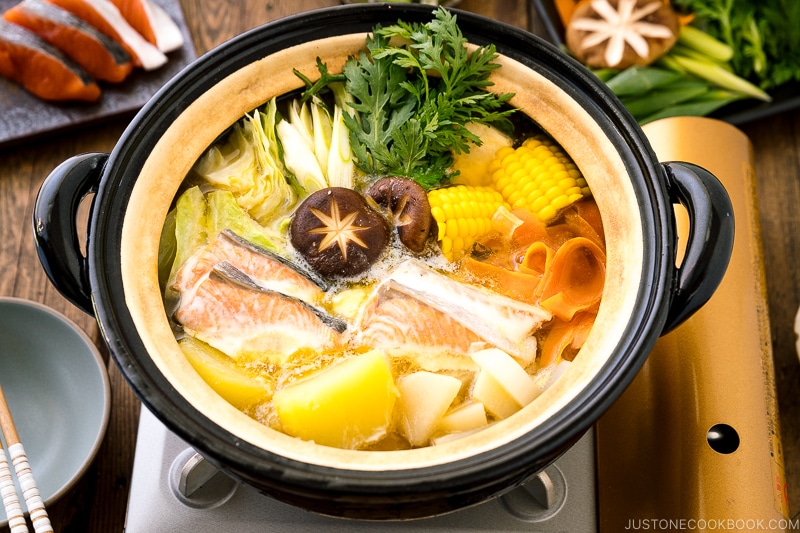
Transport yourself to wintery Hokkaido with Salmon Hot Pot, or Ishikari Nabe. Here, we layer salmon with potatoes, corn, daikon, onion, and cabbage, then simmer everything in a savory miso broth. A pat of butter on top melts into the soup for a rich, creamy finish. So good!
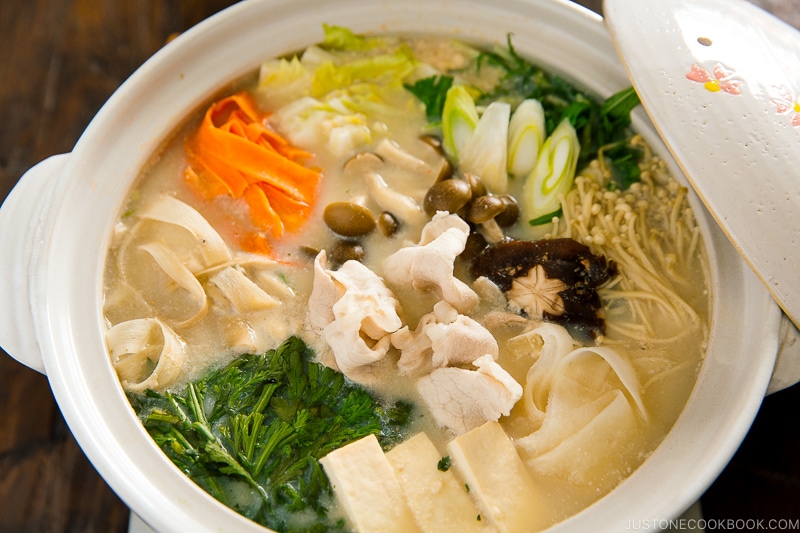
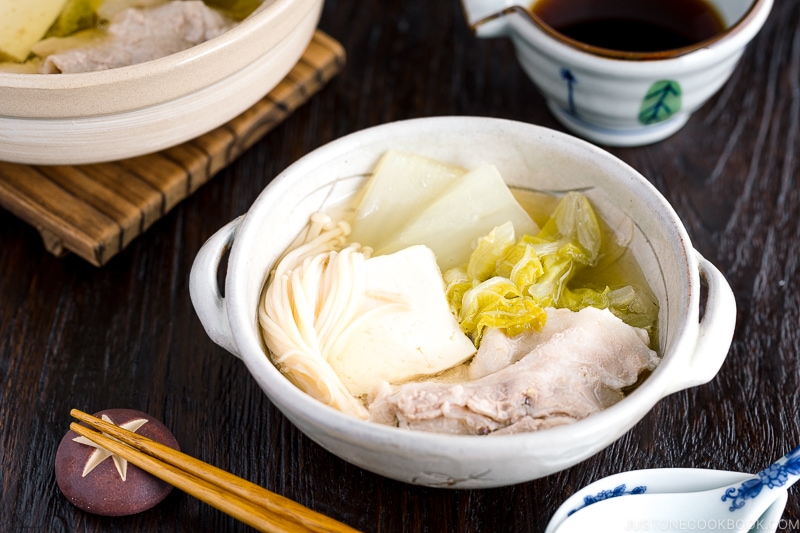
If you enjoy a delicate yet creamy soup, you’ll love making Soy Milk Hot Pot, or Tonyu Nabe. In Japan, it’s often served at tofu restaurants or cozy ryokan (traditional inns), and at home, I keep it simple with napa cabbage, carrots, mushrooms, and tofu. It’s easy to make but feels extra special with every comforting, silky spoonful.
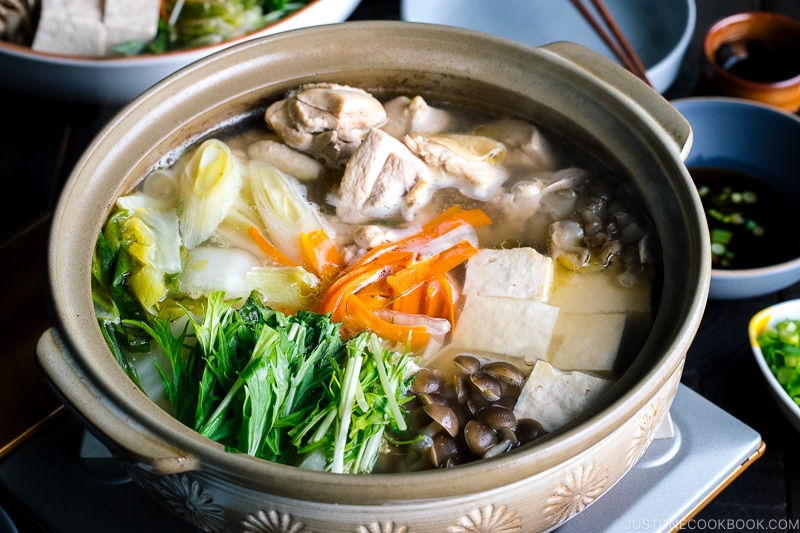
Mizutaki, or Chicken Hot Pot, is easy to make with simple, everyday ingredients—chicken, vegetables, mushrooms, and tofu. Just simmer everything in a light broth, then dip each bite into savory, citrusy ponzu sauce.
This Monkfish Hot Pot (Anko Nabe) is a specialty from eastern Japan. The rich, savory broth is absolutely unforgettable. I usually look for monkfish at local fish markets or Japanese stores. You can also swap in grouper, halibut, mahi-mahi, sea bass, scallops, snapper, or swordfish.
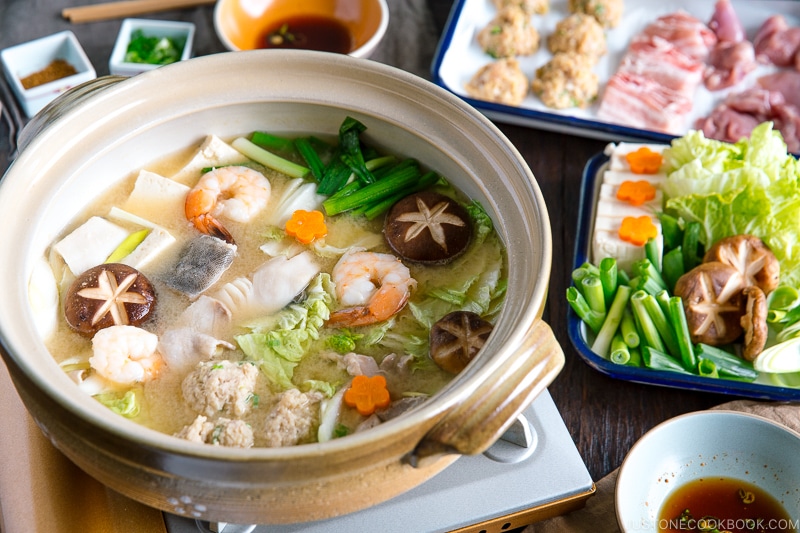
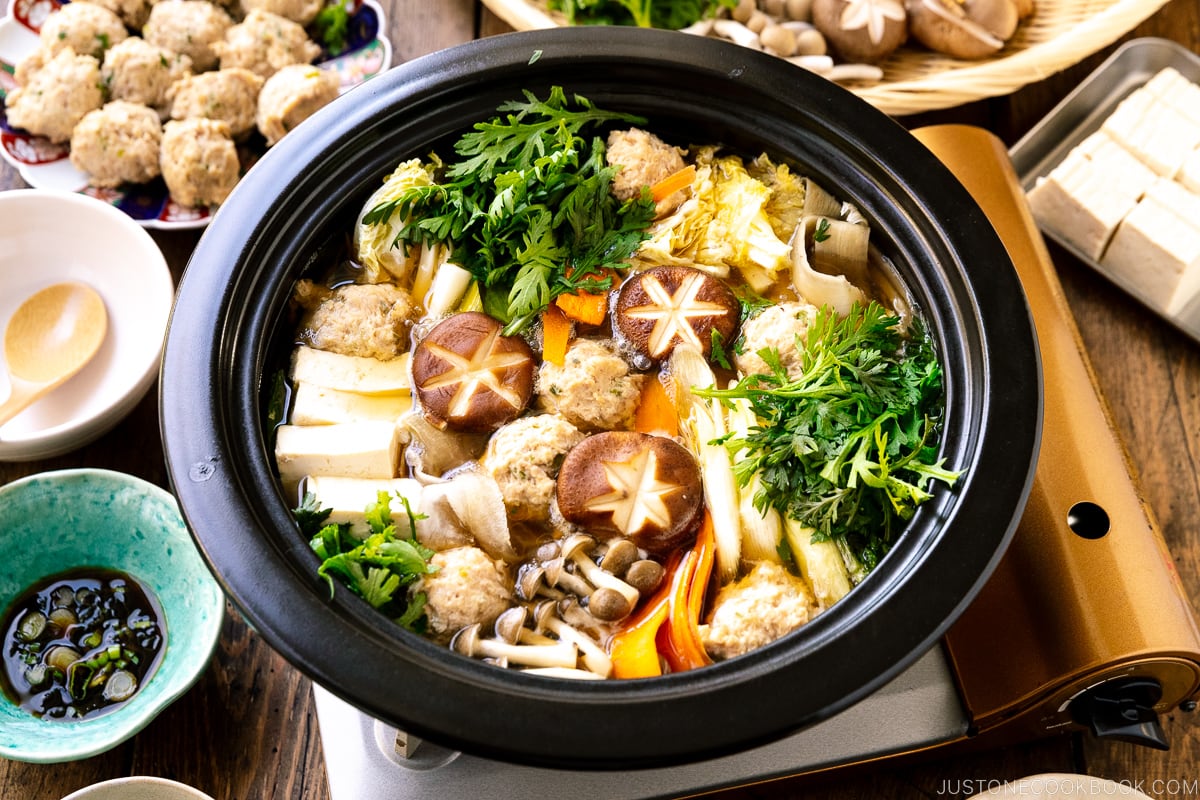
Tsukune Hot Pot, or Tori Dango Nabe, is always a kids’ favorite thanks to its flavorful chicken meatballs! They are simmered in a light dashi broth with tofu, vegetables, and mushrooms for a healthy, comforting meal.
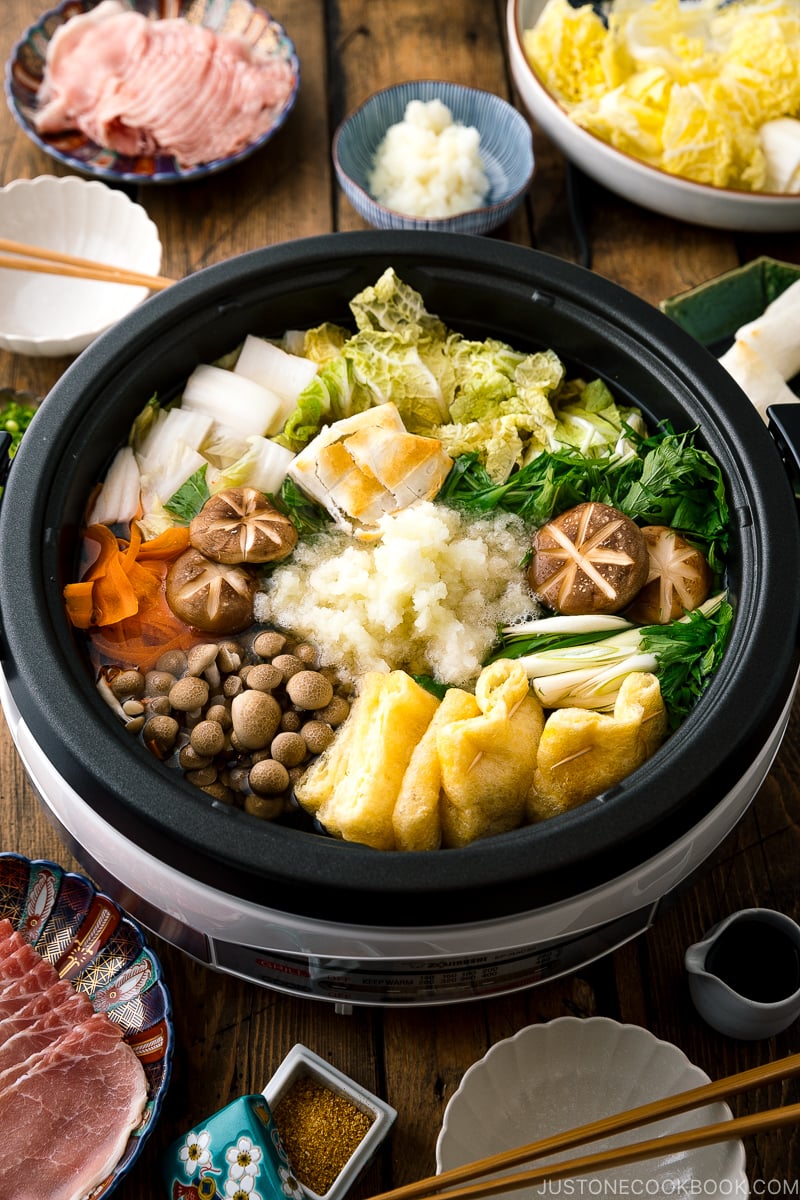
Eating hot pot can feel almost poetic, especially with Mizore Nabe. We pile the pot with grated daikon, vegetables, and mushrooms. As it simmers, the daikon quickly turns translucent, like sleet or falling snow! That’s why this hot pot is also called yukinabe (雪鍋), which literally means “snowy hot pot.”
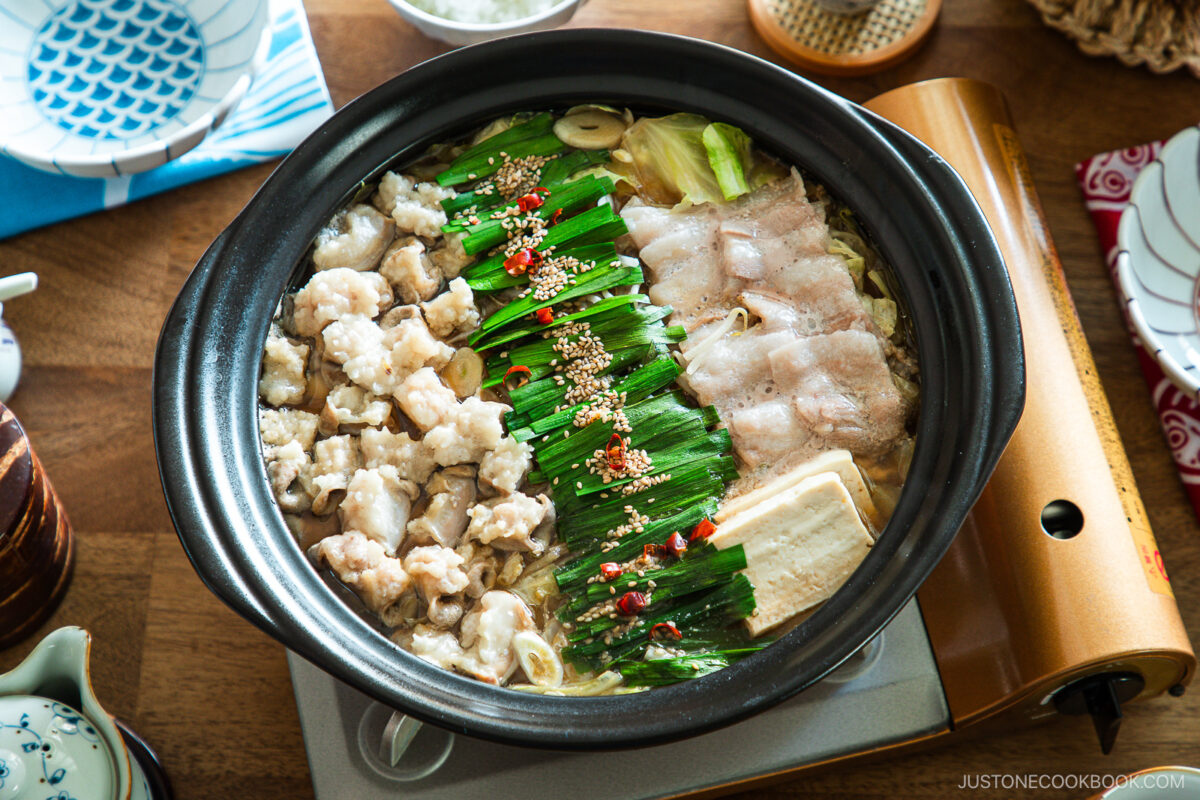
If you love different cuts of meat, try this rich Motsunabe. Originating in Hakata, Fukuoka, it’s now a favorite in restaurants across Japan. Beef offal, garlic chives, cabbage, and tofu simmer in a creamy miso broth for a bowl packed with deep umami goodness!
This hot pot is quick, easy, and perfect for one or two people. With sliced meat, vegetables, and mushrooms, it makes a wholesome, satisfying meal. Serve it with rice or noodles to make it even heartier. This cozy recipe was inspired by the Japanese drama Midnight Diner.
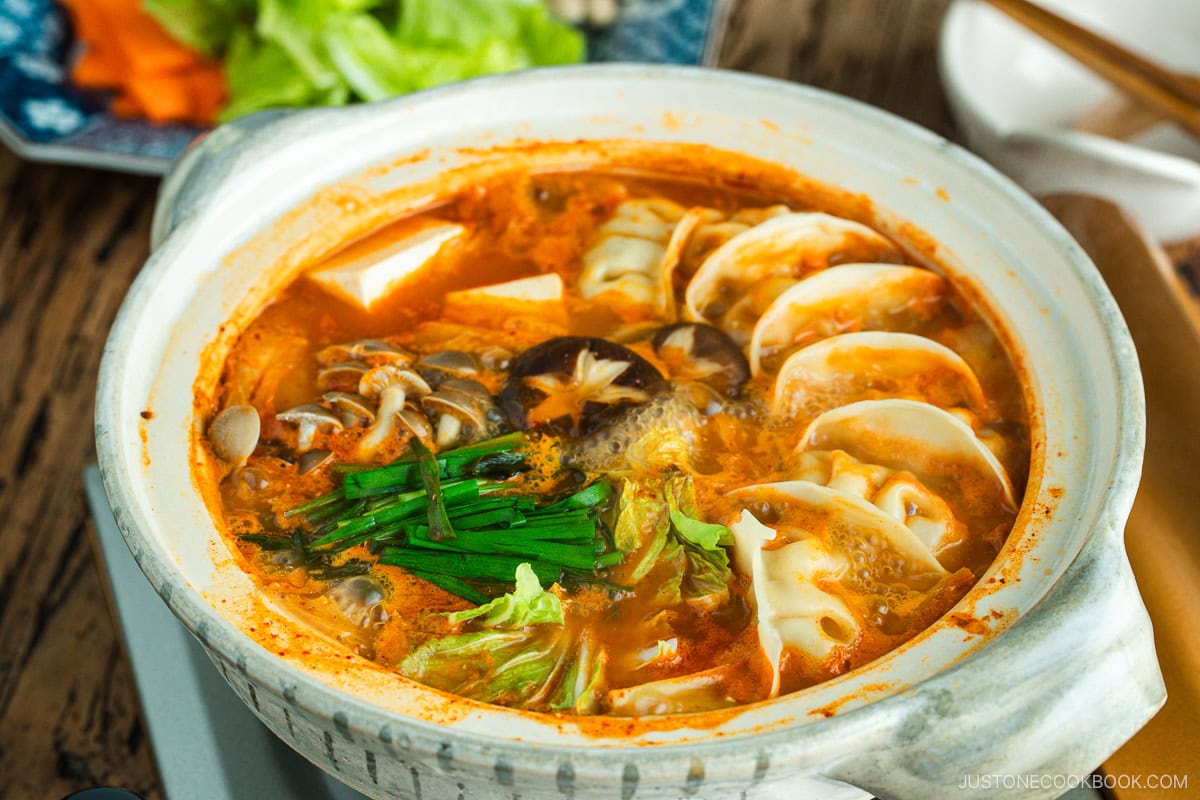
My family loves Kimchi Gyoza Nabe when we crave something tangy and spicy. This Korean-inspired Japanese hot pot is packed with juicy dumplings, kimchi, tender vegetables, and hearty mushrooms. Every simmering spoonful is pure savory deliciousness!