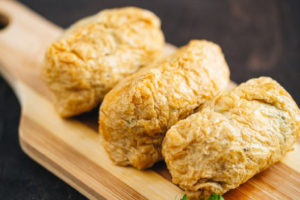
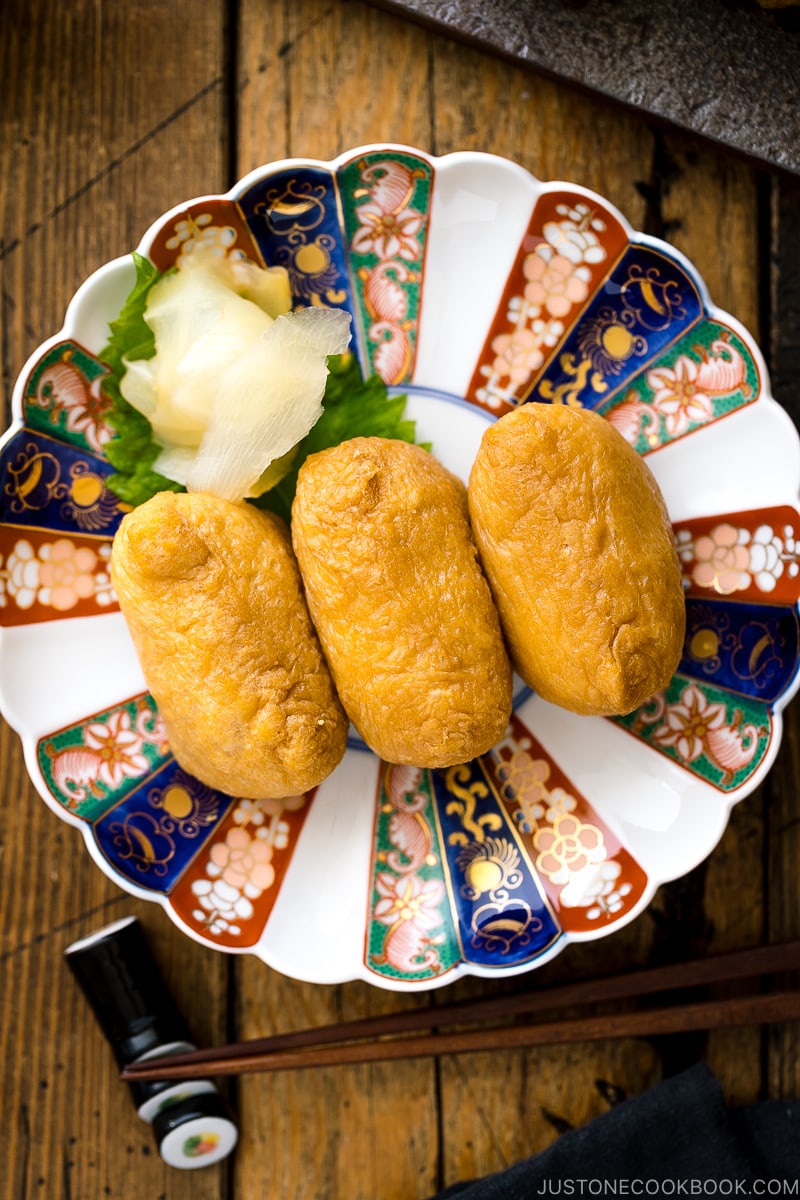
Looking for an easy sushi recipe to make at home? You won’t go wrong with Inari sushi (稲荷寿司). You can enjoy tasty, filling, and addicting Inari sushi at any time of the day. They make a satisfying little snack and the perfect finger food to serve at your next home gathering. In this recipe, I’ll show you how to make proper sushi rice and two variations of Inari sushi.
What Is Inari Sushi?
Inari sushi (稲荷寿司, いなり寿司), or Inarizushi as we call it in Japan, are made of sushi rice that we stuff inside seasoned deep-fried tofu pockets/pouches called Inari age. The tofu pockets are cooked in a dashi-based broth. After the tofu pockets absorb all the flavors, we squeeze them to remove the liquid and get them ready to stuff with sushi rice.
With their sweet and savory taste and toothsome bite, these little golden pockets are the best sushi to enjoy at home, picnic, or on the go. Inari sushi are also a popular item for bento boxes, and you may see this type of sushi packed at the deli along with sushi rolls.
The Origin of Inari Sushi
Behind its popularity, Inari sushi has a fascinating story. It gets its name “Inari” directly from the deity who protects the crops. At Inari shrines in Japan, people bring the deep-fried tofu pockets–what we call aburaage (油揚げ)–as offerings and place them in front of the fox statues on the shrine grounds.
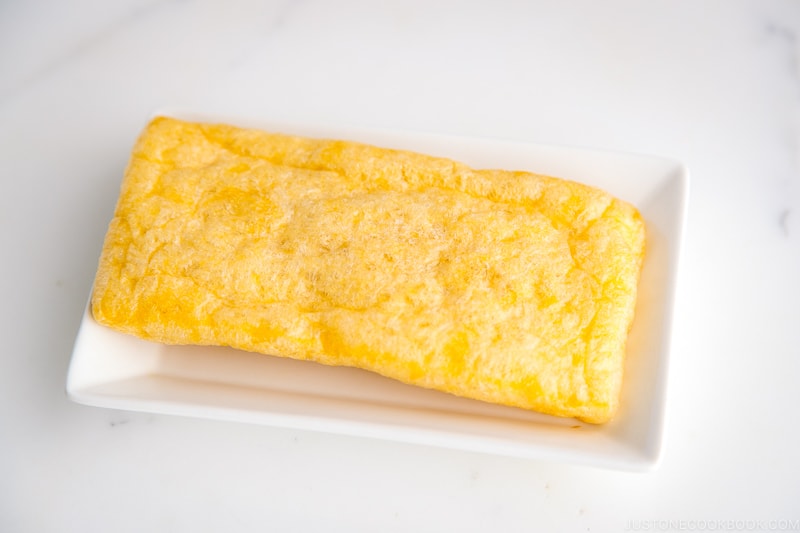
It is said that foxes are the messengers of the Inari god and it’s believed that they like aburaage. Eventually, newly harvested rice was added as a filling to the fried tofu pockets to show gratitude for good crops towards the Inari god.
Hence, the dish was named Inarizushi or Oinari-san (O is an honorific prefix, and -san is an honorific title) and the Japanese have enjoyed it for over 170 years.
Tokyo vs. Osaka Style Inari Sushi
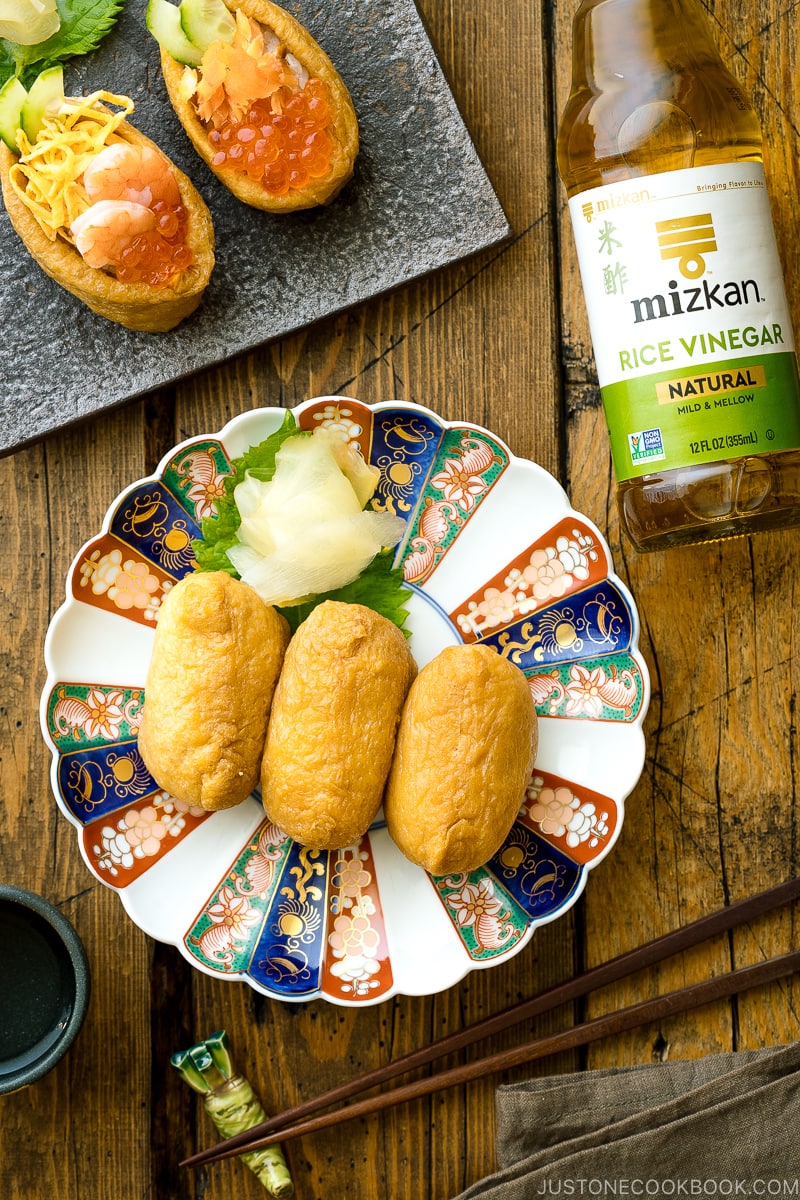
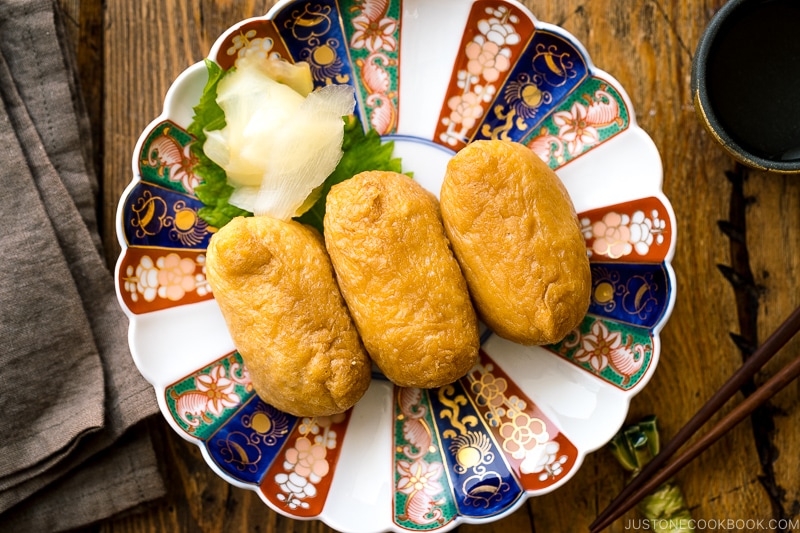
In Japan, Inari sushi in the Tokyo area and the ones in the Osaka area are actually different in shape. In the Tokyo area, Inari sushi is shaped like a straw bag and the sushi rice is completely wrapped inside.
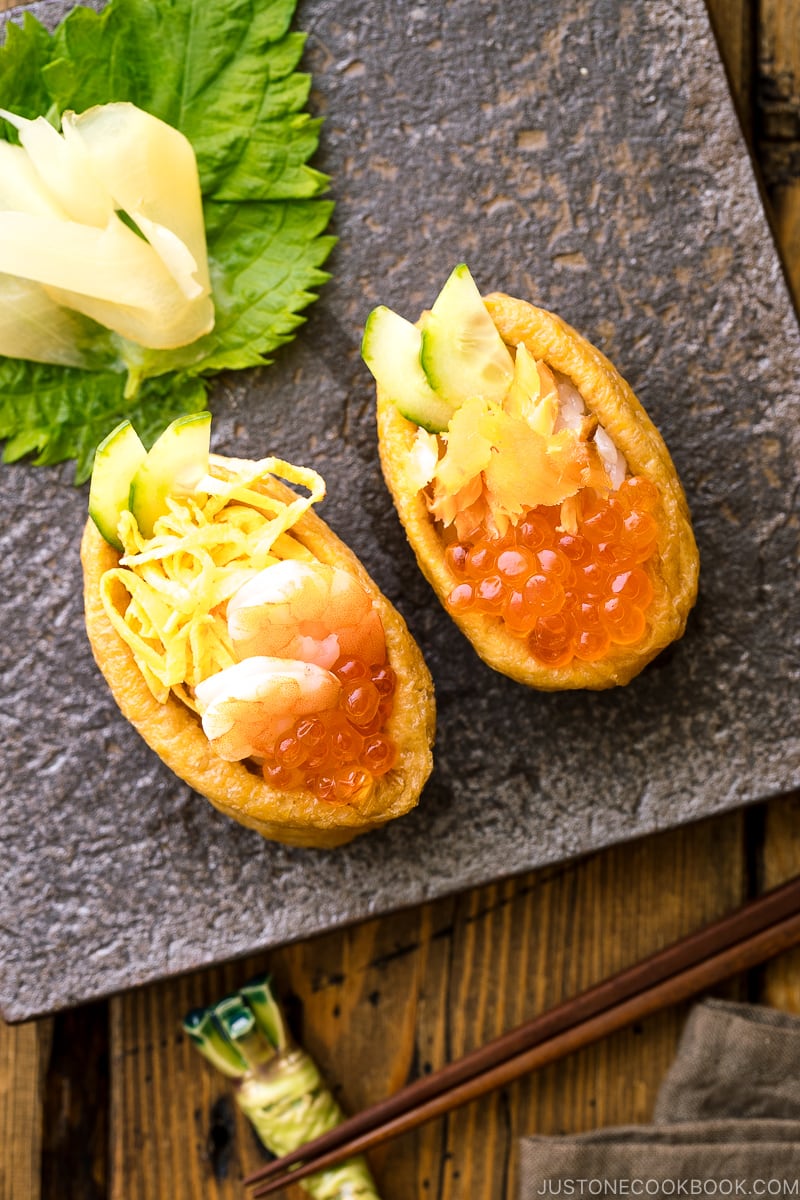
Whereas in the Osaka area, you will find fox-ear-like triangle-shaped Inari sushi that exposes the sushi rice at the bottom. Other versions include straw bag-shaped Inari sushi that is decorated with colorful ingredients on the top opening. Sometimes sushi rice inside the tofu pocket is mixed with various ingredients to give additional flavors and texture.
Tokyo-Style Inari Sushi
- Straw bag-shaped
- Sushi rice is completely covered in Inari age
Osaka-Style Inari Sushi
- Triangle-shaped (sushi rice is exposed on the bottom)
- Straw bag-shaped (opening on the top, decorated with colorful ingredients)
- Sushi rice is mixed with ingredients like Osaka-style chirashi sushi
How to Make Inari Sushi
Inari sushi is made in three simple and easy steps.
- Make homemade Inari age* by simmering tofu pockets in sweet and savory dashi-based broth. Or, buy packaged Inari age from a store.
- Make sushi rice. Cook rice with kombu (dried kelp) and season the cooked rice with sushi vinegar.
- Stuff the sushi rice into the tofu pockets.
It all comes together very quickly once you make the sushi rice.
*If you have an extra hour, I recommend making homemade Inari age. You can even make it in advance and freeze it!
Homemade vs. Store-Bought Inari Age
Homemade Inari age are the best, in my opinion, especially because store-bought ones tend to be a lot sweeter. However, there are benefits for store-bought Inari age. Let’s compare the two.
Homemade Inari Age:
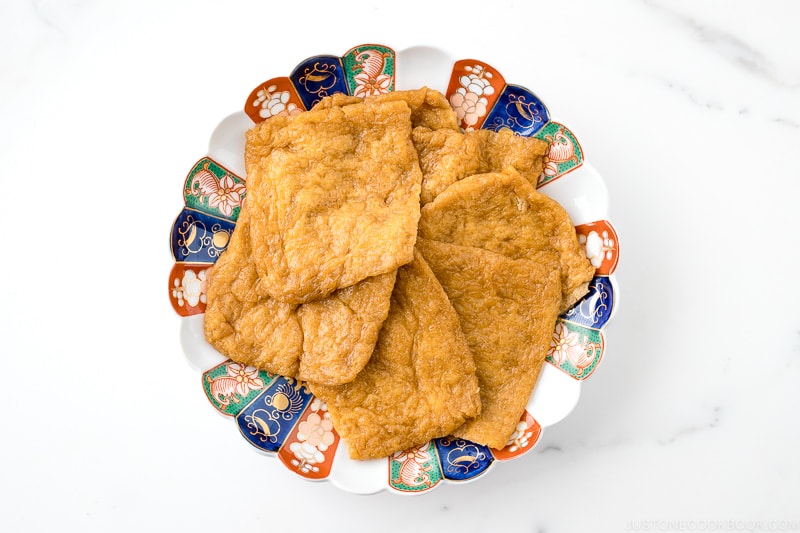
- Natural ingredients and no preservatives.
- You can adjust the seasonings – less soy sauce, less sugar, etc.
- Vegetarian/vegan-friendly with the use of kombu dashi.
Store-bought Inari Age:
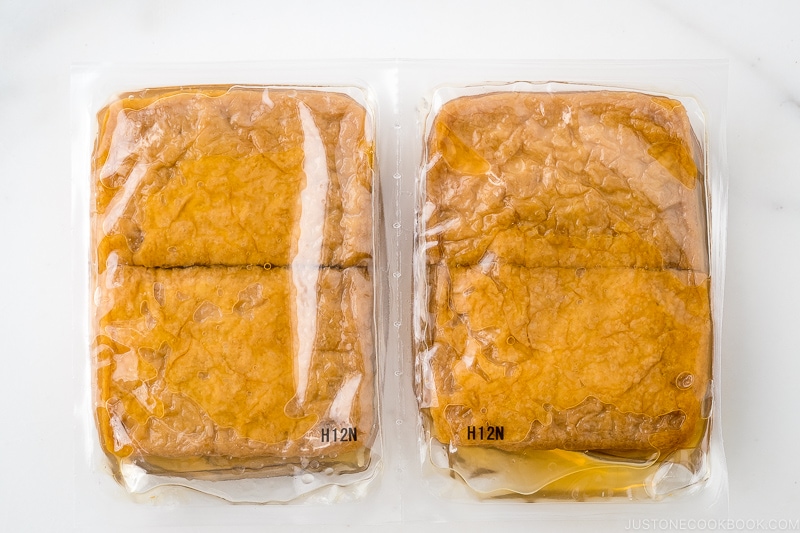
- To make homemade Inari age, you’ll need deep-fried tofu pouches, but they can be hard to find. According to JOC readers around the world, ready-made Inari age are more accessible at their local Japanese/Chinese/Korean grocery stores.
- Shorten cooking time for Inari sushi by roughly one hour.
When I have time, I make my own Inari age; otherwise, I use the store-bought Inari age for Inari sushi or kitsune udon. When I make homemade Inari age, I make sure to double or triple my recipe and freeze them for later use.
How to Make Delicious Sushi Rice
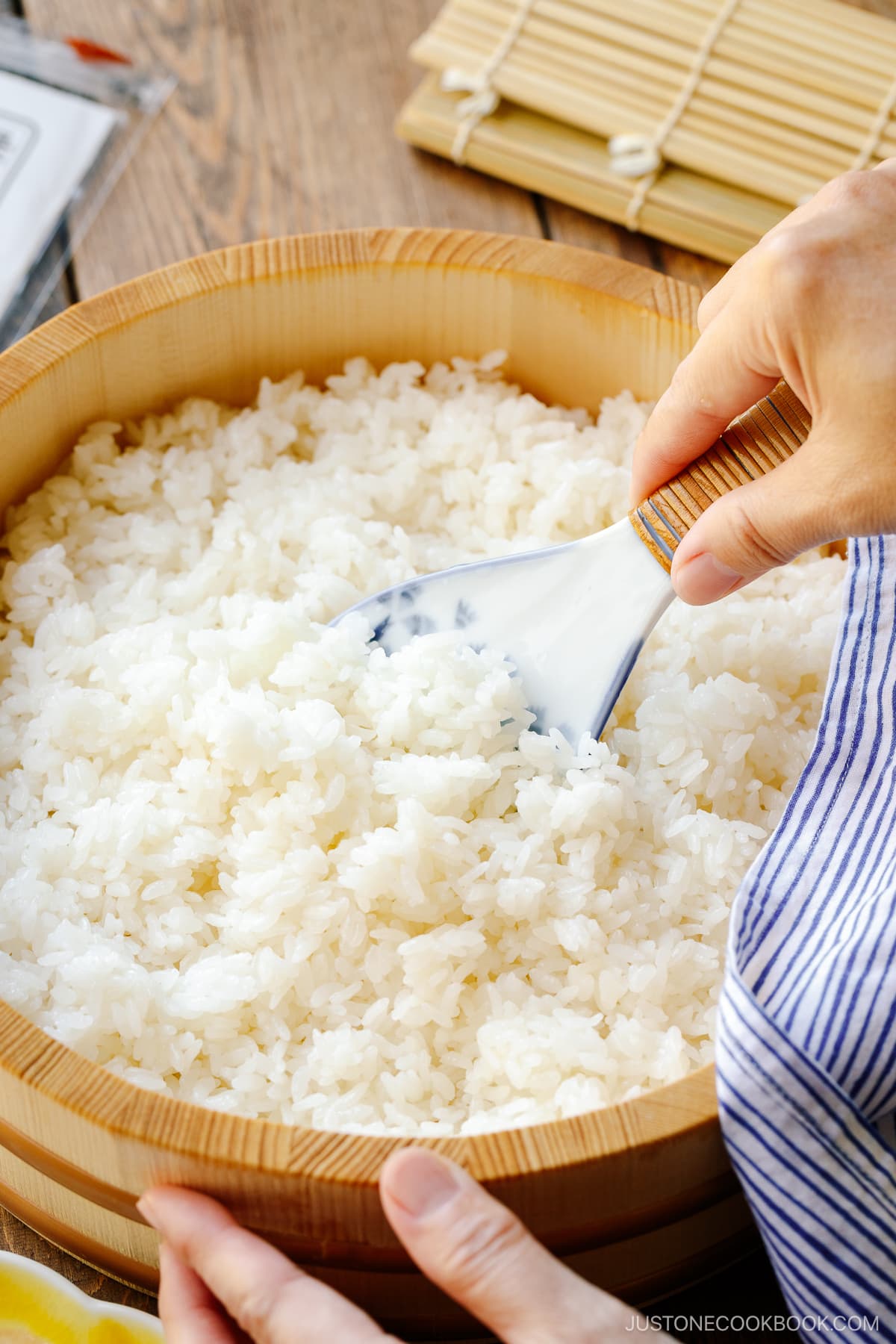
When we say “sushi rice” in Japan, it always means the seasoned steamed rice that we use to make all kinds of sushi. We never use unseasoned regular steamed rice to make sushi.
Sushi rice (sumeshi 酢飯) is made with short-grain rice cooked in kombu-steeped water and then seasoned with sushi vinegar.
Sushi vinegar (sushizu 寿司酢) is made with just three ingredients—rice vinegar, sugar, and salt. It gives the rice a beautiful shine and delicious flavor, perfect for all kinds of sushi. You can find my detailed technique for preparing sushi rice in the recipe card.
I can’t emphasize enough that it’s important to use rice vinegar, not other types of vinegar you may have in the pantry. Rice vinegar is a lot milder than the other kinds of vinegar. For convenience, I also keep a bottle of sushi vinegar at home when I need to make sushi rice in a pinch. Sweet, mild, and versatile, Mizkan Seasoned Rice Vinegar is my go-to sushi vinegar to accent many Japanese dishes!
Inari Sushi Cooking Tips
When Making Sushi Rice
- Use only Japanese short-grain rice. Do not use any other type of rice as it won’t be sticky enough and will fall apart easily. Read more here.
- Make sure to use rice vinegar, not other kinds of vinegar.
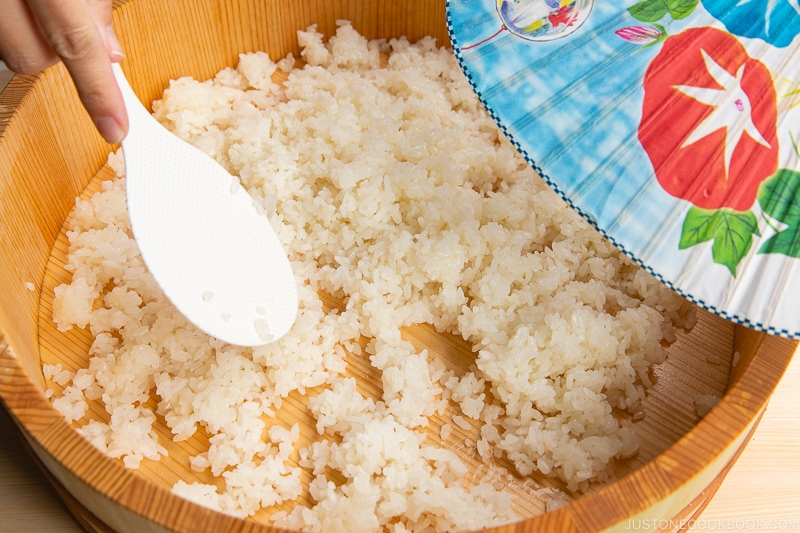
- Use a large bowl (I use a sushi oke or hangiri here) or a baking sheet to cool and season the cooked rice.
- “Slice” the rice, instead of mixing the rice, so the rice will not get mushy.
- Fan the cooked rice to cool it, which gives a beautiful shine to the rice!
When Stuffing Sushi Rice
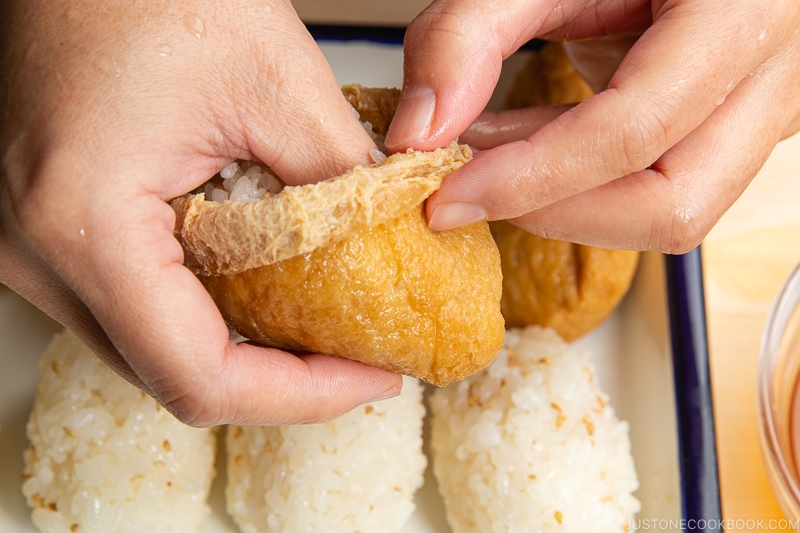
- Carefully open the tofu pockets. They are so fragile, so take your time as you open the pockets.
- Don’t stuff too much rice. Start with a small amount. You can always add more.
- Stuff the rice into two corners. This is very important to achieve the perfect round corners.
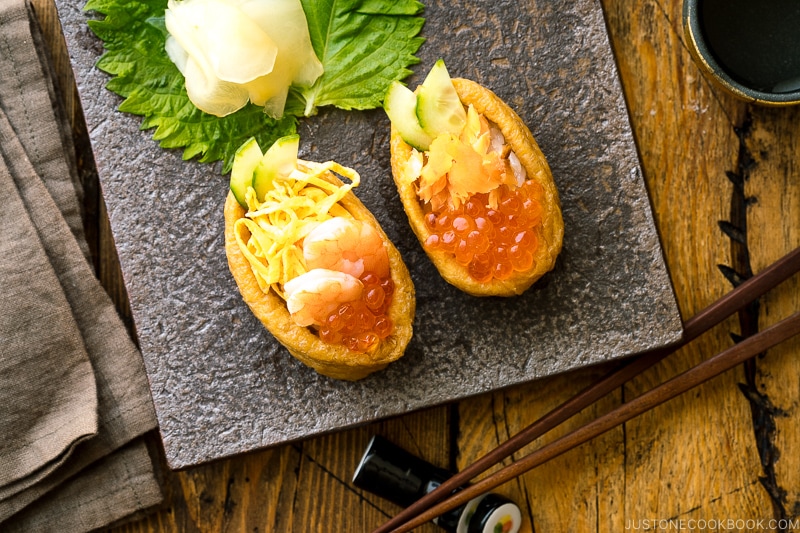
- For Osaka-style Inari sushi, flip upside down and show the rice. Tuck in the edge of the Inari age inside the bag, so it will have a round smooth edge. You can decorate the top with shredded egg crepe called kinshi tamago, ikura, cooked shrimp, cucumber slices, or any toppings you like!
The Perfect Sushi to Enjoy Anytime
For those who enjoy cooking with your kids, you want to give Inari sushi a try! Together, you can stuff the sushi rice into the tofu pockets. It’s super fun and ridiculously easy.
I love packing Inari sushi in a bento box with some vegetables for a simple quick lunch. For dinner, you can serve Inari sushi with futomaki, hosomaki, or temaki sushi (hand roll sushi) as part of your sushi meal. They make the perfect afternoon snack too!
Wish to learn more about Japanese cooking? Sign up for our free newsletter to receive cooking tips & recipe updates! And stay in touch with me on Facebook, Pinterest, YouTube, and Instagram.

Inari Sushi
Ingredients
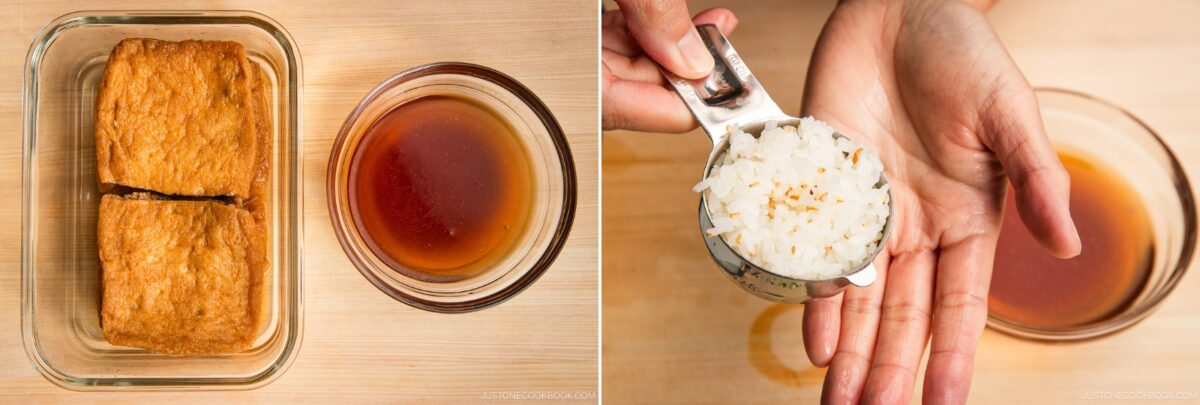
- 12 Inari age (seasoned fried tofu pouch) (store bought; reserve the liquid left in the package; or you can make Homemade Inari Age)
- 1 Tbsp toasted white sesame seeds
For the Sushi Rice
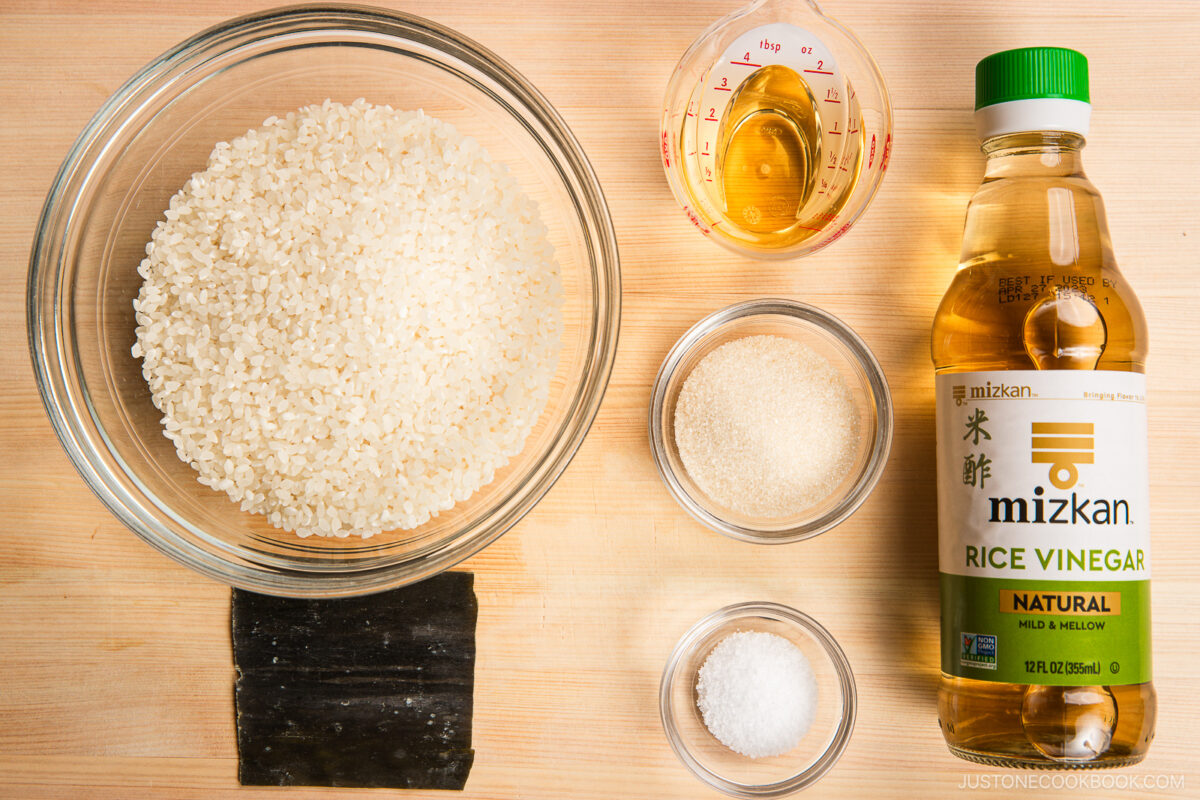
- 1½ cups uncooked Japanese short-grain white rice (2 rice cooker cups)
- 1½ cups water (use equal parts water to rice)
- 1 piece kombu (dried kelp) (5 g, 2 x 2 inches, 5 x 5 cm per piece; optional, but it gives a nice aroma)
- 4 Tbsp rice vinegar (unseasoned) (if you use bottled sushi vinegar, skip the sugar and salt below)
- 2 Tbsp sugar
- 1 tsp Diamond Crystal kosher salt
For the Garnish
- sushi ginger (gari)
- 5 shiso leaves
Instructions
- Before You Start: The rice cooking time is 45 minutes to 1 hour, depending on the method you use.
- Please note that 1½ cups (2 rice cooker cups, 300 g, 10.6 oz) of uncooked Japanese short-grain rice yield 3½ cups (660 g) of steamed rice, enough for 12 Inari sushi pieces. You must use Japanese rice or your sushi will fall apart. The rice-to-water ratio for sushi rice is 1 to 1; we cook the rice on the firm side, since we later add more liquid with the sushi vinegar. Now, gather all the ingredients.
To Cook the Rice
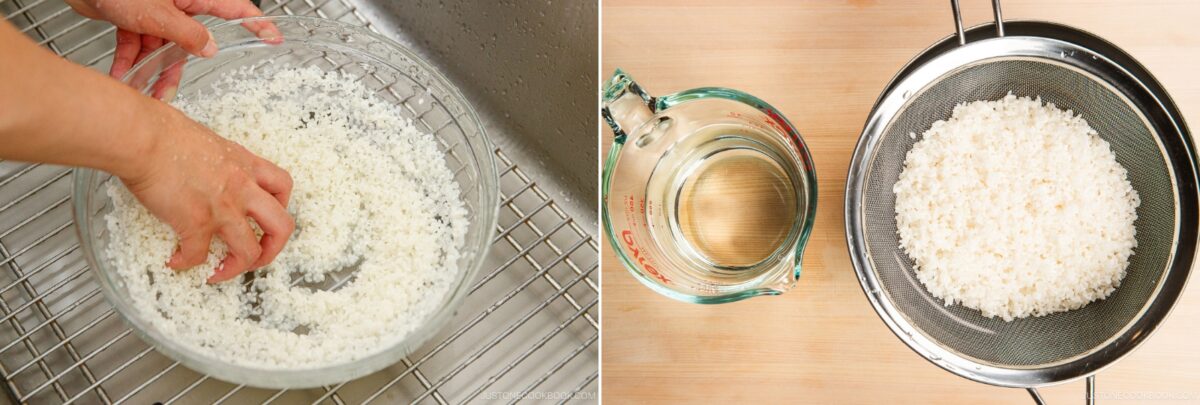
- Wash and rinse: Place 1½ cups uncooked Japanese short-grain white rice in a bowl. To quick rinse, add just enough water to submerge the rice, then immediately pour off the water; repeat and pour off. To wash, gently agitate the wet grains with your fingers in a circular motion for 10–15 seconds. To rinse, add water to cover the grains and immediately pour it off; repeat. Repeat the wash and rinse cycle two more times. Finally, drain the rice very well in a fine-mesh sieve and shake off the excess water.
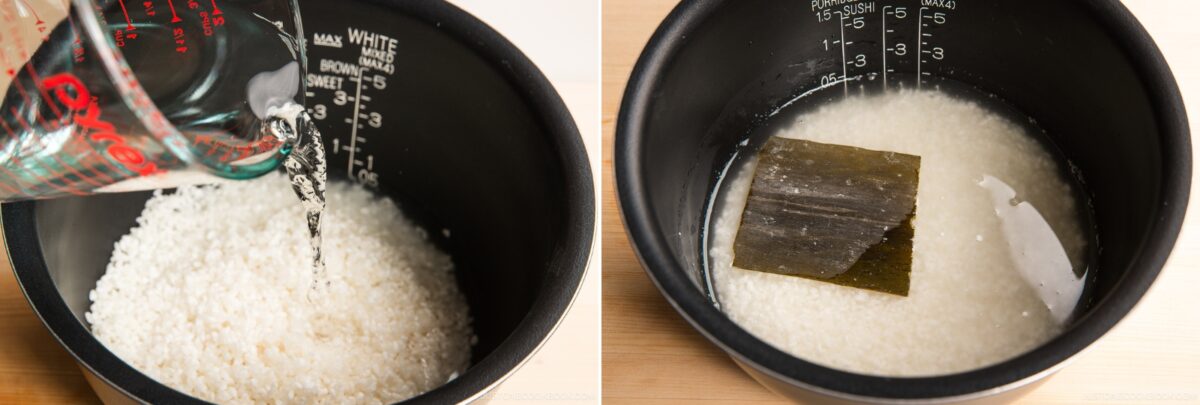
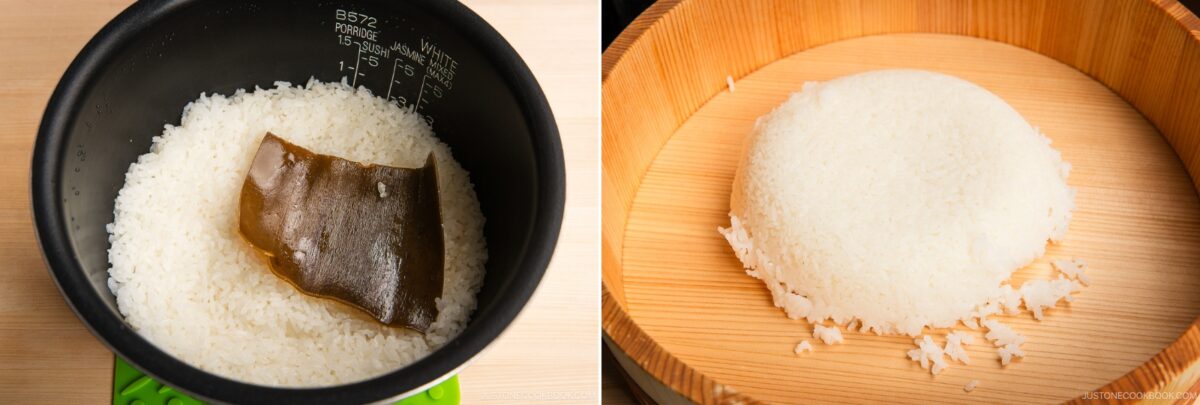
- Cook: Put the well-drained rice in the inner pot of a rice cooker. Add 1½ cups water. Next, wipe off any dirt particles from 1 piece kombu (dried kelp) with a damp cloth, but keep the white powdery substance. Place the kombu on the rice and soak both for 20–30 minutes. Then, start cooking. Nami's Tip: For easy measuring, use your rice cooker's Sushi Rice mode and add water to the 2 rice cup line. Or, use the White Rice mode and add water to just under that line. You can also cook it in a pot on the stove, donabe, or Instant Pot using the same rice and water amounts.
To Season the Sushi Rice
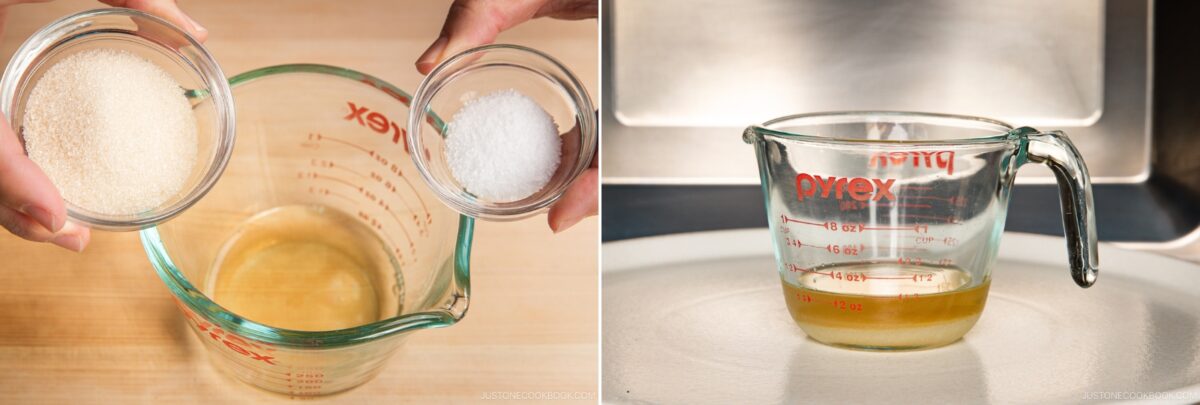
- While the rice is cooking, make the sushi vinegar. Combine 4 Tbsp rice vinegar (unseasoned), 2 Tbsp sugar, and 1 tsp Diamond Crystal kosher salt in a small bowl. Microwave it for 30–40 seconds and whisk to dissolve the sugar. Set it aside and cool to lukewarm or room temperature.Nami's Tip: Alternatively, you can bring it to a boil in a saucepan over medium-high heat and whisk to dissolve the sugar.
- Moisten a wooden sushi oke (hangiri) with running water and drain well, or use a baking sheet lined with parchment paper. When the rice is done, discard the kombu (or use it to make simmered kombu). Transfer the hot rice to the sushi oke or baking sheet.
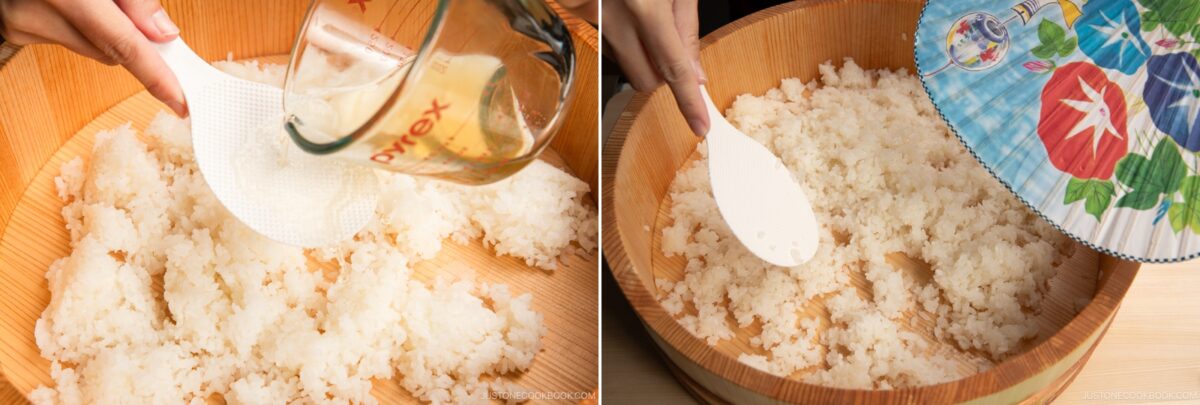
- While it's hot, evenly spread it out with a rice paddle and slowly drizzle the cooled sushi vinegar over it. Gently “slice” the rice with the rice paddle at a 45-degree angle to incorporate the seasoning and break up the rice chunks. Do not stir or mix because that may break the grains and make it mushy. As you slice, vigorously fan the rice with a paddle fan or another fan to cool it. Gently flip the rice every few slices. Continue until the rice is the temperature of human skin. It's now ready to use. Cover it with a damp towel (or paper towel) and keep for up to a few hours at room temperature.Nami's Tip: Fanning wicks away the excess moisture and makes the rice shine.
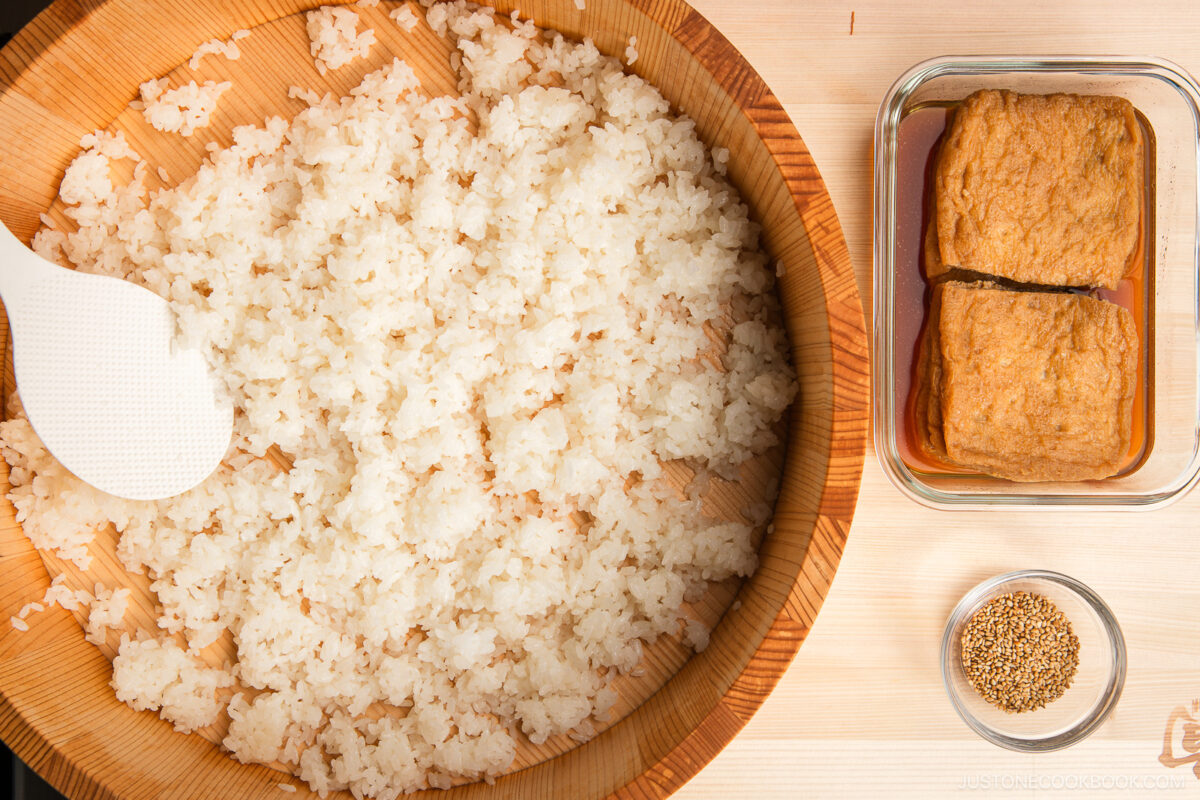
To Make the Inari Sushi
- Take out 12 Inari age (seasoned fried tofu pouch) from the refrigerator.
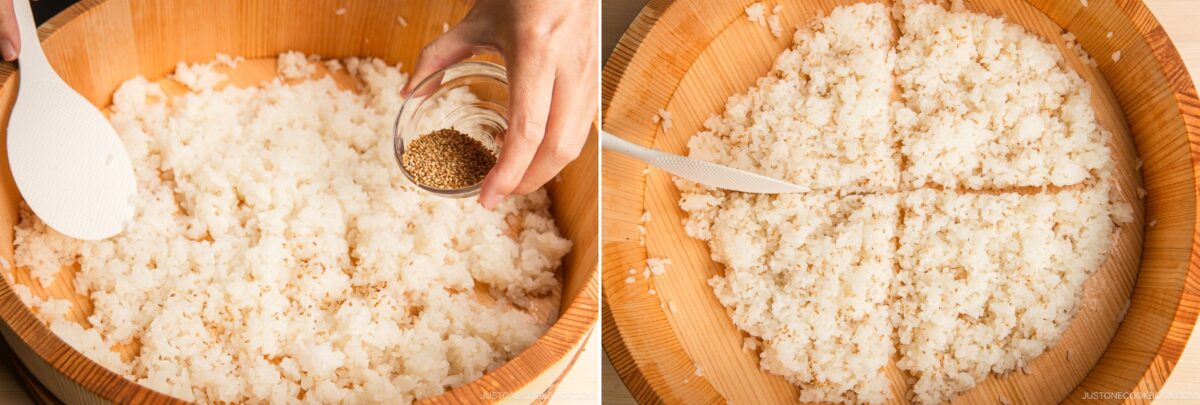
- Sprinkle 1 Tbsp toasted white sesame seeds over the sushi rice and gently “slice” the rice again to combine. Next, divide the sushi rice into quarters; each quarter makes 3 pieces of Inari sushi.
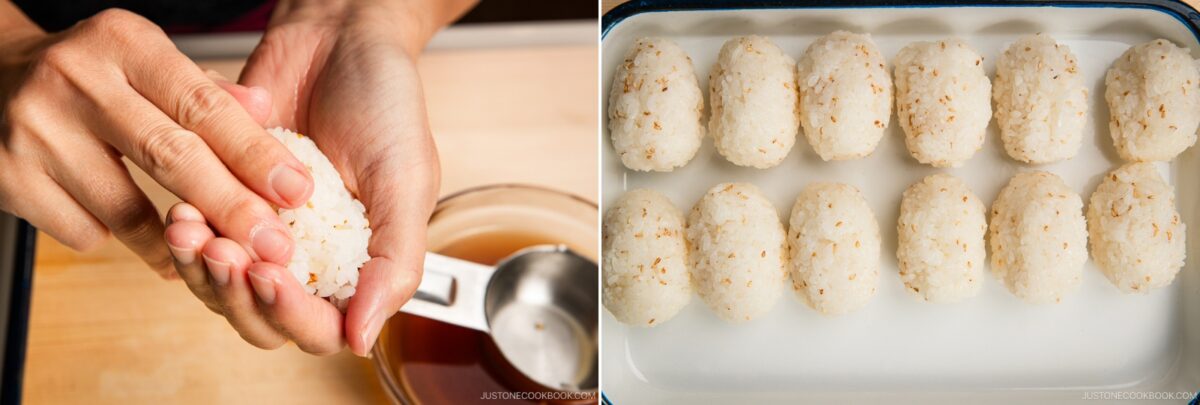
- Pour the seasoned liquid from the Inari age package into a small bowl. Moisten your hands with it, then place about ¼ cup of sushi rice in your palm.
- Gently form the rice into an oblong shape. Use just enough pressure to keep the sushi rice ball from falling apart. Don't squeeze too tightly, and keep it as airy as possible. Repeat; you should be able to make 12 sushi rice balls.
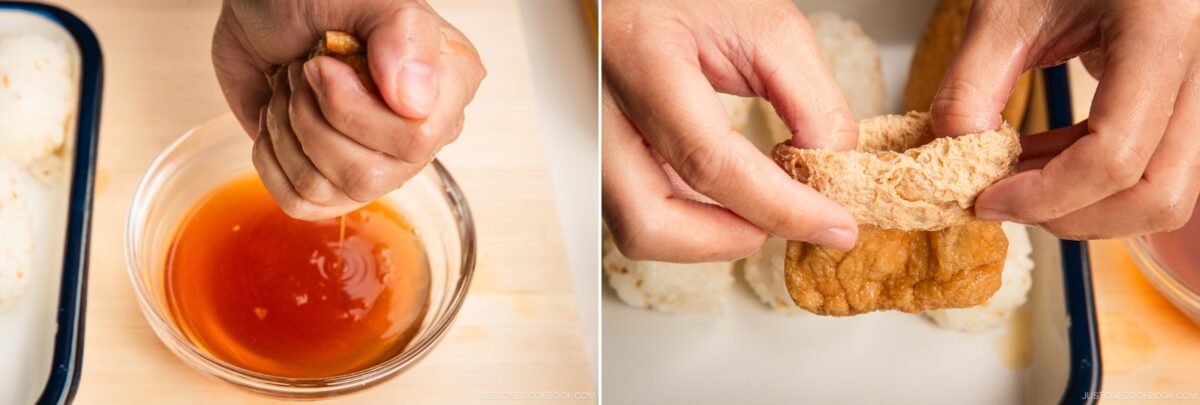
- Squeeze the liquid from the seasoned Inari age. Next, carefully open the pocket, separating the skin all the way to the bottom of the pocket. Be gentle, as the skin is thin. Then, fold back the skin at the opening.
- Stuff a sushi rice ball into the Inari age pocket all the way so the two corners look smooth and round.
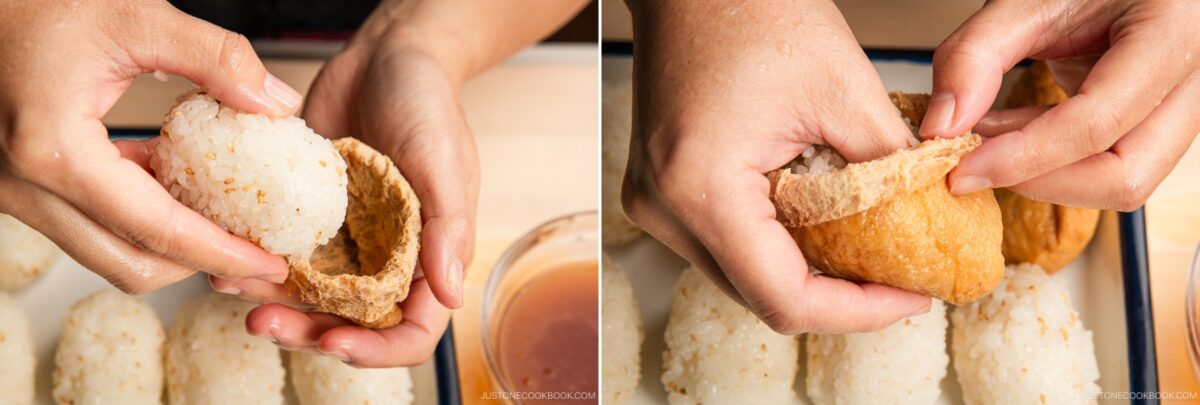
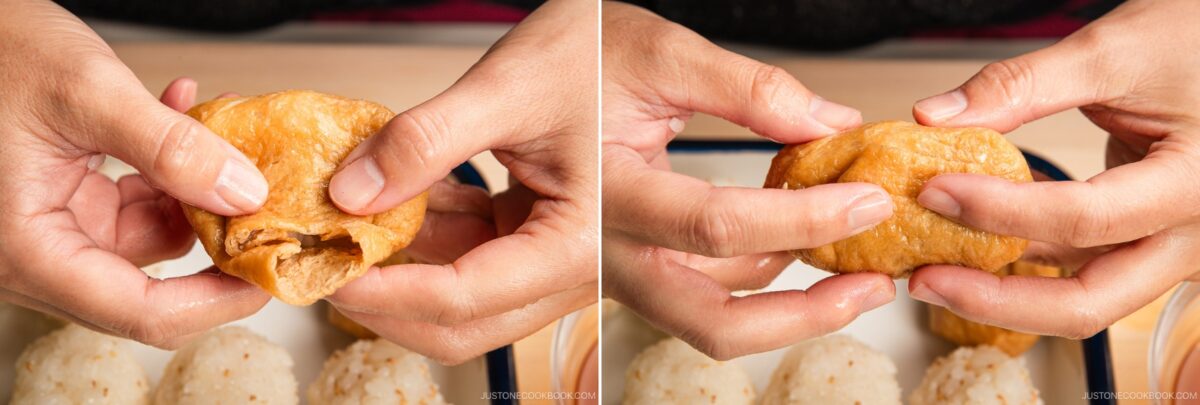
- Unroll the skin at the opening and fold both side edges down onto the sushi rice ball.
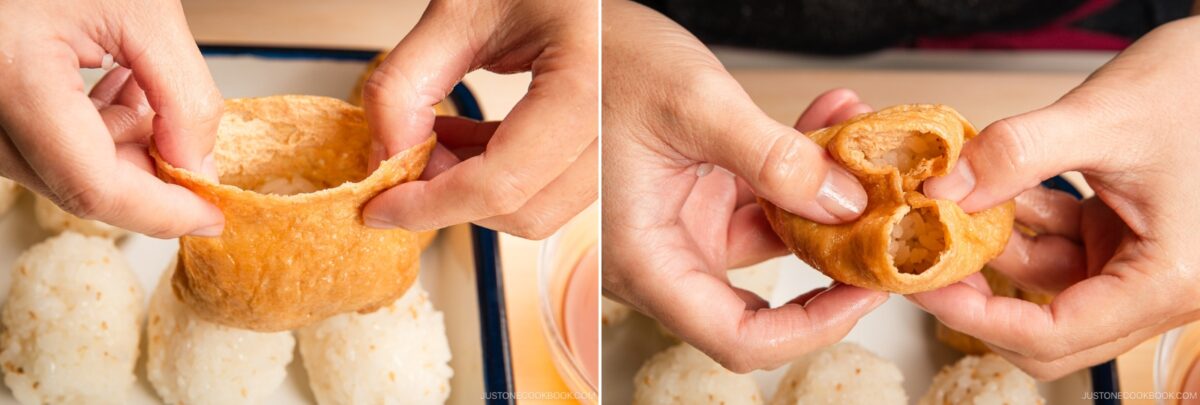
- Fold the front and back edges down like you’re wrapping a present. Place the Inari sushi seam side down onto a plate or tray. Continue filling the rest of the pockets. Your Inari sushi are now ready to serve.
To Make Kansai-Style Inari Sushi (optional)
- After stuffing the pocket with sushi rice, keep it open on top and tuck the edges of the Inari age inside the pocket so you will have smooth, round edges. Then, add any toppings you like. Here, I used sliced cucumber, ikura (salmon roe), shredded egg crepe (kinshi tamago), boiled shrimp, and cooked salmon flakes.

To Serve
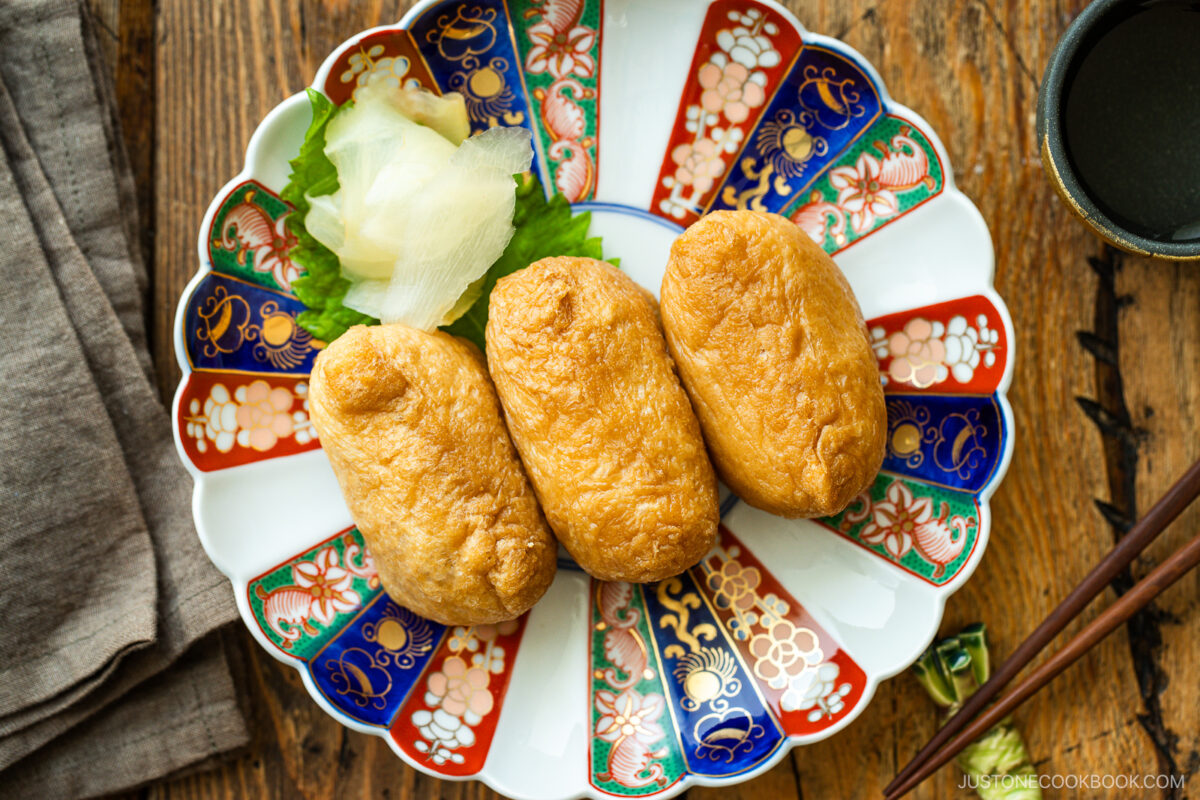
- Serve at room temperature. Garnish with 5 shiso leaves and sushi ginger (gari), as desired.
To Store
- Please consume the Inari Sushi the same day they’re prepared. You can keep them in a cool place for several hours. If needed, you can store leftovers in the refrigerator for up to 24 hours. If you do so, I highly recommend storing them in an airtight container or plate sealed tightly with plastic, then wrapping it completely with a thick kitchen towel. The towel keeps the rice insulated from the cold air so it doesn‘t get hard and dry. Store leftover Inari age pouches with their liquid in the freezer for up to a month or in the refrigerator for 2–3 days.
Nutrition
Did you make this recipe?
Tag @justonecookbook on Instagram so we can see your delicious creation!
Editor’s Note: The post was originally published on February 28, 2011. It’s been updated with new images and revised blog content in December 2021.