

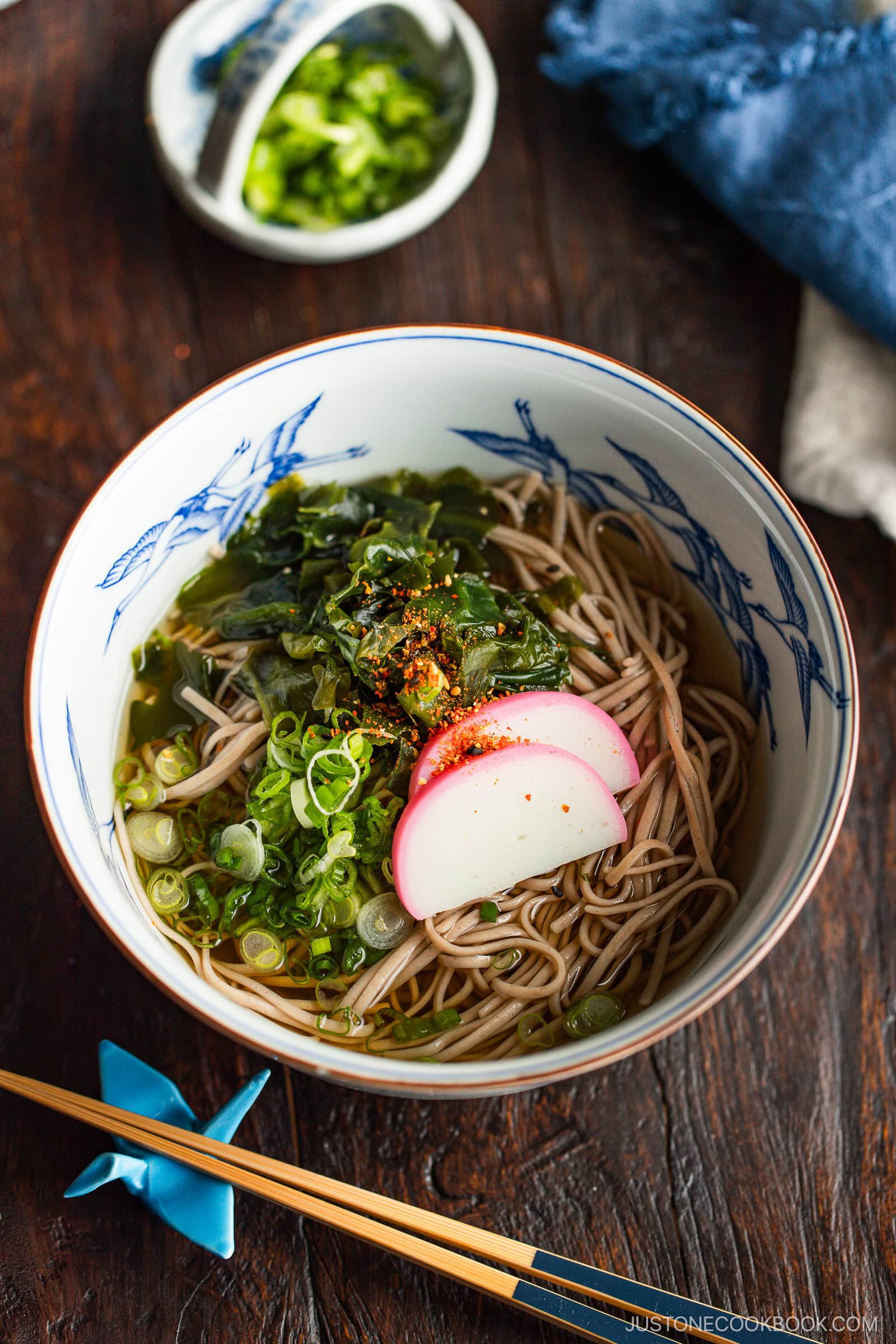
Recipe Highlights
As the year comes to a close, many Japanese families enjoy the tradition of Toshikoshi Soba (年越しそば), or year-crossing noodles. This custom involves sitting down to a bowl of humble noodle soup before the stroke of midnight. This last meal of the year is light, soothing, deeply meaningful, and a quiet moment of reflection before welcoming what comes next.
- Deeply symbolic and comforting – Long soba noodles represent resilience, good luck, and a wish for a long, peaceful life.
- Simple yet satisfying – A delicate dashi broth and buckwheat noodles come together with just a few toppings.
- Easy to make – With basic ingredients and a short prep time, anyone can enjoy this tradition at home during this most important time of year.
If you enjoy Japanese noodle dishes, try my Udon Noodle Soup, Curry Udon, and Soba Noodle Soup with tempura next.
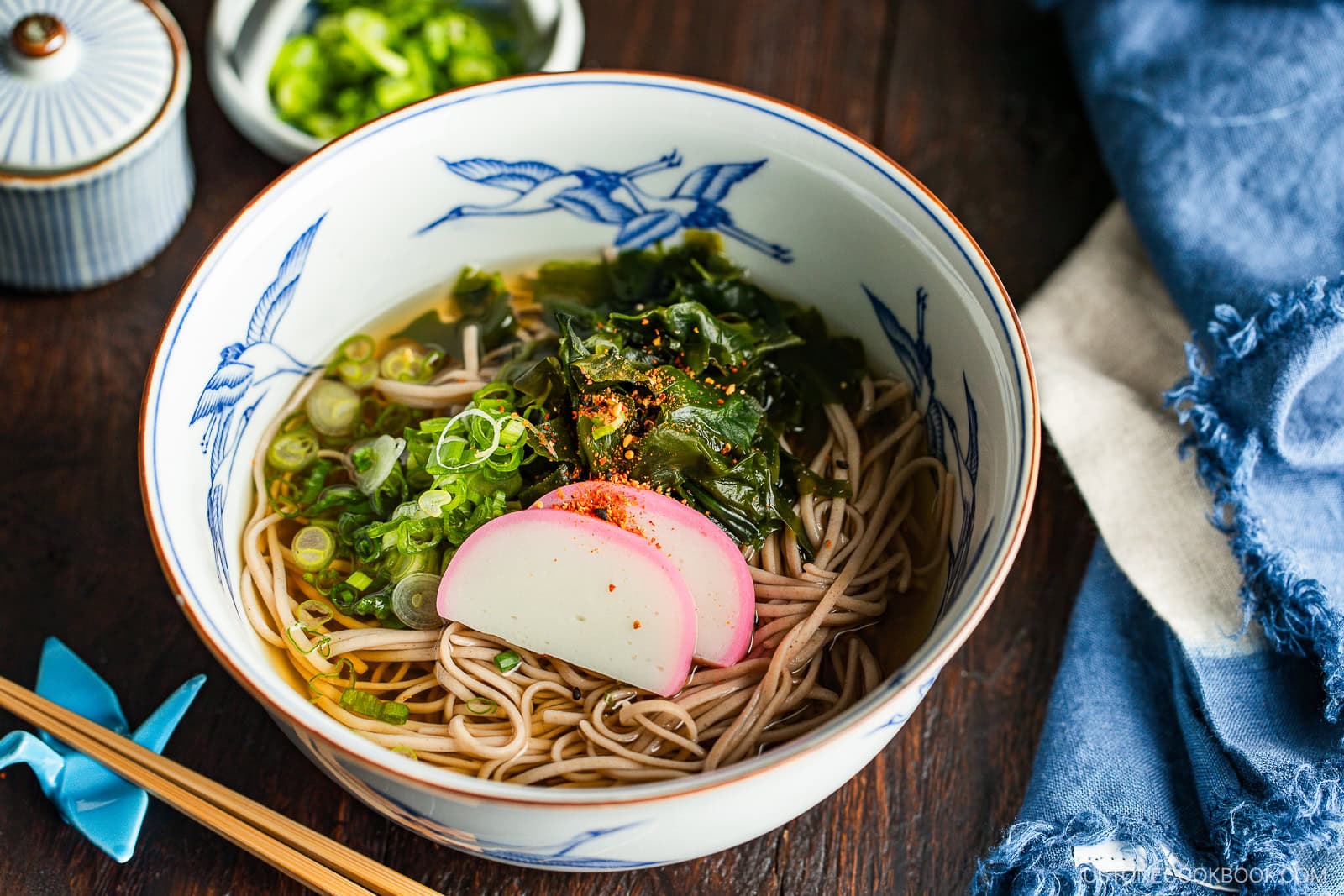
What is Toshikoshi Soba?
Toshikoshi soba is the tradition of eating Japanese soba noodle soup on New Year’s Eve (Ōmisoka, 大晦日). Like many New Year customs in Japan, it focuses on renewal and fresh beginnings. The long, thin buckwheat noodles symbolize strength, endurance, and longevity, while their easy texture represents letting go of the past year’s hardships. This tradition dates back to the mid–late 1700s, when everyday customs became closely tied to wishes for good fortune.
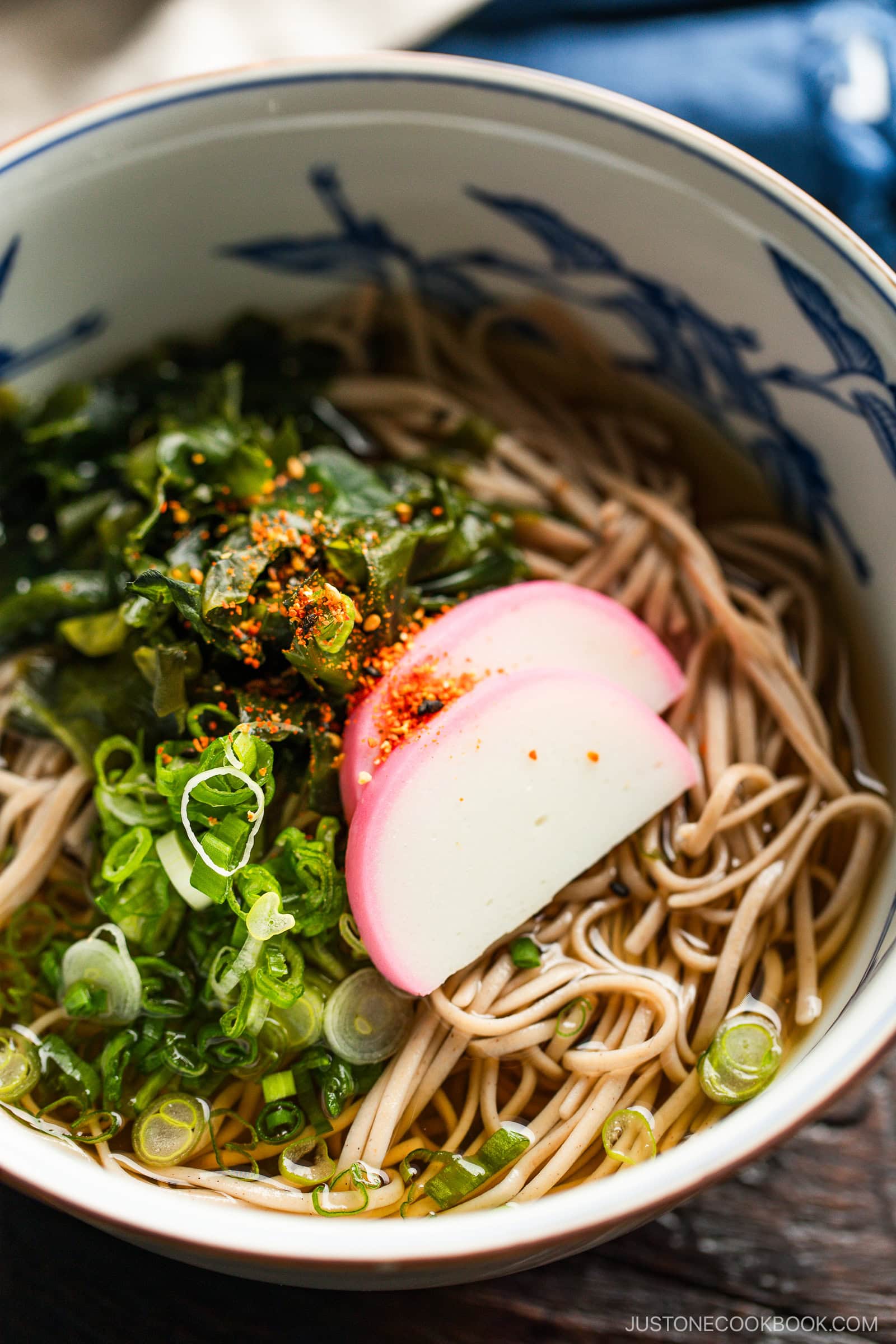
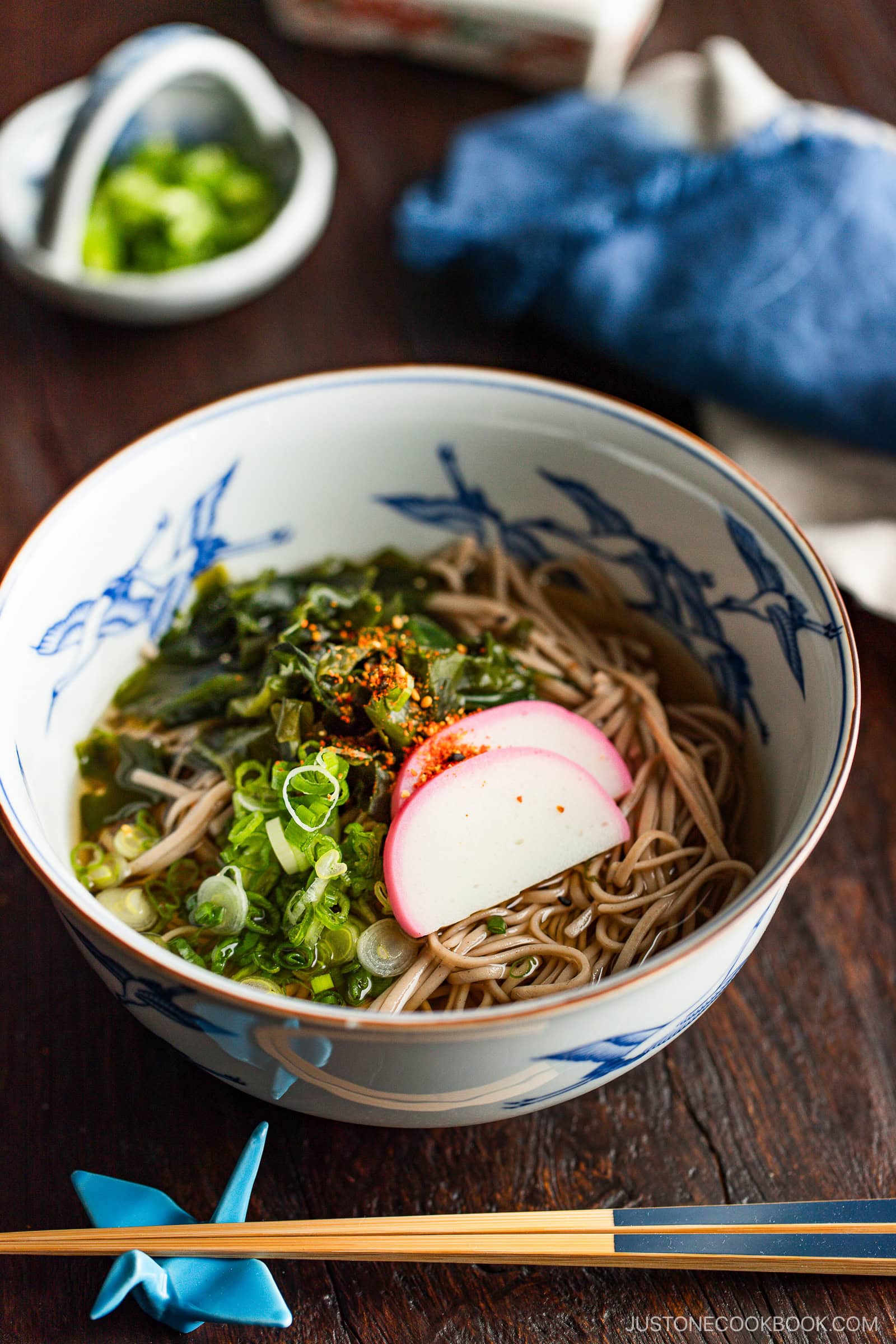
Ingredients for Toshikoshi Soba
You can enjoy any type of soba noodle soup for toshikoshi soba. For my version, I keep things simple with easy, no-fuss toppings:
- dried soba noodles
- kamaboko (fish cake)
- dried wakame seaweed
- green onion or scallion
- water
- for soba broth:
- dashi (Japanese soup stock): kombu (dried kelp) and katsuobushi (dried bonito flakes)
- seasonings: sake, mirin, soy sauce, and kosher salt
- shichimi togarashi (Japanese seven spice) – optional
Find the printable recipe with measurements below.
Jump to RecipeHow to Make Toshikoshi Soba
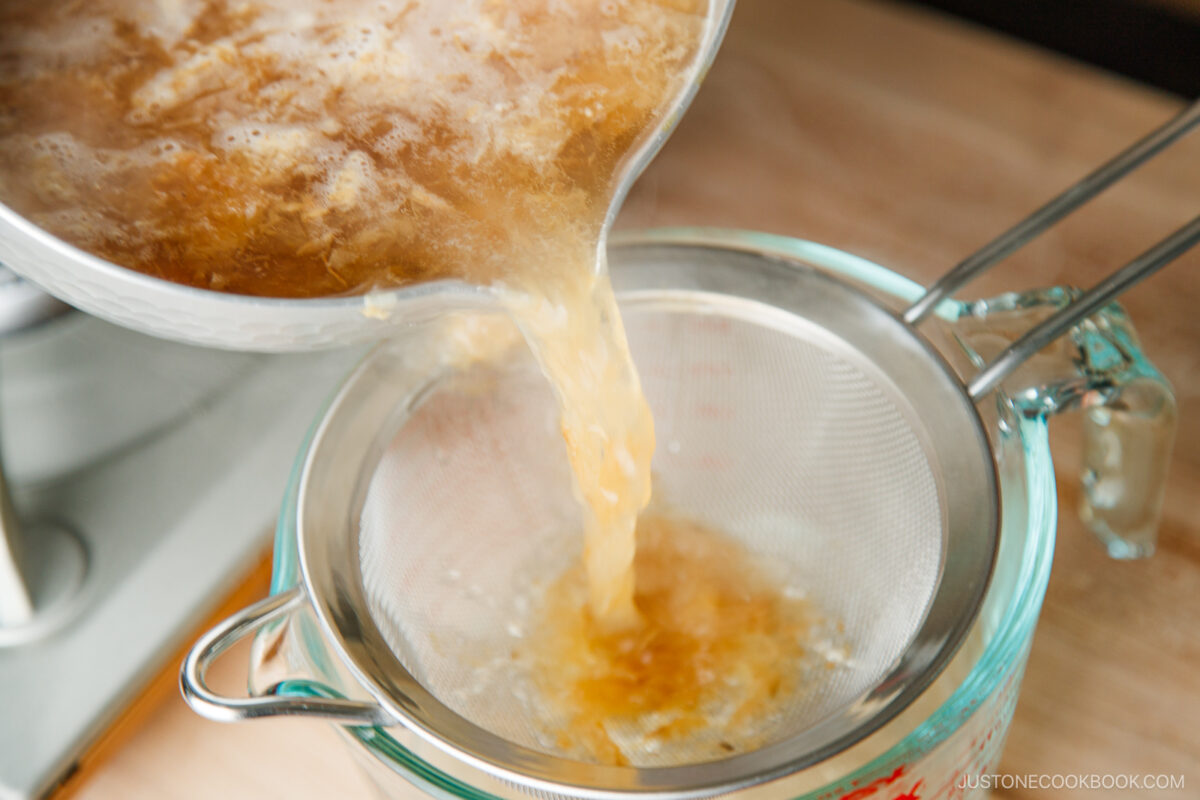
- Make the dashi. Slowly heat water in a pot with kombu, remove before boiling, then steep the bonito flakes and strain.

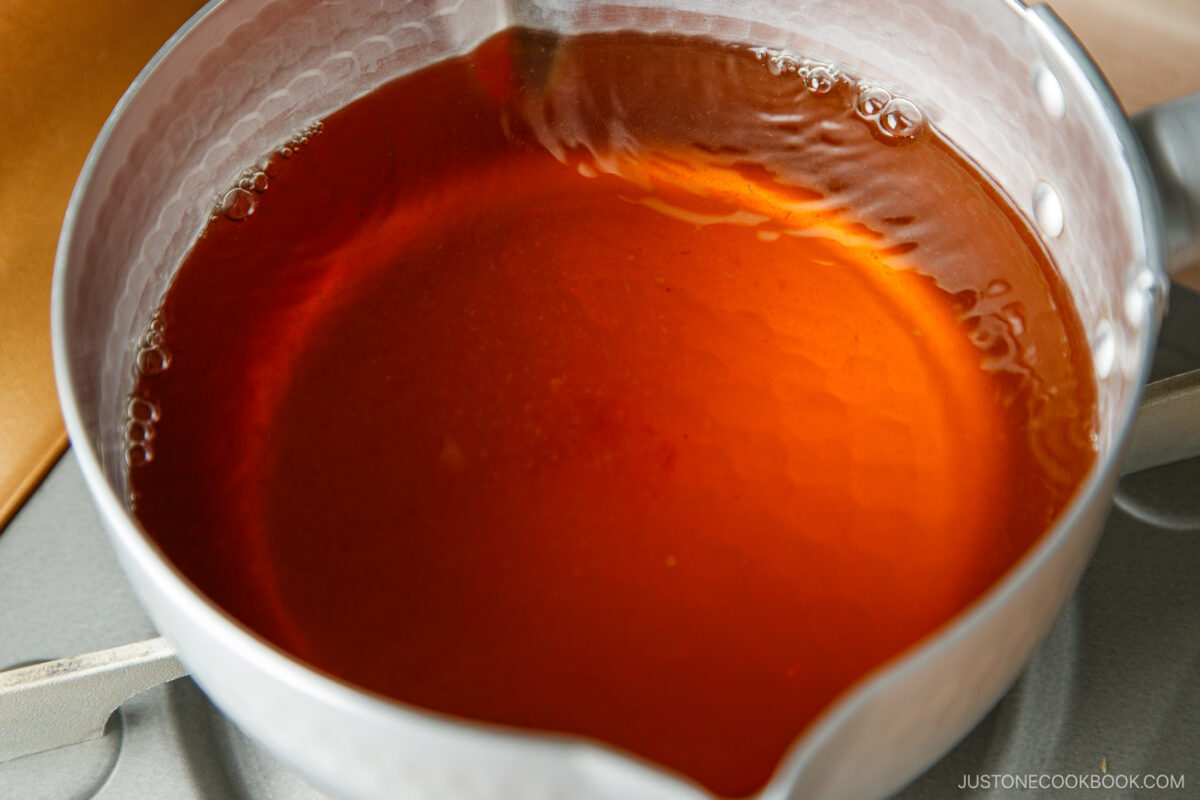
- Season the broth. Add sake, mirin, soy sauce, and salt. Bring to a gentle simmer over medium heat, then set aside.
- Prepare the toppings. Rehydrate the wakame, slice the green onion, and cut the kamaboko.

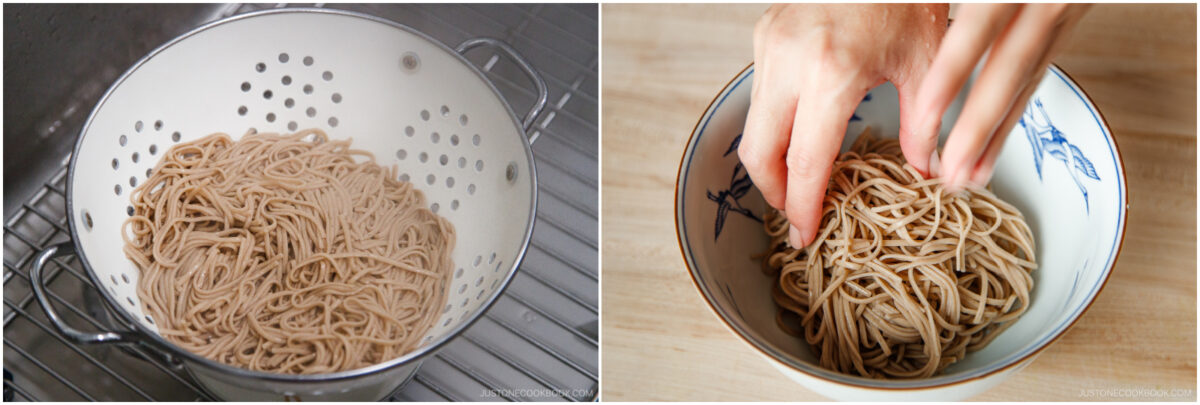
- Cook the noodles. Boil the soba noodles according to the package instructions, then drain and rinse under cold water.
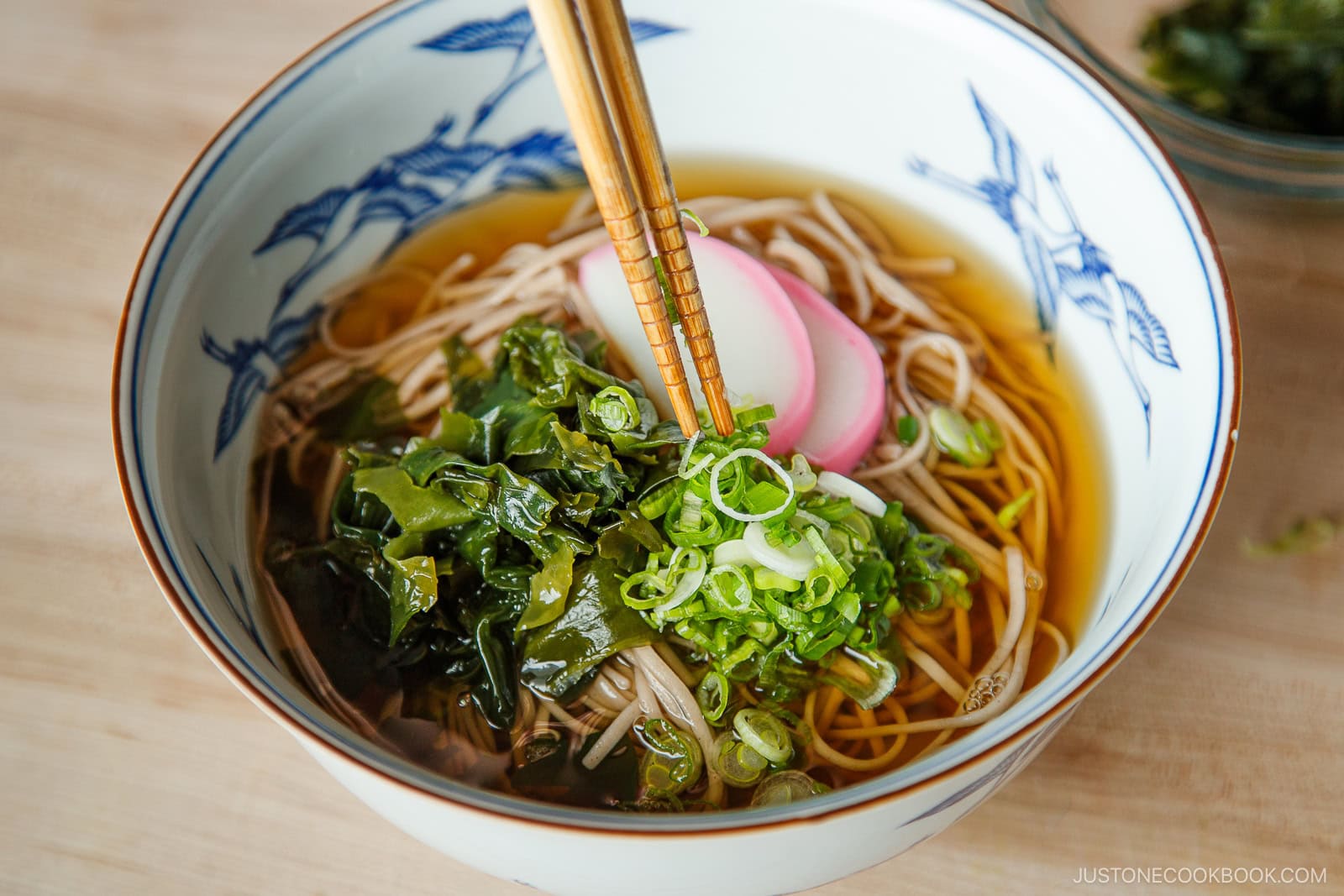
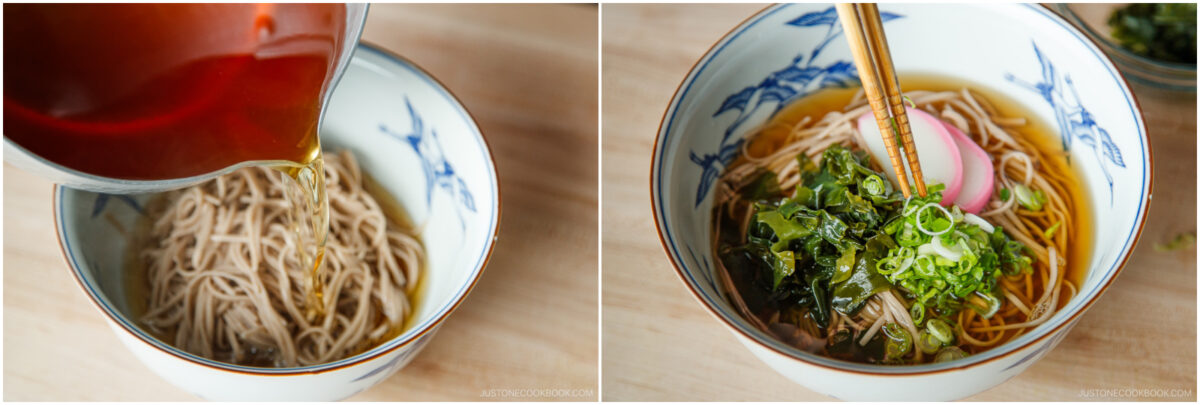
- Assemble and serve. Divide the noodles into bowls, pour over the hot dashi broth, and add the toppings.


Nami’s Recipe Tips
These simple tips will help you make a delicious toshikoshi soba recipe every time.
- Use good dashi. This soup (tsuyu) is very simple, so the flavor of the dashi stock really matters. Kombu and katsuobushi create a broth that tastes light but deeply savory.
- Do not salt the cooking water. Soba noodles are cooked in plain water, not salted like pasta water.
- Rinse the noodles well. Washing off the starch keeps the broth clear and clean-tasting.
- Keep the toppings simple. This dish is traditionally minimalist!
- Vegan option. Use kombu and dried shiitake mushrooms to make vegan dashi, and skip the fish cake.
Variations and Customizations
Looking to change things up? Try these easy and tasty ideas!
- Vegan or vegetarian. Make Vegan Dashi and use tofu or mushrooms as toppings.
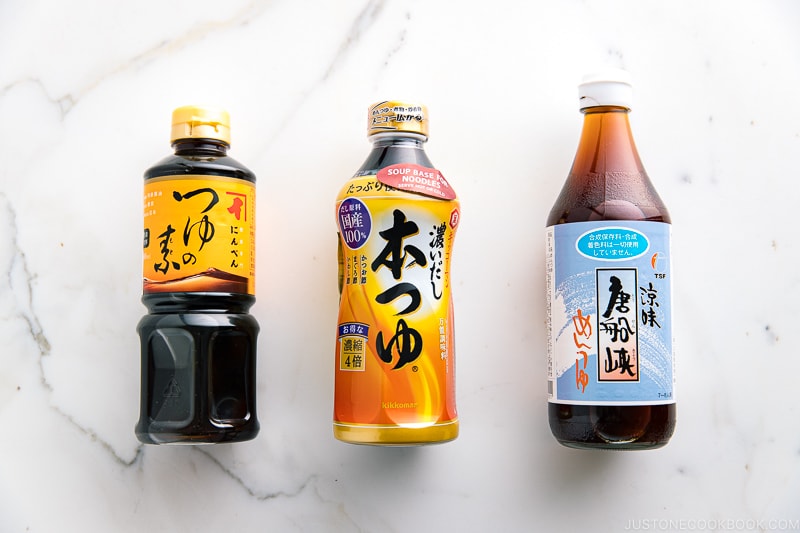
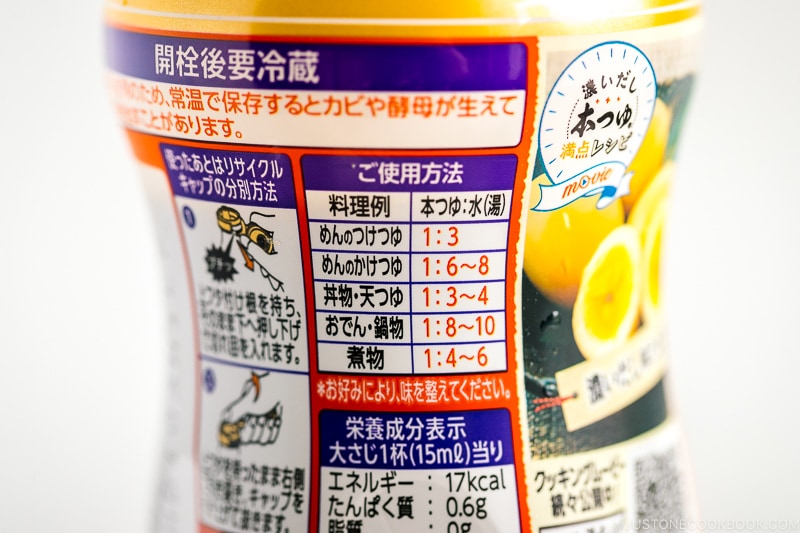
- Shortcut broth. Use store-bought mentsuyu diluted with water for a quick version.
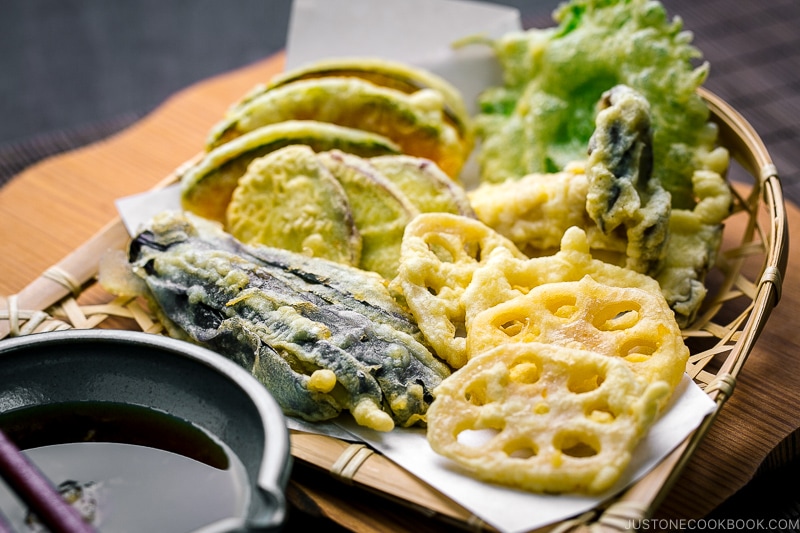
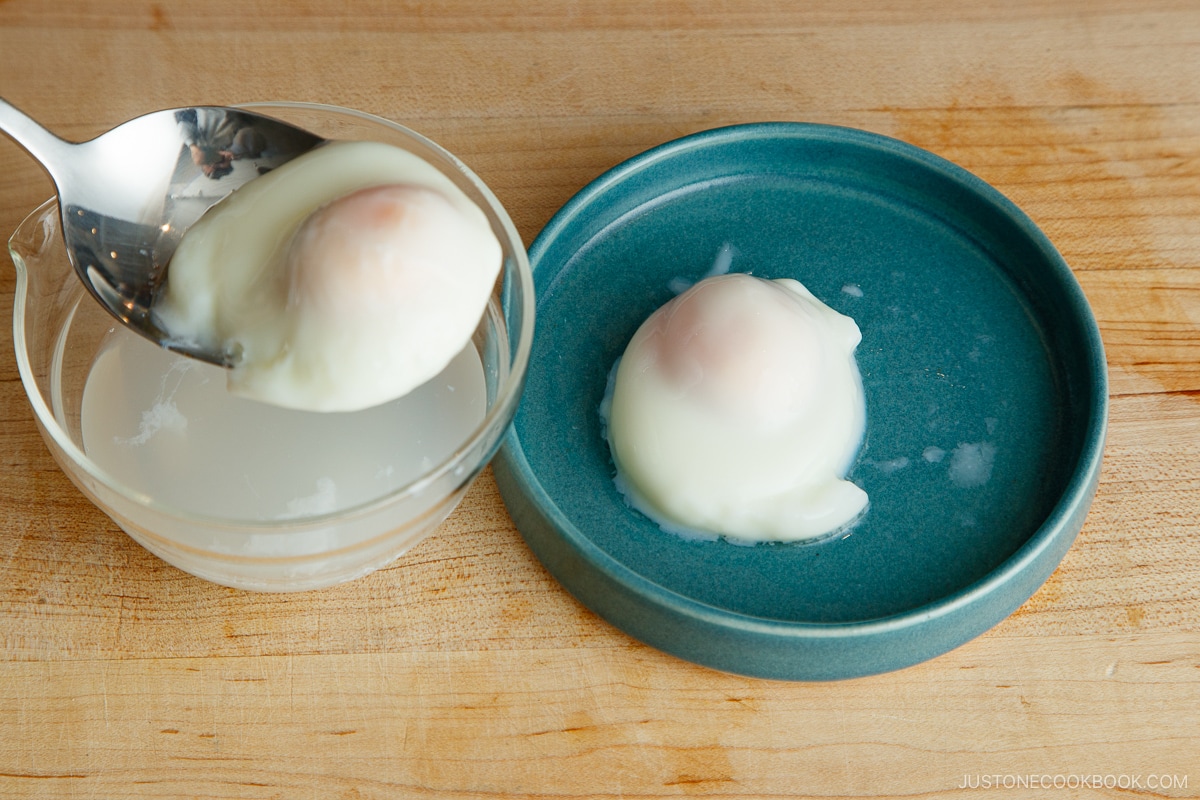
- Extra toppings. Learn How to Make the Best Tempura to serve on top or on the side. You can also top with a 2-Minute Onsen Tamago for a silky, soft-poached egg. See more options in my Soba Noodle Soup recipe.
Storage and Reheating Tips
To store: Keep the broth and noodles separate in the refrigerator for up to 2 days.
To reheat: Warm the broth gently on the stove. Cook noodles just before serving for the best texture.
FAQs
When do you eat toshikoshi soba?
Toshikoshi soba is eaten on New Year’s Eve, usually in the evening or just before midnight on December 31st as a way to close out the year.
Can I make toshikoshi soba ahead of time?
You can prepare the broth and toppings ahead, but it is best to cook the soba noodles right before serving.
Why are soba noodles used instead of other noodles?
Noodles made with buckwheat flour symbolize resilience and strength, and they are easy to cut, which represents letting go of the past year.
Can I eat toshikoshi soba after New Year’s Eve?
Traditionally, we eat it before New Year’s Day, but enjoying it later is perfectly fine. We eat hot soba noodle soup all year around.
I’d love to hear how yours turned out! 💛 Please leave a star rating and comment below to share your experience. Your feedback not only supports Just One Cookbook but also helps other home cooks discover recipes they can trust.
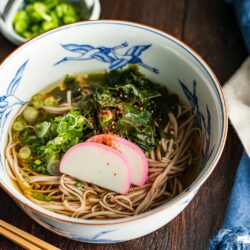
Toshikoshi Soba (New Year’s Eve Soba Noodle Soup)
Ingredients
- 7 oz dried soba noodles (buckwheat noodles)
- 4 slices kamaboko (fish cake) (skip for vegetarian/vegan)
- 2 Tbsp dried wakame seaweed
- 1 green onion/scallion
- shichimi togarashi (Japanese seven spice) (optional; for a spicy kick)
For the Soba Broth (from scratch)
- 3 cups water (for vegan/vegetarian, you can skip katsuobushi or make Vegan Dashi)
- 1 piece kombu (dried kelp) (10 g; 4 x 4 inches, 10 x 10 cm per piece)
- 1 cup katsuobushi (dried bonito flakes) (skip for vegetarian/vegan)
- 1 Tbsp sake
- 2 Tbsp mirin
- 2 Tbsp usukuchi (light-colored) soy sauce (or regular soy sauce)
- ¼ tsp Diamond Crystal kosher salt
For the Quick Soba Broth (optional, using concentrated mentsuyu)
- 2⅓ cups water
- ⅓ cup mentsuyu (concentrated noodle soup base)
- 1 Tbsp mirin
Instructions
Before You Start
- Gather all the ingredients. Optional: For the best dashi flavor, soak 1 piece kombu (dried kelp) in 3 cups water overnight to make cold brew kombu dashi. If you don’t have time, start soaking the kombu as soon as you can.
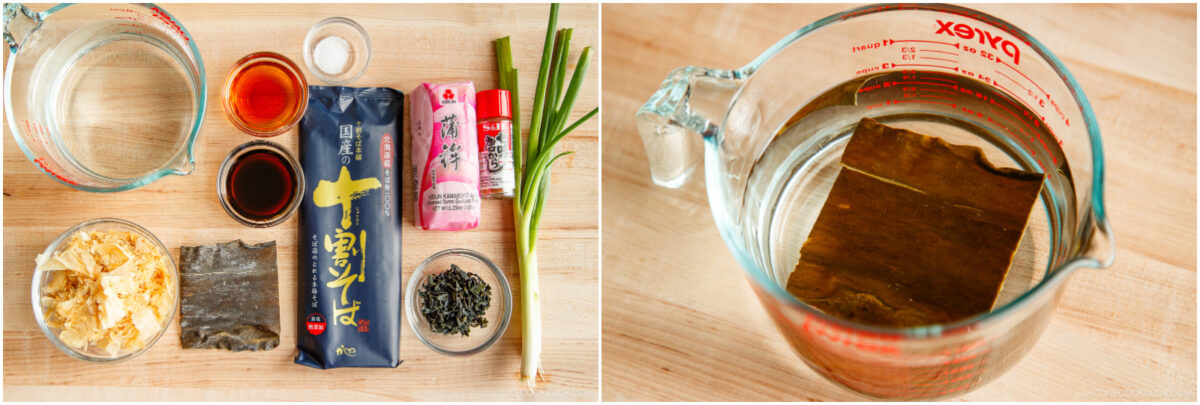
- When you're ready to prepare this dish, start bringing a big pot of water to a boil for the soba noodles.
To Make the Soba Broth (from scratch)
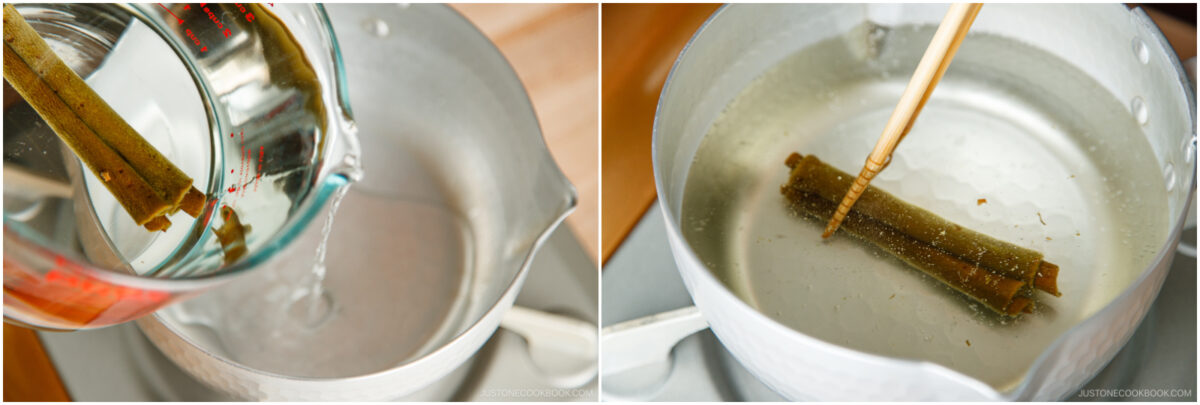
- Add 1 piece kombu (dried kelp) and 3 cups water (or the cold-brew dashi with the kombu) to a medium saucepan. Slowly bring it to a boil over medium-low heat to extract the most flavor from the kombu. When it's close to boiling, remove the kombu. Nami's Tip: You can use the spent kombu to make furikake rice seasoning.
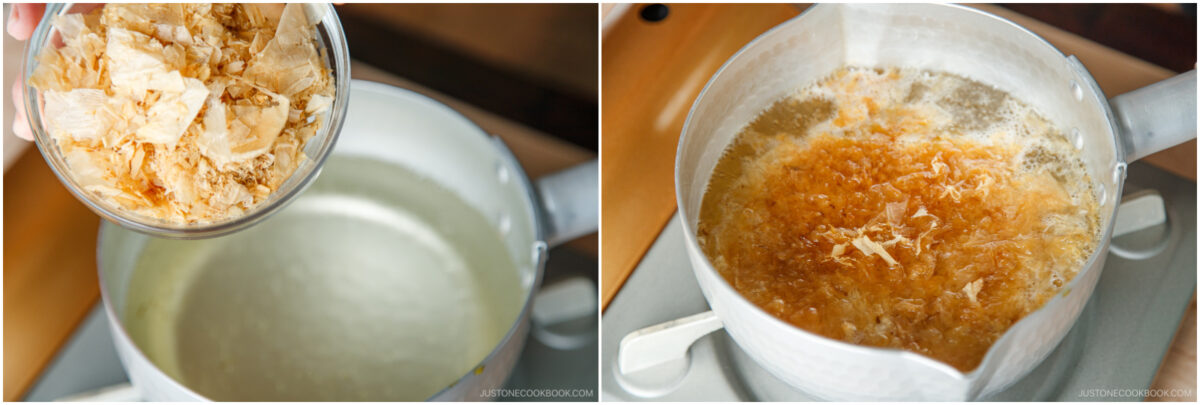
- Add 1 cup katsuobushi (dried bonito flakes) and simmer for 30 seconds. Turn off the heat and let the katsuobushi sink to the bottom of the saucepan. Let it steep for about 10 minutes. Meanwhile, prepare the toppings.
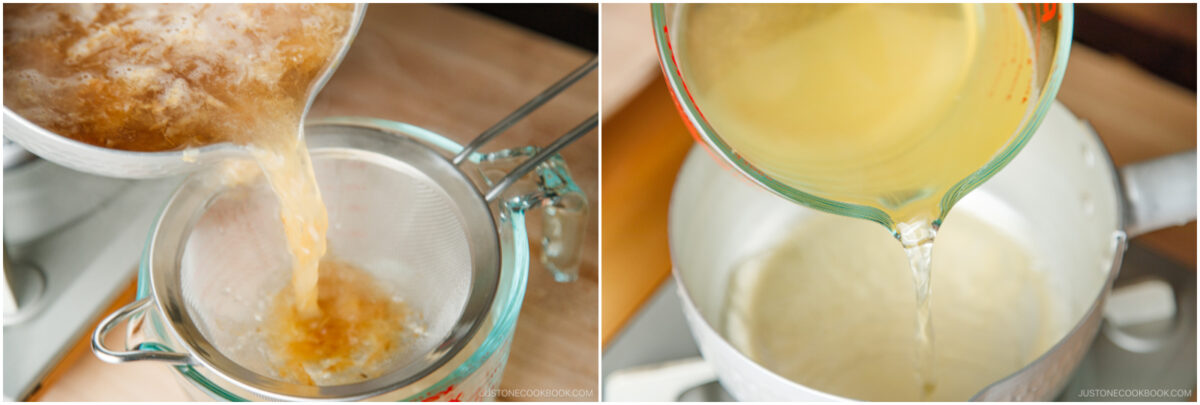
- Strain the dashi through a sieve into a measuring cup (or bowl), then put the dashi back into the saucepan.Nami's Tip: Discard the spent katsuobushi or use it to make furikake rice seasoning.
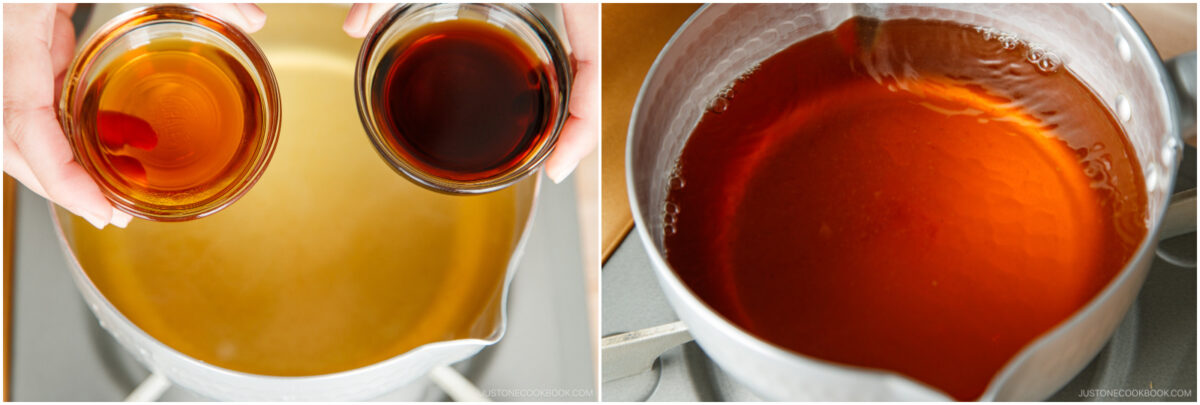
- Add 1 Tbsp sake, 2 Tbsp mirin, 2 Tbsp usukuchi (light-colored) soy sauce (or regular soy sauce), and ¼ tsp Diamond Crystal kosher salt. Bring it to a simmer. Once boiling, remove from the heat, cover, and set aside.
To Prepare the Toppings
- Rehydrate 2 Tbsp dried wakame seaweed in 1 cup water. Then, squeeze the water out and set aside. Thinly slice 1 green onion/scallion.

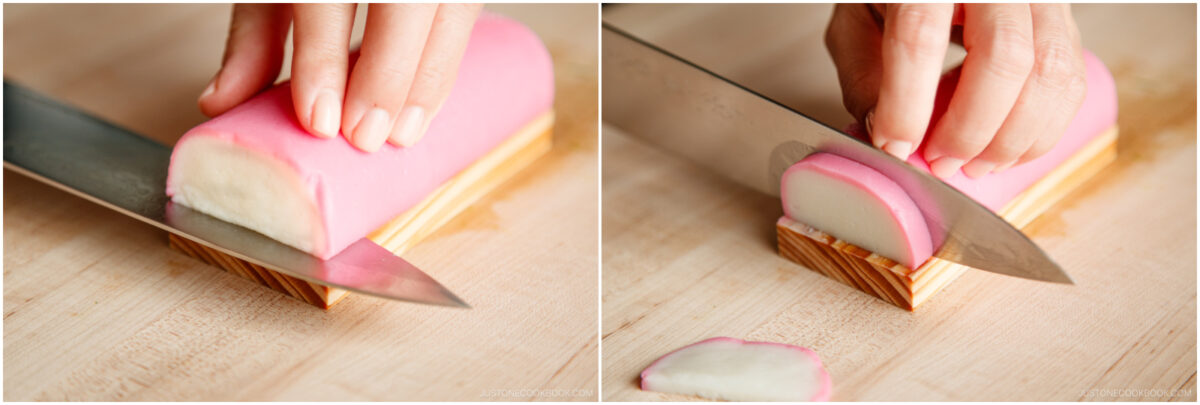
- Slide a knife under the kamaboko to detach it from the wooden board. Thinly cut 4 slices kamaboko (fish cake).
To Cook the Soba Noodles
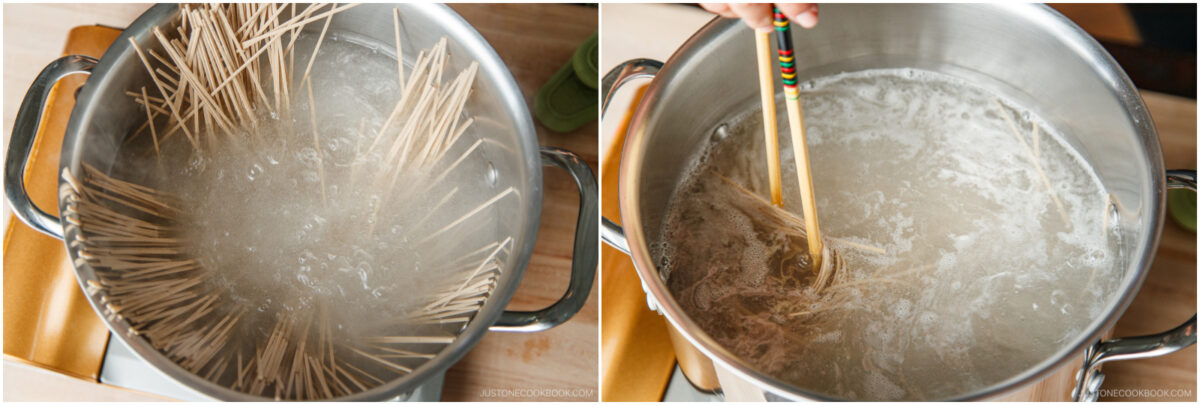
- In the pot of boiling water, cook 7 oz dried soba noodles (buckwheat noodles) according to the package instructions. You do not need to salt the water.
- Drain the soba noodles through a sieve and rinse them with your hands under cold water to get rid of the starch. Shake off the excess water and transfer to individual bowls.
To Serve
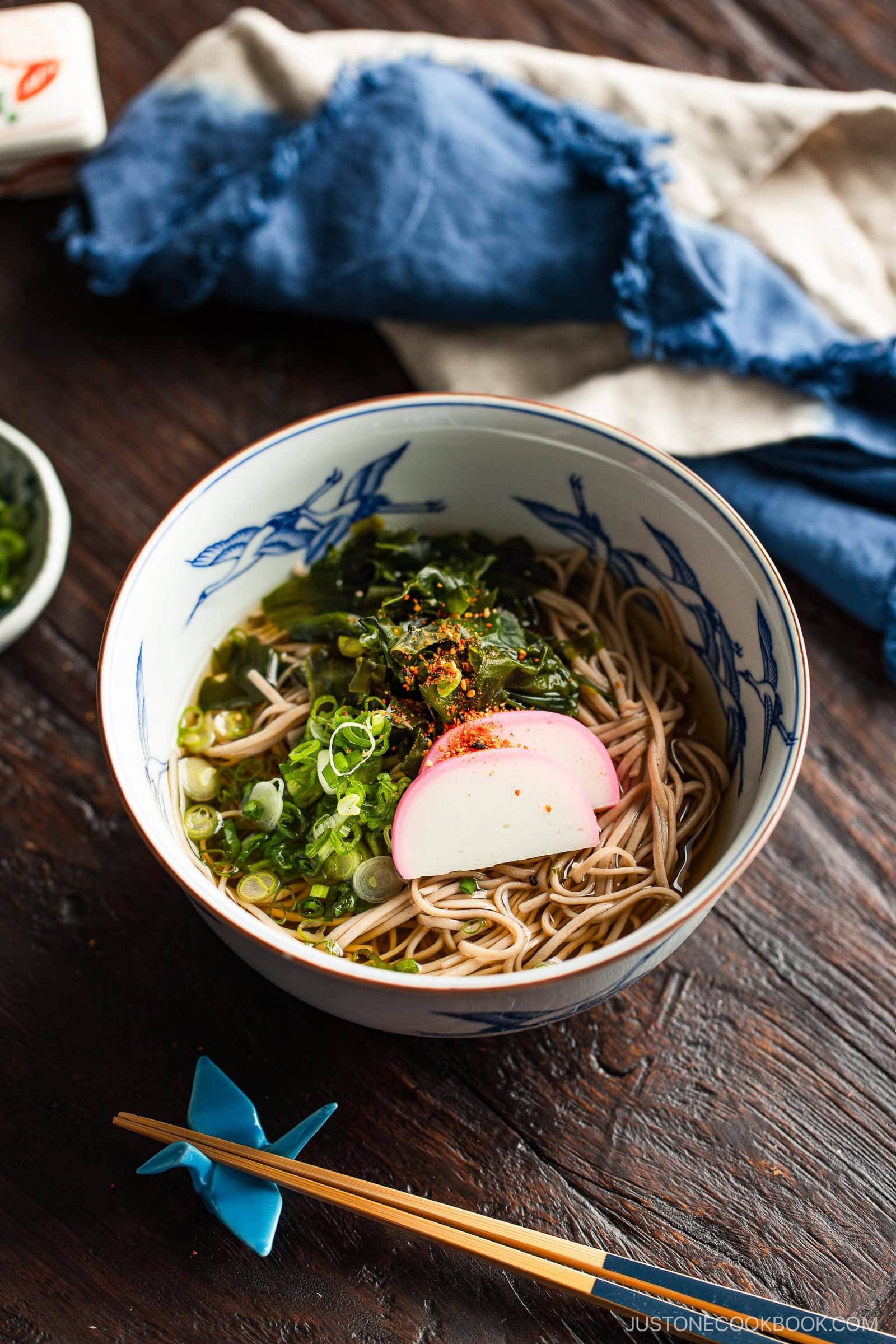
- Pour the hot soup broth over the noodles. Top with kamaboko, wakame seaweed, and green onions. Sprinkle shichimi togarashi (Japanese seven spice), if you‘d like. Serve immediately and enjoy.
To Make the Quick Soba Broth (with concentrated mentsuyu; optional)
- Follow your mentsuyu bottle instructions to make the broth.
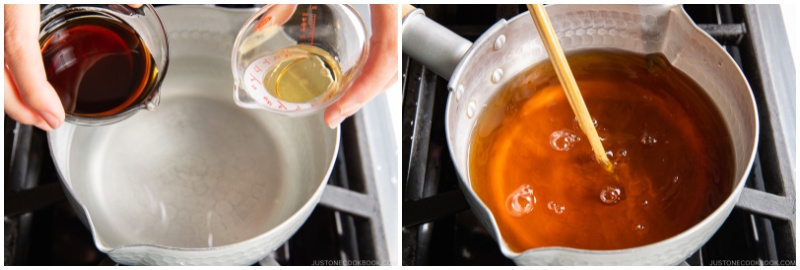
- In a medium saucepan, combine 2⅓ cups water, ⅓ cup mentsuyu (concentrated noodle soup base), and 1 Tbsp mirin. Mix well. Bring it to a gentle simmer over medium heat. Cover with a lid and turn off the heat. The soba broth is ready to use.
Notes
- Tempura: Learn How to Make the Best Tempura to serve on the side.
- Japanese poached egg: Top with a 2-Minute Microwave Onsen Tamago for a silky, soft-poached option.
- See other topping suggestions in my Soba Noodle Soup recipe.
Nutrition
Did you make this recipe?
Tag @justonecookbook on Instagram so we can see your delicious creation!
Editor’s Note: This post was originally published on December 30, 2018, updated on December 29, 2020, and republished with more helpful information on December 21, 2025.