

Looking for a unique food souvenir from Japan? Yuzu kosho is a spicy Japanese condiment that comes in many varieties, especially in Kyushu. This guide will help you find a delicious jar to bring home and enjoy.
This post may contain affiliate links. Please read my disclosure policy.
Yuzu kosho adds a bright citrusy aroma, savory depth, and spicy kick to everything from grilled meats to noodles. It’s also easy to pack, making it a wonderful souvenir for food lovers.
In this guide, I’ll share where to buy yuzu kosho in Japan, how to choose the right variety, and delicious recipes to try once you get home.
What Is Yuzu Kosho
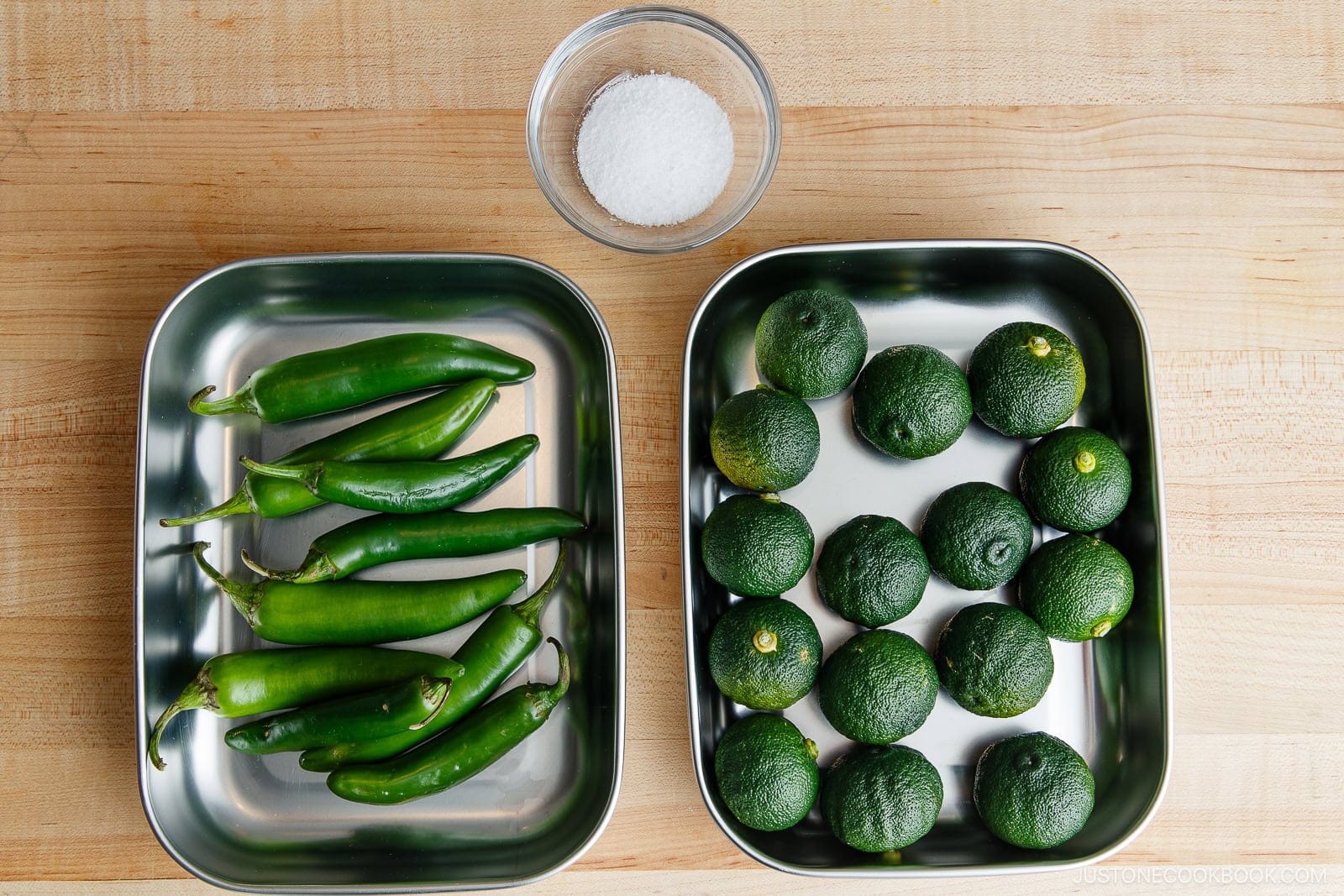
Yuzu kosho (柚子胡椒) is a fermented Japanese chili paste made from three ingredients: fresh yuzu zest, togarashi chili peppers, and salt. Think of it as a Japanese version of hot sauce with a fiery, tangy, and slightly salty flavor. Japanese cooks use it as a finishing condiment in hot pot, soups, yakitori, and noodles. But it can also be used in marinades, sauces, and stir-fries.

Yuzu kosho comes in two main varieties.
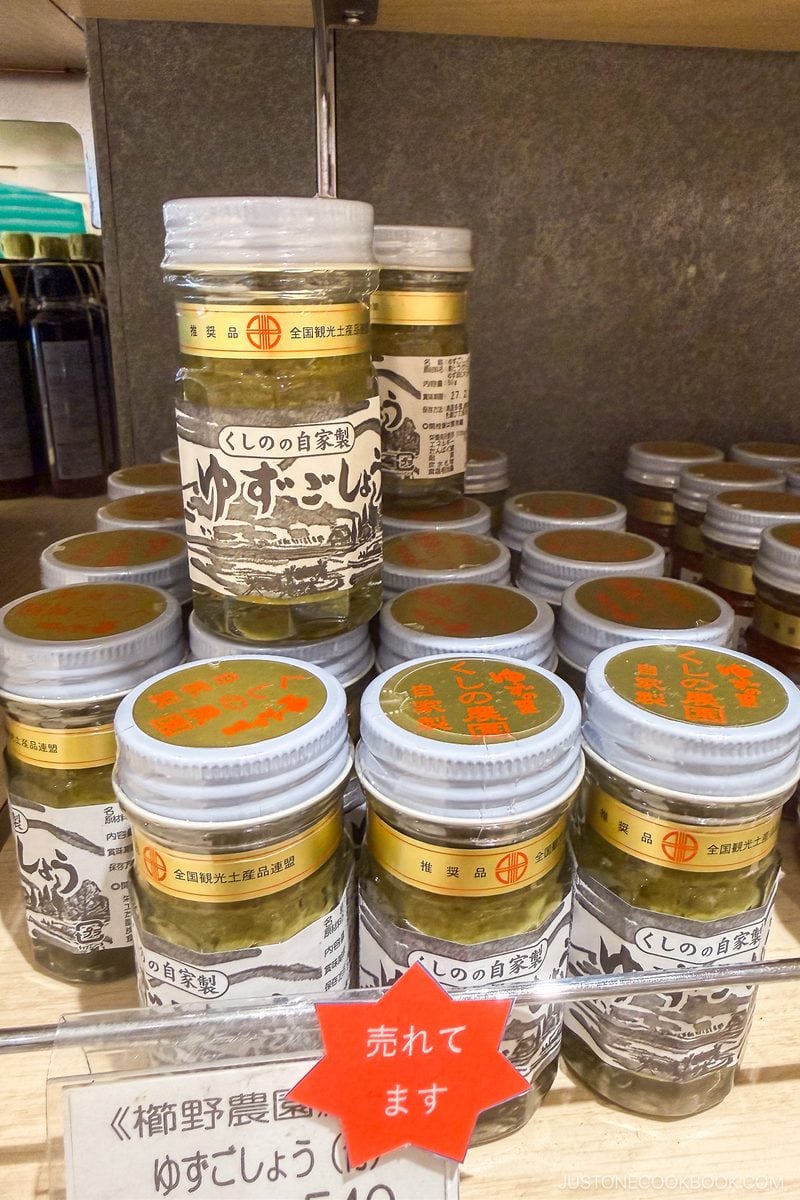
- Green yuzu kosho (青柚子胡椒) is the most common, made with the zest of unripe green yuzu and green togarashi chili peppers. It has a fresh, sharp citrus aroma.
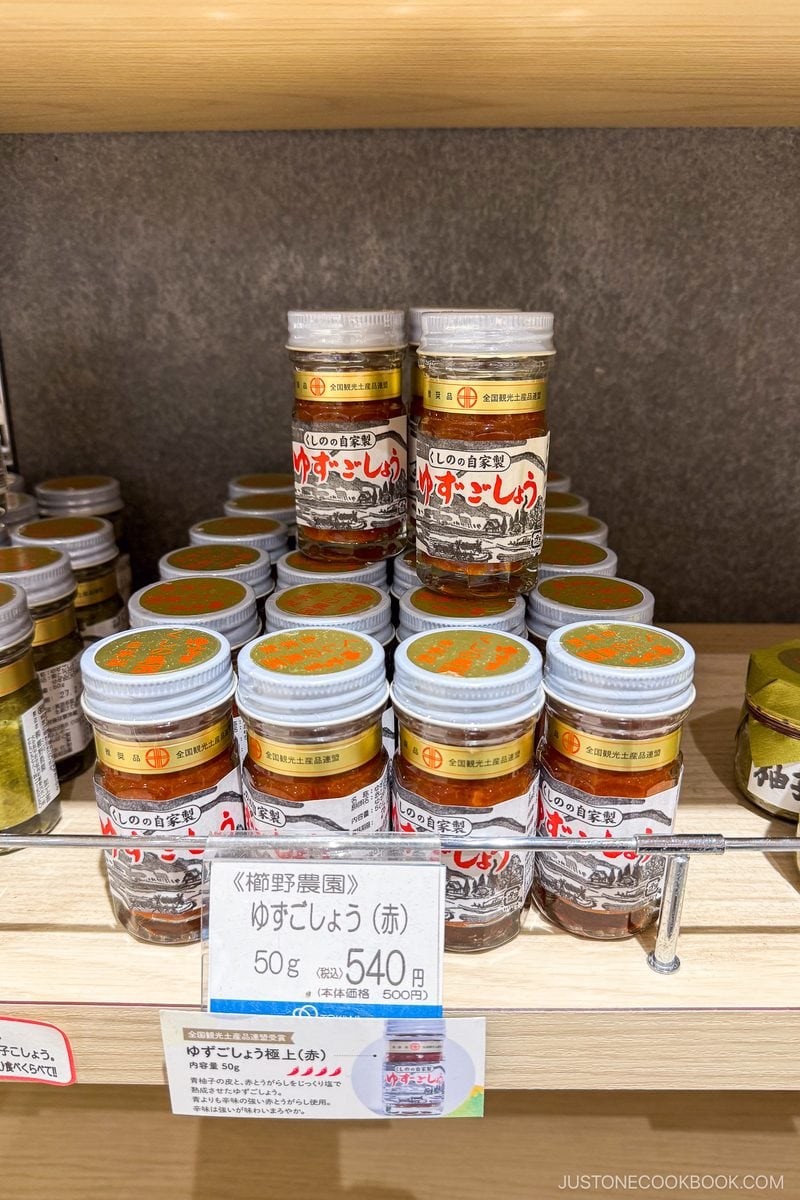
- Red yuzu kosho (赤柚子胡椒) is made with ripe yellow yuzu zest and red chili peppers. It generally has a rounder, more mellow citrus aroma. Both can be quite spicy, depending on the chili peppers used.
For more about this Japanese condiment, including how to make it from scratch, check out our Homemade Yuzu Kosho recipe and guide.
Why Yuzu Kosho Makes a Great Souvenir
Yuzu kosho may come in a tiny jar or tube, but it’s surprisingly versatile. If you love collecting hot sauces, you’ll want to add this Japanese condiment to your collection!
- Easy to pack. Small jars and tubes fit easily into your luggage, making yuzu kosho a convenient souvenir.
- More varieties in Japan. Explore different brands, regional specialties, and flavors that can be difficult to find outside Japan.
- Versatile in cooking. Just a dab adds a citrusy kick to hot pot, noodles, grilled chicken, marinades, and salad dressings.
- A little goes a long way. You only need a small amount to add flavor, so one jar can last through many meals.
How to Choose the Right Yuzu Kosho
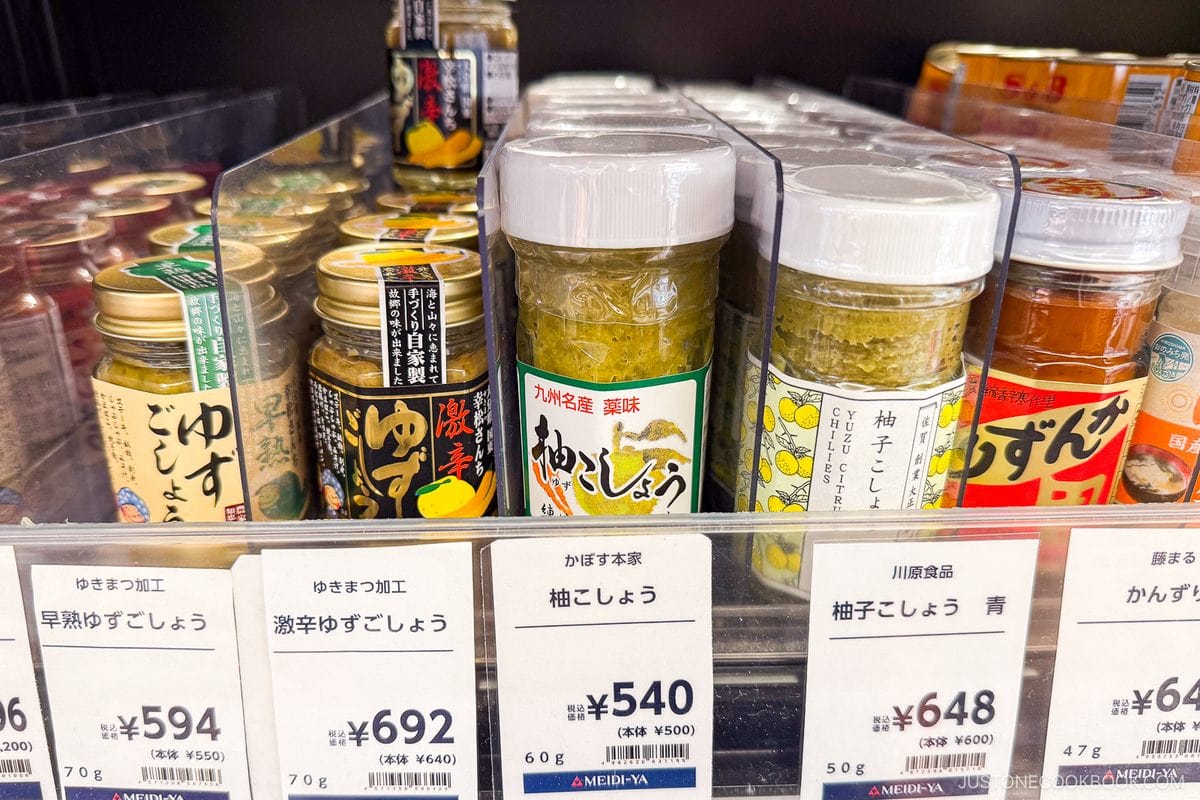
When choosing yuzu kosho, check the ingredient label for the three traditional ingredients: yuzu (柚子), chili peppers (唐辛子), and salt (塩). I recommend starting with a simple, three-ingredient variety to enjoy the natural citrus aroma and spicy flavor. Some brands include additional seasonings, so check the label if you prefer a traditional version.
The spice level varies from brand to brand, depending on the type and amount of chili peppers use. Some varieties have a gentle heat, while others pack a fiery punch. Part of the fun is choosing a few different jars and taste-testing them at home!
Storage Tips: Check the best-by date (賞味期限) and storage instructions before purchasing. Some varieties require refrigeration, even before opening. Once opened, keep yuzu kosho refrigerated according to the package directions.
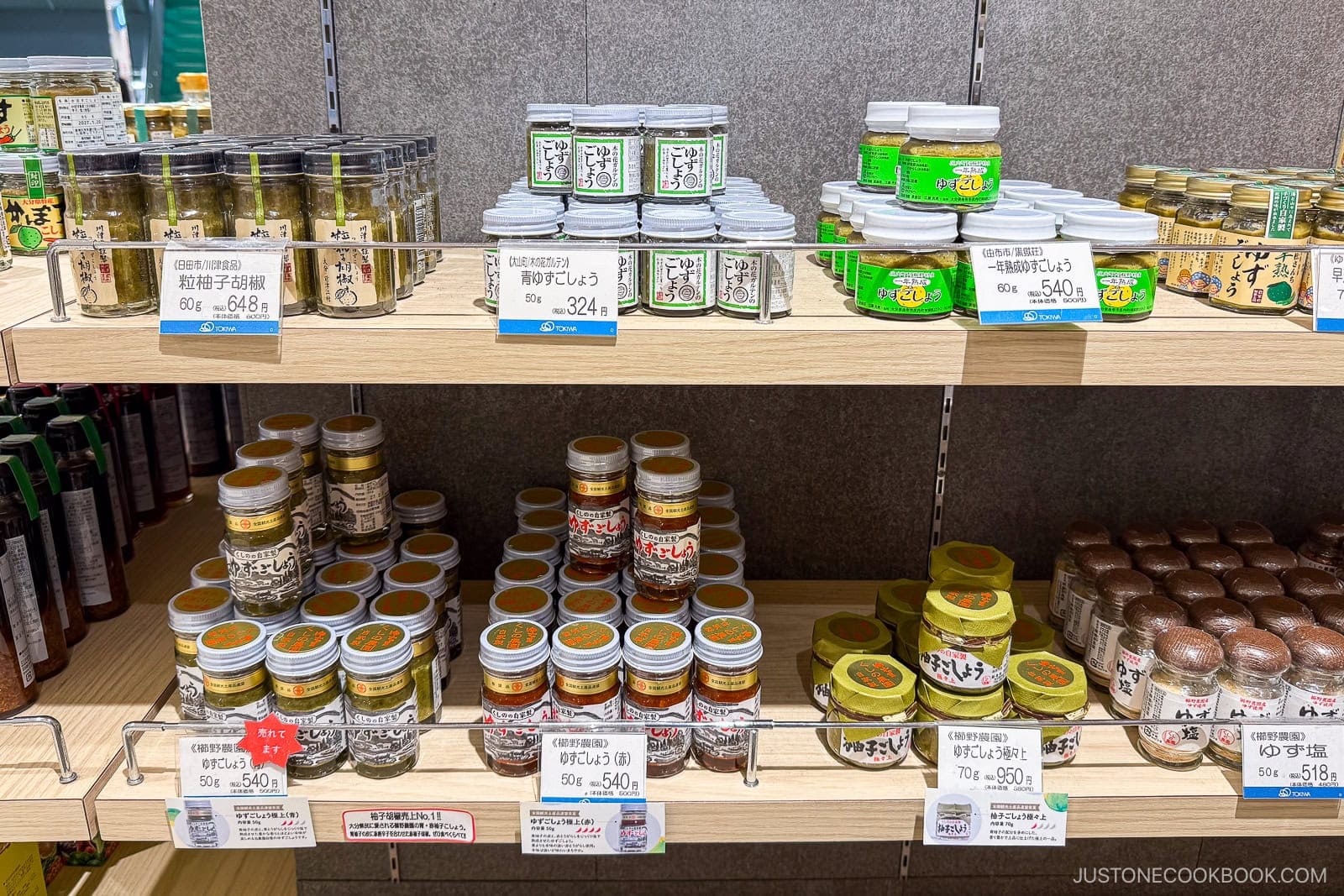
Where to Buy Yuzu Kosho in Japan
Yuzu kosho is easy to find throughout Japan, from specialty grocery stores to airport souvenir shops. Here are some of the best places to look.
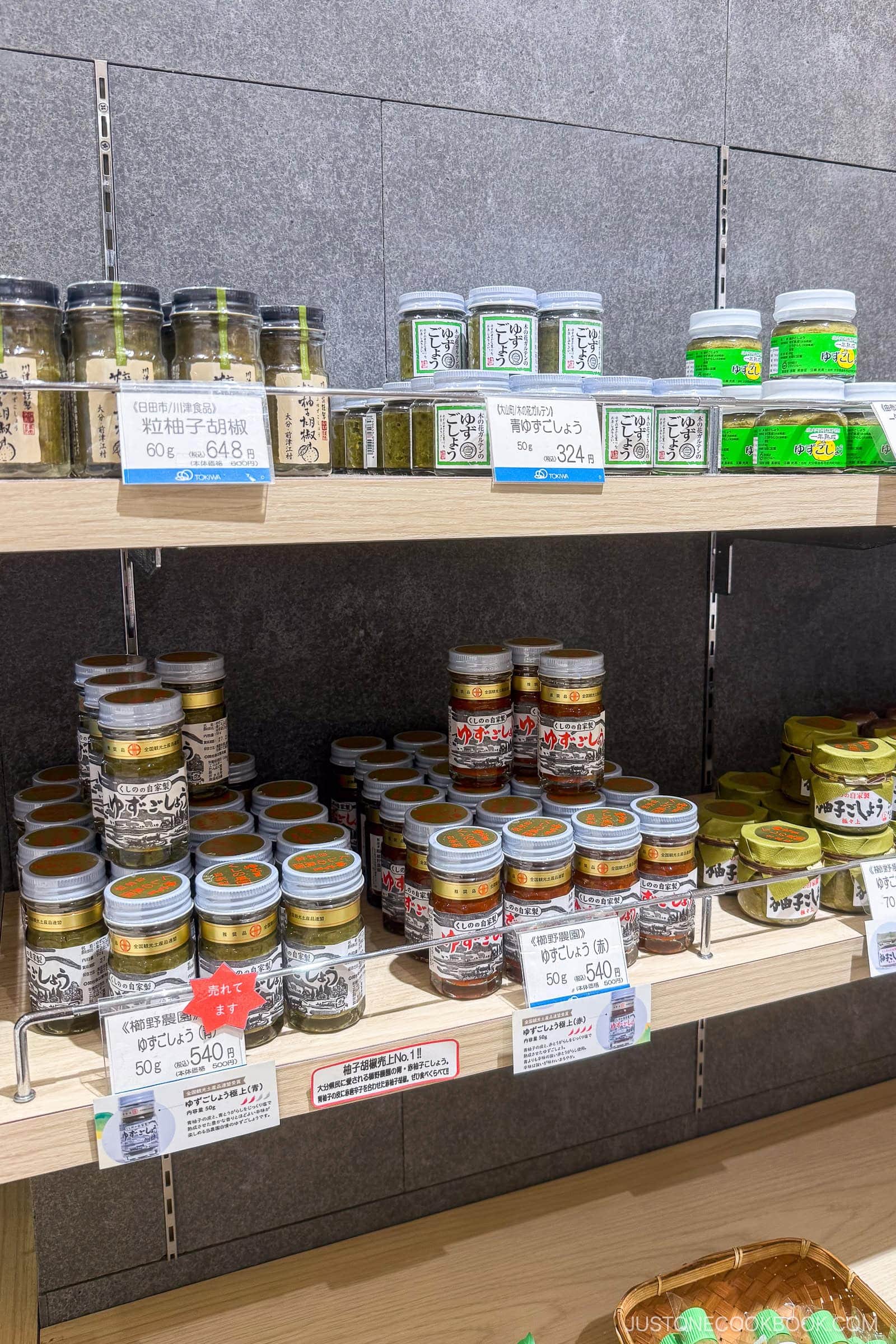
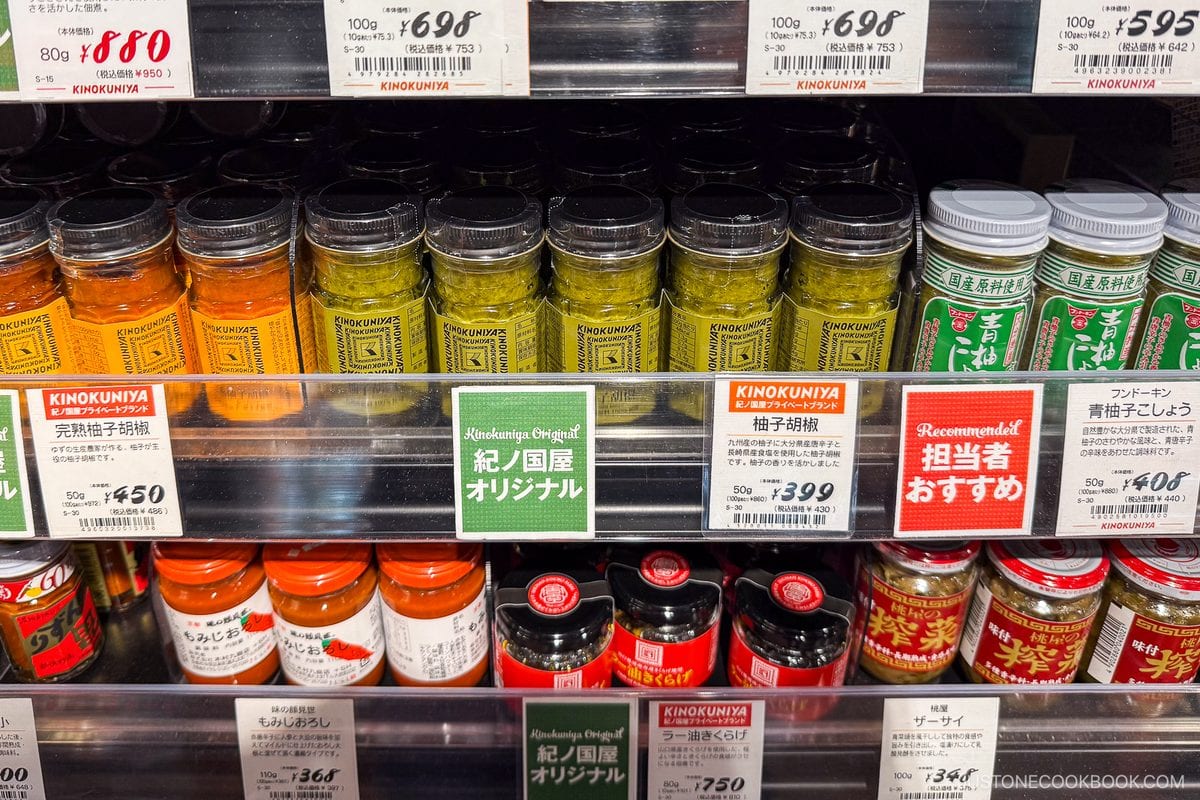
- Specialty grocers. Specialty grocery stores like Akomeya, Kaldi, and Kinokuniya carry unique jars made by small producers. I like to prioritize visiting specialty grocers when I’m looking to find something that I have never seen before. I was especially impressed by the selection at Kinokuniya, which offered the widest variety of yuzu kosho I had seen outside of Kyushu.
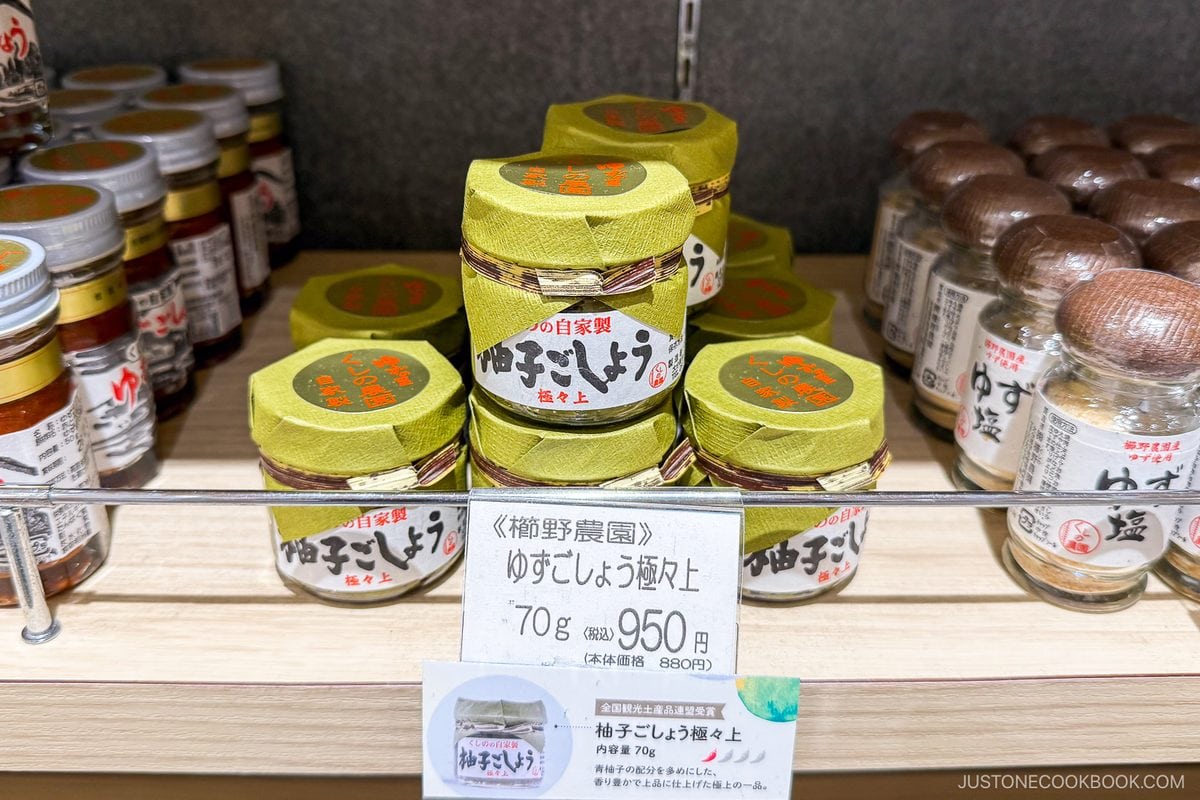
- Kyushu roadside rest stops. If you are traveling throughout Kyushu, especially if you are using a car, be sure to stop at a michi no eki (道の駅), or roadside stations. Here you will find regional small-batch yuzu kosho made by local producers. These michi no eki are a great opportunity to try local Kyushu dishes like champon, chicken nanban, and tonkotsu ramen.
- Depachika (department store basement). The basement food halls inside department stores such as Isetan, Takashimaya, and Mitsukoshi carry gift-quality jars with a special emphasis on presentation.
- Airports and train stations. Keep an eye out at Hakata Station and Fukuoka Airport. You’ll find plenty of omiyage (souvenir) shops with Japanese travelers picking up food souvenirs for friends, family, and coworkers.
How to Use Yuzu Kosho at Home
Here are some easy ways to put your souvenir to work once you get home.
- Yuzu Kosho Chicken. Marinate chicken thighs overnight in yuzu kosho, sake, and ponzu, then pan-fry or air-fry until the skin is crispy.
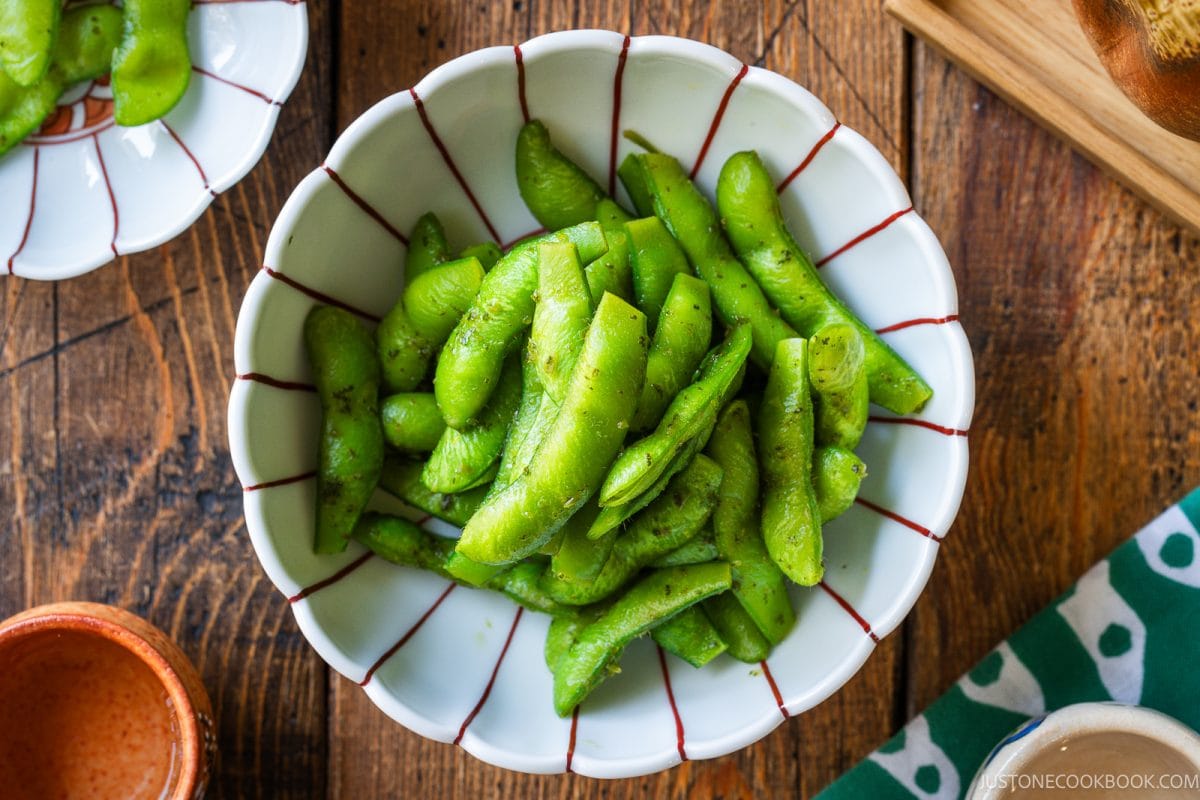
- Yuzu Kosho Edamame. This easy marinade transforms simple salted edamame into a tangy, spicy snack.
- Stir into soups and hot pot. Add a dab to soups like miso soup with yuzu kosho. Or mix into hot pot broths to add a hint of bright spice.
- Add to sauces and dips. Mix a small amount into mayonnaise for a quick dip for vegetables. I like to add a bit to ponzu sauce to accentuate the citrus.
- Pair with grilled dishes. A small dab on yakitori skewers is a classic pairing enjoyed at Japanese-style izakaya pubs. A bit next to grilled fish or veggies helps to cut through the richness.
- Run out? Make your own! Try Nami’s Homemade Yuzu Kosho recipe using fresh citrus and chili peppers.



Whether you choose a classic green yuzu kosho or a regional specialty, this little jar of citrusy heat is a delicious way to bring a taste of Japan home. Have fun exploring the different varieties, and don’t forget to pick up an extra jar for a fellow food lover!
FAQ
Can I bring yuzu kosho home on a flight and through customs?
Usually you can bring yuzu kosho home with you through customs. I suggest keeping it in its original, sealed packaging, and following liquid quantity rules (3.4 oz/100 ml or smaller) if you are transporting it in your carry-on luggage. When in doubt, please check with your home country’s customs regulations.
Is yuzu kosho vegan?
Traditional yuzu kosho has just three ingredients (yuzu, chili peppers, and salt), making it typically vegan. Be sure to check the label for added, non plant-based ingredients.
Is yuzu kosho gluten-free?
Traditional yuzu kosho is naturally gluten-free. As always, check the label for added ingredients to be completely sure.