

This post may contain affiliate links. Please read my disclosure policy.
Recipe Highlights
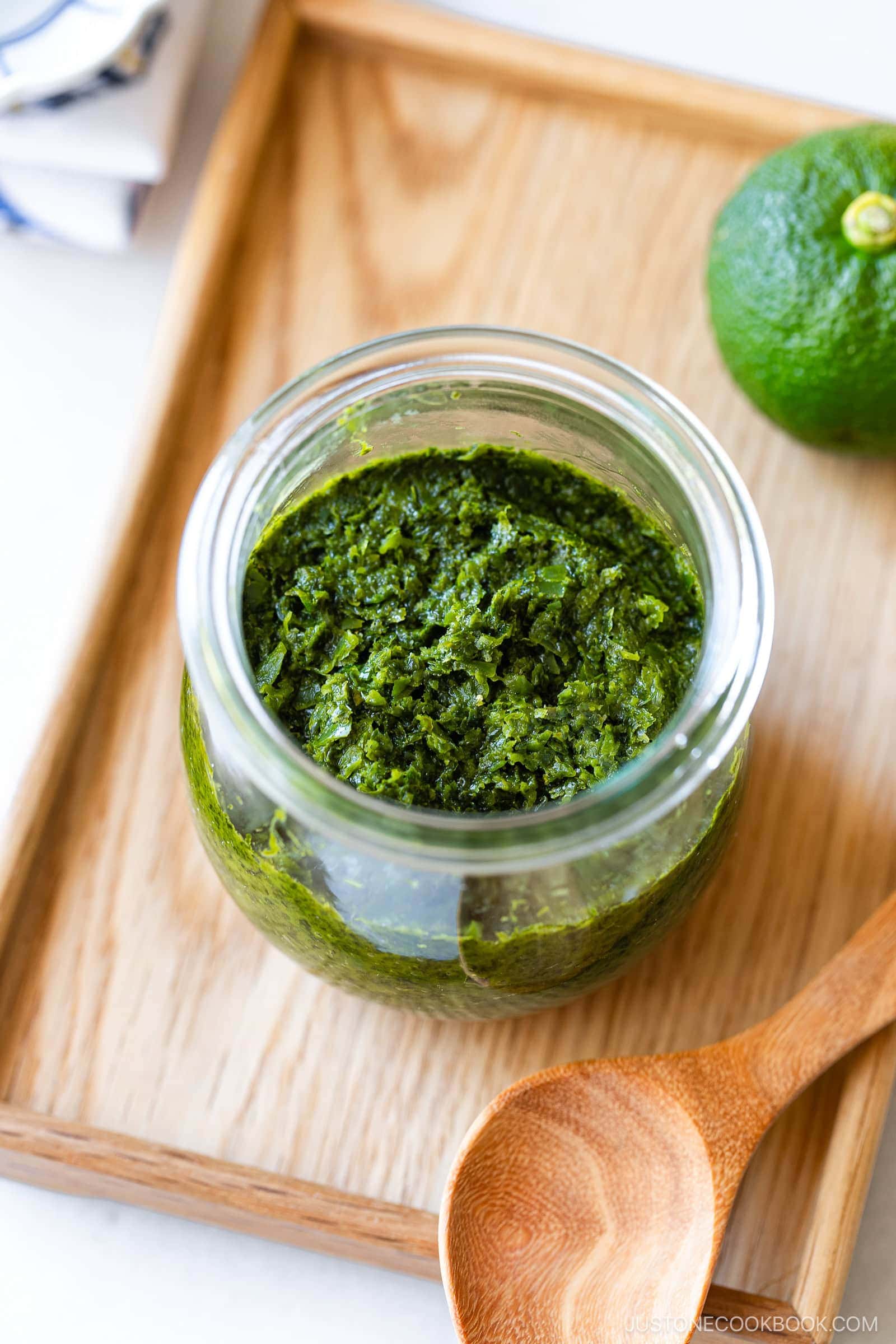
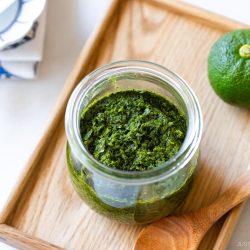
This year my friend let me pick a bunch of yuzu from her tree while it was still green. I decided to turn the yuzu into homemade yuzu kosho. Farmers harvest green yuzu from July to October, before it turns yellow. This happens to be at the same time as green chili season, making yuzu kosho a natural summer cooking project.
Here’s why I keep coming back to this recipe:
- Versatile. Adds punch to soups, rice, grilled meats, and vegetables.
- Simple. Just three ingredients and easy prep.
- Customizable. Swap the citrus and chilis and adjust the heat to your taste.
If you are looking for more fun summer projects, try my Japanese Plum Wine (Umeshu), Ume Plum Syrup, and Ume Miso recipes next!

What is Yuzu Kosho?
Yuzu kosho (柚子胡椒) is a fermented Japanese condiment made from yuzu zest, chili peppers, and salt. “Kosho” usually means black pepper in Japanese, but it’s the local word for chili pepper in the Kyushu dialect, where this condiment originated.
There are two versions:
- Green yuzu kosho (ao yuzu kosho, 青柚子胡椒) uses summer’s green yuzu and chilis for a spicy, bright flavor.
- Red yuzu kosho (aka yuzu kosho, 赤柚子胡椒) uses winter’s ripe yellow yuzu and red chilis for a warm, gentle heat.
Ingredients for Yuzu Kosho
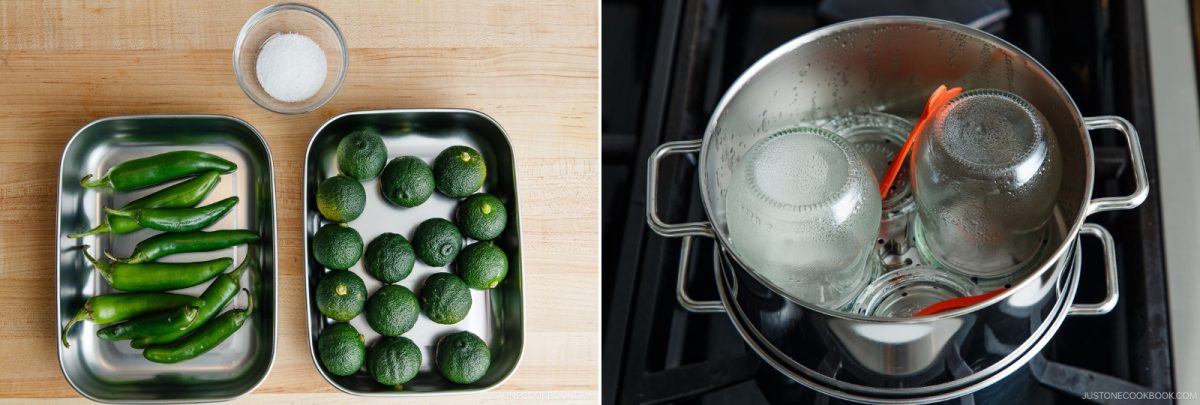
- Green yuzu – substitute with lime or lemon
- Green chili peppers (ao togarashi, 青唐辛子) – substitute with serrano peppers (closest match for heat and flavor)
- Diamond Crystal kosher salt or sea salt
Find the printable recipe with measurements below.
Jump to RecipeHow to Make Yuzu Kosho
Please note that this recipe requires 1–2 weeks of fermenting.
- Sterilize the jar. Boil or steam a glass jar for 10 minutes. Air-dry upside down on a towel.
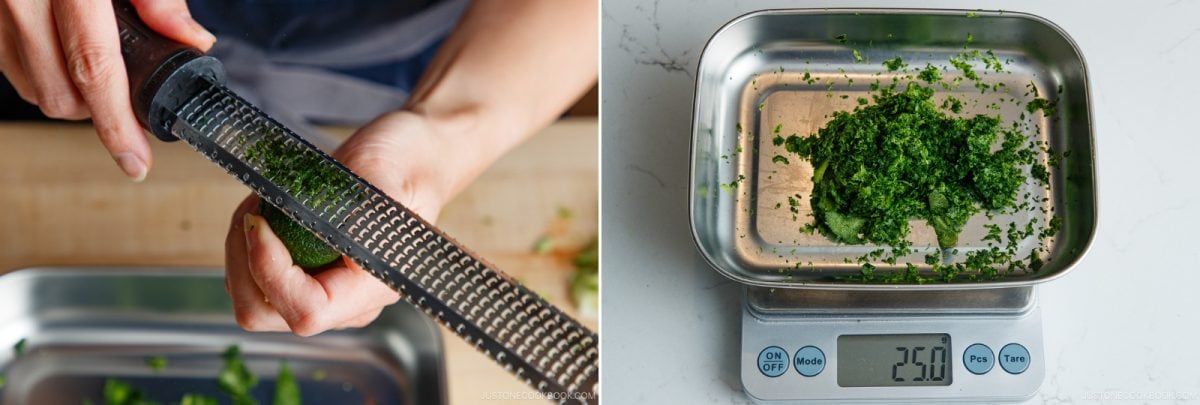
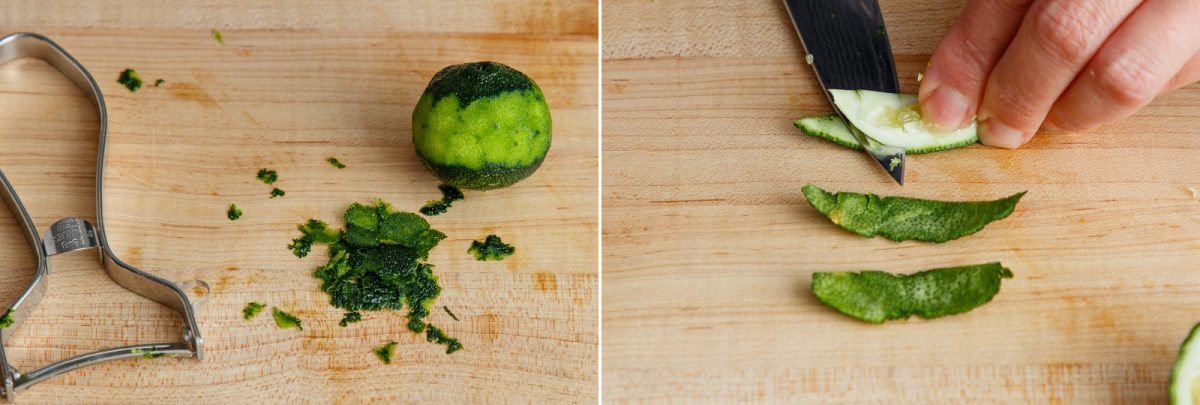
- Zest the yuzu. Grate the peel with a microplane, avoiding the white pith. Weigh the zest on a digital scale to set your base weight.
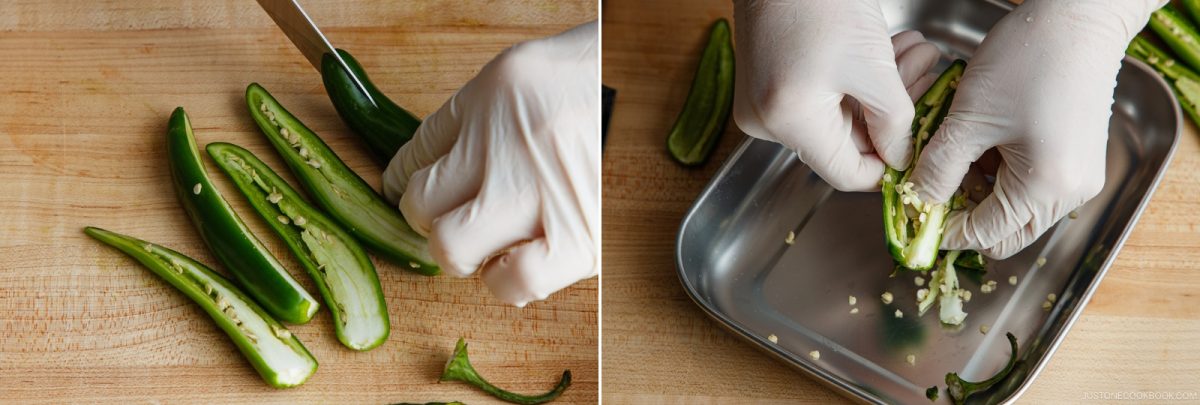
- Prep the chilis. Wear food-safe gloves to halve the peppers lengthwise, scrape out the seeds, and trim any remaining pith. Weigh to match the zest.
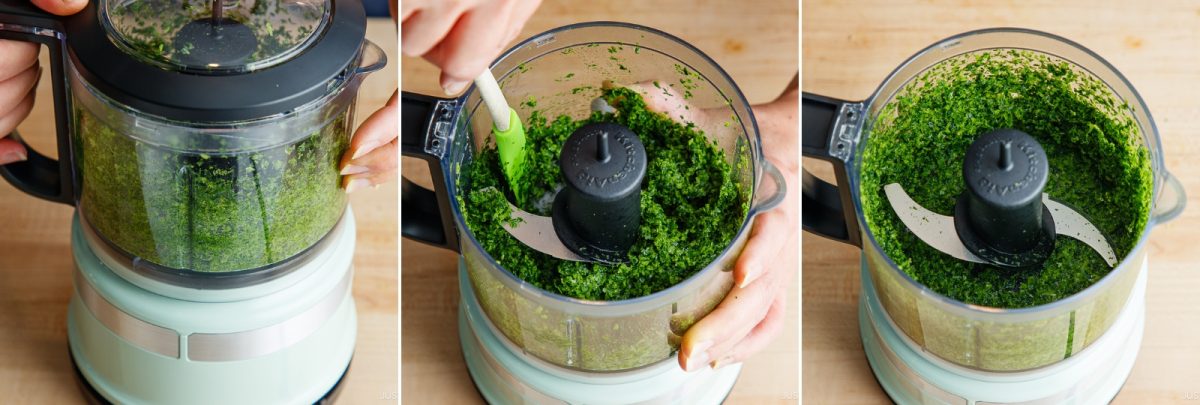
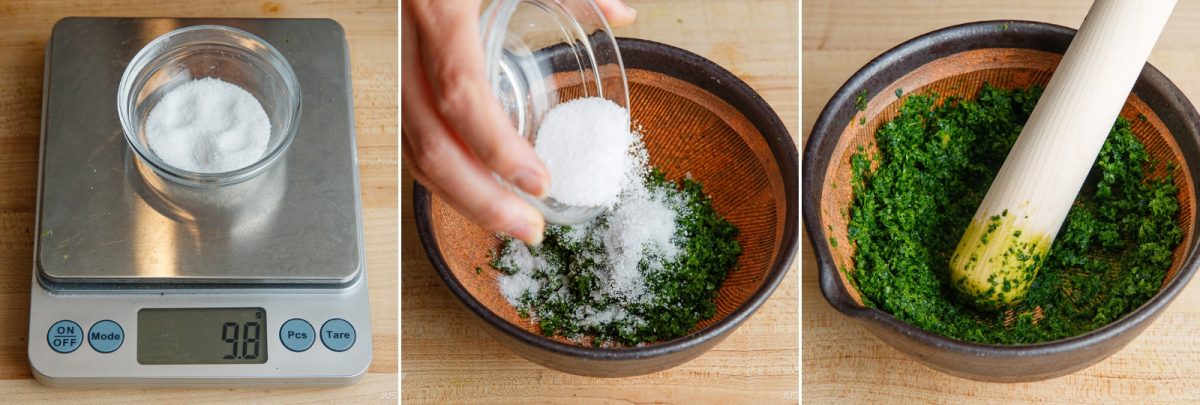
- Grind to a paste. Finely chop the zest and chilis in a food processor or with a mortar and pestle. Weigh the paste, then mix in salt at 15–20% of the total weight.
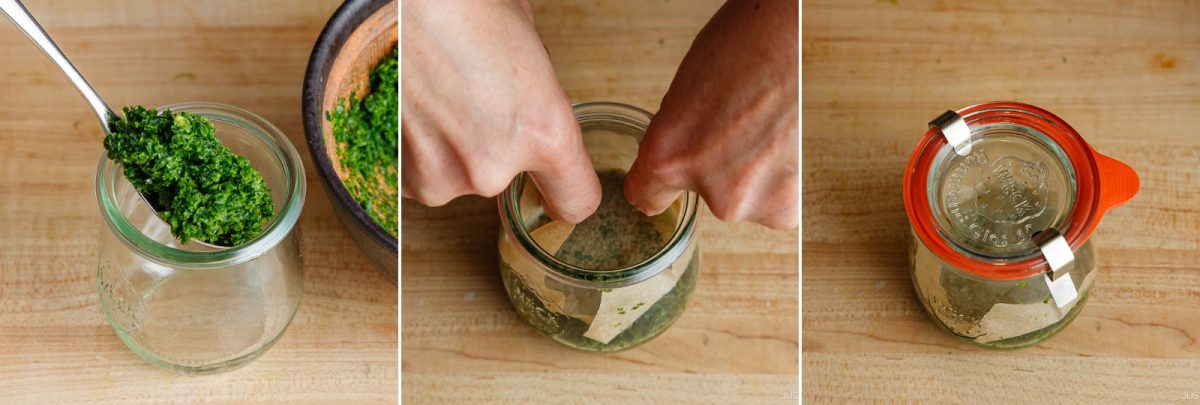
- Jar and ferment. Press the paste into the jar, pushing out any air pockets before sealing. Rest at room temperature for 24 hours, then ferment in the refrigerator for 1–2 weeks.


Nami’s Recipe Tips
Before you start, here are a few things I’ve learned along the way.
- Choose organic produce if possible – Since we’re using the peel, pesticide residue matters more here than in other recipes.
- Skip iodized salt – It can inhibit fermentation and leave a strange flavor. Use pure kosher or additive-free sea salt instead.
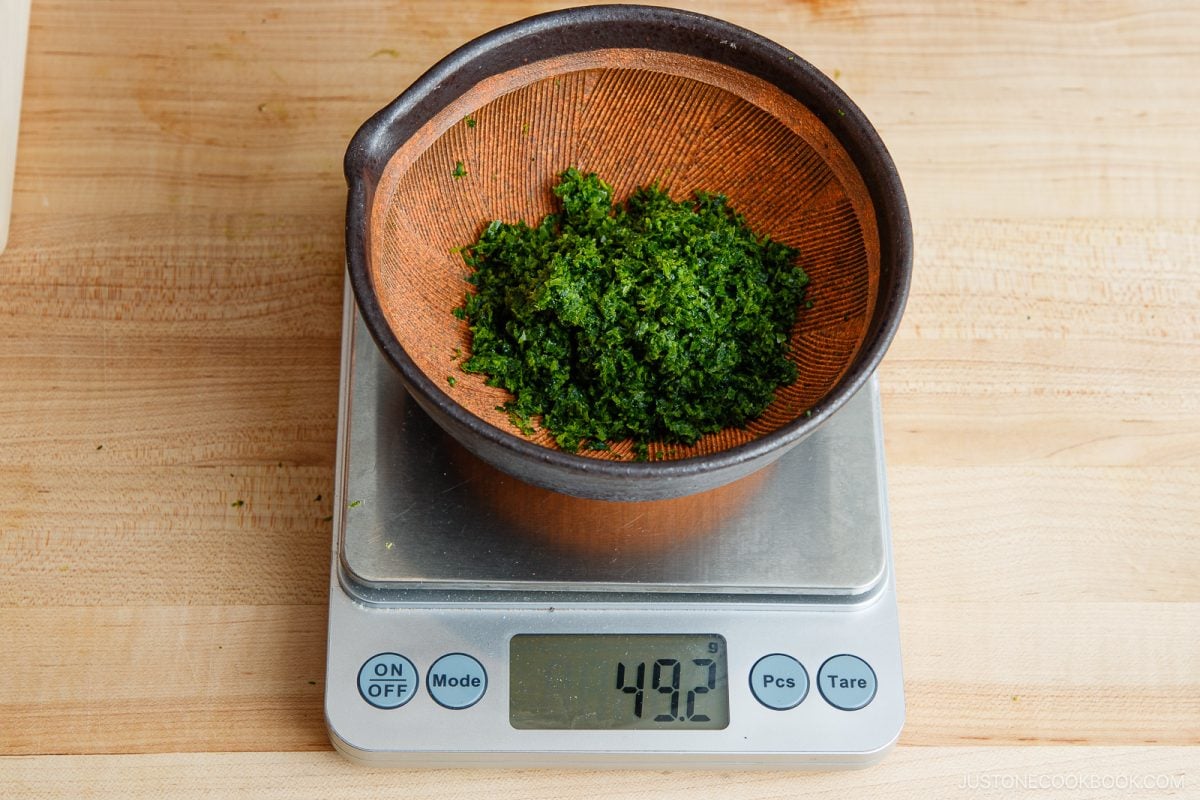
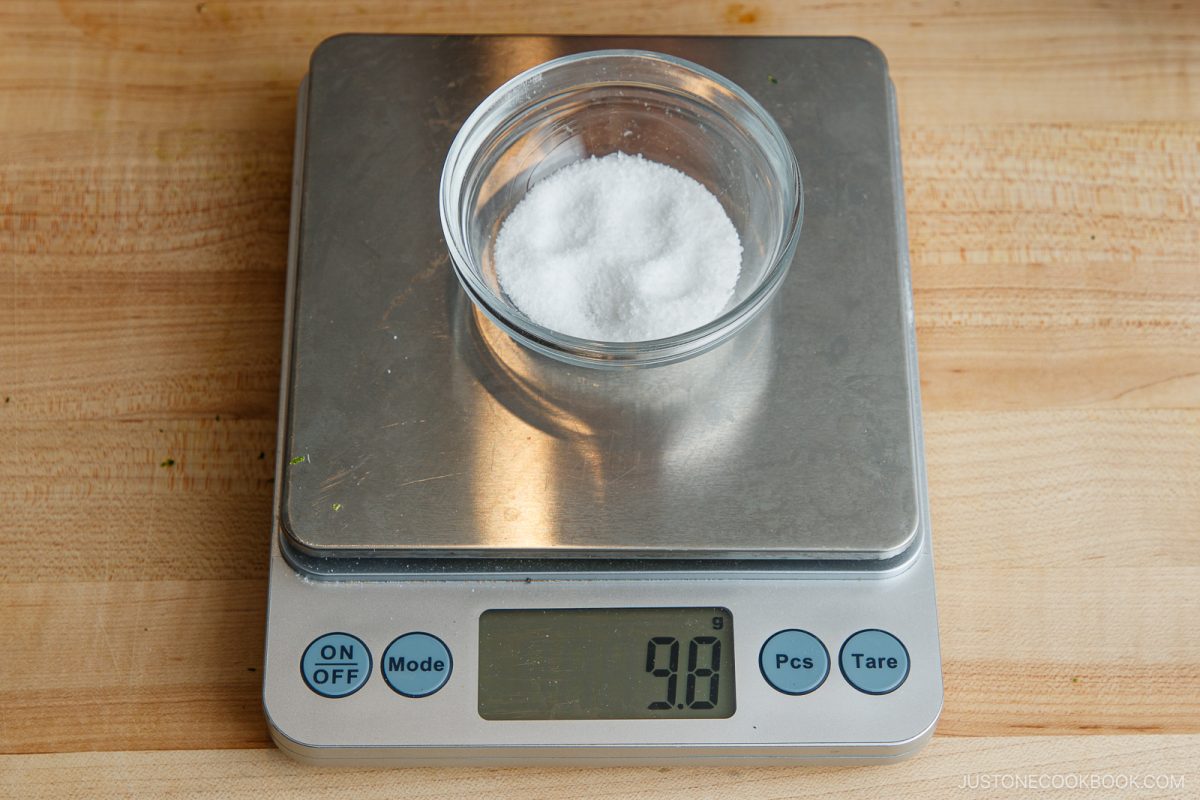
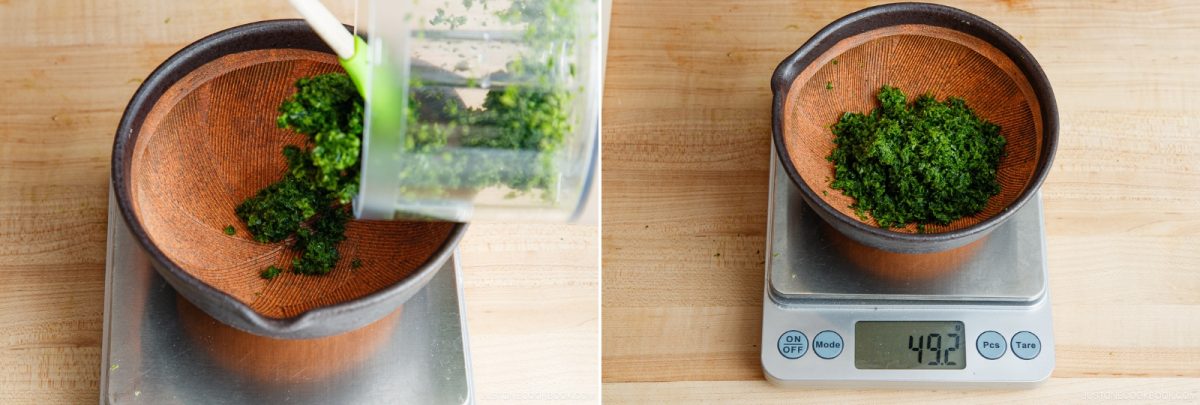
- Use a scale – Yuzu and chilis vary in size so weigh them for an accurate ratio.
- Stick to the salt percentage – Too little risks spoiling; too much mutes the citrus. 15–20% is the sweet spot. I like mine saltier, closer to 20%.
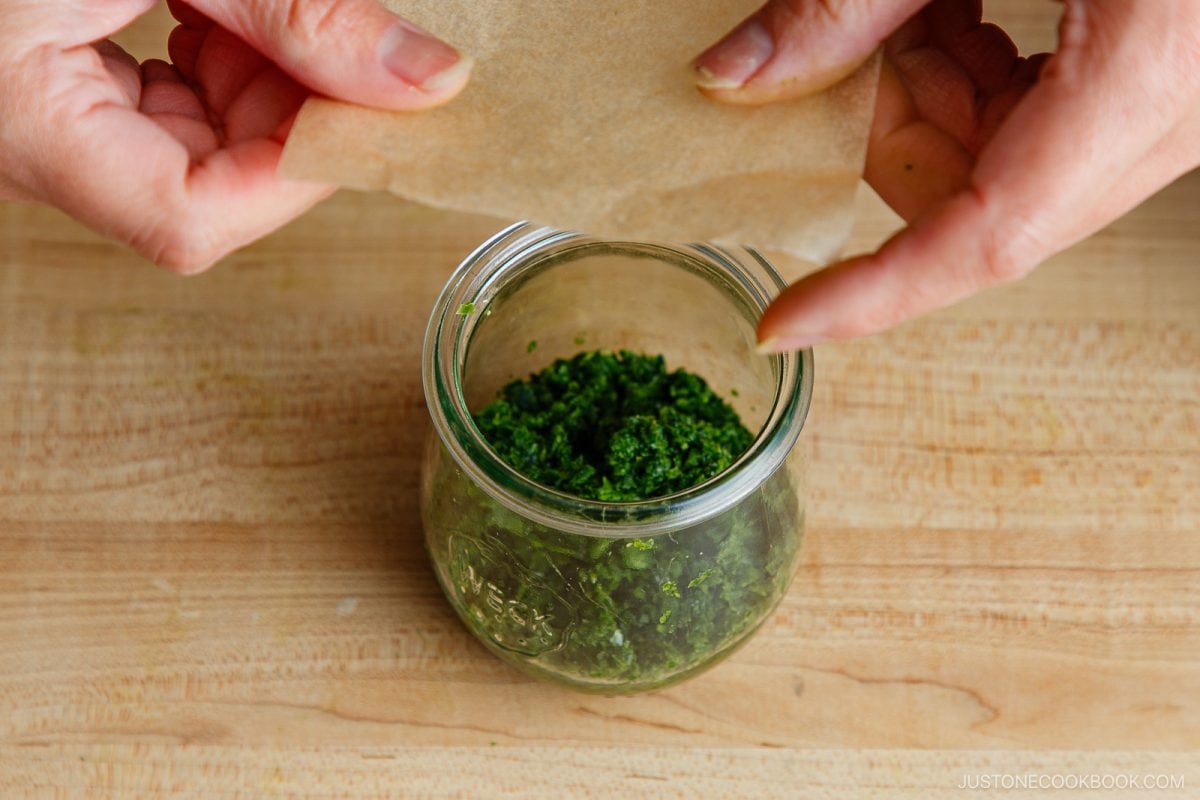
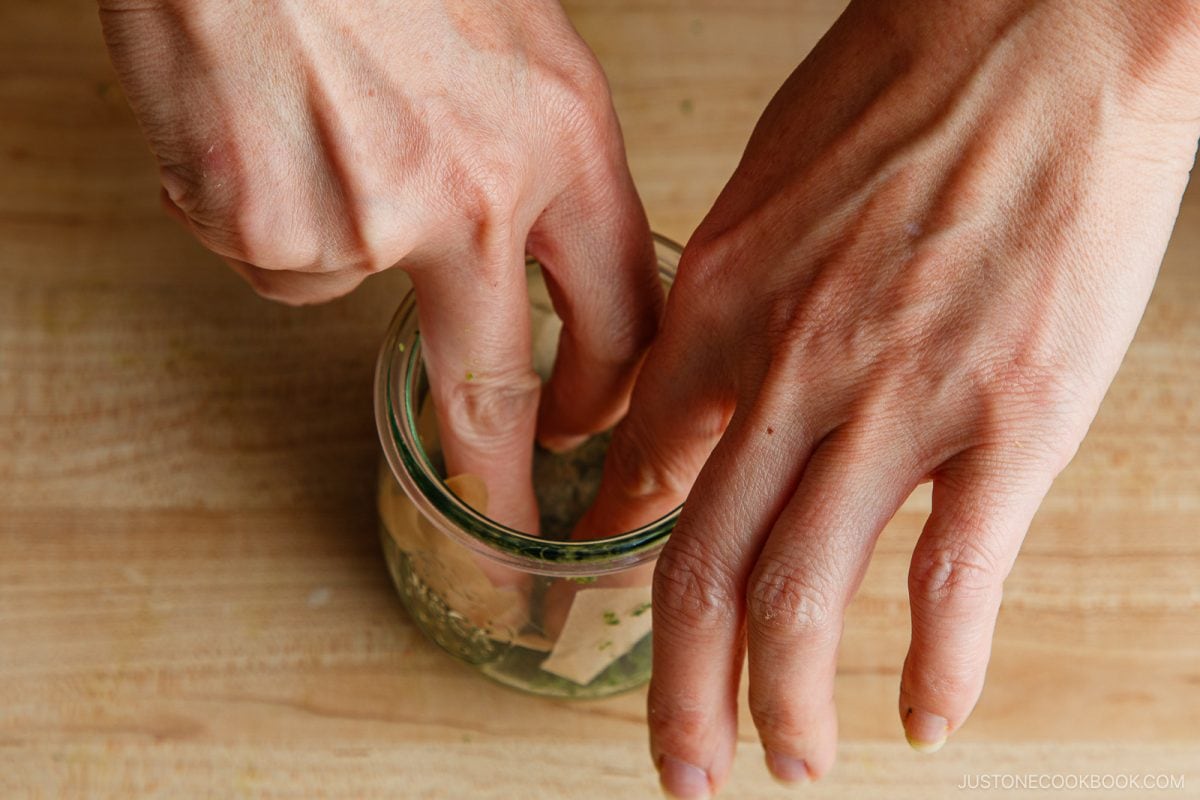
- Pack the jar tightly – Press out any air pockets and lay parchment paper on the surface before closing. This keeps air from dulling the color and flavor.
- Add yuzu juice if needed – If your yuzu kosho looks dry, stir in a small drizzle of fresh yuzu juice.
- Don’t skip the cold ferment – Fresh paste tastes sharp but after fermenting, the flavor mellows and rounds out.
Storage Tips
To store: Keep in a sterilized airtight jar in the refrigerator for about 6 months. Keep parchment paper on the surface to preserve the color.
To freeze: Yuzu kosho freezes well and never hardens fully, so you can scoop it straight from the freezer without thawing.


Variations
This recipe is flexible—here are a few easy swaps to suit your taste or pantry.
- Make red yuzu kosho. Use zest from ripe yellow yuzu and red togarashi peppers. It’s a great winter cooking project when both are in season.
- Adjust the spice level. A 1:1 ratio of zest to chilis suits a mild-to-medium spice level, which is where my spice tolerance sits. Adjust the ratio to your own taste. That’s the beauty of making it yourself!
- Swap green yuzu. Replace with lemon, lime, or other Japanese citrus like sudachi, kabosu, or shikwasa (Okinawan lime).
- Change the chilis. Experiment with your chilis. Serrano peppers are the closest match in flavor and heat level to Japanese ao togarashi. Jalapeño, Thai chili, and habanero peppers also work.
How to Use Yuzu Kosho
Start with a small dab to enhance the flavor of many Japanese dishes. You’ll soon see why it’s a kitchen staple for chefs and home cooks alike. Here’s how I use it:
- Stir into soups. The hint of bright, peppery, citrus cuts through the savory broths. I mix it in my homemade miso soup and udon noodle soup.
- Add to onigiri. Mix into the fillings or rice to up the umami. It works especially well in tuna mayo onigiri.
- Serve alongside grilled meat and fish. Dab onto yakitori skewers and thinly sliced yakiniku. It’s also a natural pairing with fish like grilled mackerel and sashimi.
- Add to oden or hot pot dipping sauces. It’s an easy way to give these sauces a bright twist.
- Whisk into dressings and dips. Mix a bit into mayo or cream cheese for a rich dip made in minutes.
- Add to edamame. Stir in a bit to coat warm edamame pods. We tried edamame like this in Kyushu and loved it. Stay tuned for the recipe coming soon!


FAQ
What does yuzu taste like?
Yuzu has a tart yet sweet flavor. It is often described as a cross between a mandarin orange and lemon or grapefruit when fully ripe. Read our guide to learn more about yuzu.
Can I use less salt?
Below 15% salt risks spoiling the yuzu kosho. Stay in the 15–20% range for a safe ferment and long refrigerator life.
Why did my yuzu kosho turn olive-brown?
Air entering the jar will dull the bright green color. Press out air pockets and cover the surface with parchment each time after opening.
I’d love to hear how your Yuzu Kosho turned out! 💛 Please leave a star rating and comment below to share your experience. Your feedback not only supports Just One Cookbook but also helps other home cooks discover recipes they can trust.
Yuzu Kosho
Ingredients
- 25 g green yuzu zest (~15 small fruits; washed and dried; optional yuzu juice to bind the paste)
- 25 g fresh green chilis (~3 serrano peppers—closest swap for ao togarashi; stemmed and seeded)
- 7.5–10 g Diamond Crystal kosher salt (15–20% of yuzu + chili weight; ~2⅔ tsp to 1 Tbsp)
Instructions
Before We Start
- Gather all the ingredients. Fruit sizes vary, so buy a little extra of each.To sterilize the jar, boil or steam a glass jar for 10 minutes, then air-dry upside down on a clean towel.Note: Green yuzu is usually the harder ingredient to source, so zest and weigh it first, then match that exact weight in chilis for a true 1:1 ratio.
To Zest the Yuzu
- Microplane the peel. Avoid the bitter white pith. Weigh the zest on a digital scale—this is your base weight (e.g., 25 g).
- (Optional method: Peel with a knife or vegetable peeler, then trim off the white pith.)
To Prep the Chilis
- Wear food-safe gloves. Trim the stem, halve chilis lengthwise, and scrape out the seeds.Nami’s Tip: Gloves prevent painful accidental burns. Capsaicin lingers on skin for hours and will cause a severe burn if you accidentally touch your eyes.
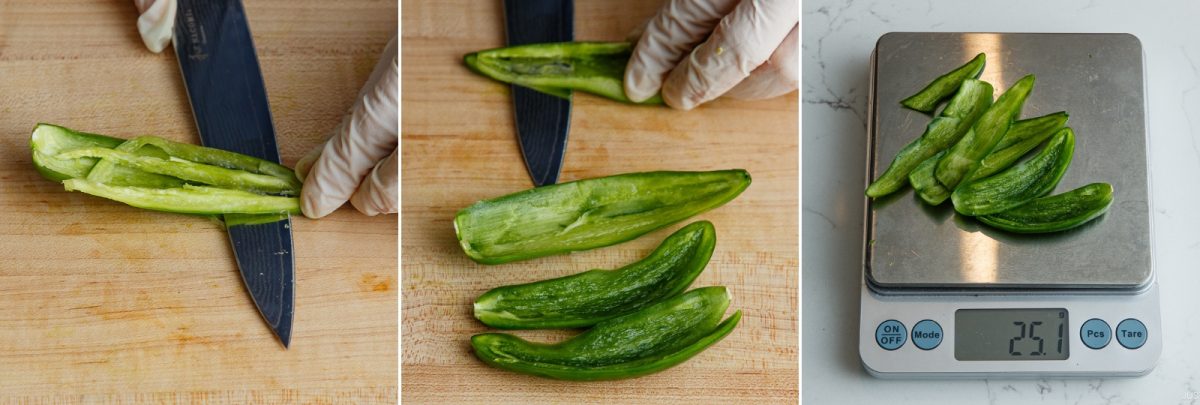
- Use a small paring knife to slice away any remaining white pith.Weigh the prepped chilis to match your yuzu zest weight exactly (e.g., 25 g)
To Grind to a Paste
- Transfer the chilis and zest to a food processor.
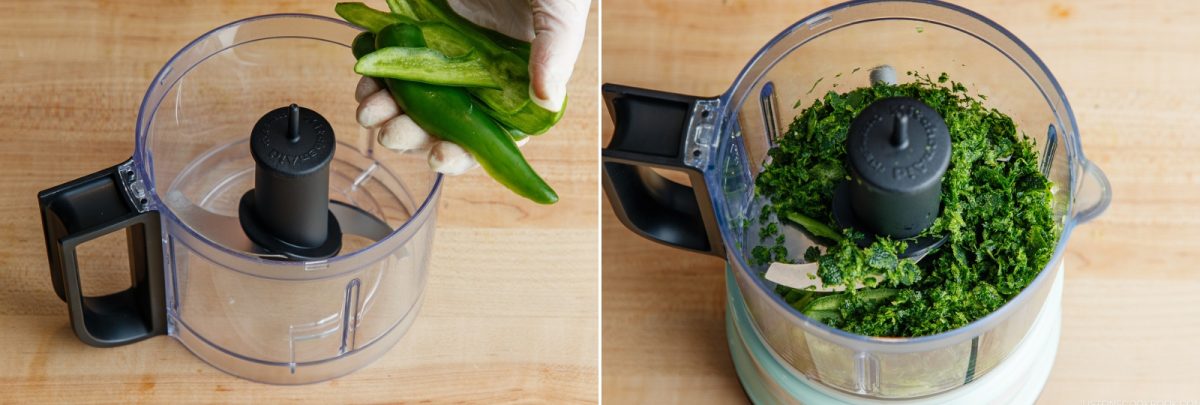
- Pulse, scraping down the sides as needed, until finely chopped.Nami’s Tip: For a smoother, traditional texture, finish by hand in a mortar and pestle—it releases even more citrus oils for an incredibly aromatic paste!
To Calculate and Add the Salt
- Place a bowl or mortar on a digital scale. Transfer the paste and record the total weight. Calculate 15%–20% of the paste weight in salt (e.g., 7.5–10 g salt for 50 g paste).
- Weigh the calculated salt and mix in thoroughly (grinding with a mortar and pestle) until fully dissolved and hydrated.Nami’s Tip: Only add a small drizzle of fresh yuzu juice if the paste looks dry—the salt usually draws out plenty of moisture naturally.
To Jar It
- Transfer paste into your sterilized glass jar, pressing out air pockets. Lay a small piece of parchment paper directly on top of the paste surface. Close the lid tightly to create an anaerobic environment.Nami’s Tip: Pressing out air pockets and sealing well prevents top oxidation, keeping the entire jar bright and fresh.
To Ferment and Age
- Rest at room temperature for 24 hours (if your kitchen is cool), then transfer to the refrigerator.Age in the fridge at least 7 days (2 weeks recommended) to mellow raw heat and develop a rounded flavor.
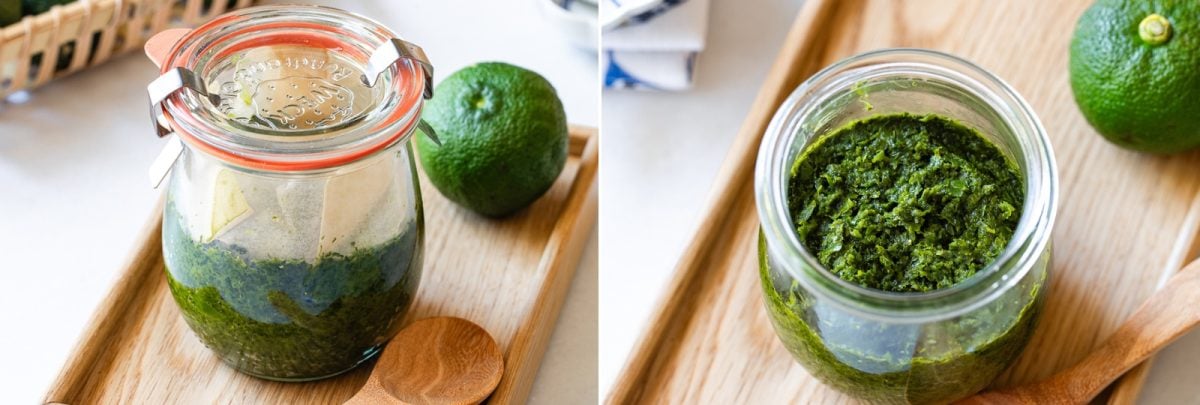
To Store
- Keep in the fridge for about 6 months. Freezes exceptionally well without turning solid—scoop straight from frozen whenever needed.
Notes
Ingredients & Substitutions
- Yuzu zest: Swap in lemon or lime zest.
- Green chilis: Serrano pepper is the closest match in flavor and heat to Japanese ao-togarashi. You can also use jalapeño, Thai chili, or habanero.
- Salt: Use pure kosher or additive-free sea salt. Do not go below 15% salt by weight to prevent spoilage during fermentation. Avoid iodized salt, which can hurt the ferment.
To Use Leftover Yuzu
Here are a few great ways to make use of the remaining fruit:- Yuzu ponzu: Juice the fruit and follow my Yuzu Ponzu recipe.
- Green yuzu syrup: Layer sliced fruit with sugar or honey until dissolved, then dilute with water.
- Yuzu ice cubes: Freeze strained juice in ice trays for dressings or Japanese Cucumber Salad.
How to Use (Quick Ideas)
See post above for full variation ideas!- Soups & Noodles: Stir a dab into miso soup, udon noodle soup, or simple pasta like aglio e olio.
- Rice & Proteins: Top onigiri, Hiyayakko (Japanese cold tofu), Yakitori, Yakiniku, Grilled Mackerel, or sashimi.
- Dips & Sauces: Whisk into mayo, cream cheese, or hot pot dipping sauces.
Did you make this recipe?
Tag @justonecookbook on Instagram so we can see your delicious creation!