

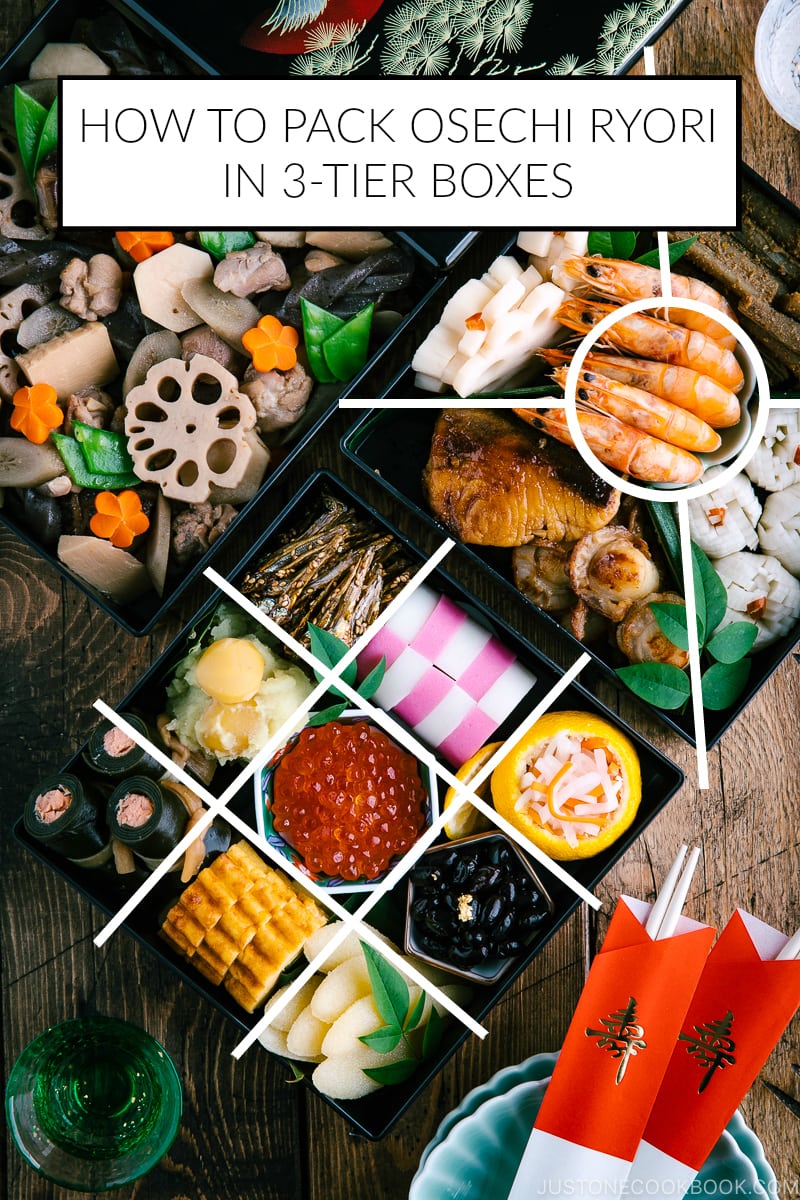
Osechi packing made simple! Here’s my beginner-friendly guide on how to pack Osechi Ryori in 3-tier boxes called jubako. With step-by-step photos, a video tutorial, and helpful tips, you’ll be able to prepare beautiful osechi boxes with confidence for your Japanese New Year feast.
Quick Overview
Osechi ryori is the traditional Japanese New Year feast served in two- or three-tiered lacquered boxes called jubako (重箱).
Each dish is arranged with care as an offering to the Year God. The stacked layers symbolize “piling up blessings” for happiness and good fortune in the year ahead.
To help you enjoy this special tradition with ease at home, I’ll walk you through:
- traditional guidelines for packing osechi boxes;
- how to plan your osechi layout;
- what foods go in each tier;
- my favorite props; and
- how to arrange colors, shapes, and textures for the best visual impact.
Now, let’s begin!
Rules for Packing Osechi
We follow a few traditional “rules,” but don’t worry—think of them as helpful guidelines. Focus on the meaning and good wishes of this festive meal rather than perfection.
- Place specific items in each box tier
- This three-tier layout is traditional, though it varies by region and family. You can also use one or two boxes or even platters.
- Top tier: Small appetizers to enjoy with drinks
- Middle tier: Grilled and vinegared dishes
- Bottom tier: Simmered dishes
- This three-tier layout is traditional, though it varies by region and family. You can also use one or two boxes or even platters.
- Season slightly stronger
- Salt and sugar are natural preservatives that slow bacterial growth.
- They help the flavors balance as the dishes mellow over time.
- Pack only cold or room temperature dishes
- Lacquered jubako boxes are not meant for hot foods.
- Allow each dish to cool fully before packing. Condensation can lead to spoilage.
- You can prepare many items in advance and refrigerate until ready to pack.
- Serve in odd numbers
- Odd numbers are considered lucky in Japanese culture.
- Arrange food in groups of 3, 5, 7, or 9 pieces.
- If you have an even number of pieces, add a garnish—like a small leaf or citrus peel—for an auspicious presentation.

Helpful Osechi Packing Tips
My simple osechi packing tips can help both beginners and experienced cooks stay focused and organized:
- Plan your layout ahead of time – Label boxes with sticky notes. Planning in advance makes packing go faster!
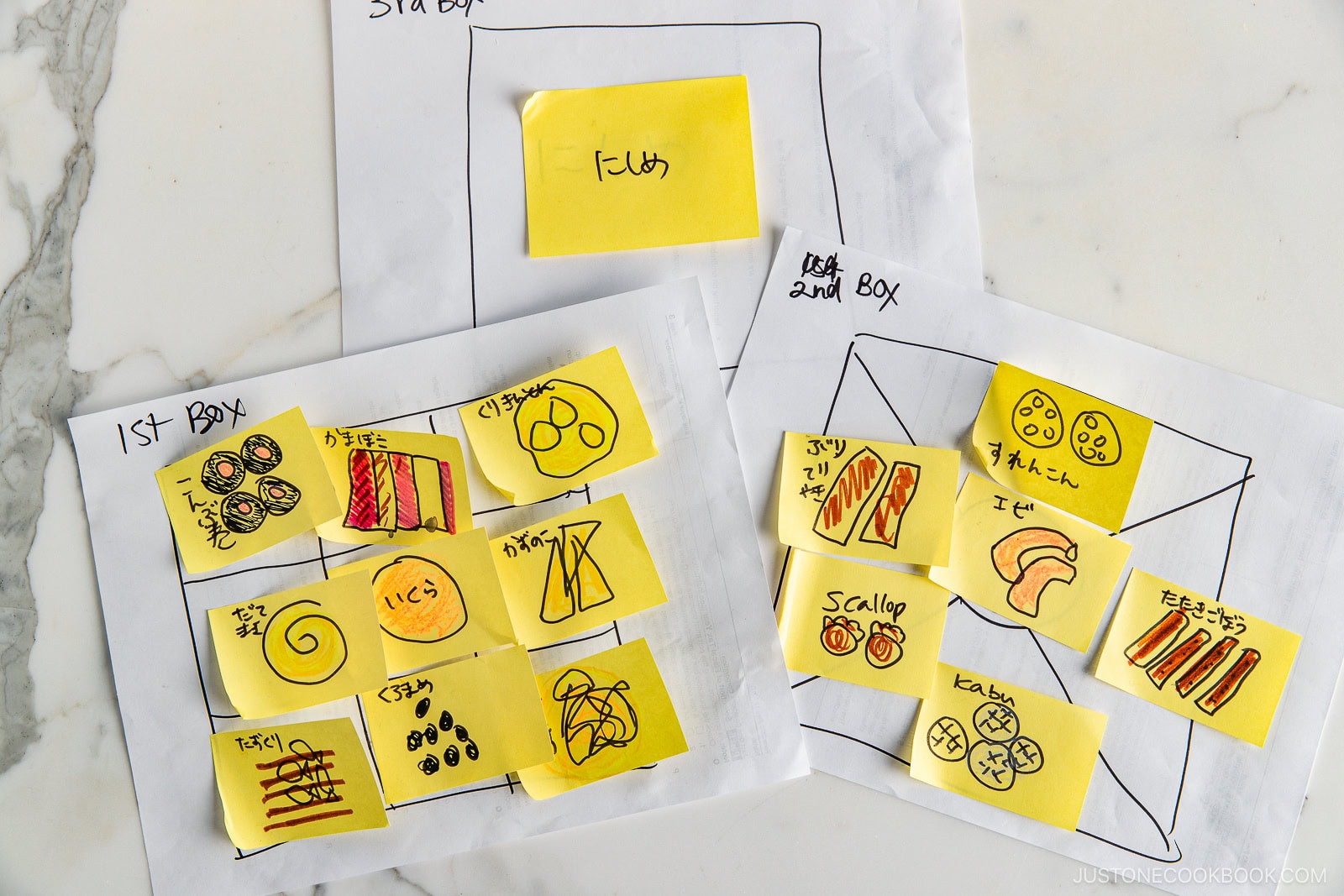
- Coordinate color and shape – Arrange foods with contrasting colors next to each other, and balance the shapes and textures. Tip: Don’t place datemaki and kuri kinton side by side since they’re both yellow.
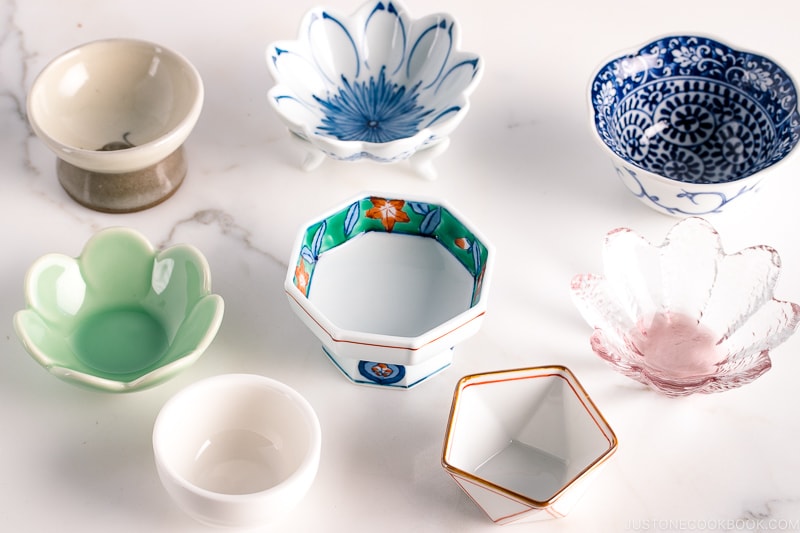
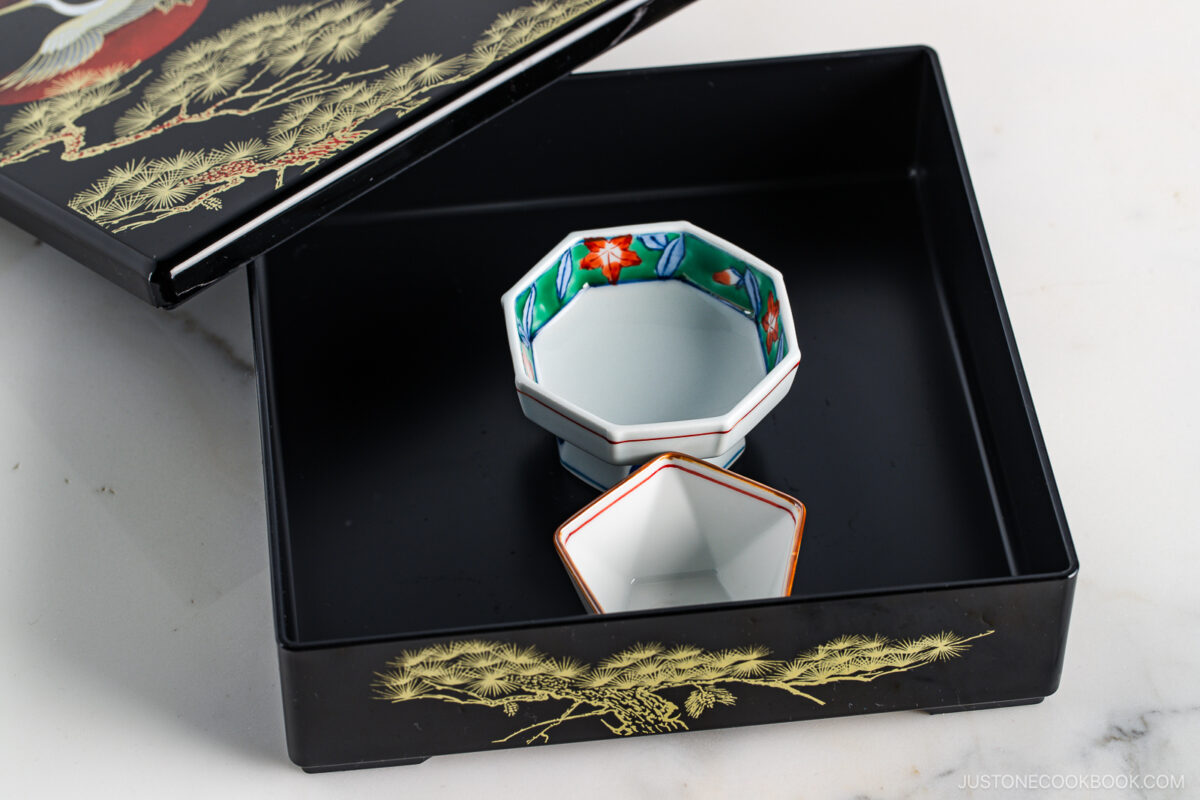
- Compartmentalize with small bowls to hold loose ingredients like kuromame (sweet black soybeans) and ikura (salmon roe).
- Add structure with rigid foods – Place firm foods like kamaboko fish cake and sweet rolled omelette next to loose, soft, and flexible foods.
- Cool completely before packing – Let dishes cool fully before packing to avoid condensation, which can cause spoilage.
- Drain liquids – You don’t want to mix the flavor of two dishes, so make sure to remove any cooking liquids before packing. The food will also keep longer that way.
- Check your colors – For example, add festiveness, elegance, and freshness with a touch of green.
My Favorite Osechi Props
To make osechi easier and prettier, three items come to my mind:
- colorful mini bowls to hold loose foods or condiments
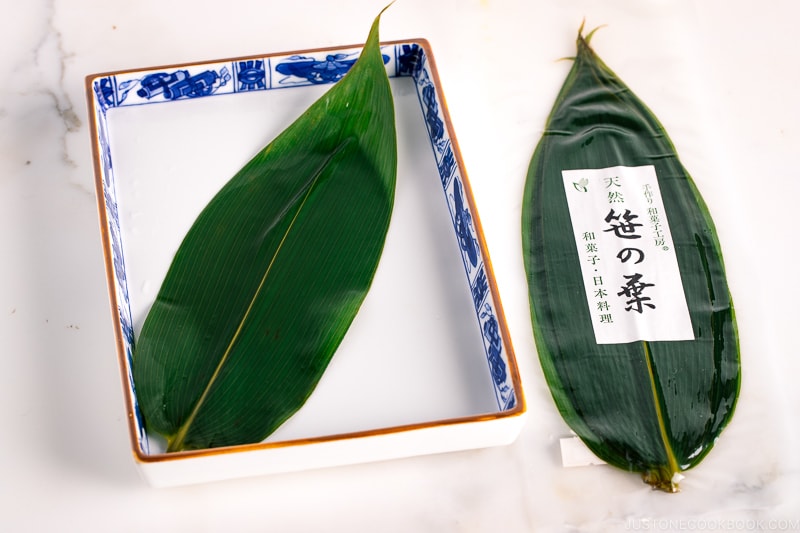
- bamboo leaves or shiso leaves to place underneath foods or to compartmentalize
- nanten leaves (nandina, heavenly bamboo, or sacred bamboo), green maple leaves, or pine needles for a pop of color
- You don’t need to use these exact items. Simply look for props that provide separation, add height, and enhance presentation.

Watch Video Tutorial on How to Pack Osechi Ryori
How to Pack Osechi Ryori in Jubako
The Top Tier
The first box (Ichinoju, 一の重) is the “face” of osechi with the colorful and beautiful small dishes. We enjoy them with drinks like otoso and sake, similar to appetizers or hors d’oeuvres. I use the ichimatsu (市松 checkerboard) design with 9 square compartments.
- Salmon roe (ikura) いくら
- Decorative Fish Cakes (Kamaboko) 市松かまぼこ
- Sweet Rolled Omelette (Datemaki) 伊達巻
- Salmon Kombu Roll (Kobumaki) 鮭の昆布巻き
- Candied Chestnut and Sweet Potatoes (Kuri Kinton) 栗きんとん
- Candied Sardines (Tazukuri) 田作り
- Daikon & Carrot Salad (Namasu) 紅白なます
- Sweet Black Soybeans (Kuromame) 黒豆
- Herring Roe (Kazunoko) 数の子
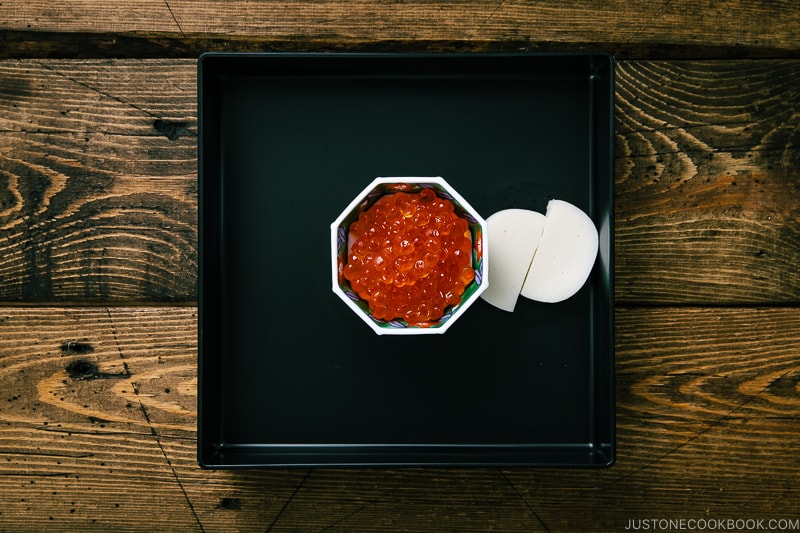
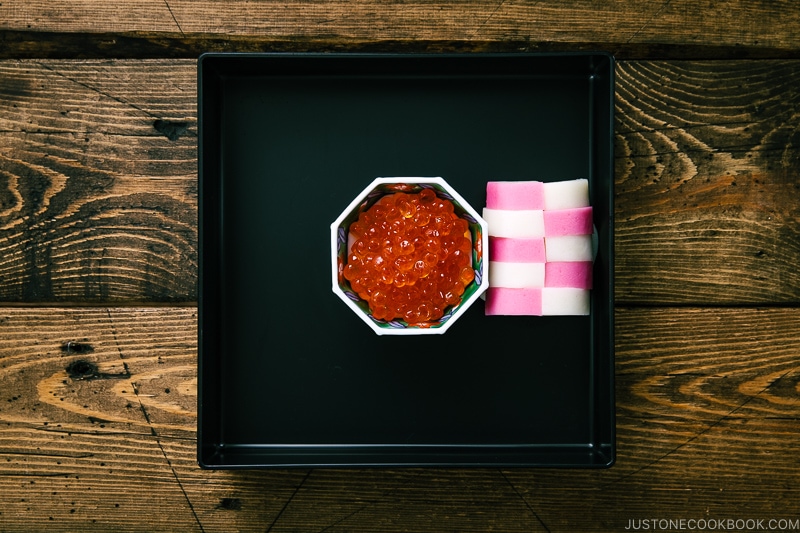
- Start with a center dish that has a pretty color and shape. Here, I put salmon roe in an octagonal bowl. Another option is sweet black beans or daikon and carrot salad in a yuzu cup.
- To maintain the same height as the salmon roe, I lay two slices of fish cake (kamaboko) as a height “booster.” Then, I add kamaboko on top in a checkerboard design. We use red (pink) and white for happy occasions.
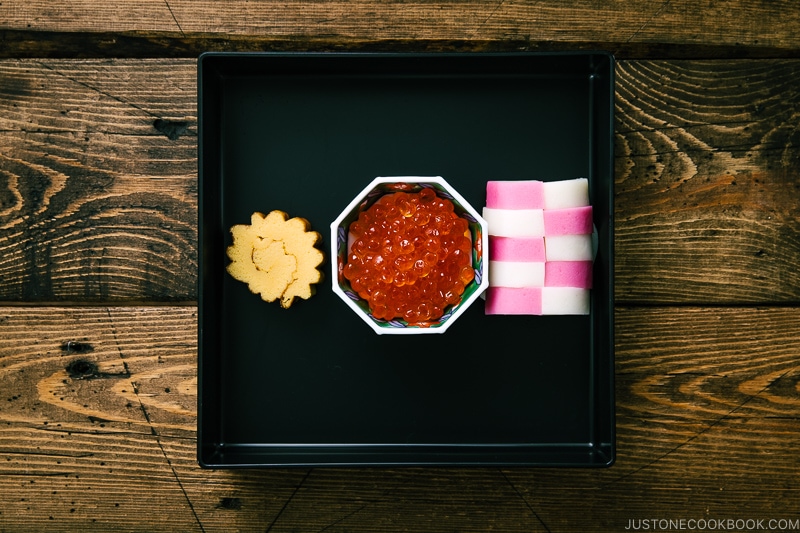
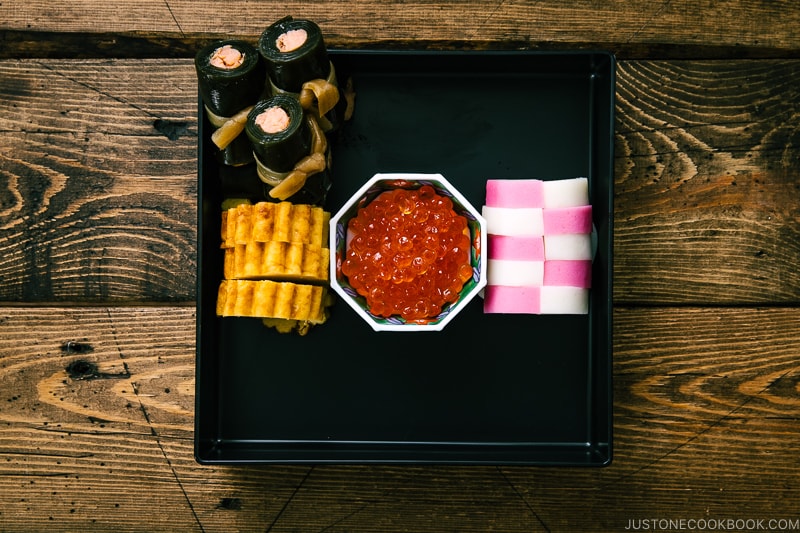
- I add a slice of rolled egg omelette on its side as another booster before putting the omelette slices on top so they’re the same height as the salmon roe and fish cake.
- Likewise, I add simmered salmon kelp rolls with a booster underneath.
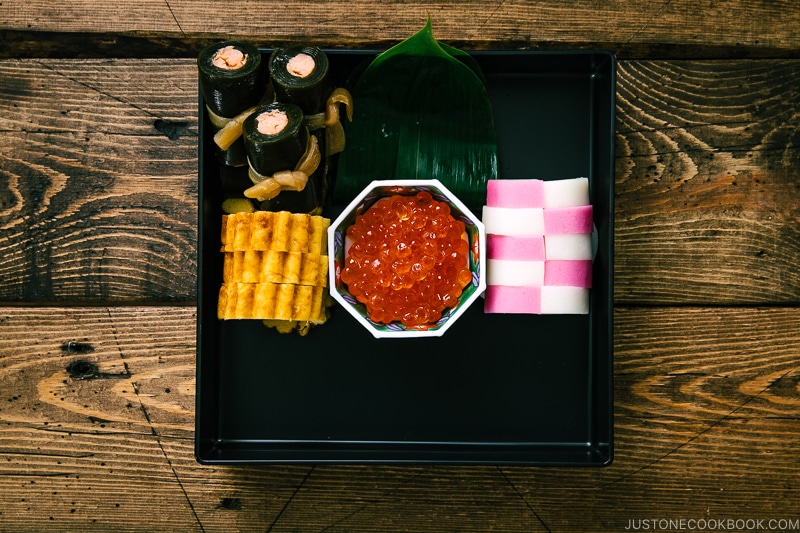
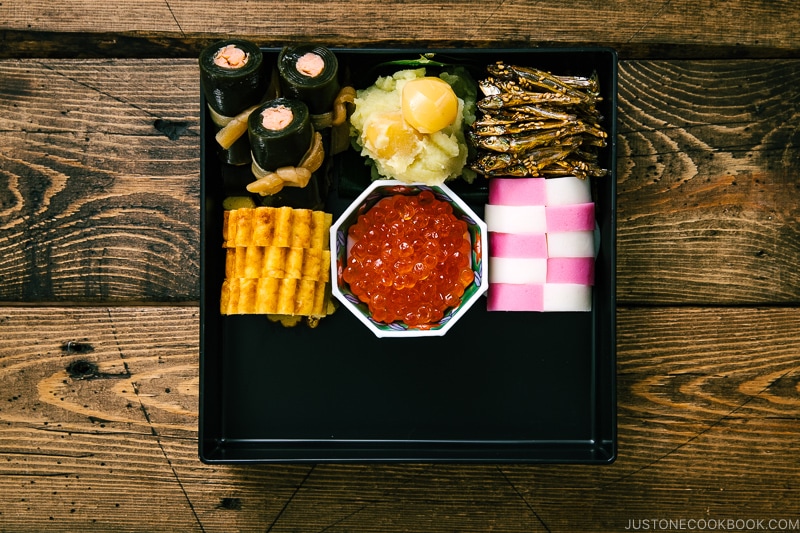
- If you can buy bamboo leaves, use one to make a compartment or divider. It also adds a pop of fresh green color, peeking out from the side of the box.
- I add candied chestnut and sweet potatoes on top of the leaf. Then, I place candied sardines (anchovies) in the next compartment with the heads facing left for good fortune (the traditional rule).
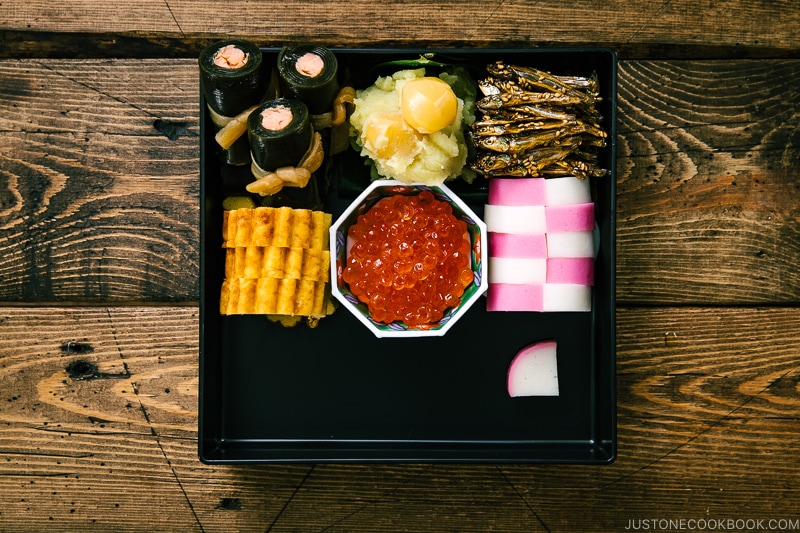
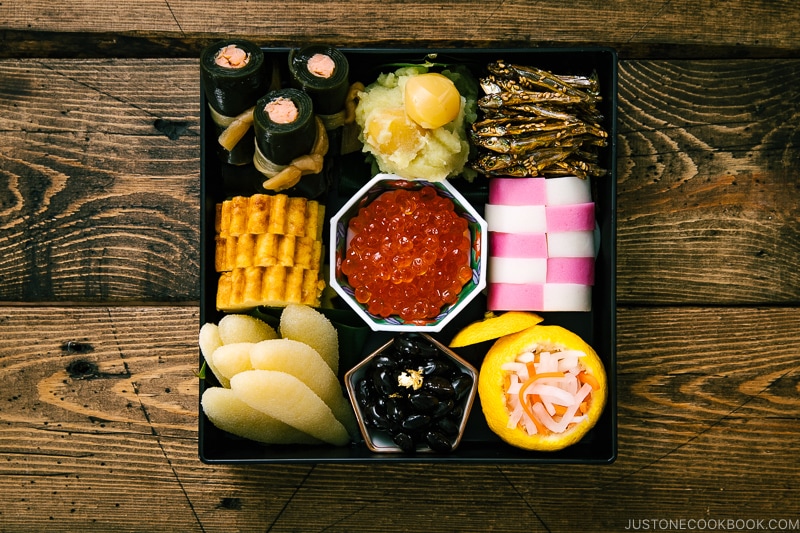
- I lay a small piece of fish cake as another booster, then I place a yuzu cup with daikon and carrot salad on top. This introduces a bright color and unique shape to make the osechi even prettier.
- Pack sweet black soybeans in a pretty container like this pentagon-shaped bowl for visual interest. I sprinkle gold flakes to make it more festive. Pack the herring roe vertically in the last compartment.
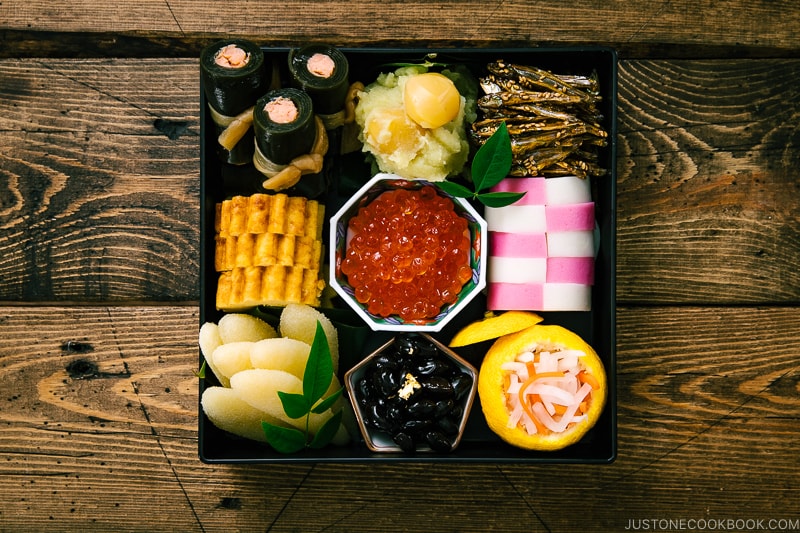
- For the final touch, add leaves of heavenly bamboo (nandina, nanten) as a colorful garnish. Your top tier is now done!
The Middle Tier
The second box (Ninoju, 二の重) includes grilled dishes (main dishes) and vinegared dishes. I used the suehiro (末広) design spreading out like an open fan from the center to create 5 compartments.
- Simmered Shrimp (Ebi no Umani) えびのうま煮
- Yellowtail Teriyaki (Buri no Teriyaki) ぶりの照り焼き
- Butter Soy Sauce Scallops (Hotate no Butter Shoyu Yaki) 帆立のバター醤油焼き
- Pickled Chrysanthemum Turnip (Kikka Kabu) 菊花かぶ
- Pickled Lotus Root (Su Renkon) 酢れんこん
- Pounded Burdock Root with Sesame Sauce (Tataki Gobo) たたきごぼう
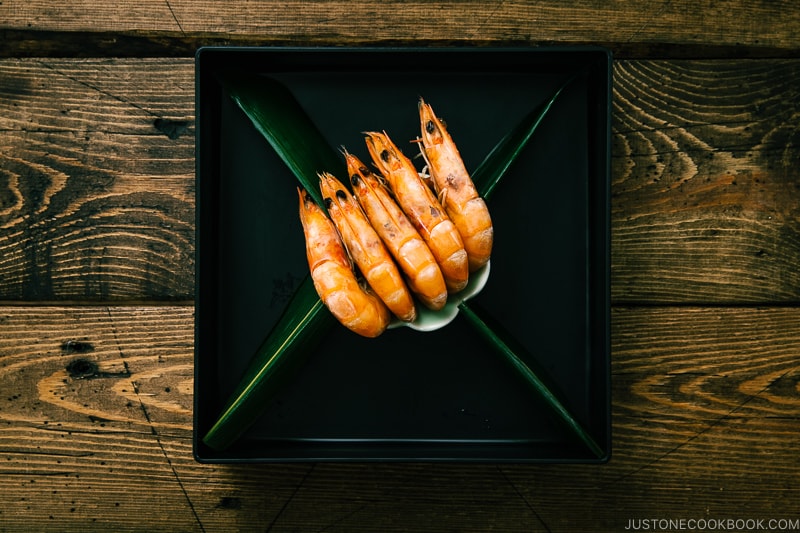
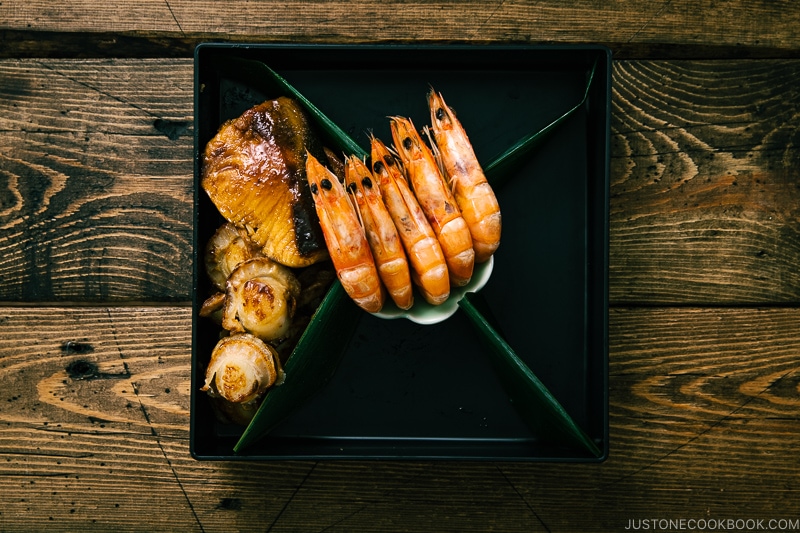
- Place a brightly colored bowl in the center. To create more compartments, fold bamboo leaves in half lengthwise and cut to fit. I add simmered shrimp in the center; you could also use daikon and carrot salad in a yuzu cup.
- First, add a bulky dish like yellowtail teriyaki into half of one compartment, then fill in with a small dish like butter shoyu scallops.
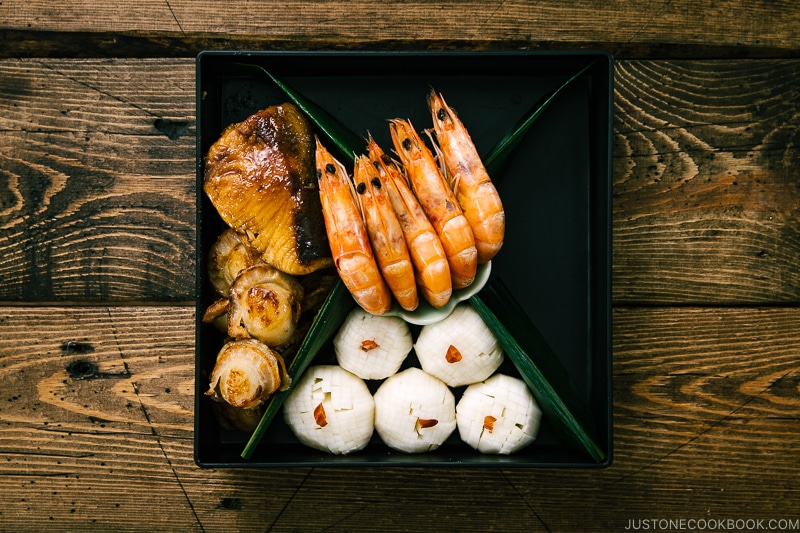
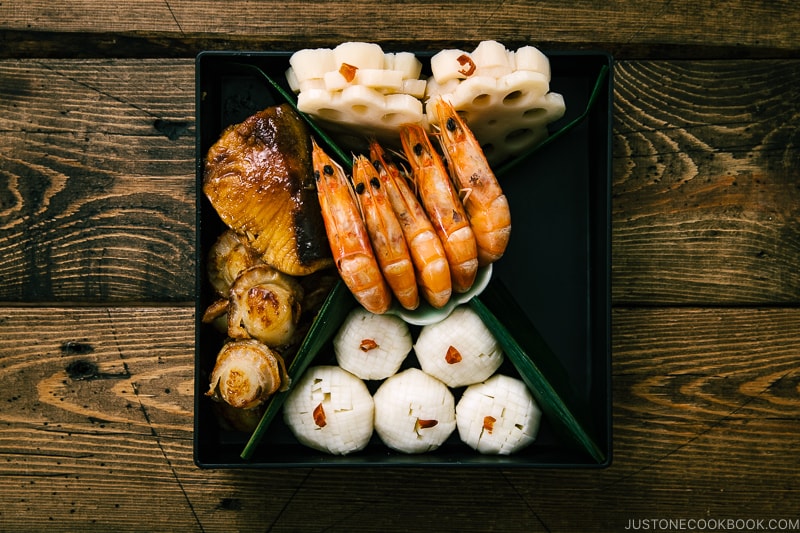
- Pack a visually appealing and shorter dish toward the front, like pickled chrysanthemum turnip (radish).
- Next, choose a taller dish like pickled lotus root to pack vertically in the back so it won’t block the other dishes.
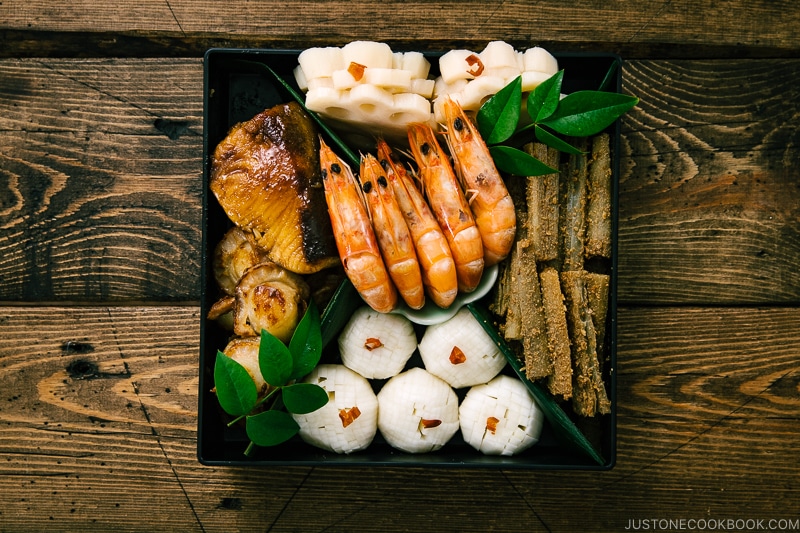
- I add pounded burdock root to fill the last compartment neatly.
- Finally, add touches of green. Just 1–2 nandina leaves make a huge difference!
The Bottom Tier
Finally, the third box (Sannoju, 三の重) contains a simmered dish.
- Simmered Chicken and Vegetables (Chikuzenni/Nishime) 筑前煮 or make Instant Pot Nishime 煮しめ
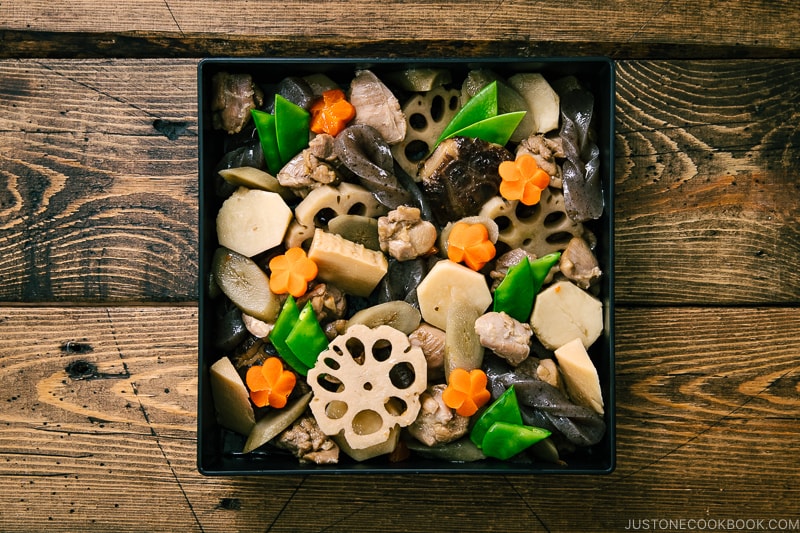
- Add simmered chicken and vegetables, distributing brown ingredients evenly in the box. Garnish with colorful items like carrots and snow peas for a bright, fresh finish.
How to Serve Osechi Ryori
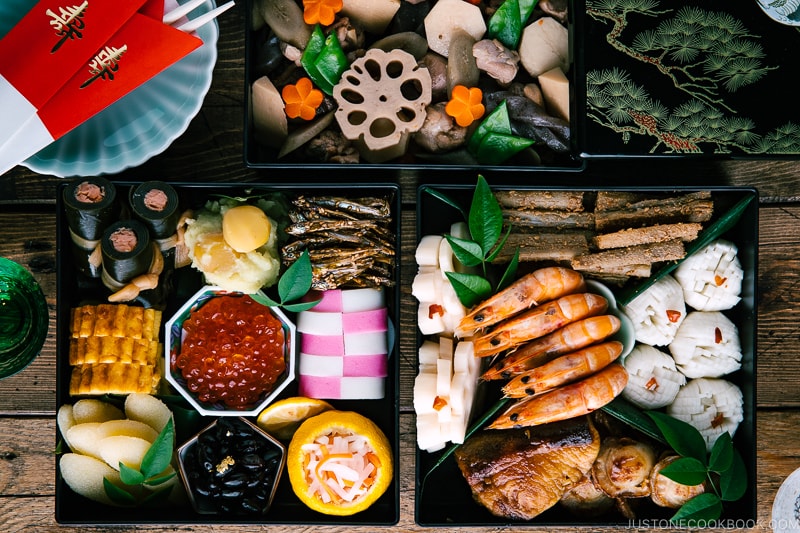
When everyone gathers on New Year’s Day morning (it’s more like brunch at my house), we enjoy the year’s first and most important meal together.
Here’s how we usually serve the feast:
- Lay out each tier at the center of the table. Everything should already be at room temperature.
- Enjoy mochi in Ozoni (Japanese New Year rice cake soup) alongside the osechi dishes.
- Add other dishes if you wish, such as grilled red snapper, roast beef, and salad.
- Drink otoso (お屠蘇), the traditional New Year’s spiced sake, to welcome good health and good luck.
- Use celebratory chopsticks called iwaibashi (祝い箸), if available. They are pointy on both ends and wrapped in red and white envelopes with the character kotobuki (寿) for long life, congratulations, and a happy occasion.
It’s a simple, cozy way to enjoy this special meal together and start the new year with warm hearts.
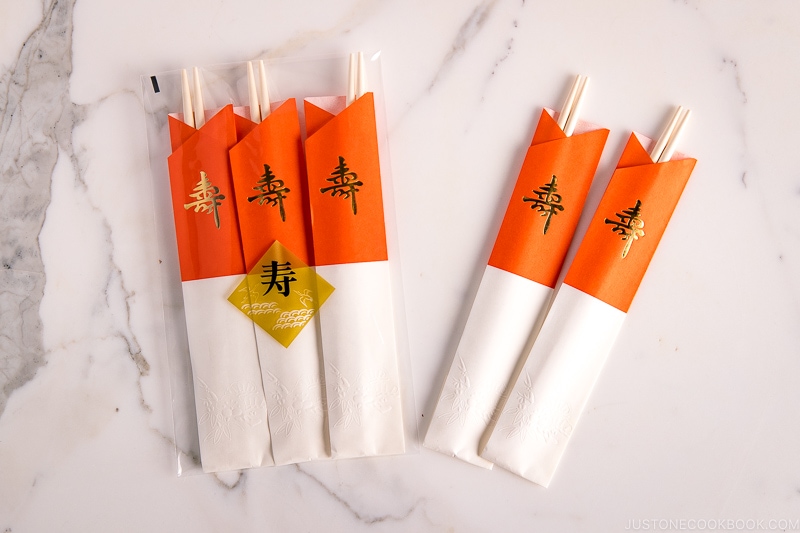
Unlike regular disposable chopsticks, iwaibashi chopsticks are pointy on both ends— one end for you and the other for the Year God. This shape symbolizes sharing the osechi meal together. They also come already separated, since we avoid breaking anything during this lucky time, and they’re made from sturdy willow wood.
Be sure not to flip them over, as the opposite end is reserved for the deity. For shared dishes, use toribashi (取り箸) serving chopsticks instead.
FAQs
How do you pack osechi ryori in three-tier jubako?
Plan your layout ahead of time, following traditional guidelines for placement. Use small bowls, leaves, garnishes, and rigid ingredients to separate foods and add structure to hold ingredients in place. Coordinate contrasting colors and shapes, and be sure to add a pop of red or green color for freshness.
Which dishes go in each tier of the osechi box?
Traditionally, the top tier holds colorful and beautiful small dishes to enjoy as appetizers with drinks. The middle tier is for grilled and vinegared dishes, while the bottom tier is for simmered dishes.
How do you arrange osechi ryori so it looks beautiful and professional?
Place foods of contrasting colors, shapes, and textures next to each other, and add bright and fresh garnishes. To make osechi prettier, three props come to my mind: 1) colorful mini bowls to hold loose foods, 2) bamboo leaves or shiso leaves to use as dividers, and 3) nandina (heavenly bamboo) leaves or green maple leaves for a pop of color.
I hope this packing guide for osechi ryori was helpful and inspirational. Good luck!
Editor’s Note: This post was originally published on December 18, 2019, updated on June 24, 2024, and republished on December 25, 2025, with more helpful information.