

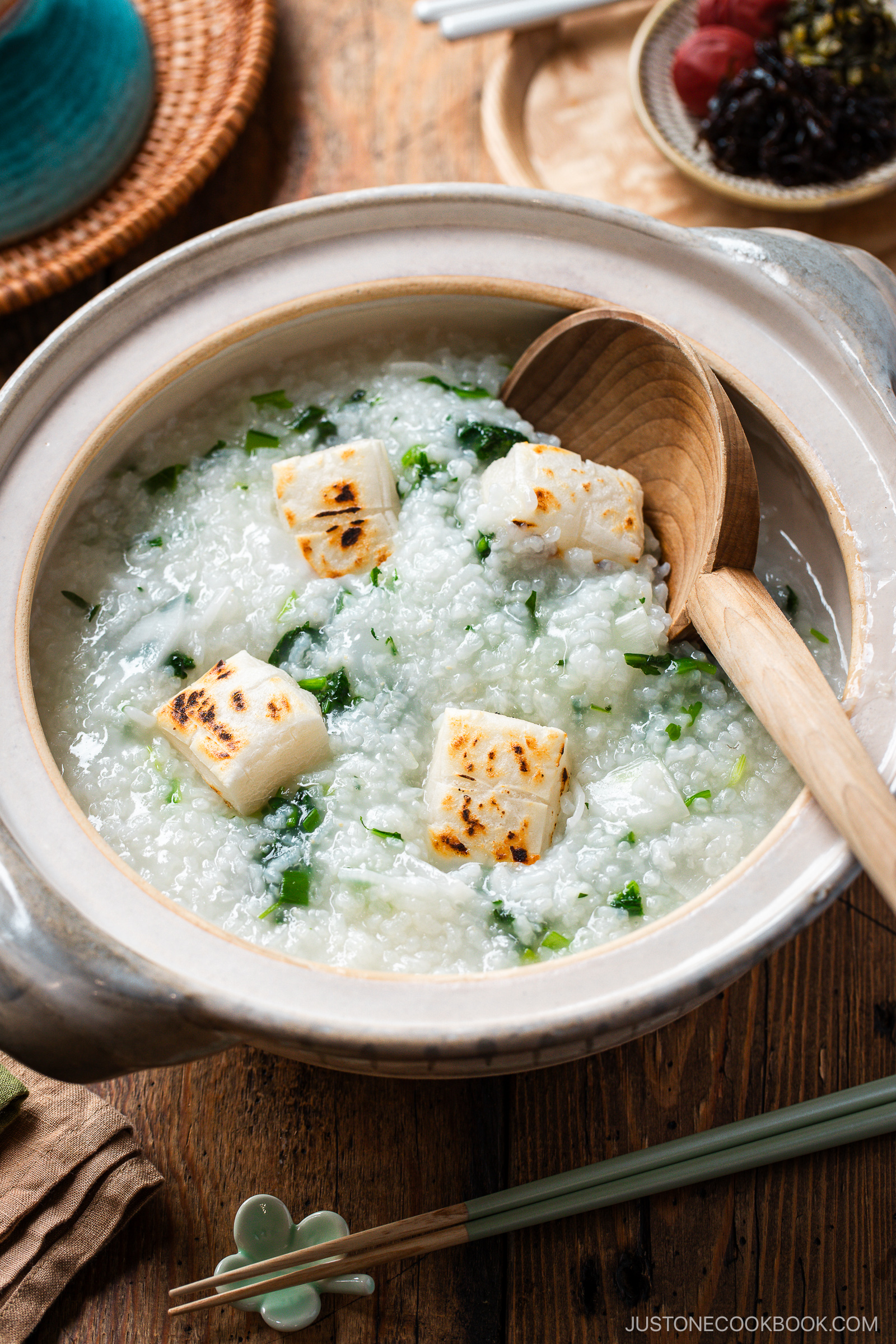
Recipe Highlights
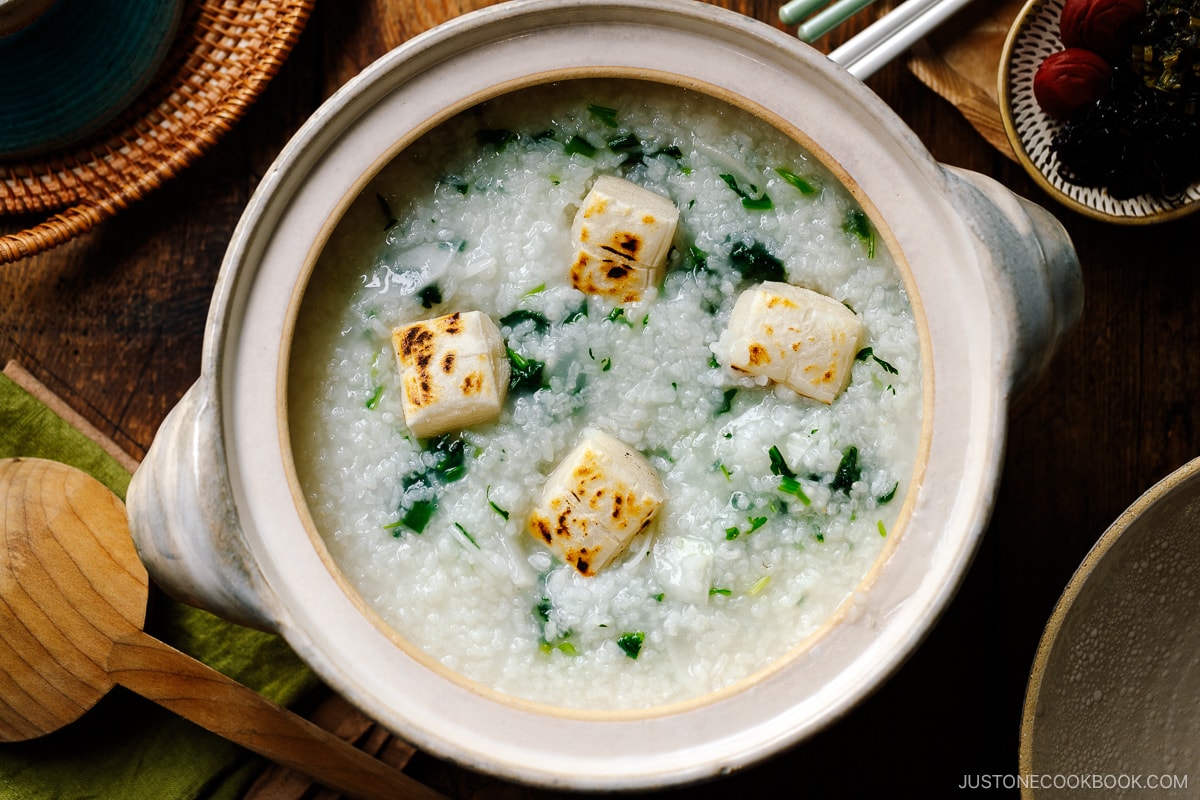
Every January 7th, we enjoy Nanakusa Gayu (七草粥), a simple rice porridge cooked with seven herbs to bring good health in the new year. After days of feasting osechi ryori (Japanese New Year food), this mild and soothing dish gives our bodies a much-needed break. It’s humble, comforting, and deeply rooted in Japanese seasonal traditions.
- Easy one-pot comfort food. Simple ingredients and gentle cooking make this a beginner-friendly and stress-free recipe.
- Light and healing. Mild, soothing, and easy on the stomach after days of New Year feasts.
- Customize with local greens. Works beautifully with other herbs and leafy greens—see my suggestions below!
If you’re interested in Japanese New Year foods, try my Toshikoshi Soba, Ozoni, and How to Enjoy Mochi recipes next!
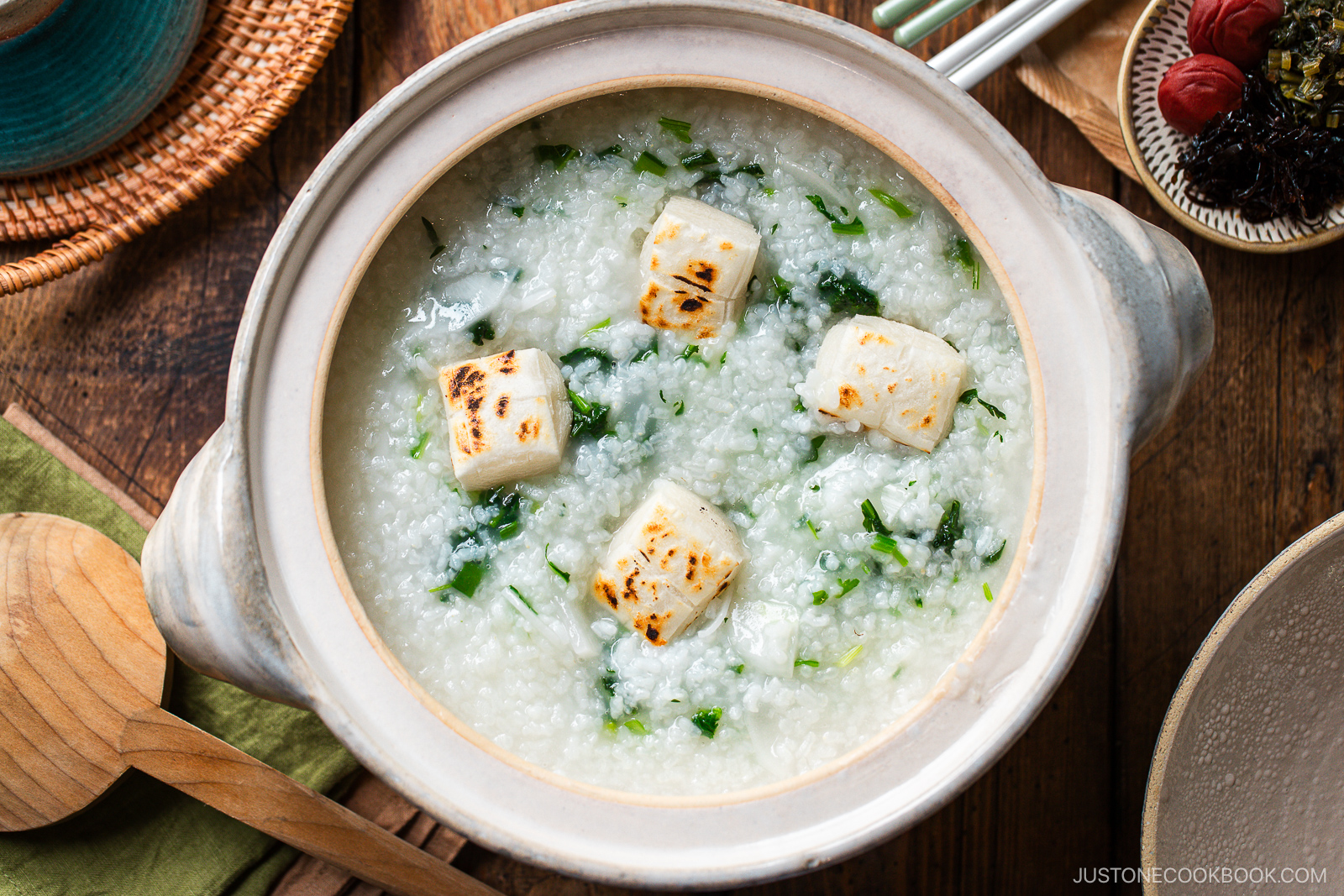
What is Nanakusa Gayu?
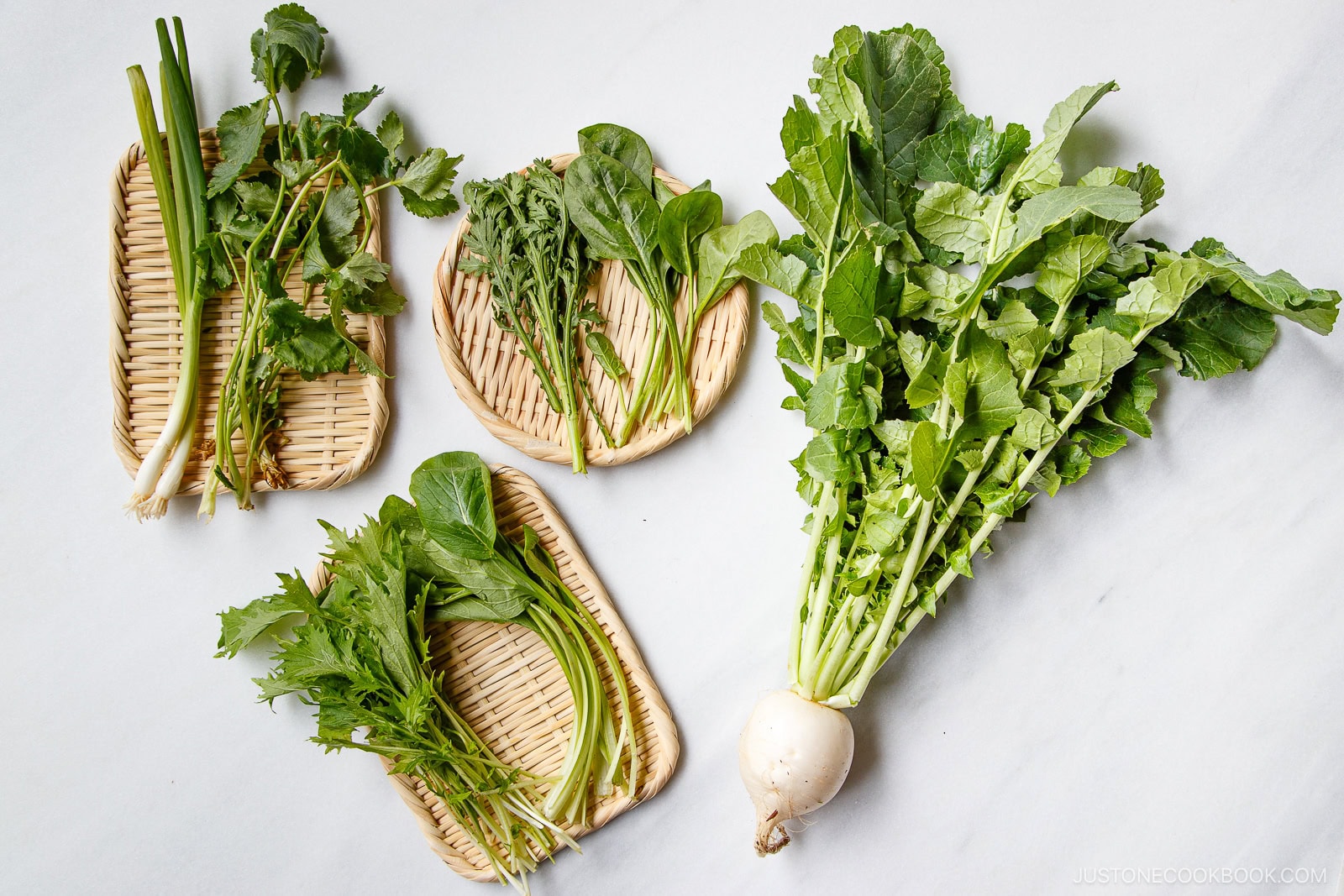
Nanakusa gayu is a type of Japanese rice porridge (okayu) cooked with seven herbs known as haru no nanakusa, or “spring’s seven herbs.” They include water dropwort (seri, せり), shepherd’s purse (nazuna, なずな・ぺんぺん草), cudweed (gogyo, ごぎょう), chickweed (hakobera, はこべら), nipplewort (hotokenoza, ほとけのざ), and turnip (suzuna, すずな・かぶ), and daikon radish (suzushiro, すずしろ・大根).
It’s traditionally eaten on January 7 during the Nanakusa no Sekku (七草の節句) festival to bring good health and ward off misfortune for the year ahead.
Ingredients for Nanakusa Gayu
- uncooked Japanese short-grain white rice
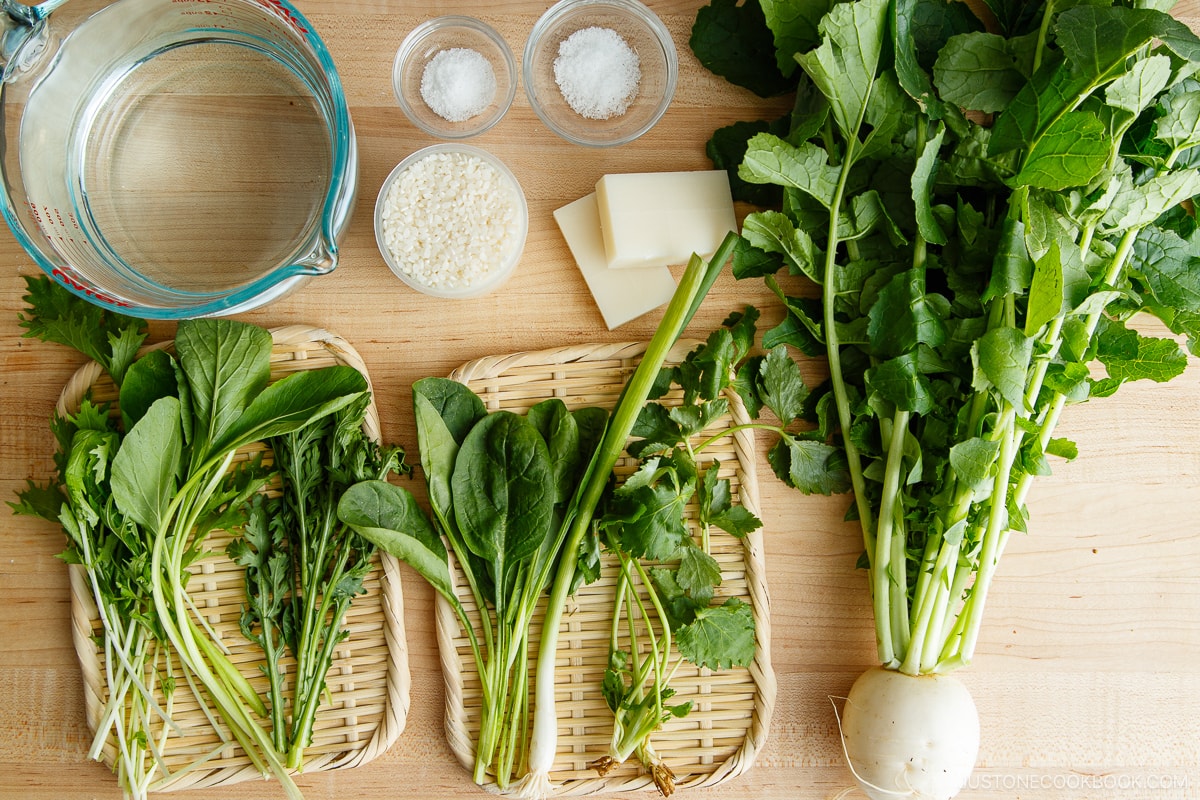
- nanakusa herbs – or swap with your choice of greens (see my suggestions below)
- daikon radish
- water
- kosher salt
Find the printable recipe with measurements below.
Jump to RecipeHow to Make Nanakusa Gayu
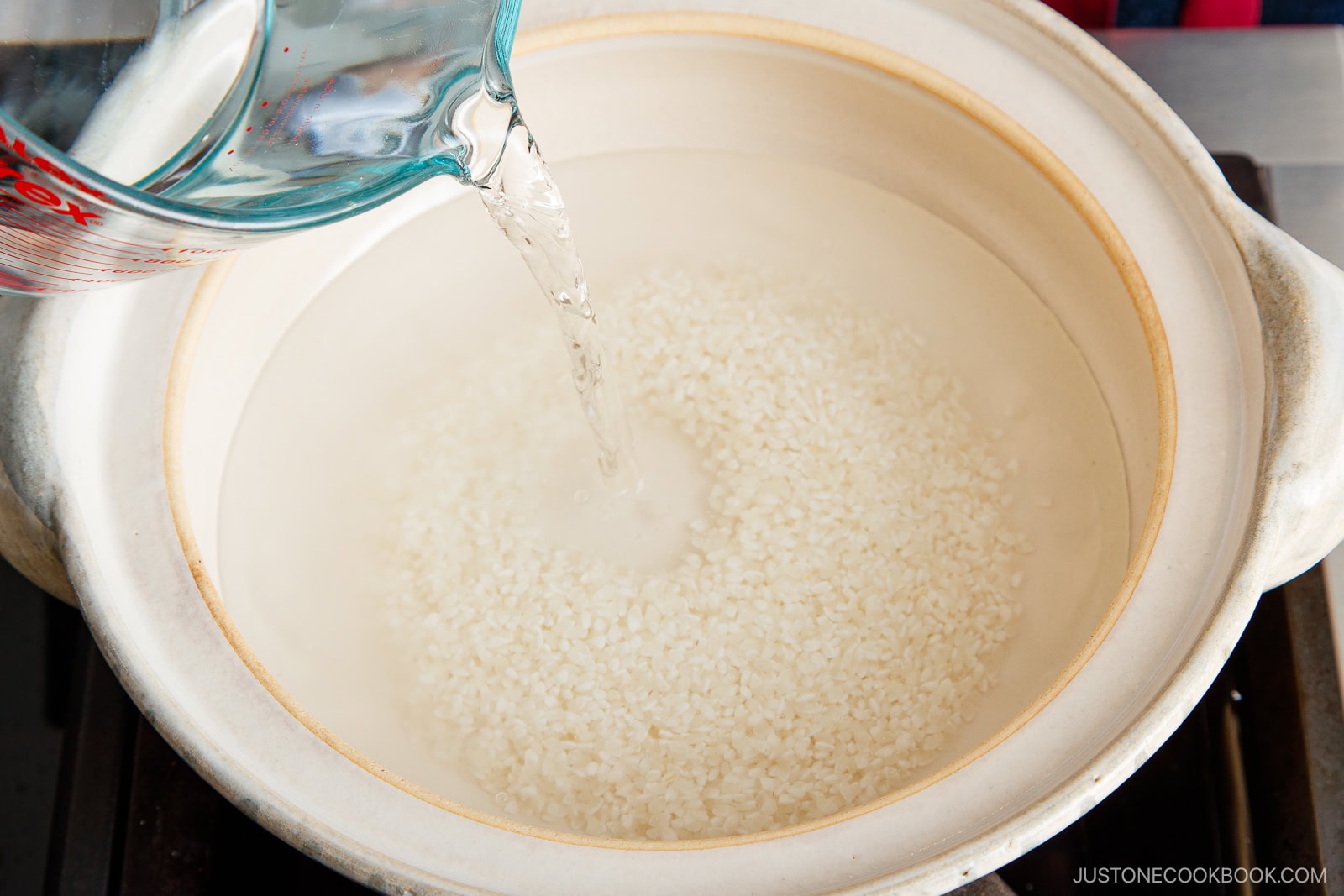
- Cook the rice. Rinse and drain, then add it with water to a heavy-bottomed pot or donabe. Bring to a boil over medium heat. Stir once, reduce to low, and cook with the lid slightly ajar for about 30 minutes without stirring.
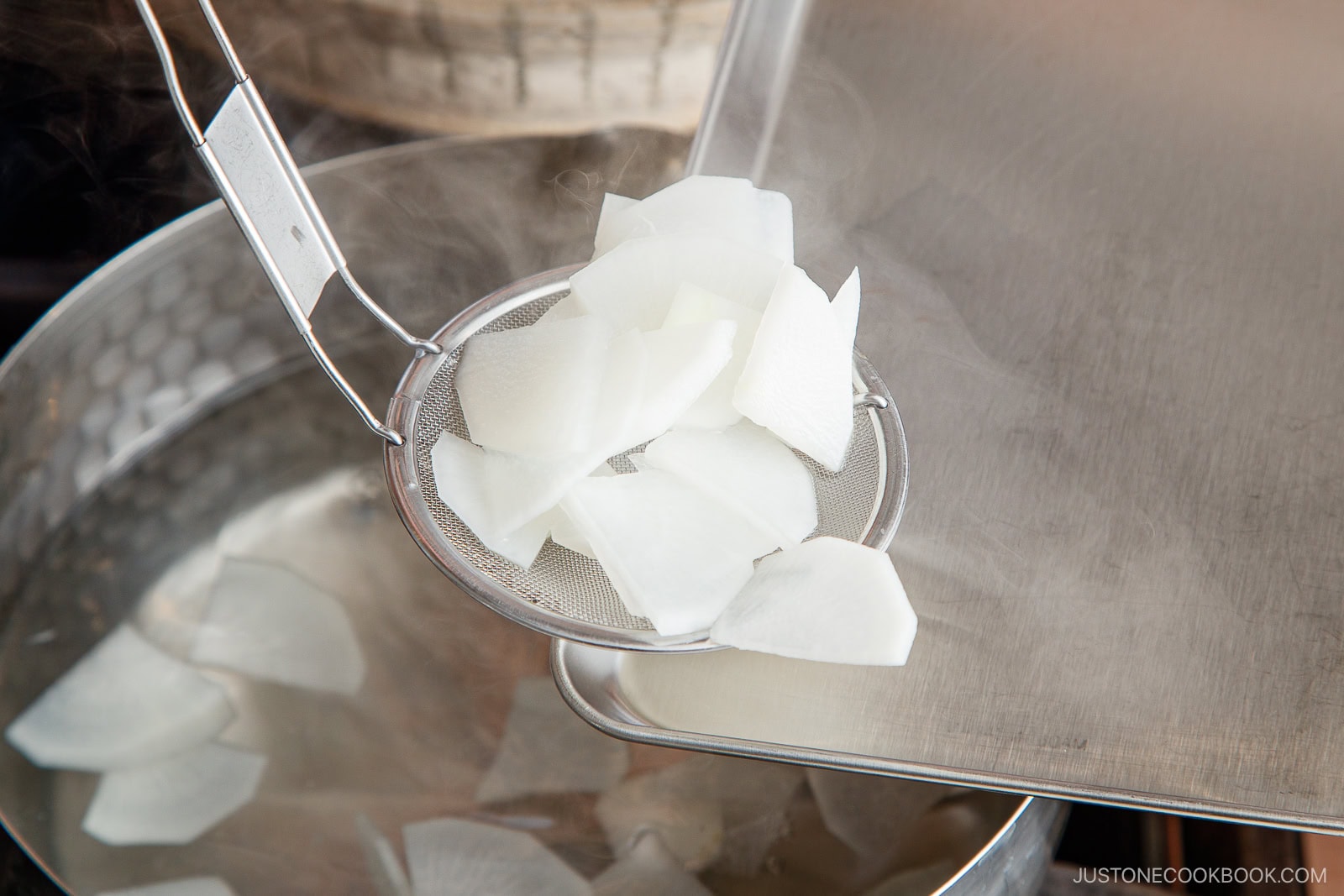
- Blanch sliced daikon. While the rice cooks, peel and thinly slice the daikon. Blanch it in lightly salted boiling water until tender, then remove and set aside.
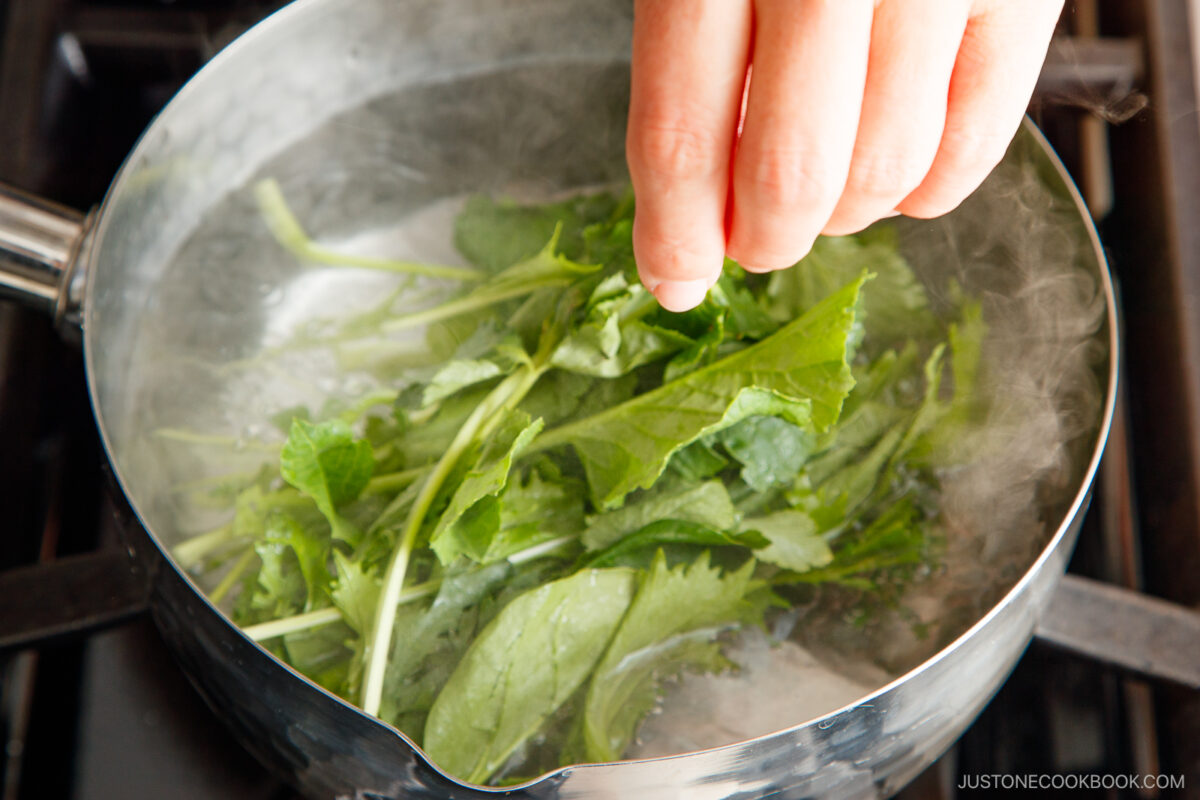
- Blanch the herbs. Cut the herbs into smaller pieces. Blanch in the same boiling water for 20–30 seconds, then transfer to iced water to stop the cooking. Squeeze out excess water and chop.
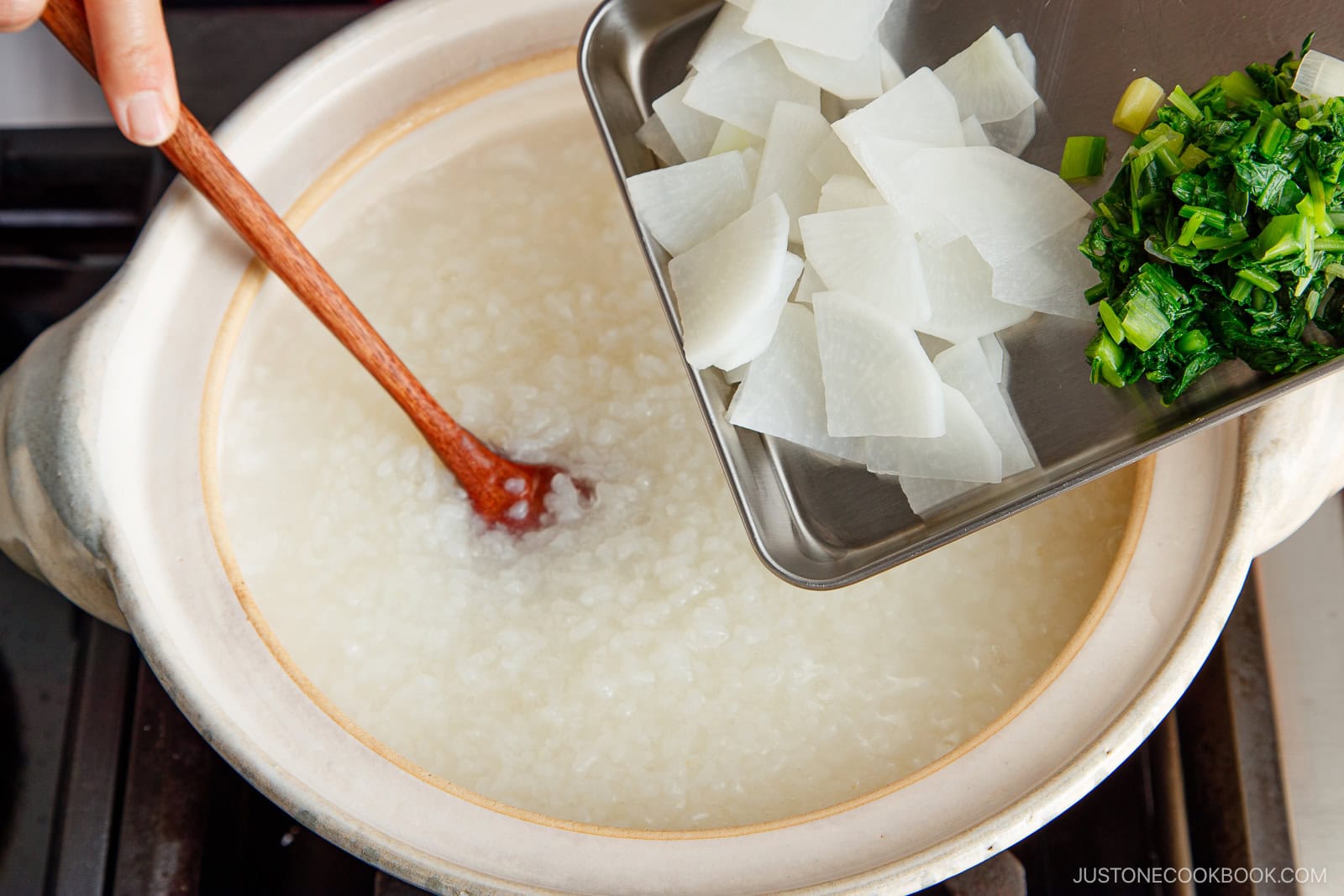
- Season and add the vegetables. Once the rice porridge reaches a thick, soupy consistency, season lightly with salt to taste. Stir in the cooked daikon and herbs. Turn off the heat, cover, and let the porridge steam for about 5 minutes.
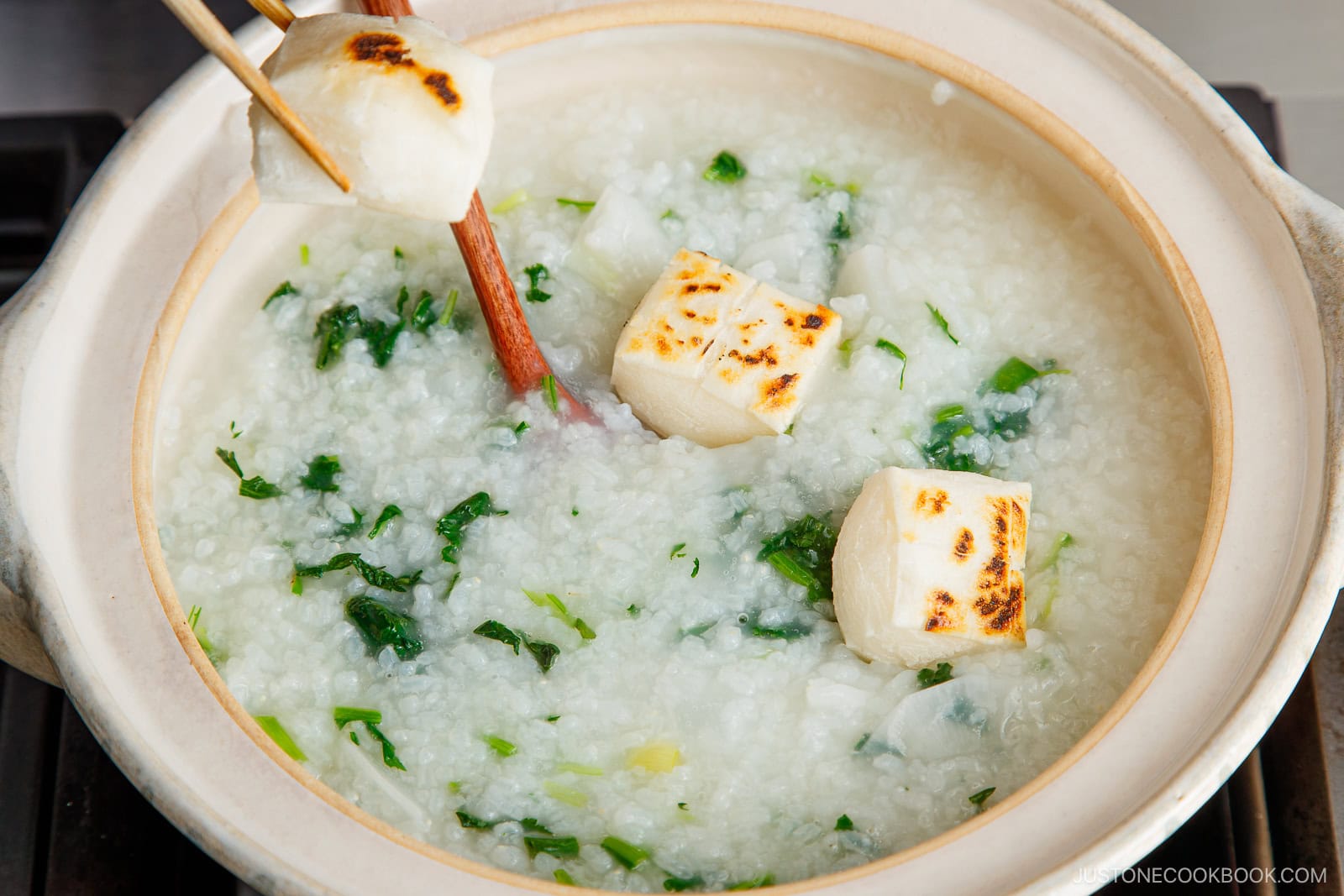
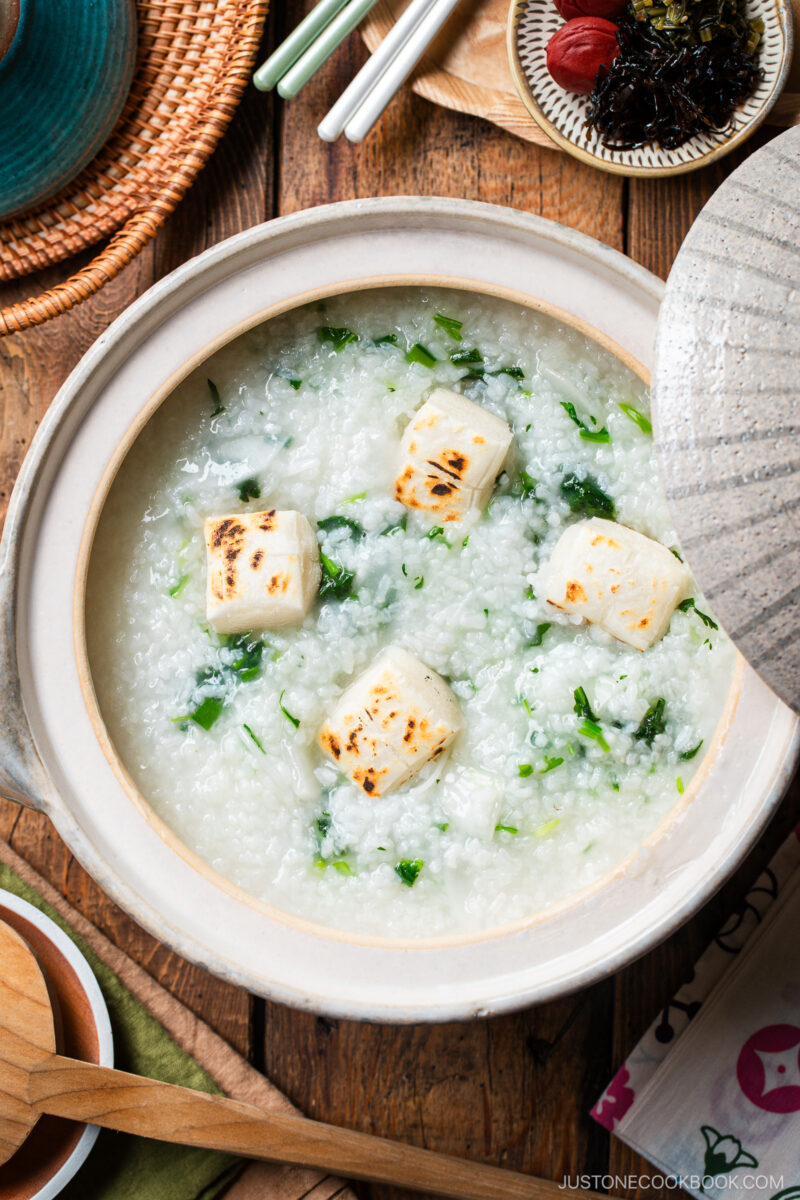
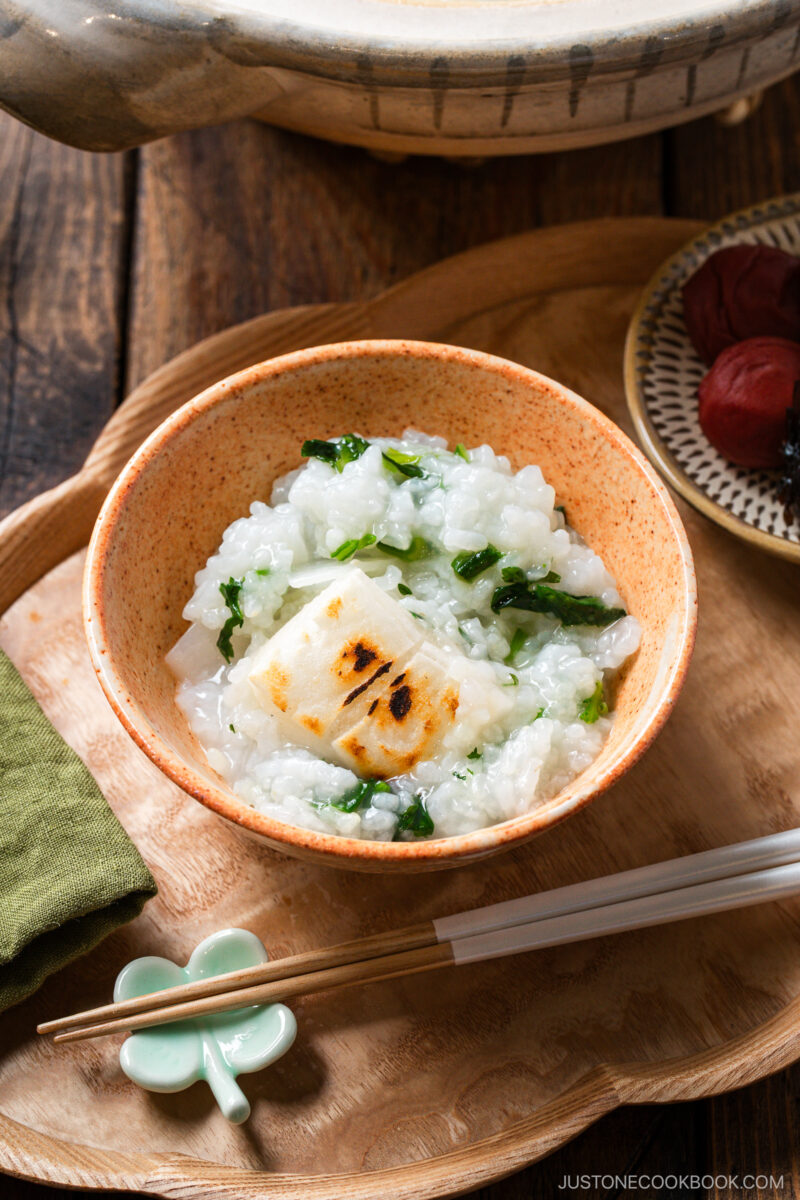
- Serve and enjoy! Ladle hot into individual rice bowls, add optional toppings, such as toasted mochi, if desired.

Nami’s Recipe Tips
These simple tips will help you make delicious Nanakusa Gayu every time.
- Use a heavy-bottomed pot. A donabe or Dutch oven cooks the rice gently and evenly.
- Keep the lid slightly ajar. This keeps the porridge from boiling over.
- Do not stir while cooking. Stirring can break the rice and make it pasty.
- Blanch herbs separately. This keeps their color bright and flavor fresh.
- Add greens at the end. They stay tender and don’t overcook.
- Season lightly. Keep the taste mild for a comforting, soothing dish.
Variations and Customizations
Looking to change things up? Try these easy and tasty ideas!
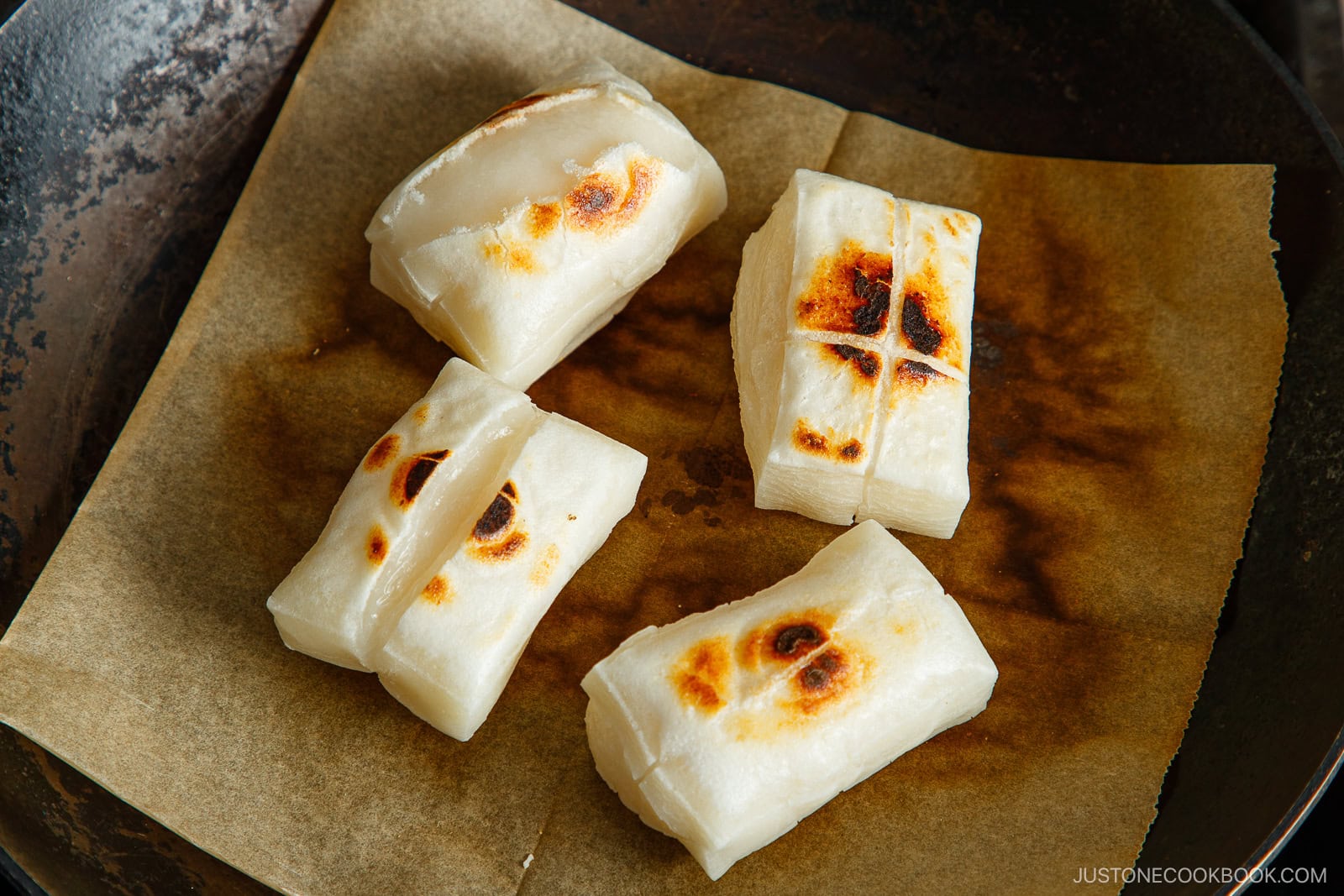
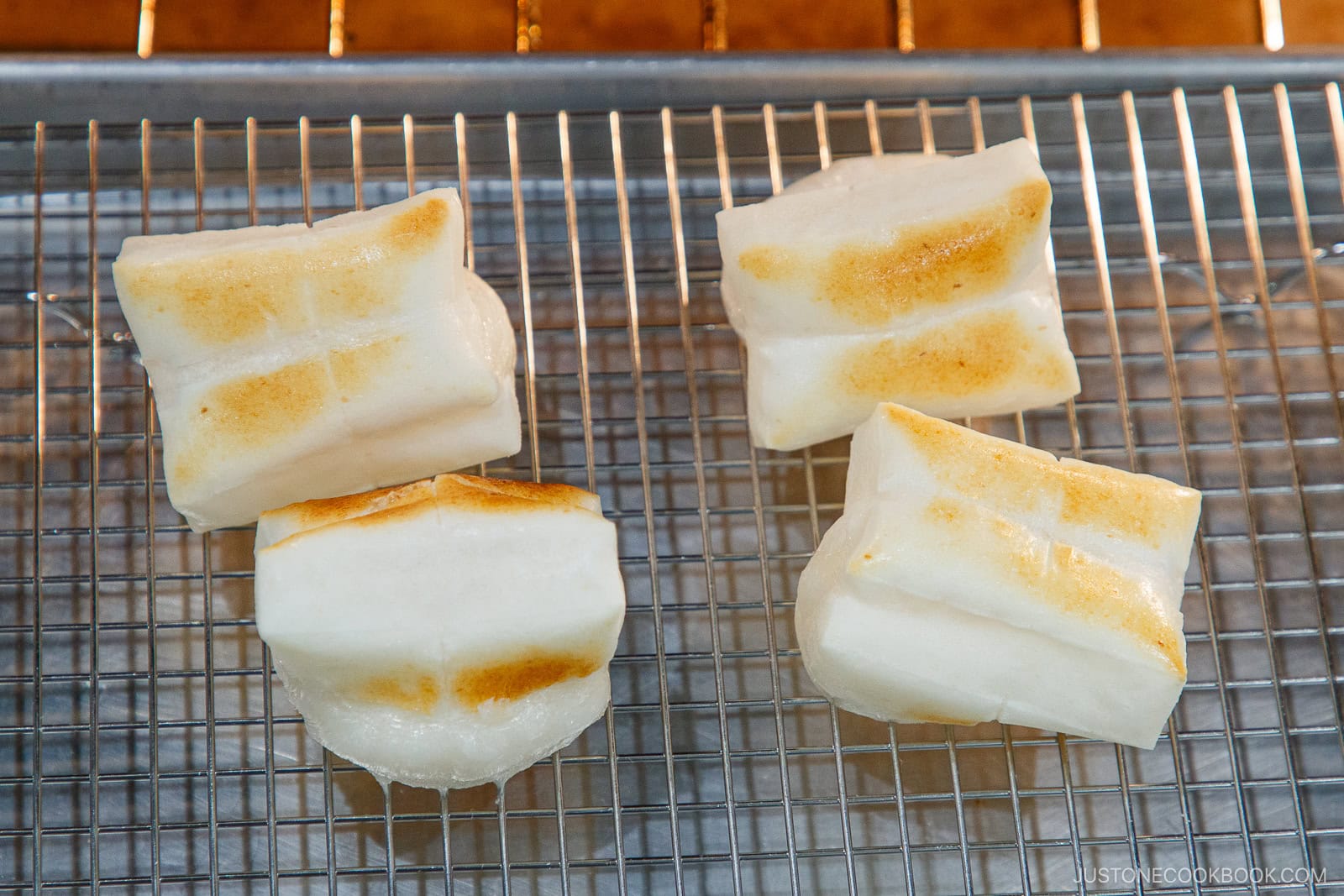
- Add Yakimochi. Learn how to grill kiri mochi from the pantry or leftover New Year mochi for an easy, satisfying topping.
- Use local greens. Daikon leaves, spinach, komatsuna greens, mizuna, chrysanthemum greens (shungiku), mitsuba, or green onions/scallions work well. Also, you could swap basil, chervil, chives, fennel, mint, and watercress. Just make sure no flavor is too strong or dominant to overpower the dish.
- Try freeze-dried nanakusa. It’s a convenient option found at Japanese grocery stores.
- Make it with cooked rice. Leftover or frozen rice works for a quicker version. Use a ratio of cooked rice to water of 1:2 (for a similar consistency) or 1:3, by volume.
What to Serve with Nanakusa Gayu
This gentle dish is simple and soothing. It’s great with these traditional sides and toppings:
- Asazuke – These Japanese lightly pickled vegetables are ready in 1 hour!
- Kombu Tsukudani – Sweet-savory simmered kombu is a tasty side dish for rice and okayu.
- Umeboshi – Japanese pickled plums are the perfect digestive aid to pair with porridge.
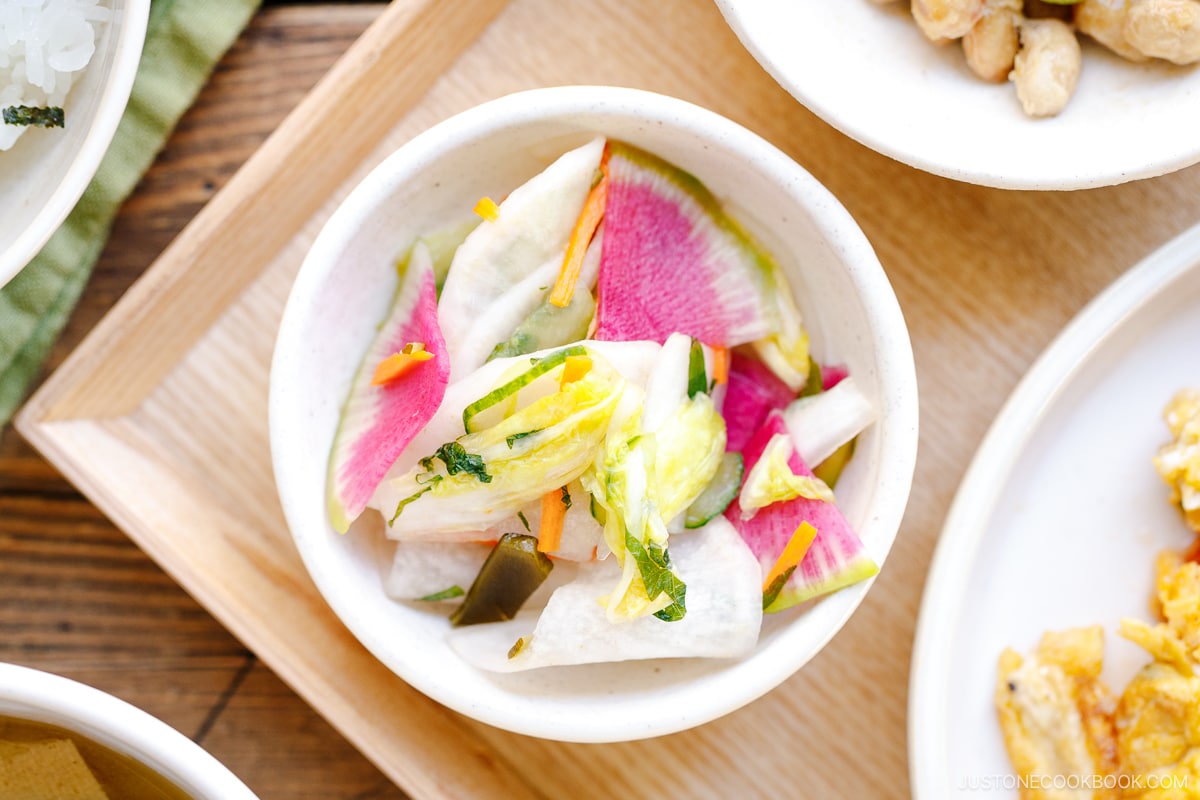
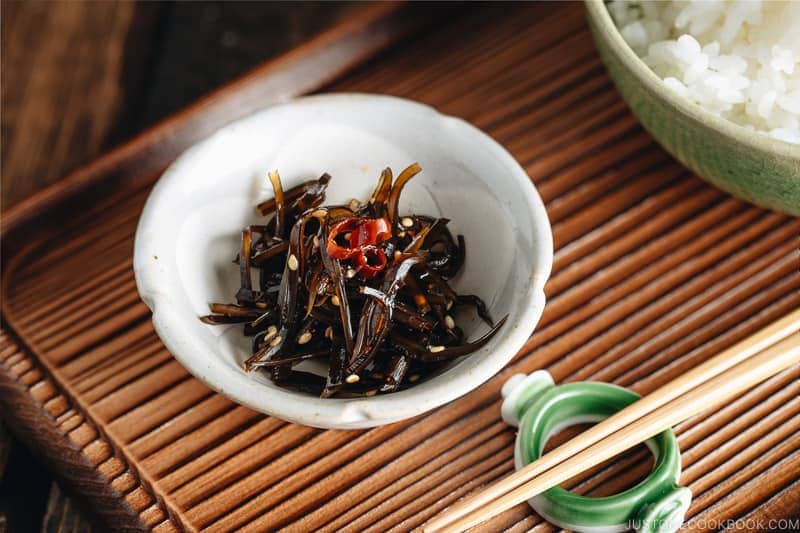
Storage and Reheating Tips
To store: Once cooled to room temperature, store in an airtight container and refrigerate for up to 2 days.
To reheat: Reheat gently on the stovetop and loosen with a splash of water, stirring occasionally until warmed through.
FAQs
Why is nanakusa gayu eaten?
Nanakusa Gayu is eaten on January 7 as part of Nanakusa no Sekku. It’s believed to promote good health and help the body recover after New Year feasts. Also, the light rice porridge symbolizes renewal for the year ahead.
What are the seven herbs in nanakusa gayu?
The traditional seven herbs (nanakusa) are water dropwort, shepherd’s purse, cudweed, chickweed, nipplewort, turnip, and daikon. They are known as haru no nanakusa and represent early spring growth and vitality.
Can I make nanakusa gayu outside of Japan?
Yes! While the exact fresh herbs can be difficult to find, you can substitute mild greens like daikon leaves, spinach, komatsuna greens, mizuna, chrysanthemum greens (shungiku), mitsuba, and green onions/scallions. Also, you could use freeze-dried nanakusa found at Japanese grocery stores.
I’ve seen readers use cilantro and other herbs, too. If you’ve tried a different herb, I’d love to hear which one you liked best—please share in the comments!
Can I make nanakusa gayu with cooked rice?
Yes! Leftover or frozen cooked rice works well. Combine with water at a ratio of about 1:2 or 1:3, then simmer until it reaches your desired consistency before adding the herbs and seasoning.
What is the rice-to-water ratio for nanakusa gayu?
I use 1 rice cooker cup (180 ml) of Japanese short-grain rice and 1 liter (1000 ml) of water. Here are the typical rice-to-water ratios for Japanese rice porridge (okayu):
- Zengayu (全粥): 1:5 (五倍粥) = 1 rice cooker cup + 900 ml (not much water left)
- Shichibugayu (七分粥): 1:7 (七倍粥) = 1 rice cooker cup + 1260 ml
- Gobugayu (五分粥): 1:10 (十倍粥) = 1 rice cooker cup + 1800 ml
- Sanbugayu (三分粥): 1:20 (二十粥) = 1 rice cooker cup + 3600 ml (very watery)
I’d love to hear how yours turned out! 💛 Please leave a star rating and comment below to share your experience. Your feedback not only supports Just One Cookbook but also helps other home cooks discover recipes they can trust.
Nanakusa Gayu (Seven Herb Rice Porridge)
Ingredients
For the Rice Porridge (4 servings)
- 7 kinds of herbs/greens of your choice (1–2 stems/sprigs each; I used fresh daikon leaves, spinach, chrysanthemum greens (shungiku), komatsuna greens, mizuna, mitsuba, and green onions; or use 1 freeze-dried nanakusa set package from a Japanese grocery store; in Japan, use 1 fresh nanakusa set)
- 1½ inches daikon radish
- ¾ cup uncooked Japanese short-grain white rice (1 rice cooker cup)
- 4¼ cups water (1 L)
- ½ tsp Diamond Crystal kosher salt (divided; plus more, to taste)
- 2 pieces Japanese rice cake (kiri mochi) (optional)
For Serving
- condiments of your choice (optional; typically salty condiments like tsukemono, simmered kombu, or umeboshi)
For Porridge Using Cooked Rice (optional; 2 servings)
- 1 rice bowl cooked Japanese short-grain rice (1 cup, 150 g)
- 2–3 rice bowls water (2–3 cups, 400–600 ml; adjust to your preferred consistency)
Instructions
- Gather all the ingredients. You will need a very small portion of each herb/green (I did not use the whole leaves you see in this picture). You will also need a heavy-bottomed pot like a donabe or Dutch oven, which cooks the rice more evenly because the heat distribution is gentler than a regular pot.
To Wash and Cook the Rice
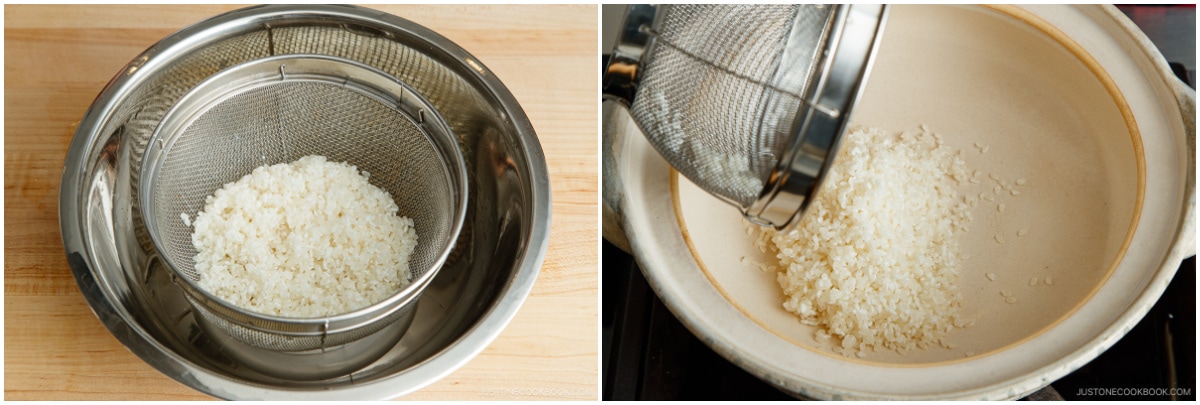
- Wash ¾ cup uncooked Japanese short-grain white rice (see how in my How to Cook Rice recipe card). Drain well in a fine-mesh sieve, then transfer the rice to a donabe or heavy-bottomed pot.
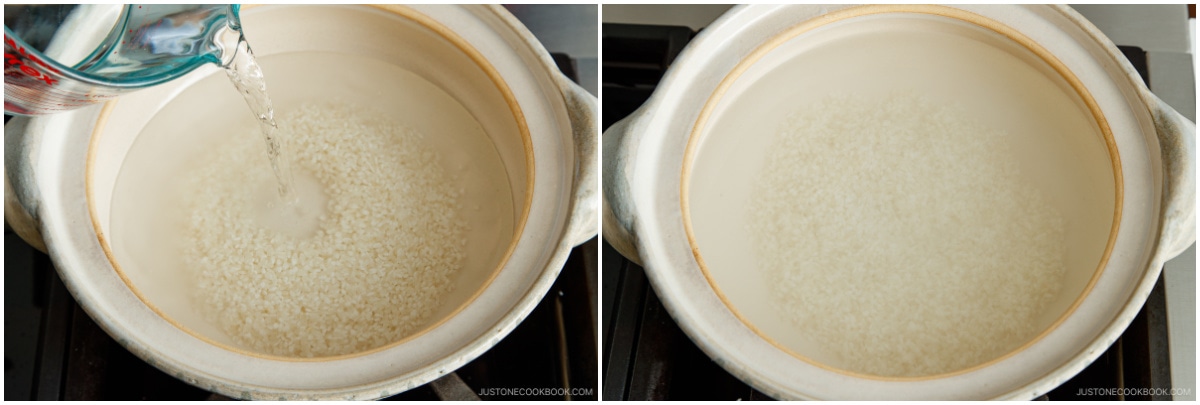
- Add 4¼ cups water. Soak the rice for 30 minutes (optional). Then, bring it to a boil over medium heat while stirring occasionally.Nami's Tip: Soaking the rice will reduce the cooking time by 5–10 minutes.
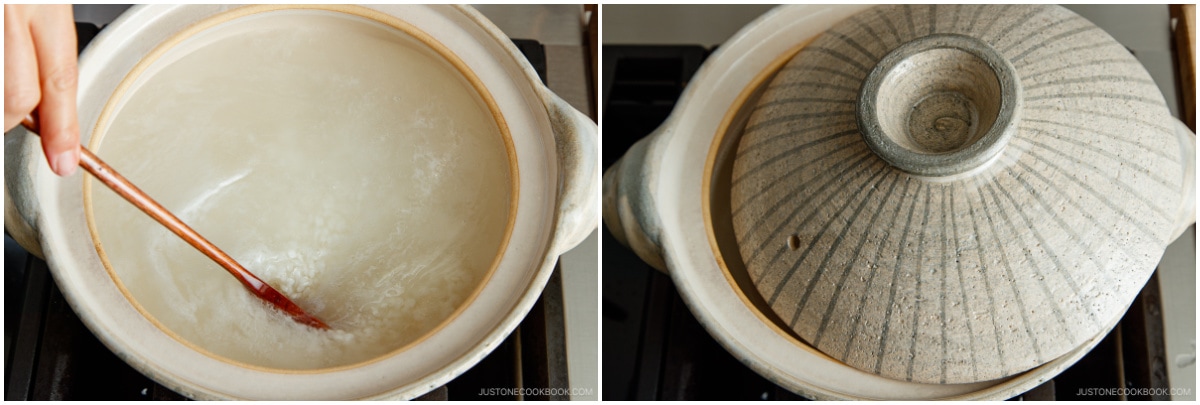
- As soon as it‘s boiling, reduce the heat to low and gently mix once with a spoon to keep the rice from sticking to the pot. Cover the donabe with the lid slightly ajar (to avoid boiling over) and gently cook for 30 minutes. Do not open the lid or stir while cooking.Nami's Tip: If you soaked the rice for 30 minutes, you can shorten the cooking time by 5–10 minutes.
To Blanch the Daikon and Herbs/Greens
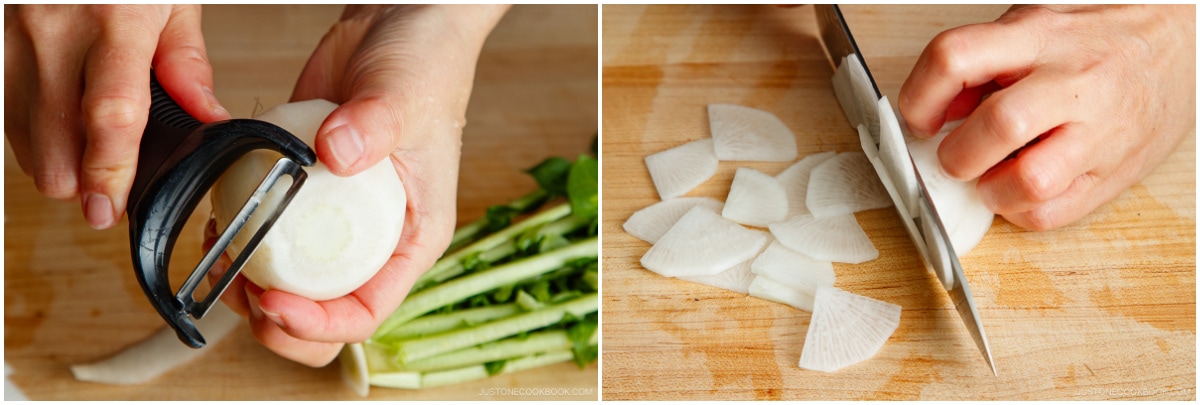
- While the rice cooks, prepare the daikon and herbs/greens. Bring a medium saucepan of water to a boil. Peel 1½ inches daikon radish and cut it lengthwise into quarters. Then, cut crosswise into ⅛-inch (3-mm) quarter slices.
- When the water is boiling, add ¼ tsp Diamond Crystal kosher salt and the daikon.
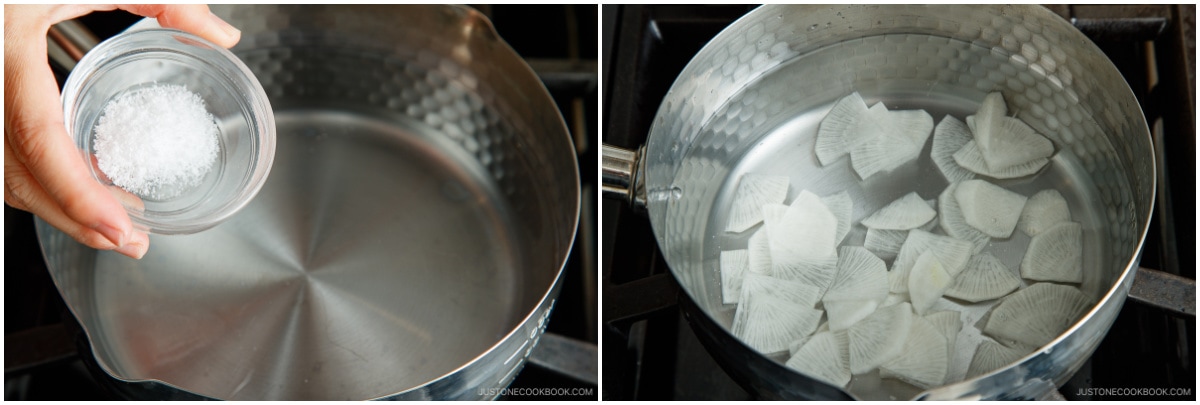
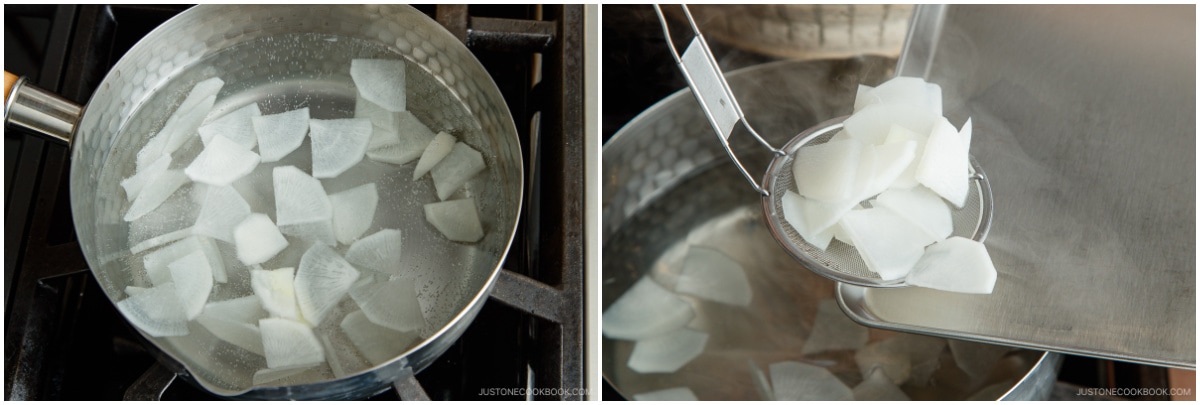
- Blanch until tender, about 4–5 minutes. Scoop out the daikon with a skimmer or slotted spoon and transfer it to a tray. Keep the water boiling for the next step.
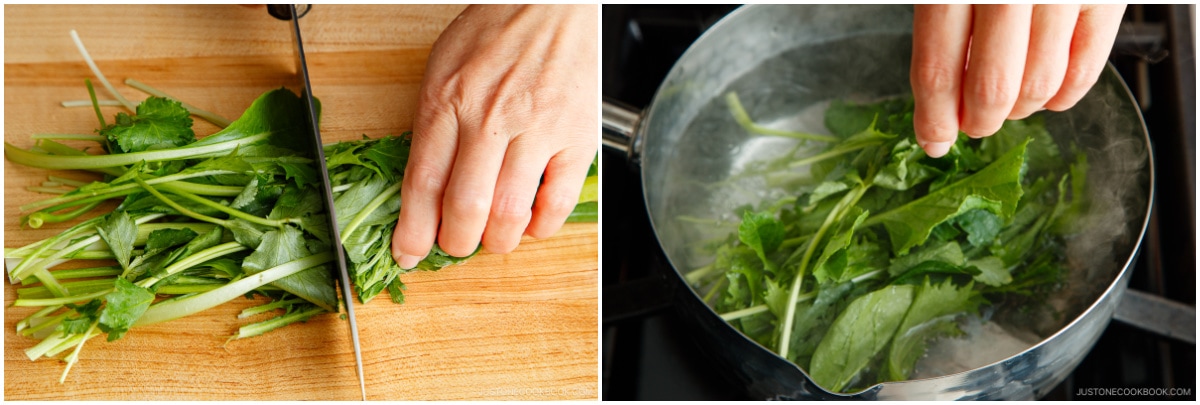
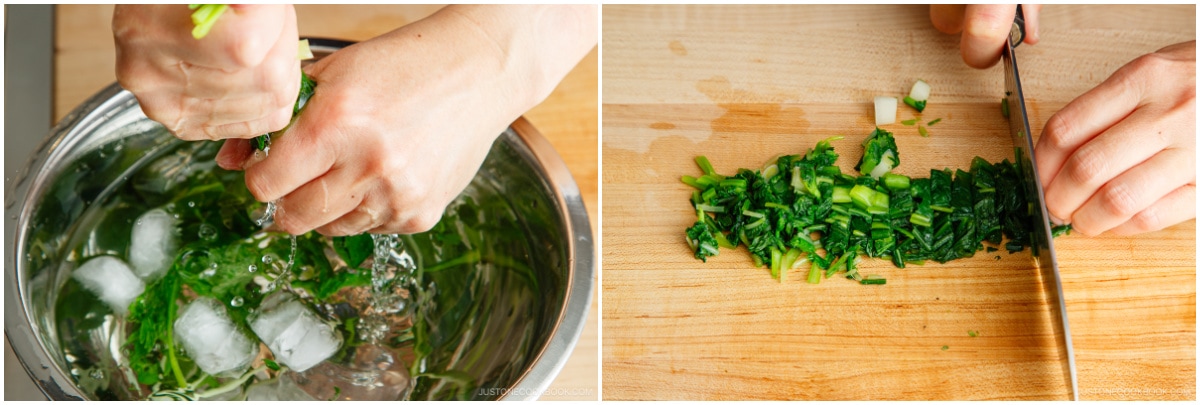
- Cut the 7 kinds of herbs/greens of your choice crosswise in half, including the tender stems. Add to the boiling water and blanch for 20–30 seconds.Nami's Tip: Salt water keeps the green color bright.
- Drain and immediately transfer the greens to iced water. This helps keep the color bright and stops the cooking.
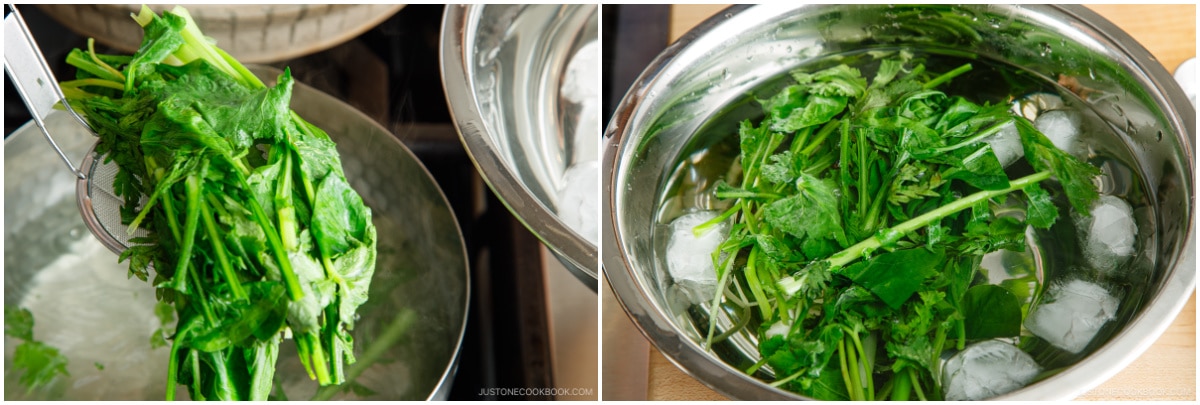
- Cool briefly, then squeeze out the water. Cut crosswise into ½-inch (1.3-cm) pieces. You'll need about 4 Tbsp of cooked and chopped herbs/greens. Nami's Tip: Don‘t soak the greens in water too long, or they will lose nutrients.
To Steam the Nanakusa Gayu
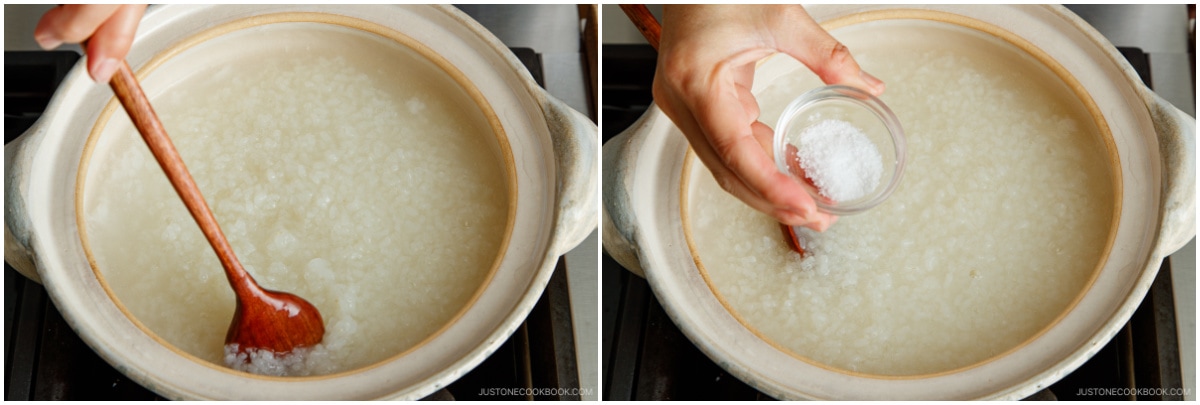
- After cooking the rice for 30 minutes (or 20–25 minutes if you pre-soaked the rice), check the consistency. It should be thick and soupy, but not pasty. Add water if it's too thick. Next, season with ¼ tsp Diamond Crystal kosher salt to taste.
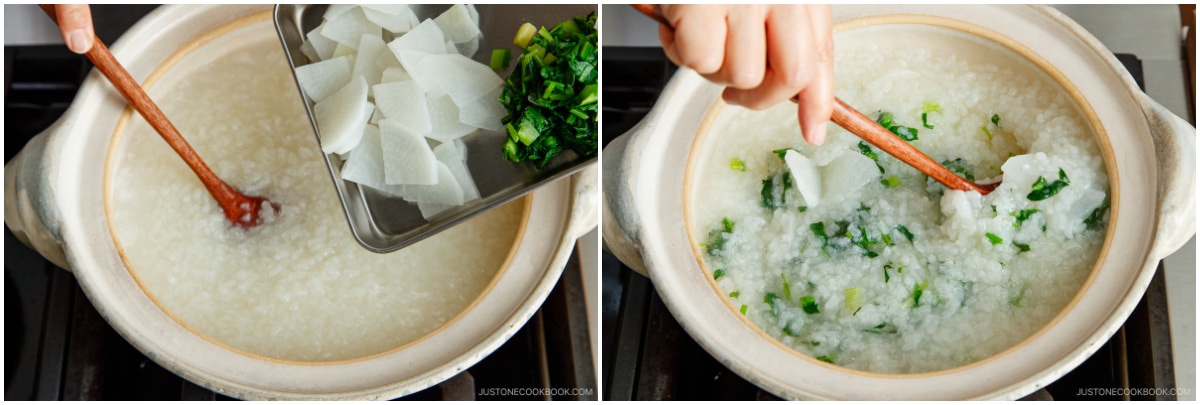
- Add the greens and daikon and stir. Turn off the heat and cover tightly. Allow to rest and steam for 5 minutes.
To Add Mochi (optional)
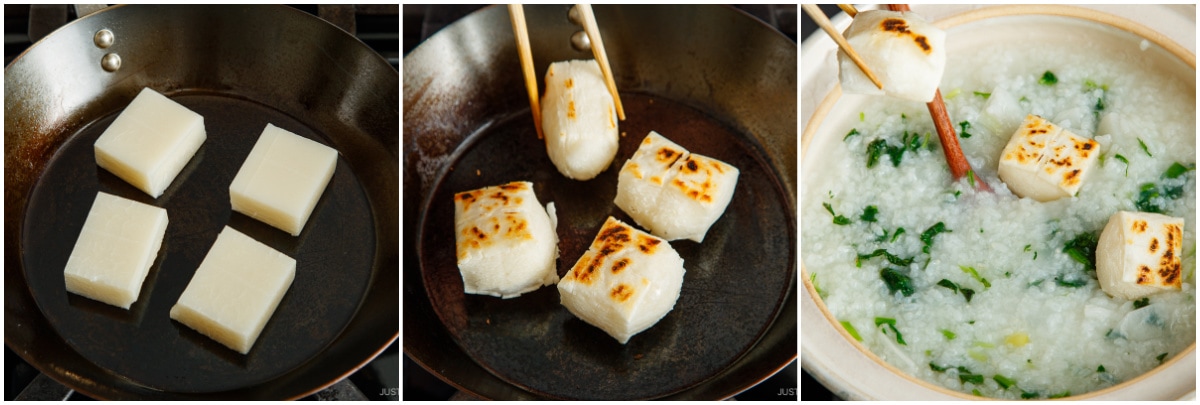
- Cut 2 pieces Japanese rice cake (kiri mochi) in half. Toast them in a dry frying pan or toaster oven until golden and puffed up. Add to the rice porridge.
To Serve
- Serve immediately in individual rice bowls with salty condiments of your choice such as tsukemono, simmered kombu (tsukudani), or umeboshi.
To Use Cooked Rice (optional; 2 servings)
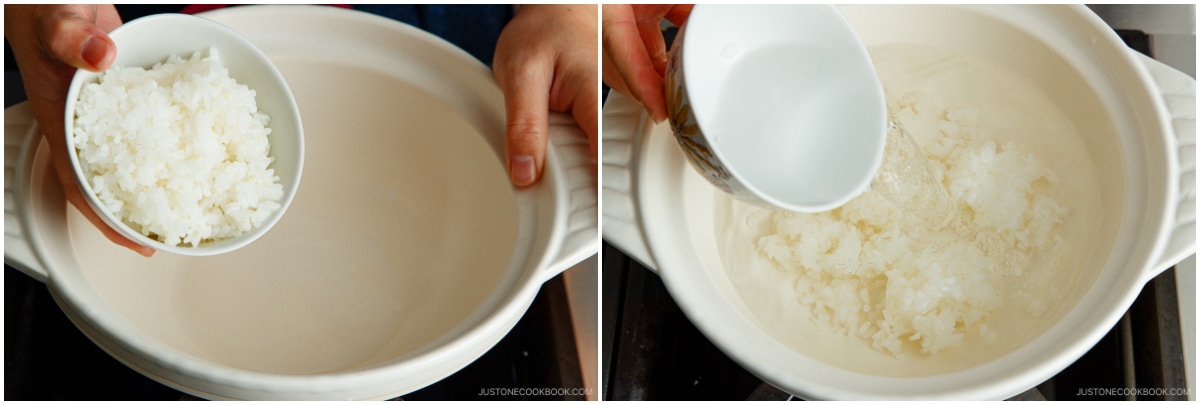
- Here, I'll show you how to cook 2 servings with one bowl of cooked rice. Add 1 rice bowl cooked Japanese short-grain rice (1 cup, 150 g) and 2–3 rice bowls water (2–3 cups, 400–600 ml) to a donabe or heavy-bottomed pot. Here, I used 3 rice bowls of water and 1 rice bowl of cooked rice to show a looser porridge consistency.
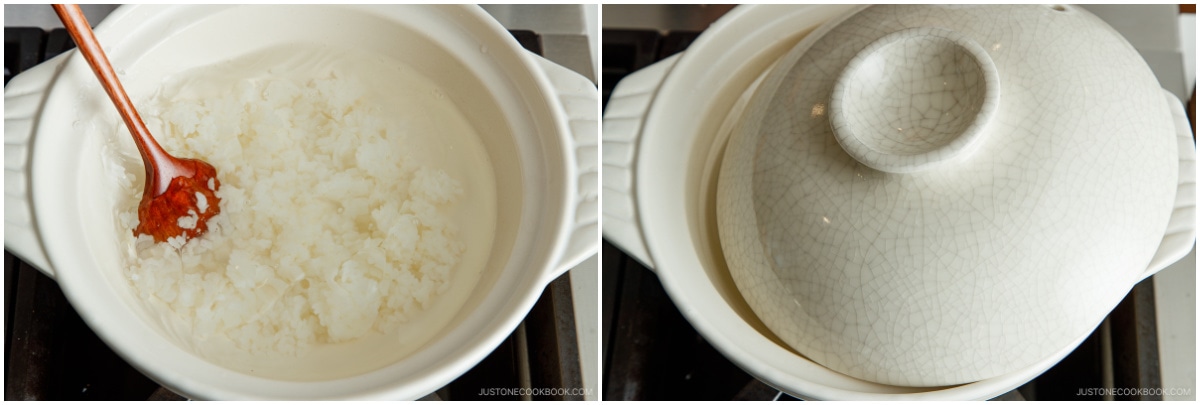
- Bring it to a boil on medium heat. Once boiling, stir the rice once and reduce the heat to low. Cover the donabe with the lid slightly ajar and cook for 10 minutes. Do not open the lid or stir while cooking.
- After 10 minutes, check the consistency. Add half the cooked daikon and 2 Tbsp blanched and chopped herbs/greens (see my previous steps for how to cook) or a half package (1 small packet) freeze-dried nanakusa. Mix gently.
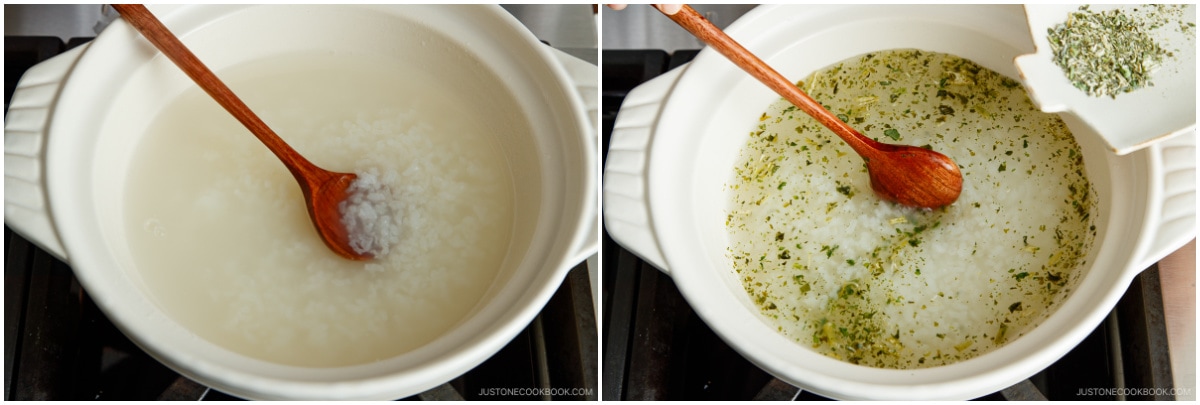
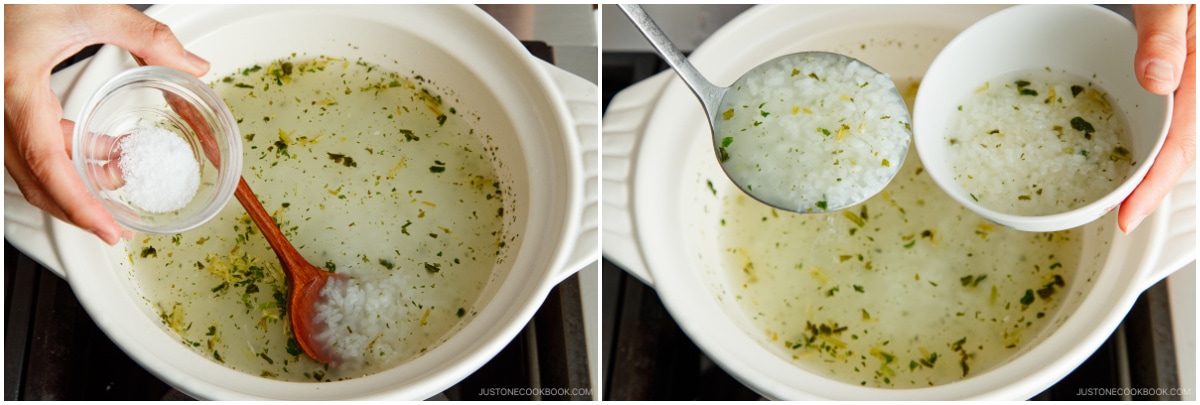
- Cook until the greens are warm and add ¼ tsp Diamond Crystal kosher salt to taste. Once the porridge reaches the consistency you like, serve it in individual rice bowls. Enjoy!
To Store
- You can keep the leftovers in an airtight container for 2 days in the refrigerator or up to a month in the freezer.
Nutrition
Did you make this recipe?
Tag @justonecookbook on Instagram so we can see your delicious creation!
Editor’s Note: The post was originally published on January 5, 2017. It was updated with new images and a revised recipe on February 19. It was republished with more helpful content on January 2, 2026.