

This post may contain affiliate links. Please read my disclosure policy.
Wafu Dressing at a Glance
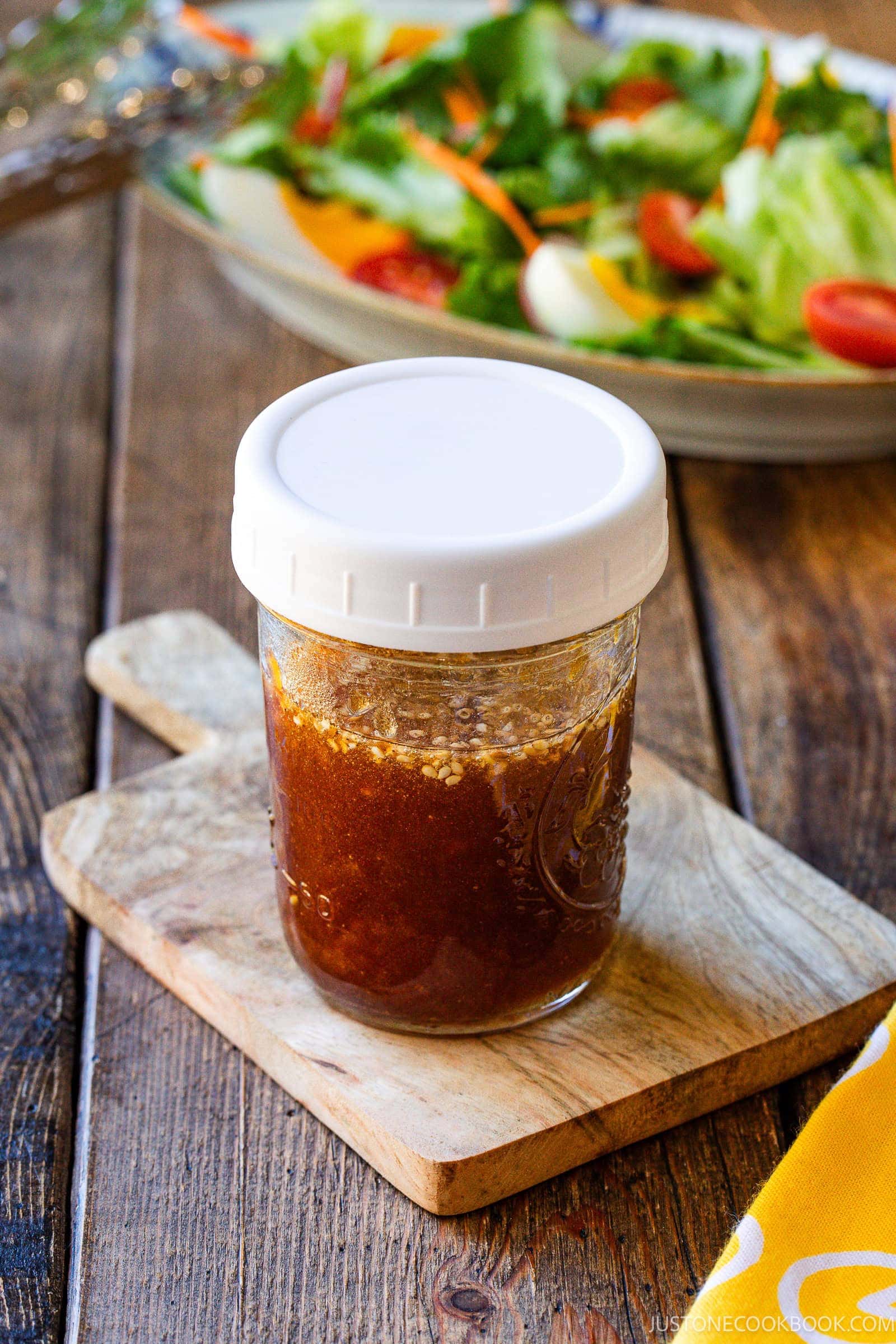
Wafu dressing (和風ドレッシング) is a classic Japanese soy sauce vinaigrette with rich umami depth, gentle sweetness, and crisp acidity. Unlike creamy Western-style dressings, it’s oil-based, light, and dairy-free. In Japan, you’ll find it on salads at home, in bento, and at family-style restaurants.
Why You’ll Love It
- Freshly grated onion – Adds natural sweetness and a fresh, sharp bite you won’t get from store-bought bottles.
- Easy mixing method – Everything comes together in one jar. Give the jar a vigorous shake, and the dressing emulsifies with no extra dishes to wash.
- Made from scratch – You can adjust the sugar and vinegar to your taste, with no added preservatives.
“Of all of Nami’s wonderful recipes on this website, I’ve made this one the most. So easy to put together and so flavorful.“
Jonathan
My Recipe Story
When I was growing up in Japan, wafu dressing was a constant on our family dinner table. It turned simple leafy greens into salads I couldn’t stop eating.
Today, my homemade Wafu Dressing is a weeknight family dinner staple. I always have the ingredients on hand, it’s ready in 5 minutes, and its bright flavor is better than any store-bought dressing.
If you love quick and flavorful Japanese dressings, try my Carrot Ginger Dressing, Sesame Dressing, and Miso Dressing recipes next!
Key Ingredients
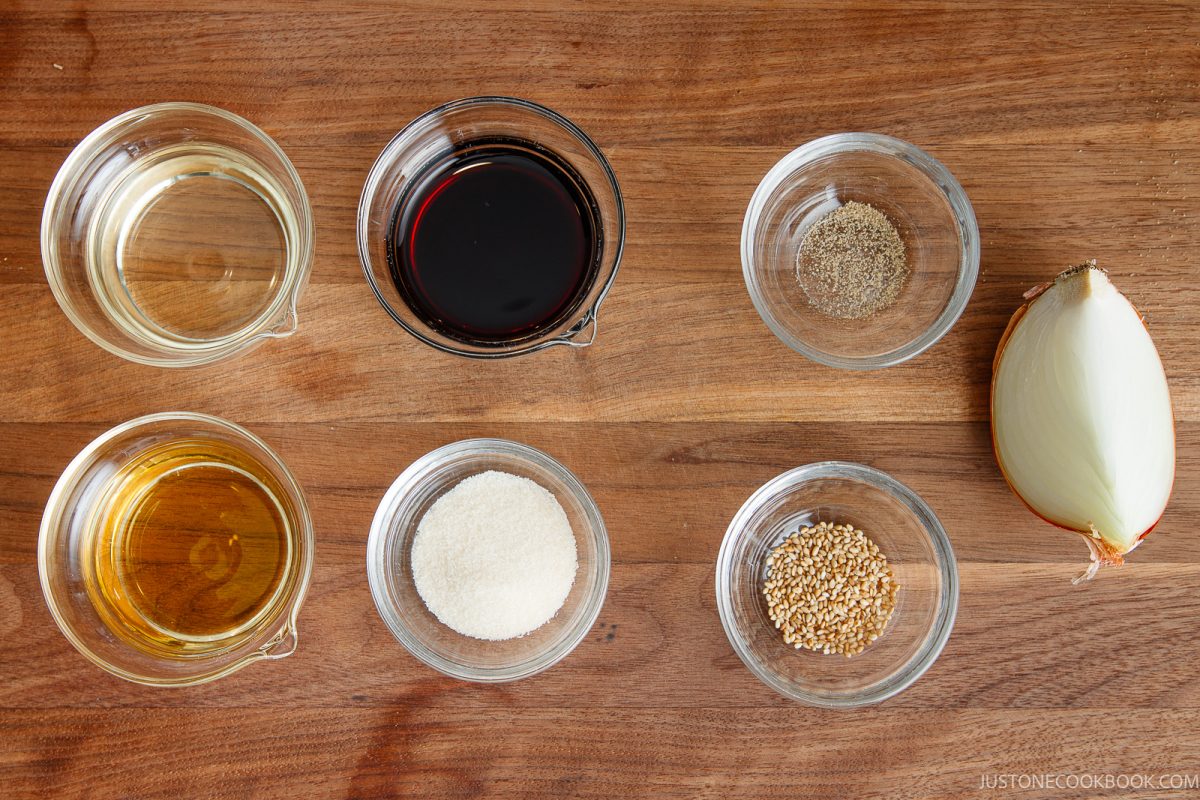
Wafu dressing is made with onion, soy sauce, rice vinegar, sugar, black pepper, toasted sesame seeds, and neutral oil.
- Grated yellow onion – Adds a signature savory depth and natural sweetness. If you find raw onion too sharp, see my Recipe Tips section below.
- Soy sauce – The savory, umami-rich base that defines this dressing. Standard Japanese soy sauce works best. Use tamari soy sauce for a gluten-free option.
- Unseasoned rice vinegar – Adds a soft, gentle acidity. Champagne vinegar makes a good substitute. Avoid distilled white and white wine vinegar, which taste too sharp.
- Sugar – Balances the vinegar’s acidity and softens the raw onion’s bite. Adjust to taste, but avoid omitting it completely.
- Toasted sesame seeds – Provide texture and a roasted, nutty flavor.
- Neutral oil – Choose a light, neutral oil like canola and safflower. Heavier oils like extra virgin olive oil can overpower the other flavors and leave a greasy mouthfeel.
Find the printable recipe with measurements below.
Jump to RecipeHow to Make Wafu Dressing
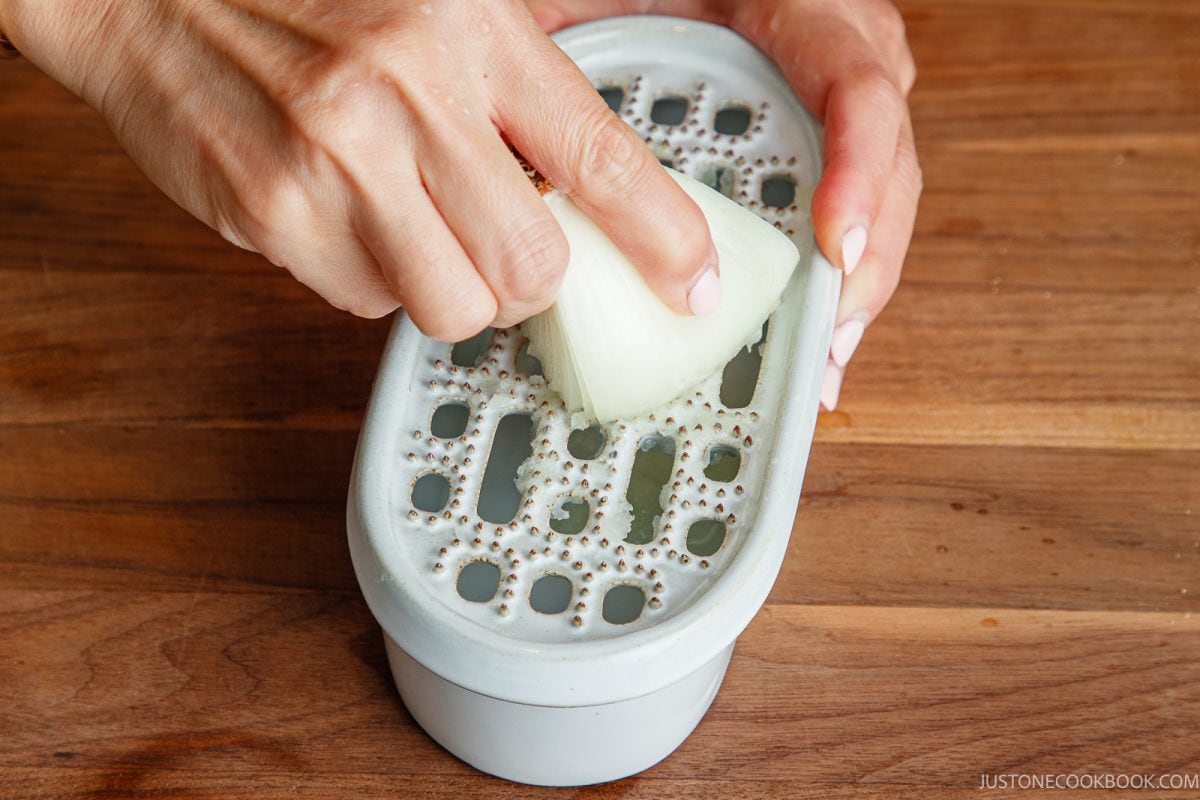
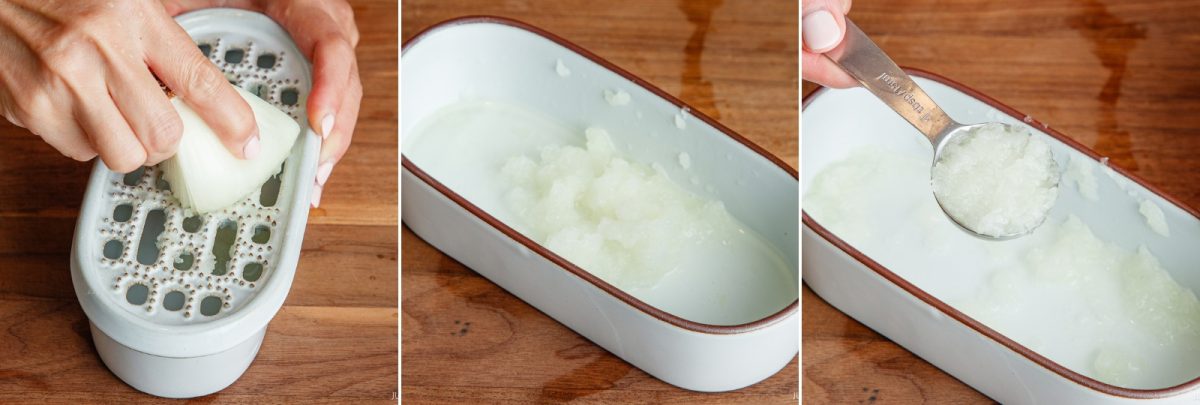
- Grate the onion. Use a ceramic grater to grate the onion finely, catching the juice along with the pulp.
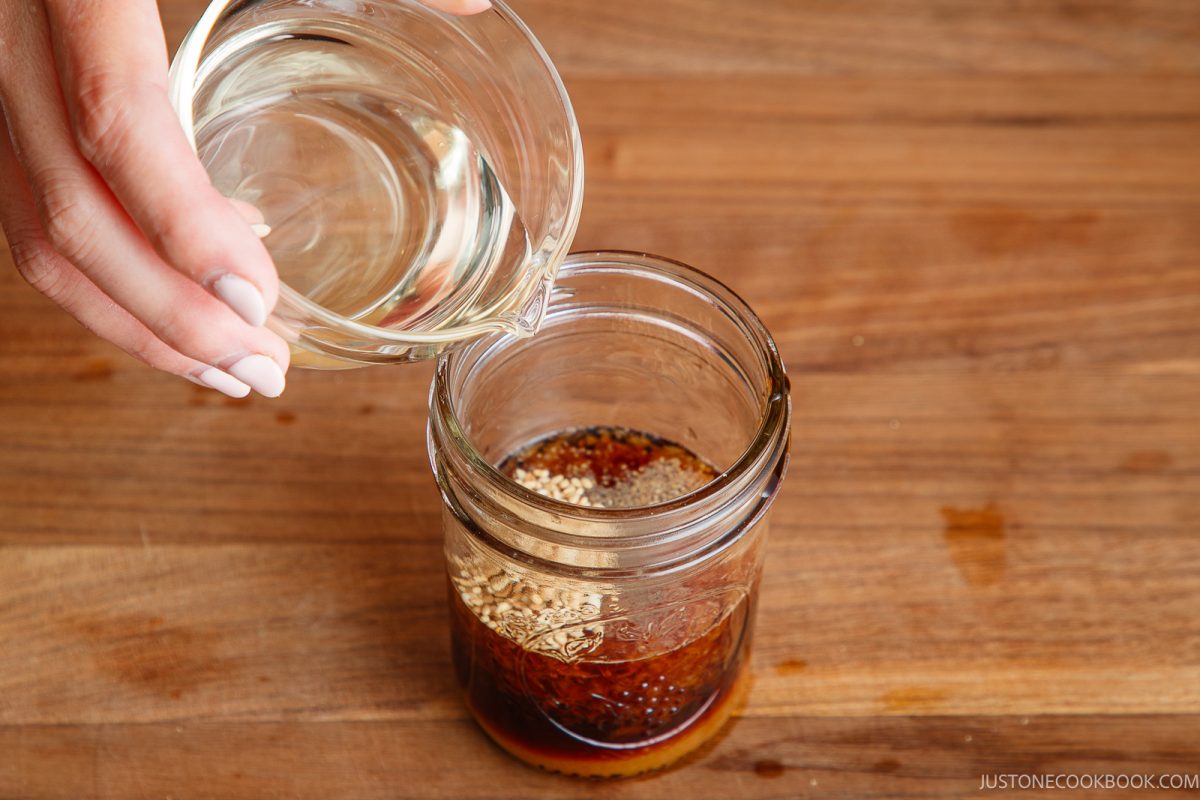
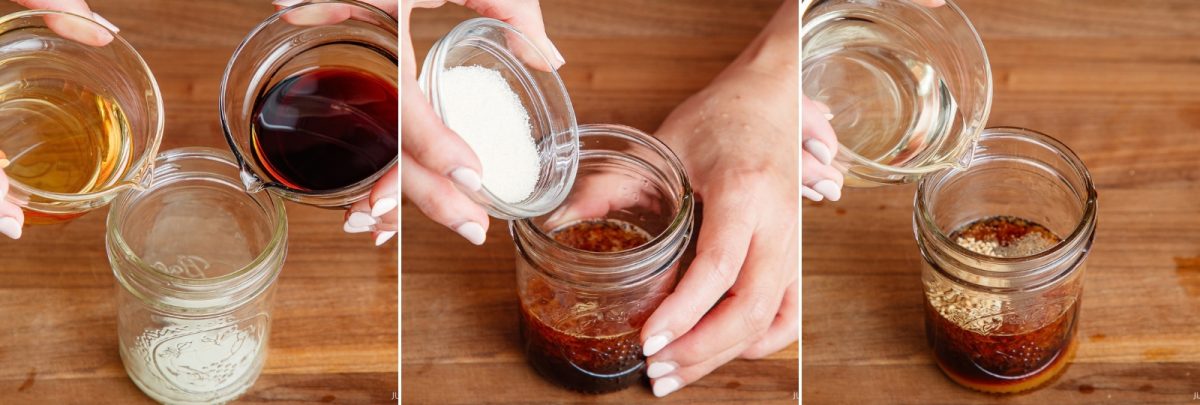
- Combine everything in a jar. Add all the ingredients to a mason jar or mixing bowl.
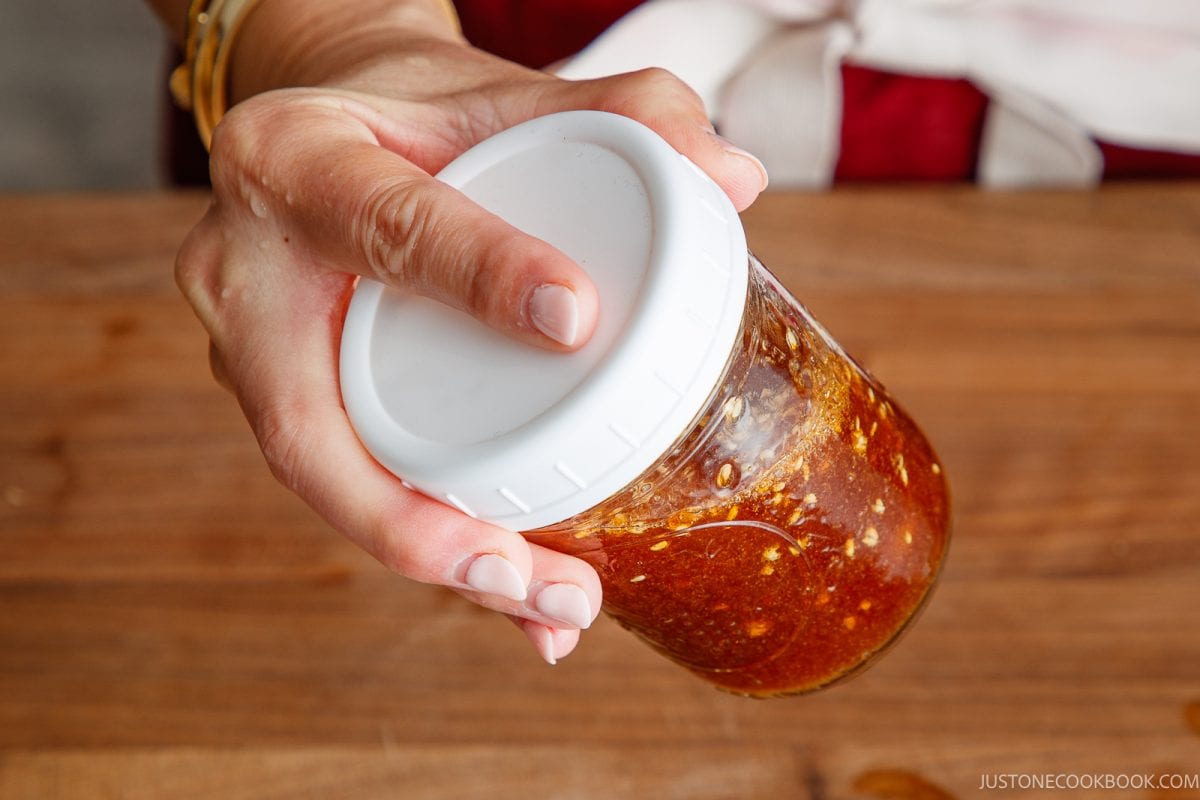
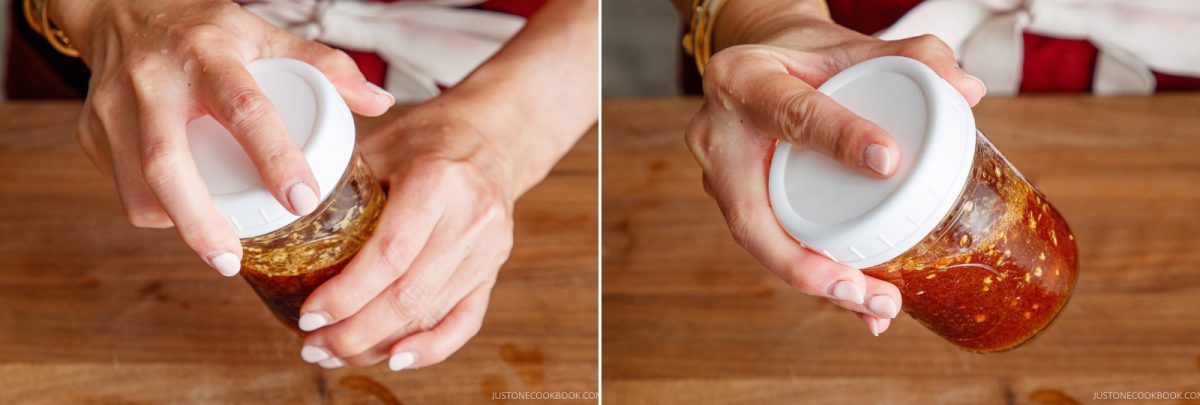
- Shake until the sugar dissolves. Put on the lid and shake the jar vigorously until the dressing turns cloudy and slightly thickens. Or whisk it in a bowl.

Nami’s Recipe Tips
These simple tips will help you make Wafu Dressing perfectly every time.
- Soften the raw onion flavor – The sugar balances the onion’s sharpness. For a milder taste, microwave the grated onion for 15–20 seconds, or sauté it until translucent.
- Rest it overnight – If you have time, chilling the dressing overnight lets the flavors meld and further mellows the raw onion.
- Choose a light, neutral oil – Besides canola and safflower, high-oleic sunflower oil and refined grapeseed/avocado oil have light viscosity. Heavier oils like extra virgin olive oil and vegetable oil blends can solidify in the refrigerator, making the dressing harder to pour.


- Use room-temperature ingredients – Make sure the vinegar and grated onion aren’t cold before mixing. Cold ingredients can cause the dressing to separate instead of emulsifying.
- Whisk or shake well – If using a bowl, whisk for 10–15 seconds right before serving. If using a jar, seal tightly and shake until there is no oil separation.
Storage Tips
To store: This dressing keeps for 7–10 days in the refrigerator. Make a double batch to last the whole week. The oil rises as it sits, so shake well before each use. Freezing is not recommended because the oil separates and the onion turns watery once thawed.
To re-emulsify chilled dressing: If the dressing separates in the fridge, let it warm up on the counter for 5–10 minutes. Or microwave it for 10–15 seconds with the lid off. Shake to restore the emulsion.
Variations
Here are a few easy ways to make this dressing your own.
- Enhance the Japanese flavors. Add grated daikon radish, grated ginger, shiso (perilla leaves), umeboshi (pickled plum) paste, ground sesame seeds, or a little wasabi.
- Add yuzu juice. A squeeze of Japanese citrus adds a bright, refreshing flavor.
- Swap the oil. Replace one-third of the neutral oil with toasted sesame oil to make a Chinese-style Chuka Dressing.
How to Serve Wafu Dressing
Enjoy this versatile Japanese vinaigrette on salads, grilled meats, or steamed veggies.
- Salads: Toss with Daikon Radish Salad, Tofu Salad, Seaweed Salad, or a fresh green salad.
- Meat & Fish: Use as a sauce for Chilled Pork Shabu Shabu, grilled fish, or Japanese-style Wafu Hamburger steaks.


FAQ
I don’t like raw onion. Can I cook it or skip it?
Raw onion gives this dressing its sharp bite. I have three recommendations. First, allow the flavor to mellow and meld overnight instead of serving right away. This method takes off the sharp edge and the onion becomes sweeter. Second, microwave or sauté the onion to remove its harsh bite. Third, use a sweet onion like Vidalia or Maui for a milder, sweeter flavor. I don’t recommend skipping it completely, since the dressing flavor will change completely.
Can I use olive oil instead of neutral oil?
Yes, but choose a refined or “light” olive oil instead. Read more about neutral oils, in my Best Neutral Oil for Cooking blog.
I’d love to hear how yours turned out! 💛 Please leave a star rating and comment below to share your experience. Your feedback not only supports Just One Cookbook but also helps other home cooks discover recipes they can trust.
Wafu Dressing (Japanese Salad Dressing)
Ingredients
- ¼ yellow onion
- 3 Tbsp soy sauce (use tamari for gluten-free)
- 3 Tbsp rice vinegar (unseasoned) (see Notes for substitutes)
- 1 Tbsp sugar (essential to balance the sharp onion bite and rice vinegar acidity)
- ⅛ tsp freshly ground black pepper
- 1 tsp toasted white sesame seeds
- 3 Tbsp neutral oil (see Notes for recommended types)
Instructions
- Gather all the ingredients.
- Grate ¼ yellow onion using a ceramic daikon grater until you get 1 Tbsp.
- Add 1 Tbsp grated onion, 3 Tbsp soy sauce, 3 Tbsp rice vinegar (unseasoned), 1 Tbsp sugar, ⅛ tsp freshly ground black pepper, 1 tsp toasted white sesame seeds, and 3 Tbsp neutral oil to a mason jar (or a mixing bowl).
- Put the lid on and shake the jar vigorously (or whisk the ingredients in the bowl) for 10 seconds until fully emulsified with no visible oil separation.
To Serve
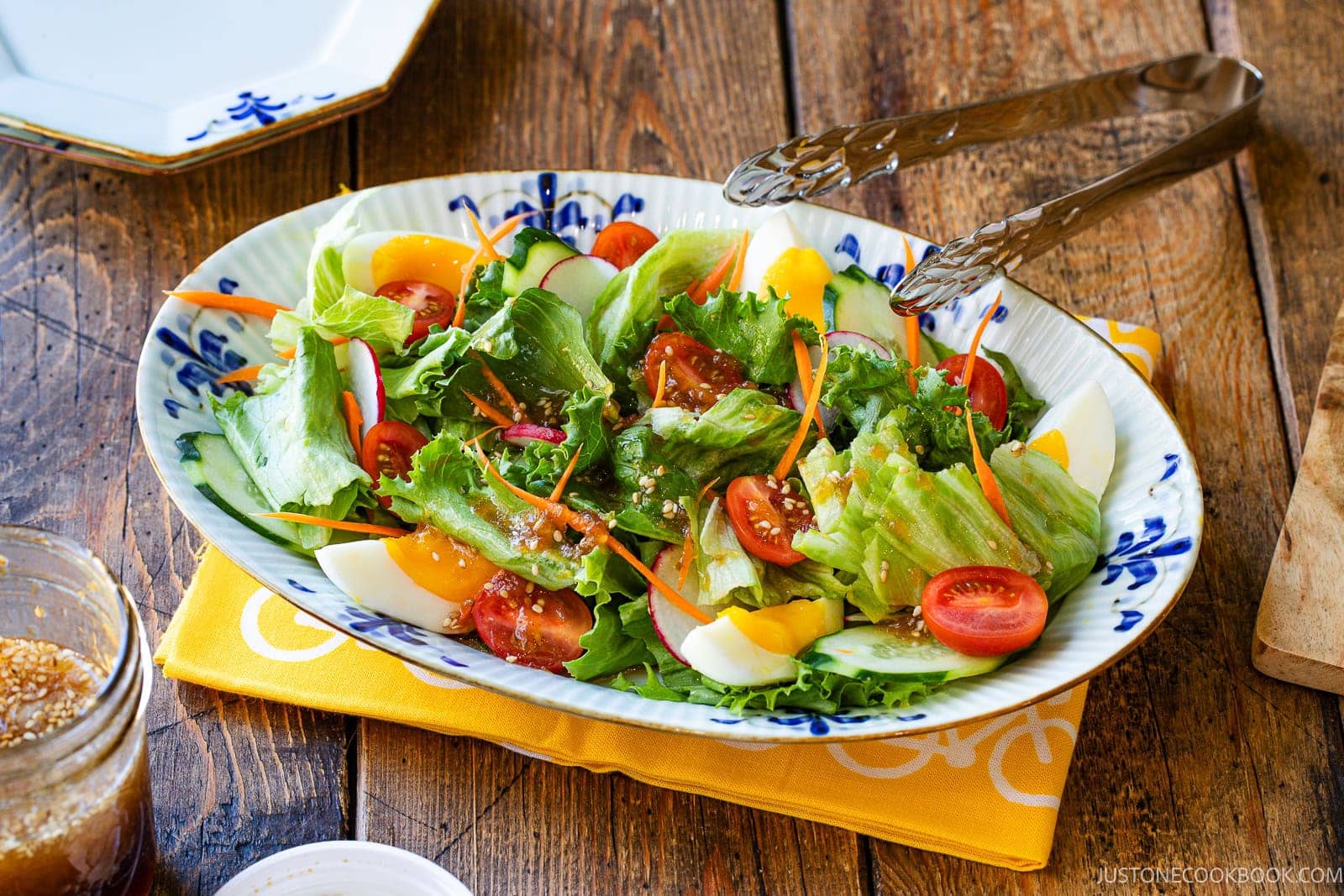
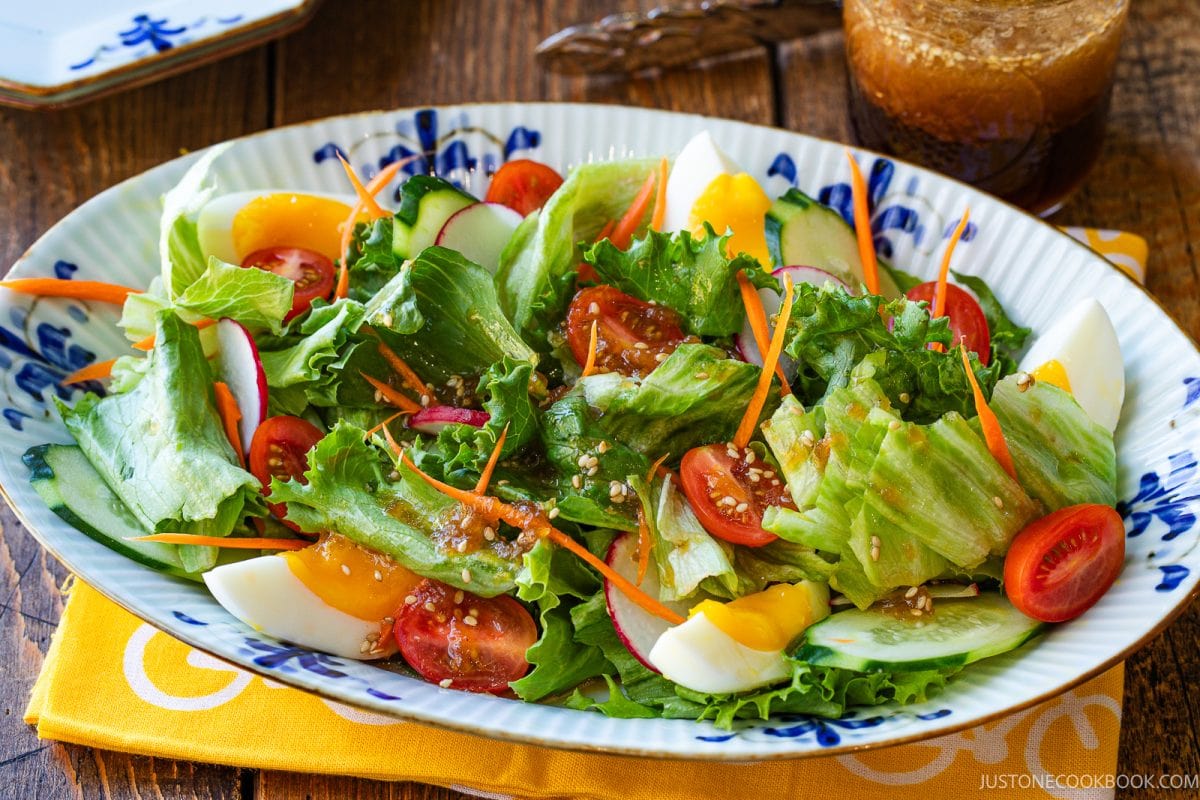
- Shake the jar (or whisk) before each use since the oil rises as it sits. Drizzle over a leafy green salad. I put together green leaf lettuce, halved cherry tomatoes, shredded carrots, sliced cucumber, red radish slices, and boiled egg. See Notes for more ideas.

To Store
- Keep the dressing in an airtight container and store in the refrigerator for 7–10 days. Freezing is not recommended because the oil separates and the onion turns watery once thawed.To re-emulsify chilled dressing: If the dressing separates in the fridge, let it warm up on the counter for 5–10 minutes. Or microwave it for 10–15 seconds with the lid off. Shake to restore the emulsion.
Notes
- Salads: Toss with Daikon Radish Salad, Tofu Salad, Seaweed Salad, or a fresh green salad.
- Meat & Fish: Use as a sauce for Chilled Pork Shabu Shabu, grilled fish, or Japanese-style Wafu Hamburger steaks.
Nutrition
The nutrition facts shown are generated by an online calculator and are estimates only. Please consult a professional nutritionist for specific dietary needs.
Did you make this recipe?
Tag @justonecookbook on Instagram so we can see your delicious creation!
Editor’s Note: This post was originally published on October 14, 2011, and updated with new photos in November 2013. It was updated on October 4, 2026, with new images, detailed ingredient notes, and helpful tips for success.
