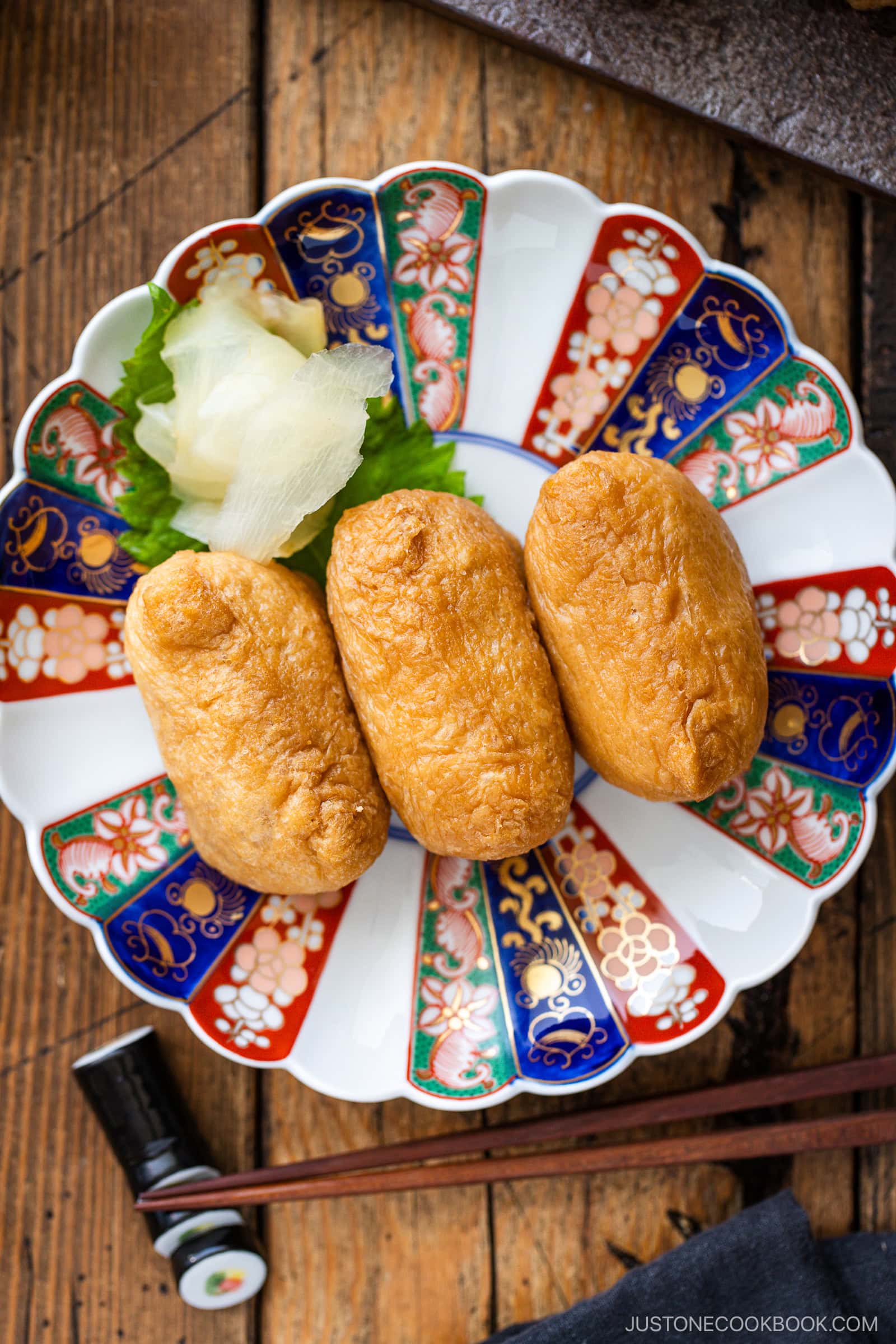
Inari Sushi features seasoned sushi rice tucked inside sweet and savory tofu pockets. This home-cooking favorite is light, flavorful, and vegetarian- and vegan-friendly. In this simple recipe, I’ll show you how fast and easy it is to make at home with store-bought or home cooked version.
- The easiest sushi to make! – If you enjoy cooking with your kids, give Inari sushi a try! It’s super fun and ridiculously easy.
- Sweet, savory, and comforting – This light and delicious sushi is easy to eat and popular among kids and adults alike.
- Optional store-bought shortcuts can shorten the prep time, so you can whip them up in a flash.
If you’re craving homemade sushi, try my Vegetarian Sushi Rolls, Dragon Roll, and Sushi Rolls (Maki Sushi – Hosomaki) next!
What is Inari Sushi?
Inari sushi or Inarizushi (稲荷寿司, いなり寿司) is sweet and tangy sushi rice tucked inside seasoned deep-fried tofu pouches called Inari age.
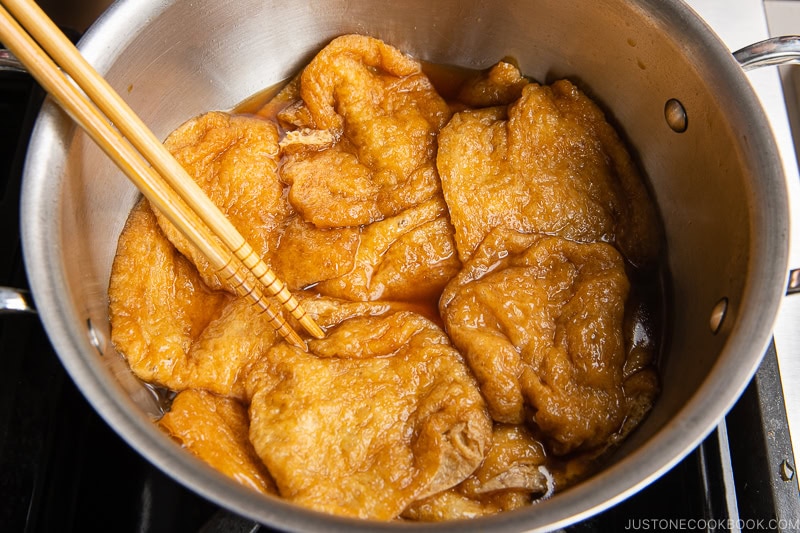
First, we simmer thin, fried tofu pockets, known as aburaage (油揚げ), in a sweet and savory dashi broth. After they absorb the seasoning, we gently squeeze them and fill them with vinegared sushi rice. The result is a delicate sushi with a perfectly balanced sweet-savory flavor.
The dish takes its name from the Inari deity of harvest, whose fox messengers are said to love fried tofu. For this reason, many people affectionately call it O-Inari-san. Over time, it became a beloved home-style dish. Today, you’ll often find Inari sushi at supermarkets, in bento boxes, and at family gatherings throughout Japan.
Ingredients for Inari Sushi
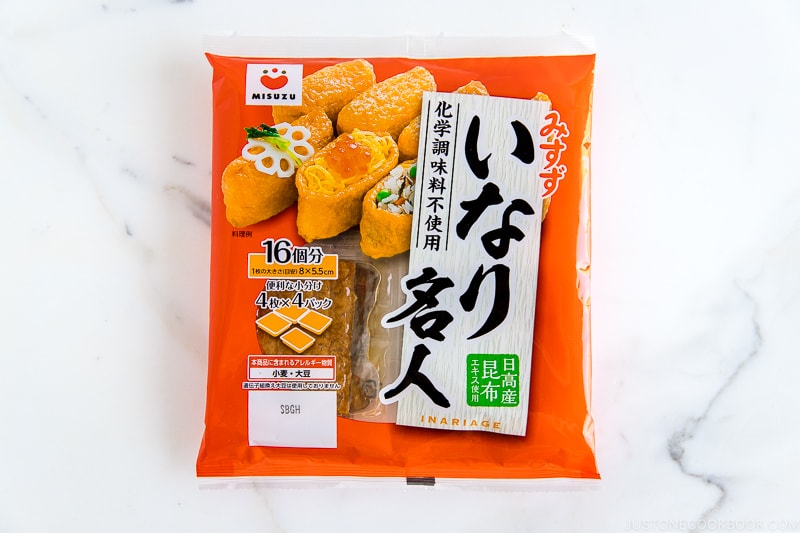
- Inari age (seasoned tofu pockets) – store bought or make Homemade Inari Age
- sushi rice – for step-by-step tips on cooking and seasoning it, see my How to Make Sushi Rice recipe
- toasted white sesame seeds
- sushi ginger and shiso (perilla) leaves – optional, for garnish
Find the printable recipe with measurements below.
How to Make Inari Sushi
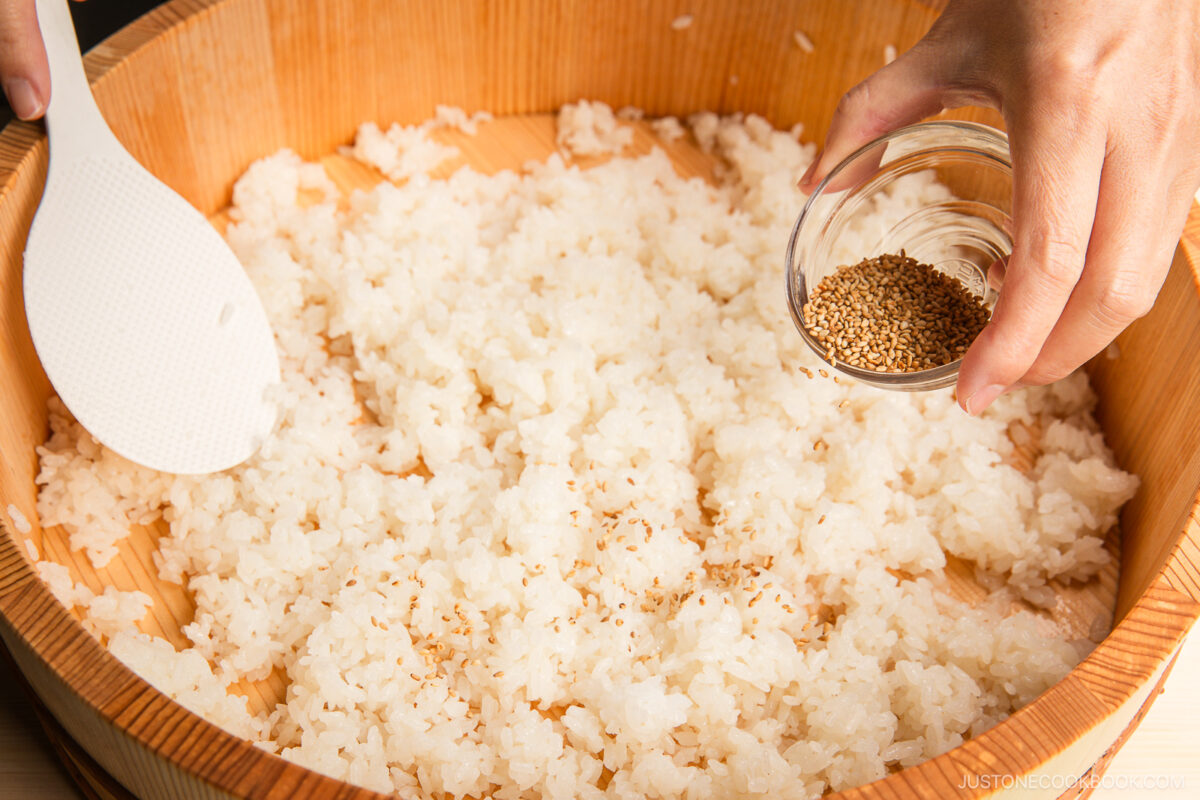
- Prepare sushi rice. Cook rice with kombu. Transfer the cooked rice to a sushi oke or a baking sheet. Season it with sushi vinegar and sprinkle with sesame seeds. For my step-by-step method and helpful tips, see my How to Make Sushi Rice recipe.
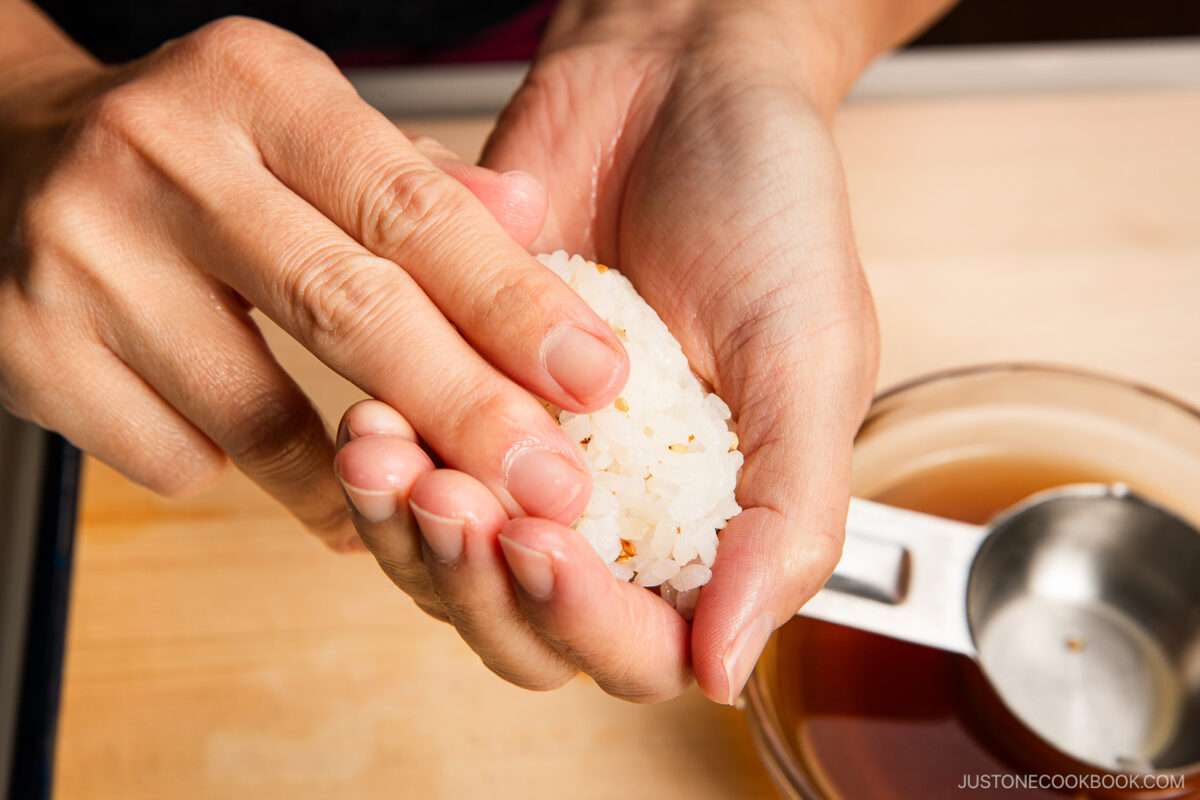
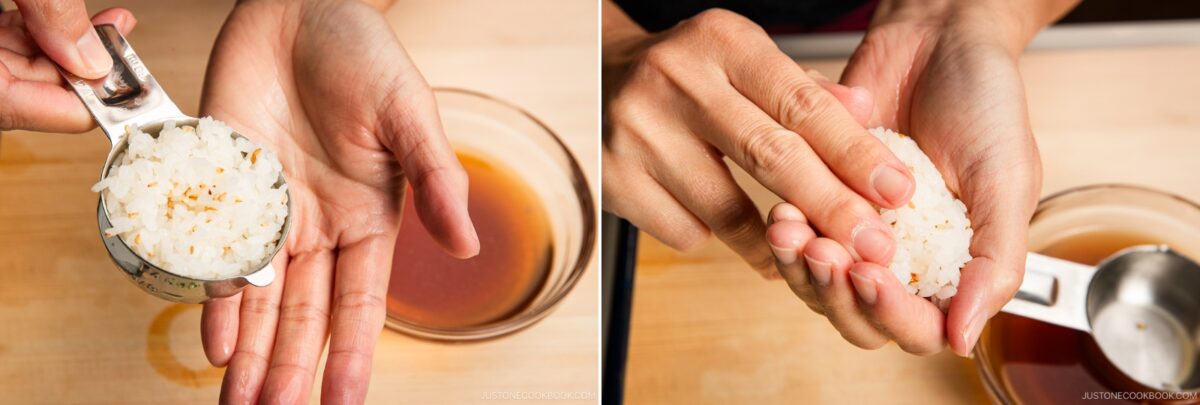
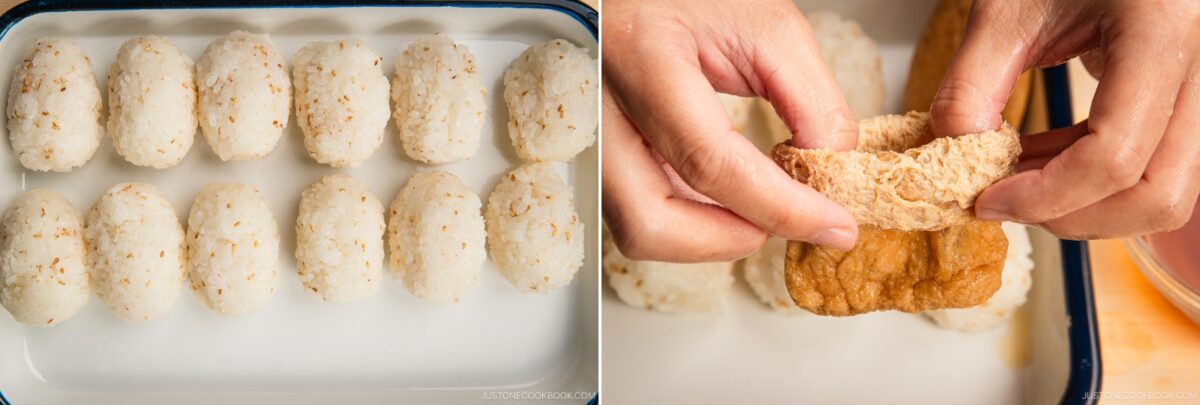
- Form the sushi rice into oblong portions.
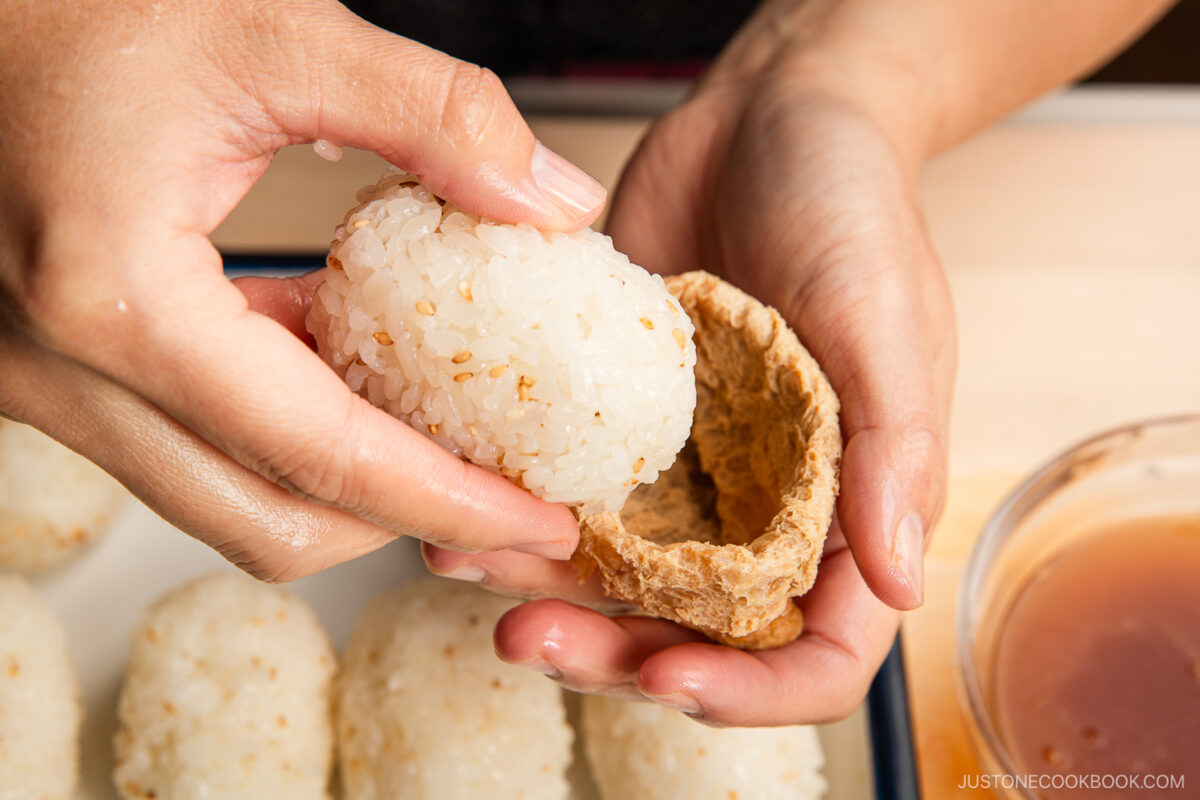
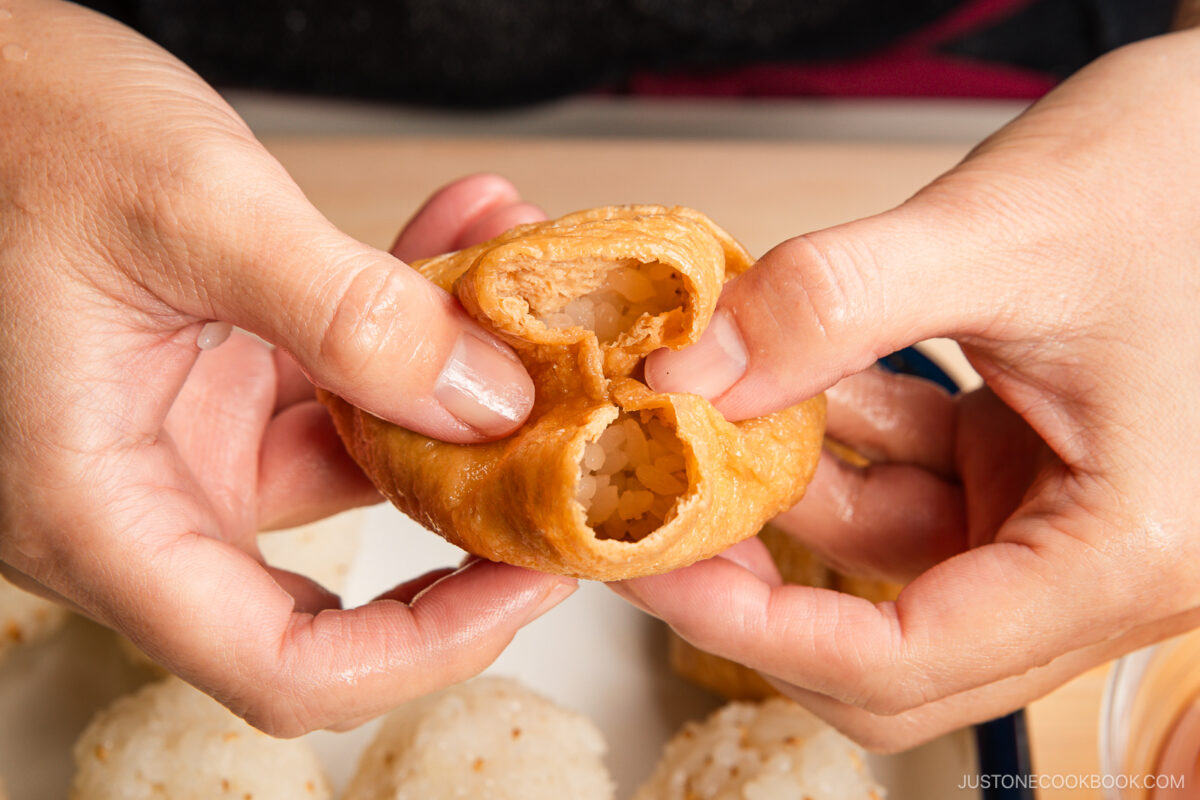
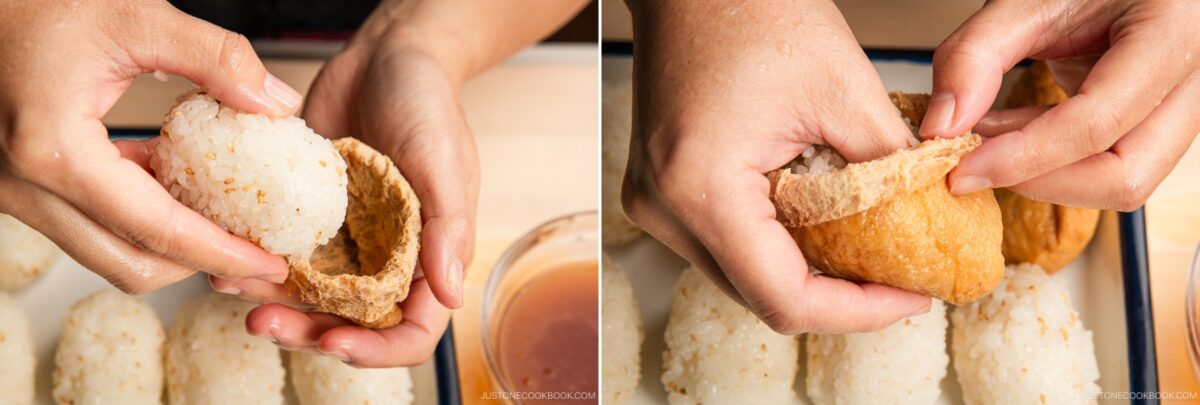
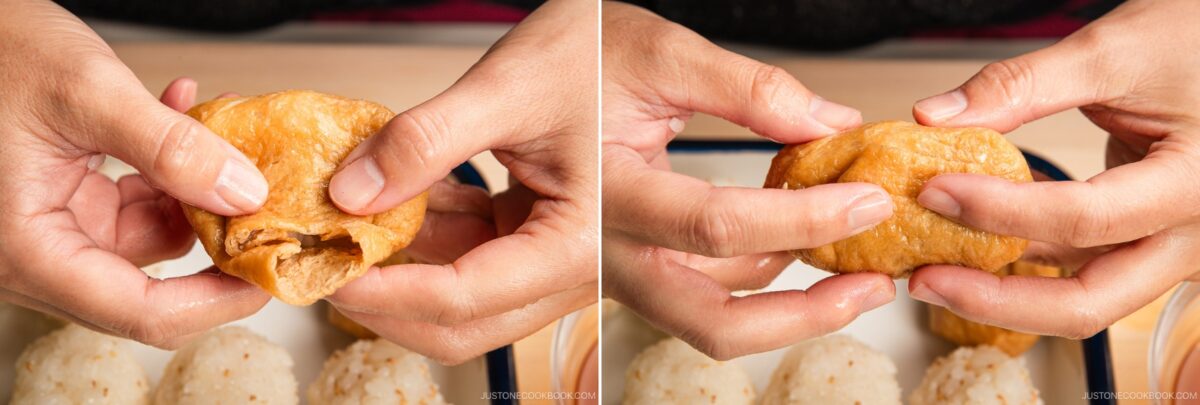
- Fill the tofu pockets. Gently open each pouch and stuff the rice into both corners. Shape gently. Close the Inari sushi and place the sealed side down on a plate.
- Shape gently and close the Inari sushi pockets. Place the sealed side down on a plate.
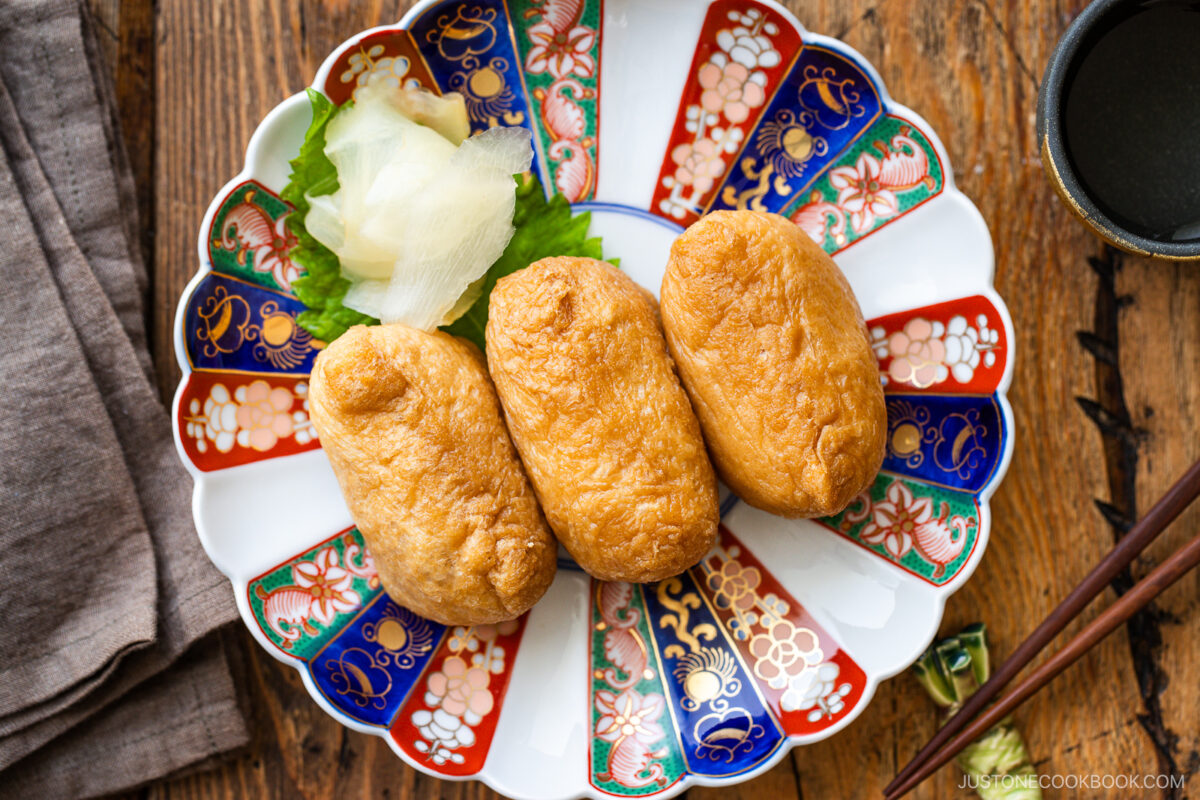
- Serve at room temperature. Garnish with optional shiso leaves and sushi ginger (gari).

Nami’s Recipe Tips
These simple tips will help you make Inari Sushi perfectly every time.
- Use Japanese short-grain rice only – It gives you the best texture and holds together well. There are good reasons why Japanese cooks don’t use brown rice for traditional sushi.
- Fan the rice while seasoning – This step helps remove excess moisture and gives the rice a beautiful shine.
- Let the sushi rice cool to body temperature – If the rice is too hot, it can tear the tofu pouch or make the rice mushy.
- Lightly moisten your hands – This prevents the rice from sticking and keeps the surface smooth.
- Don’t overfill – Fill about 80% full so you can close the pouch neatly. Gently press the rice into corners for soft, rounded edges.
- Make your own Inari age ahead of time – Since homemade seasoned tofu pouches freeze well, you can prep in advance and assemble later.

Variations and Customizations
Looking to change things up?
- Make mixed sushi rice. For extra color and texture, add blanched julienned carrots, Simmered Shiitake Mushrooms, and white sesame seeds.
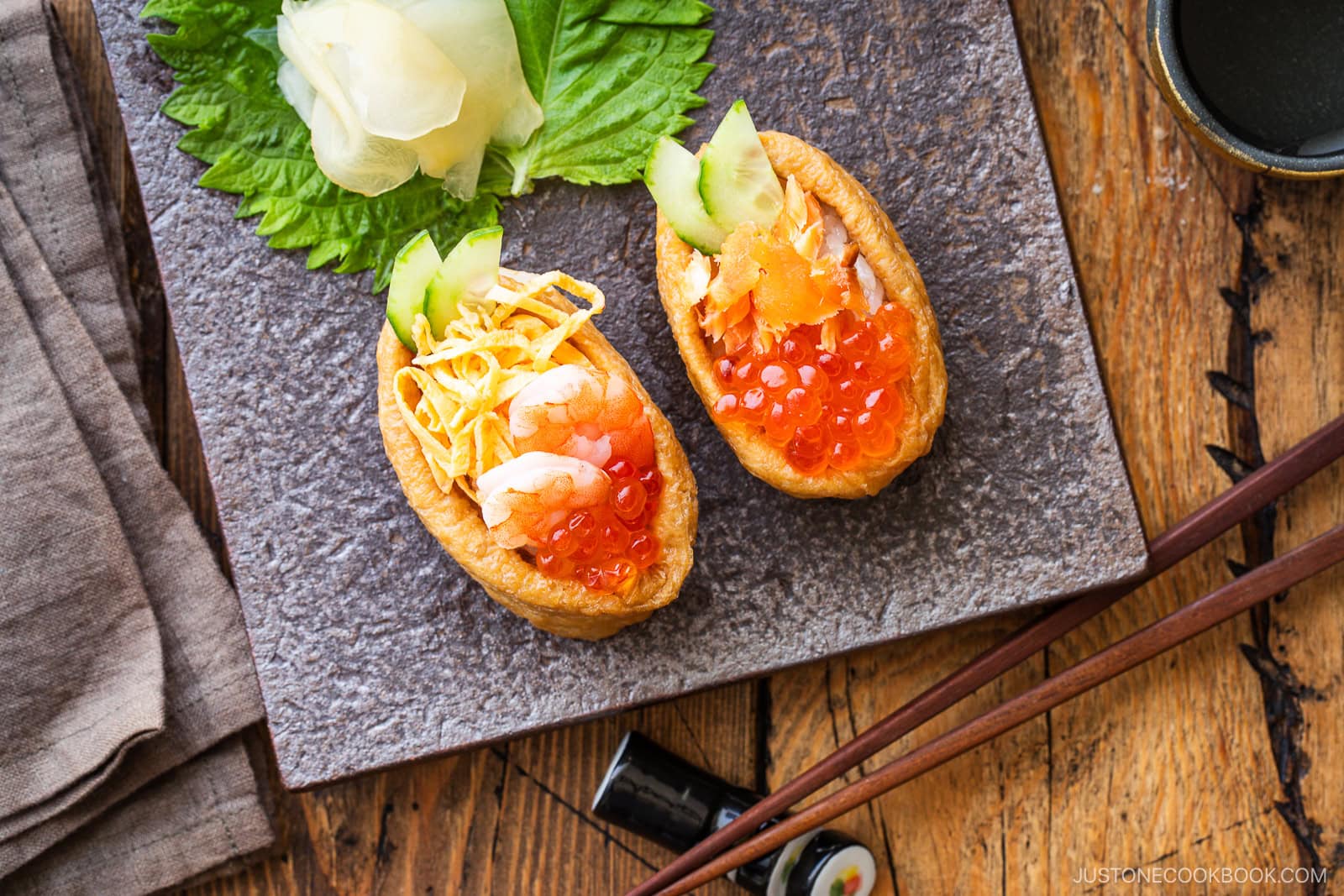
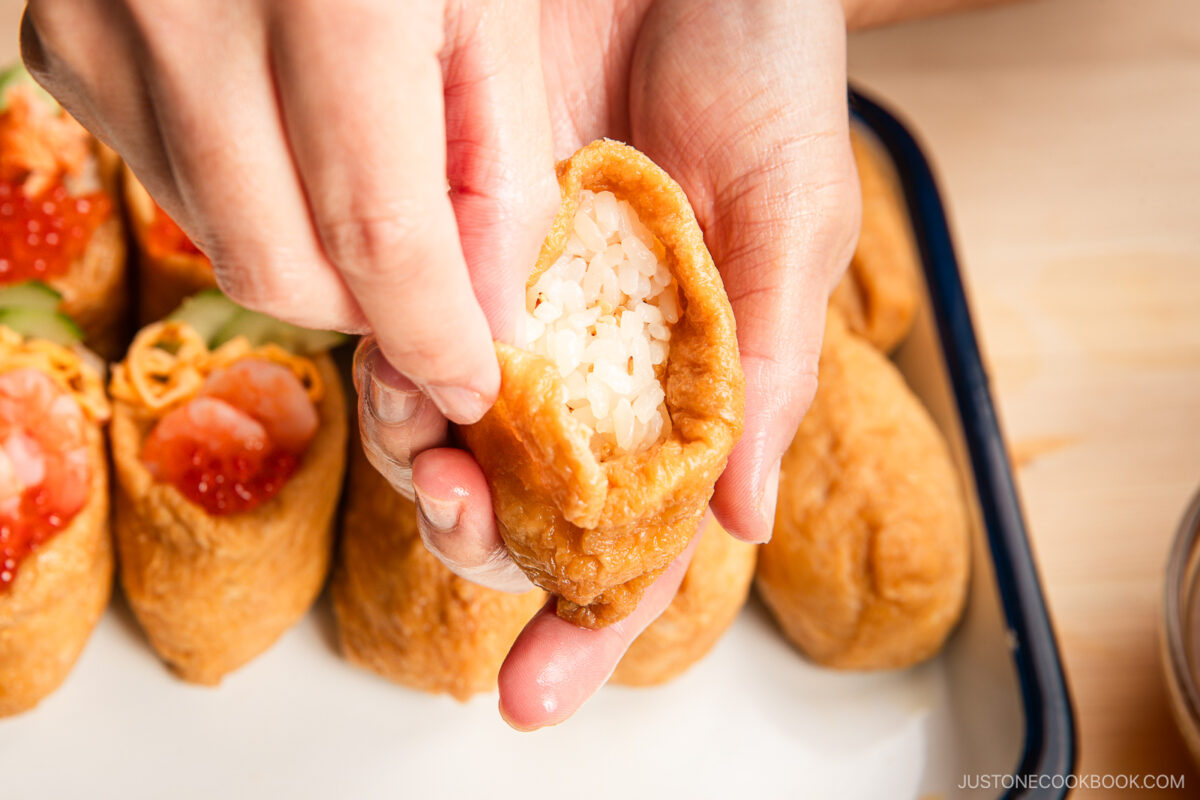
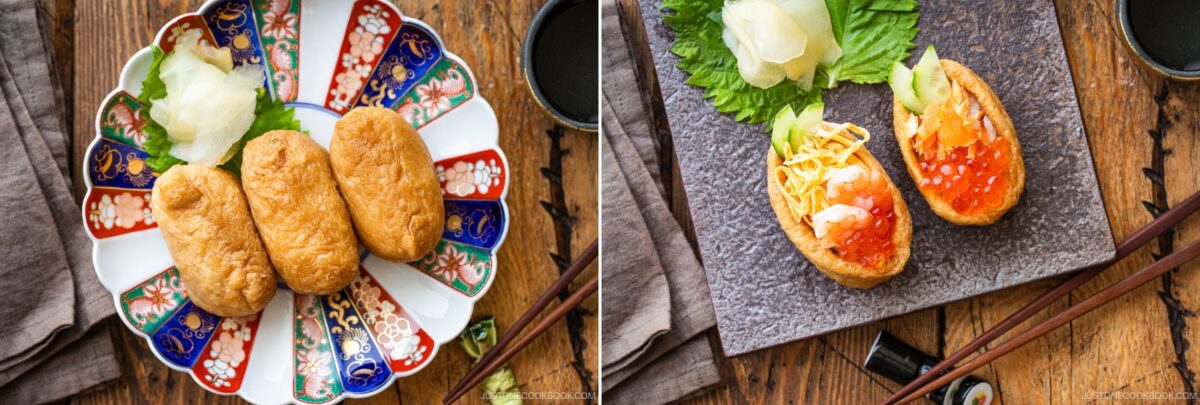
- Keep the stuffed pocket open. Instead of closing it, tuck the edges of the rectangular Inari age inside the pocket so you will have smooth, round edges on top. Top with sliced cucumber, ikura (salmon roe), shredded egg crepe, (kinshi tamago), boiled shrimp, or cooked salmon flakes.

What to Serve with Inari Sushi
Serve Inari sushi any time of year, whether for snack time, gatherings, and simple family meals. Simply choose seasonal sides to round out the menu.
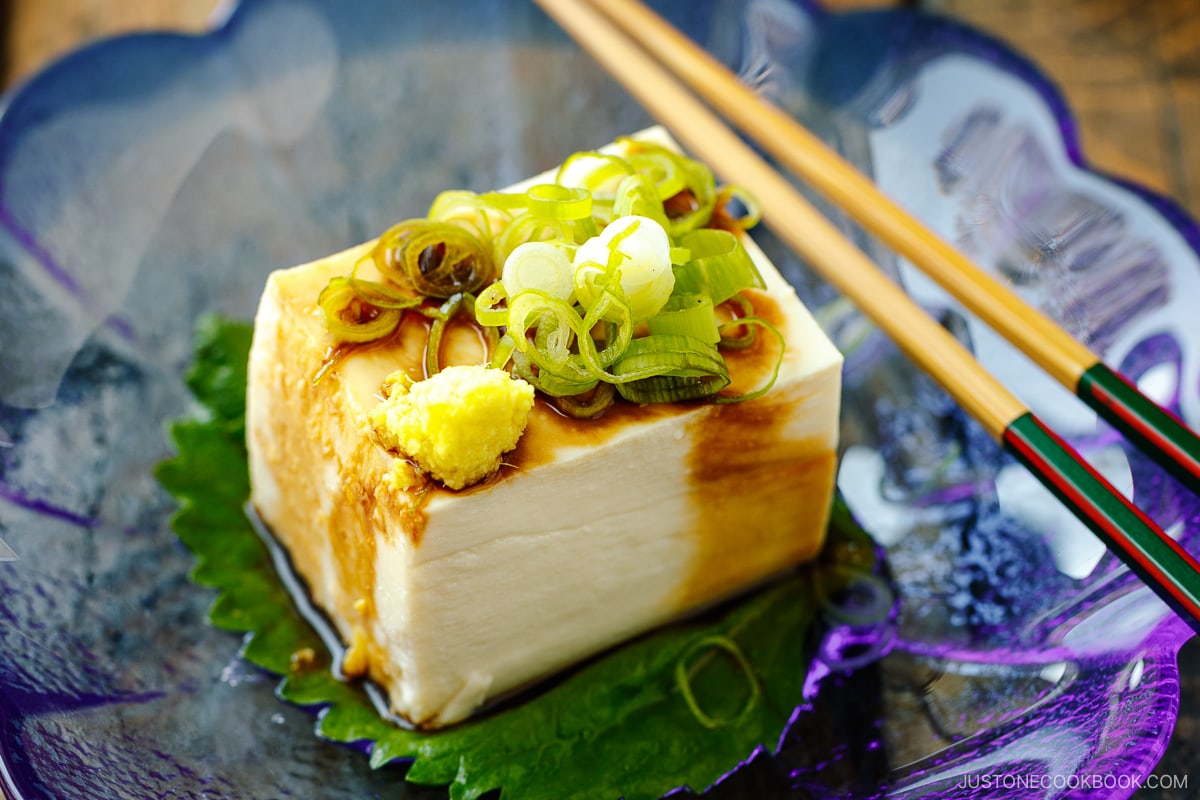
- Japanese Cold Tofu (Hiyayakko)
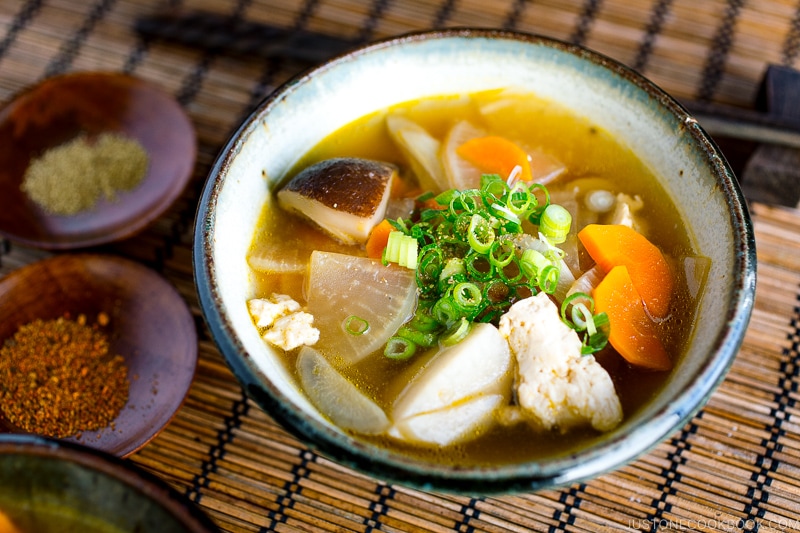
- Kenchinjiru (Japanese Vegetable Soup)
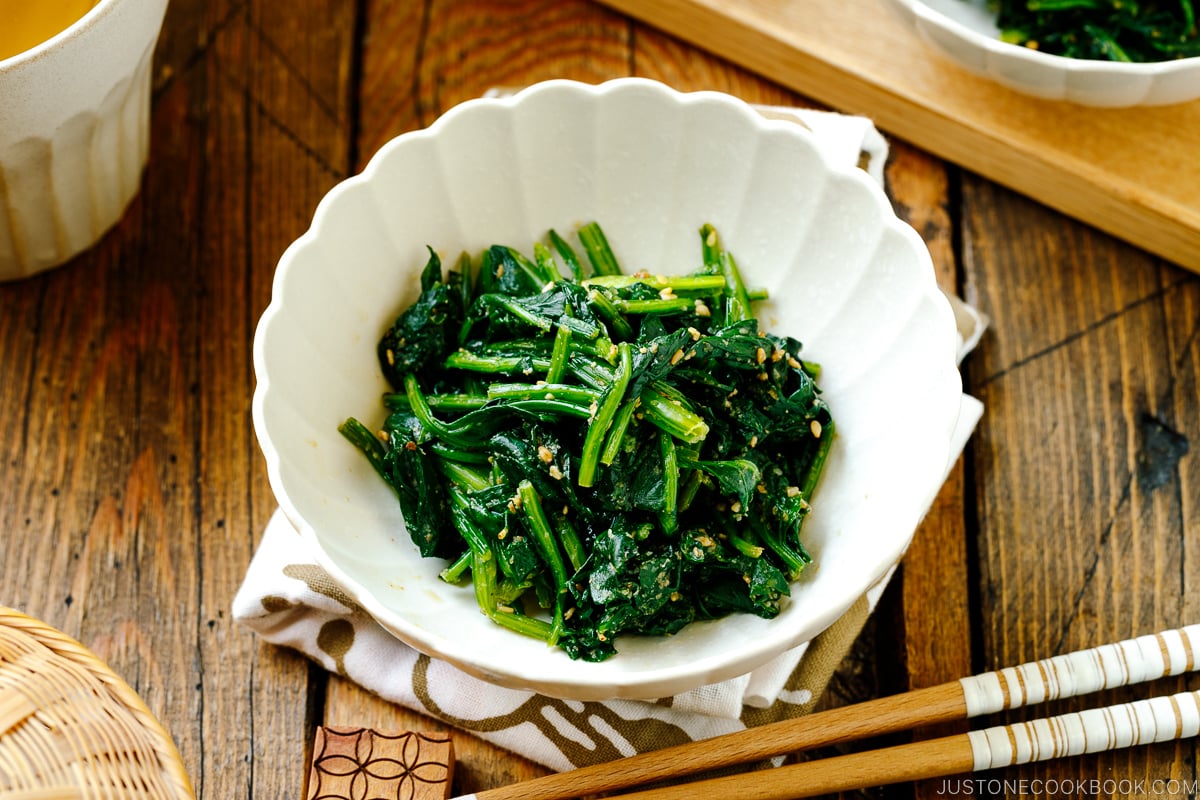
- Japanese Spinach Salad with Sesame Dressing (Gomaae)
- Simmered Ganmodoki (Fried Tofu Patties)

Storage Tips
To store: Enjoy Inari sushi the same day. Keep in a cool place for several hours. If needed, refrigerate for up to 24 hours by wrapping tightly with plastic and covering with a thick kitchen towel to prevent the rice from hardening.
Store leftover inari age in their liquid in the refrigerator for 2–3 days or freezer for up to 1 month.
FAQs
Inari sushi is usually vegetarian because we fill it with seasoned sushi rice and wrap it in sweet tofu pockets called Inari age. However, many store-bought Inari age contain fish-based dashi, so they’re not fully vegetarian or vegan. To make it vegetarian or vegan, look for dashi-free Inari age or prepare Homemade Inari Age without bonito flakes.
I recommend enjoying Inari sushi the same day you make it. Sushi rice dries out as it sits, so assemble and serve it fresh for the best texture. You can prepare homemade inari age ahead of time. Then simply fill and assemble the sushi just before serving.
The main difference is the shape. In the Tokyo (Kanto) area, people shape Inari sushi into an oval or slightly rectangular form, resembling a small rice bale (tawara). In the Osaka (Kansai) area, they form it into a neat triangle, often said to resemble fox ears connected to Inari shrines. Both regions traditionally close to the tofu pouch completely—the difference comes down to the regional shape, not the ingredients.
I’d love to hear how yours turned out! 💛 Please leave a star rating and comment below to share your experience. Your feedback not only supports Just One Cookbook but also helps other home cooks discover recipes they can trust.

Inari Sushi
Ingredients
- 12 Inari age (seasoned fried tofu pouch) (or make Homemade Inari Age; reserve the liquid left in the package)
- 1 Tbsp toasted white sesame seeds
For the Sushi Rice
- 1½ cups uncooked Japanese short-grain white rice (2 rice cooker cups)
- 1½ cups water (use equal parts water to rice)
- 1 piece kombu (dried kelp) (5 g, 2 x 2 inches, 5 x 5 cm per piece; optional, but it gives a nice aroma)
- 4 Tbsp rice vinegar (unseasoned) (if you use bottled "seasoned" sushi vinegar (available on Amazon), skip the sugar and salt below)
- 2 Tbsp sugar
- 1 tsp Diamond Crystal kosher salt
For the Garnish
- sushi ginger (gari) (optional)
- shiso leaves (optional)
Instructions
- Before You Start: The rice cooking time is 45 minutes to 1 hour, depending on the method you use.Please note that 1½ cups (2 rice cooker cups, 300 g) of uncooked Japanese short-grain rice yield 3½ cups (660 g) of steamed rice, enough for 12 Inari sushi pieces. You must use Japanese rice or your sushi will fall apart.
To Cook the Rice
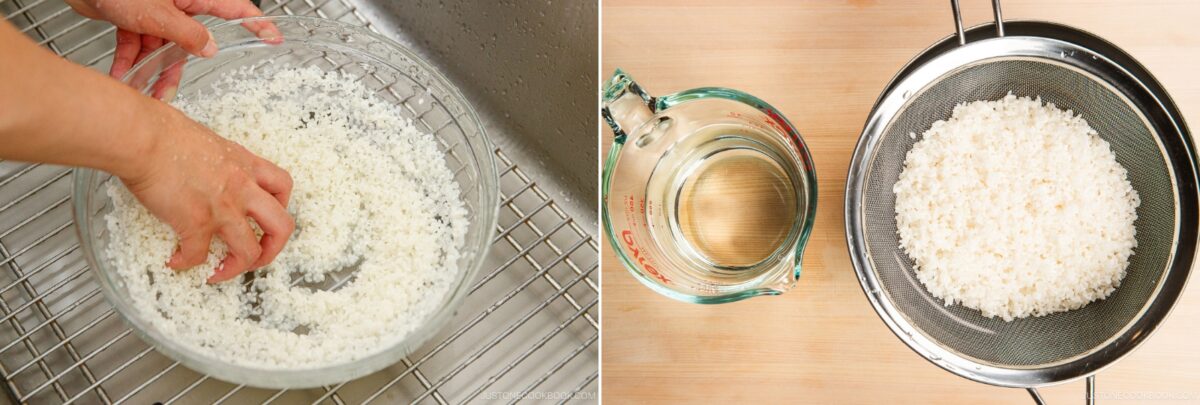
- Wash and rinse: Place 1½ cups uncooked Japanese short-grain white rice in a bowl. To quick rinse, add just enough water to submerge the rice, then immediately pour off the water; repeat and pour off. To wash, gently agitate the wet grains with your fingers in a circular motion for 10–15 seconds. To rinse, add water to cover the grains and immediately pour it off; repeat. Repeat the wash and rinse cycle two more times. Finally, drain the rice very well in a fine-mesh sieve and shake off the excess water.
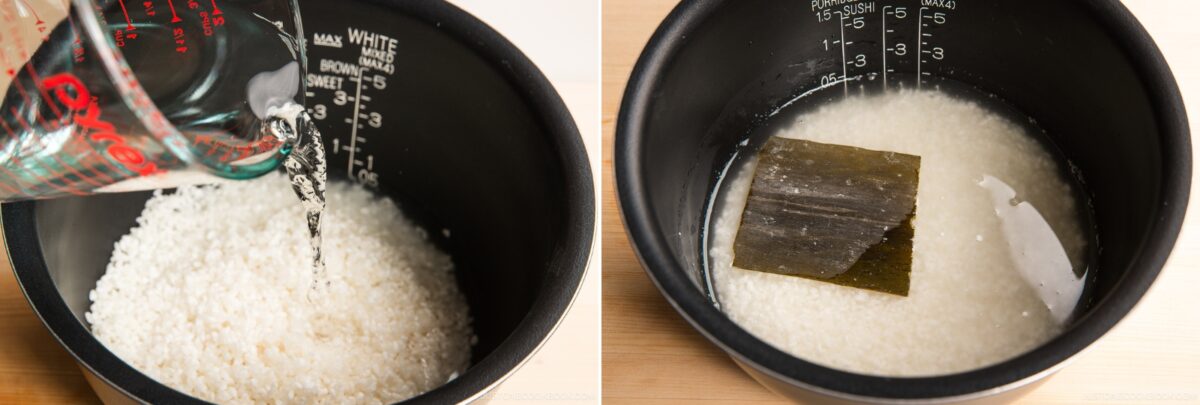
- Cook: Put the well-drained rice in the inner pot of a rice cooker. Add 1½ cups water. Next, wipe off any dirt particles from 1 piece kombu (dried kelp) with a damp cloth, but keep the white powdery substance. Place the kombu on the rice and soak both for 20–30 minutes. Then, start cooking. Nami's Tip: For easy measuring, use your rice cooker's Sushi Rice mode and add water to the 2 rice cup line. Or, use the White Rice mode and add water to just under that line*. You can also cook it in a pot on the stove, donabe, or Instant Pot using the same rice and water amounts.*The rice-to-water ratio for sushi rice is 1 to 1 (instead of regular 1: 1.1 or 1.2); we cook the rice on the firm side, since we later add more liquid with the sushi vinegar.
To Season the Sushi Rice
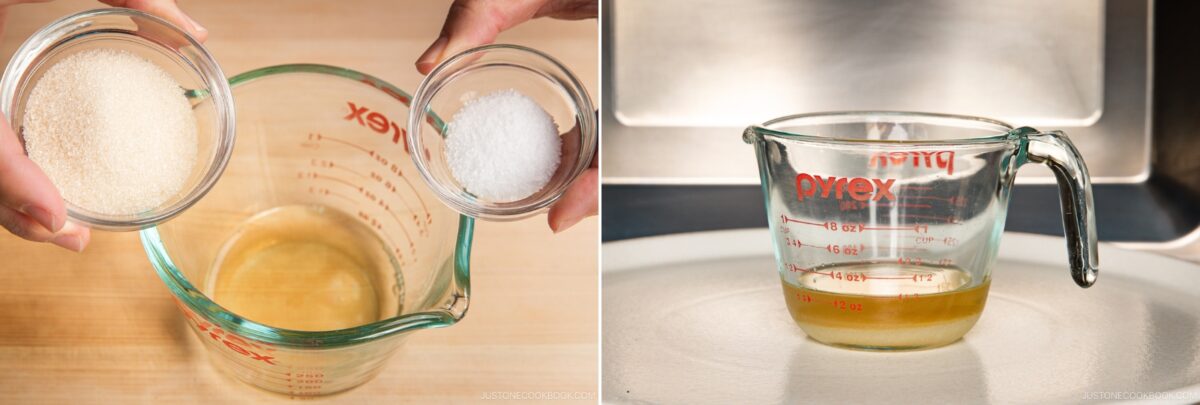
- While the rice is cooking, make the sushi vinegar. Combine 4 Tbsp rice vinegar (unseasoned), 2 Tbsp sugar, and 1 tsp Diamond Crystal kosher salt in a small bowl. Microwave it for 30–40 seconds and whisk to dissolve the sugar. Set it aside and cool to lukewarm or room temperature.Nami's Tip: Alternatively, you can bring it to a boil in a saucepan over medium-high heat and whisk to dissolve the sugar.
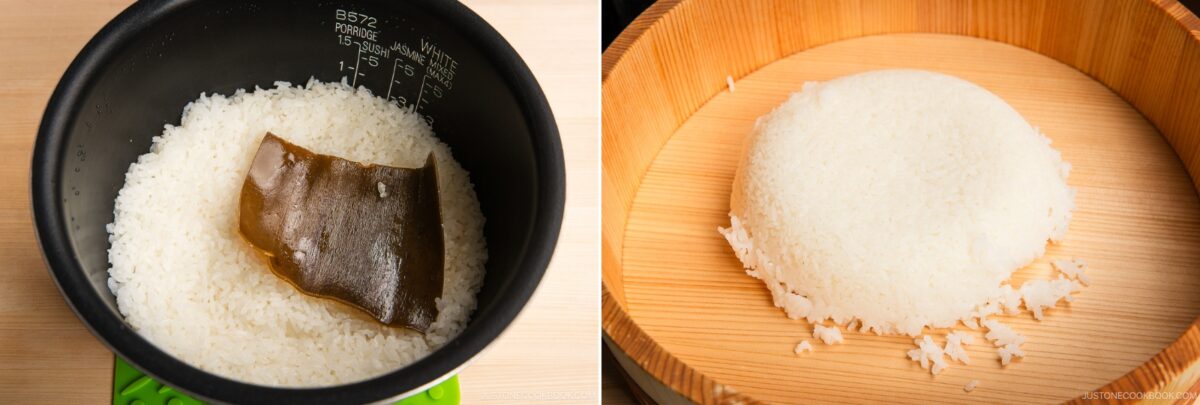
- Moisten a wooden sushi oke (hangiri), or a baking sheet, with running water and drain well. When the rice is done, discard the kombu (or use it to make simmered kombu). Transfer the hot rice to the sushi oke or baking sheet.
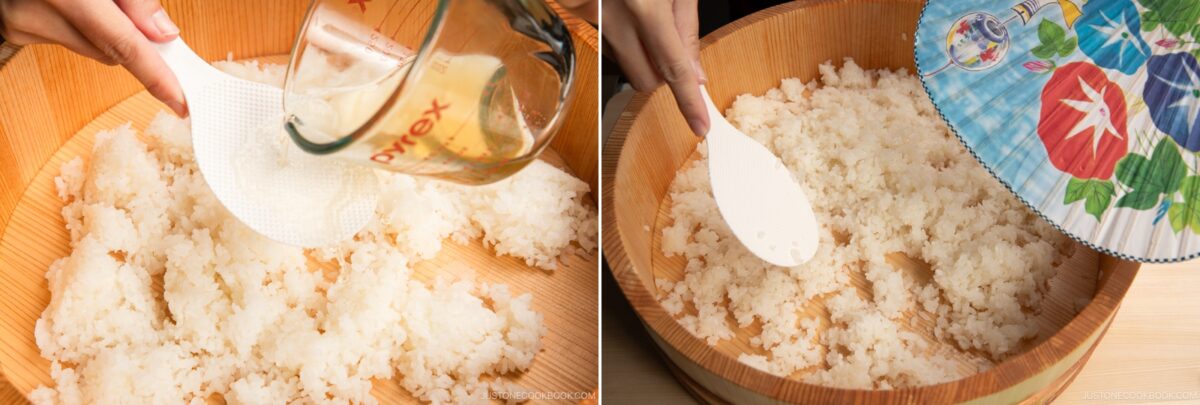
- While it's hot, evenly spread it out with a rice paddle and slowly drizzle the cooled sushi vinegar over it. Gently “slice” the rice with the rice paddle at a 45-degree angle to incorporate the seasoning and break up the rice chunks. Do not stir or mix because that may break the grains and make it mushy. As you slice, vigorously fan the rice with a paddle fan or another fan to cool it. Gently flip the rice every few slices. Nami's Tip: Fanning wicks away the excess moisture and makes the rice shine.
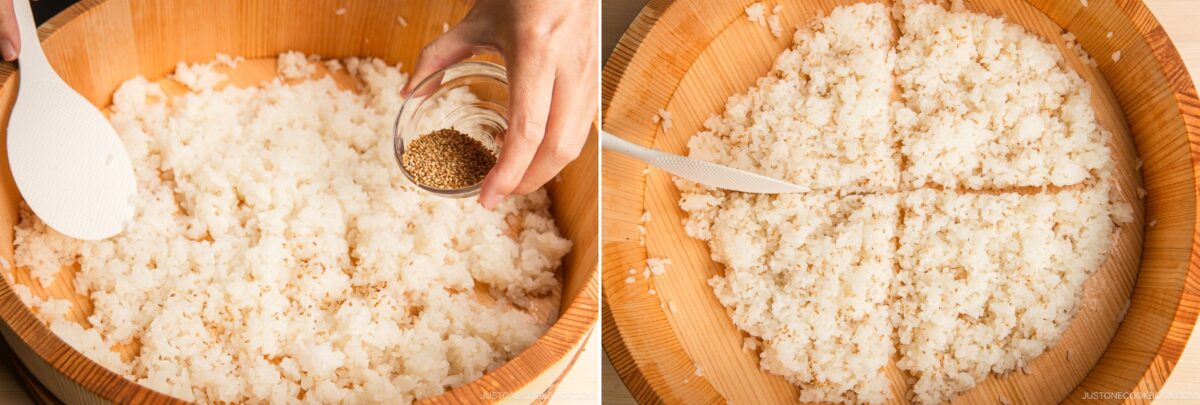
- Sprinkle 1 Tbsp toasted white sesame seeds over the sushi rice and gently “slice” the rice again to combine. Continue until the rice is the temperature of human skin. Next, divide the sushi rice into quarters; each quarter makes 3 pieces of Inari sushi.
To Make the Inari Sushi
- Gently squeeze the liquid from 12 Inari age (seasoned fried tofu pouch) and pour into a small bowl. Moisten your hands with it, then place about ¼ cup of sushi rice in your palm.

- Moisten your hands with it, then place about ¼ cup of sushi rice in your palm. Gently form the rice into an oblong shape. Use just enough pressure to keep the sushi rice ball from falling apart. Don't squeeze too tightly, and keep it as airy as possible.
- Repeat; you should be able to make 12 sushi rice balls. Carefully open the pocket, separating the skin all the way to the bottom of the pocket. Be gentle, as the skin is thin. Then, fold back the skin at the opening.
- Stuff a sushi rice ball into the Inari age pocket all the way so the two corners look smooth and round.
- Unroll the skin at the opening and fold both side edges down onto the sushi rice ball.
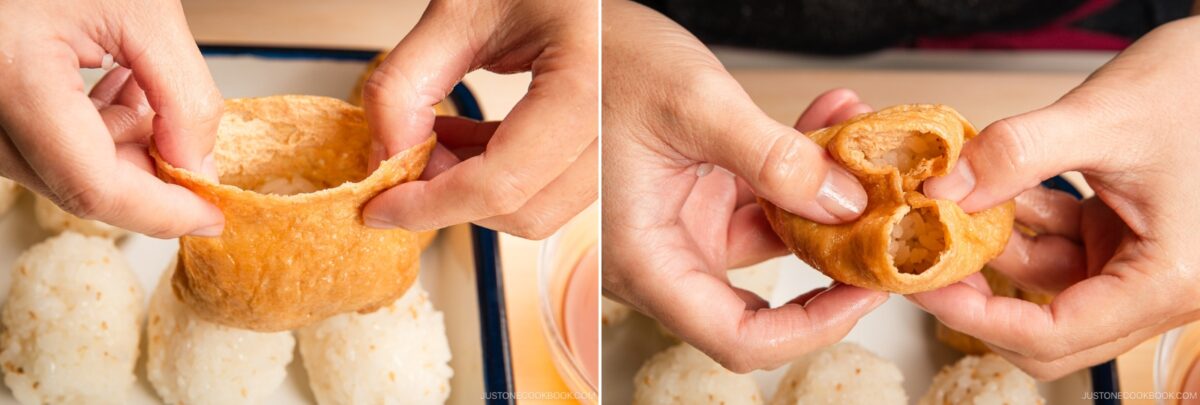
- Fold the front and back edges down like you’re wrapping a present. Place the Inari sushi seam side down onto a plate or tray. Continue filling the rest of the pockets. Your Inari sushi are now ready to serve.
How to Make Decorative Inari Sushi (optional)
- After stuffing the pocket with sushi rice, keep it open on top and tuck the edges of the Inari age inside the pocket so you will have smooth, round edges. Then, add any toppings you like. Here, I used sliced cucumber, ikura (salmon roe), shredded egg crepe (kinshi tamago), boiled shrimp, and cooked salmon flakes.

To Serve
- Serve at room temperature. Garnish with shiso leaves and sushi ginger (gari), as desired.
To Store
- Enjoy Inari Sushi on the same day for the best taste and texture. You can keep them in a cool place for a few hours.If needed, store leftovers in the refrigerator for up to 24 hours. Place them in an airtight container (or cover tightly with plastic wrap), then wrap the container in a thick kitchen towel. This helps protect the rice from cold air so it doesn’t turn hard or dry.Store leftover inari age pouches with their simmering liquid. Keep them in the refrigerator for 2–3 days, or freeze for up to 1 month.
Nutrition
Did you make this recipe?
Tag @justonecookbook on Instagram so we can see your delicious creation!
Editor’s Note: The post was originally published on February 28, 2011, and updated with new images on December 22, 2021, and republished with more helpful content on February 12, 2026.