


This post may contain affiliate links. Please read my disclosure policy.
Salmon and Shio Kombu Onigiri at a Glance
Salmon and Shio Kombu Onigiri are Japanese rice balls made with flaked salmon and shio kombu (seasoned dried kelp) that are packed with savory flavor. Onigiri are a staple of Japanese home cooking and a favorite in bento boxes and on-the-go meals. They’re easy to make and endlessly adaptable, so you can fill or mix them with almost anything.
Why You’ll Love It
- The shio kombu difference – I add shio kombu (dried seasoned kelp) to add a deeper savory flavor than salmon alone.
- Flavor in every bite – I mix the filling into the rice instead of placing it in the center, so each bite has a little of everything.
- Ideal for leftovers – Leftover cooked salmon and rice turn into onigiri quickly, so nothing goes to waste.
My Recipe Story
I’ve been making bento lunches for my kids since they were in elementary school. As they got older and became busy with club meetings, their lunch breaks got shorter. They needed something quick, filling, and easy to eat between activities.
That’s when onigiri became one of my favorite things to pack! These salmon and shio kombu onigiri were especially popular with my kids, who told me they could eat them every day. I love mixing up the recipe with add-ons like shiso, myoga (Japanese ginger), and toasted sesame seeds for a fragrant and refreshing balance.
If you love onigiri, try my Tuna Mayo Onigiri, Umeboshi Onigiri, and Tenmusu (Shrimp Tempura Onigiri) next!

Key Ingredients
- Japanese short-grain rice – Its naturally sticky texture holds the rice balls together. Use freshly cooked, warm rice for easy shaping. Medium-grain rice works, but avoid long-grain varieties like jasmine rice, which won’t hold together.
- Cooked salmon – Use flaked leftover Salted Salmon or Miso Salmon.
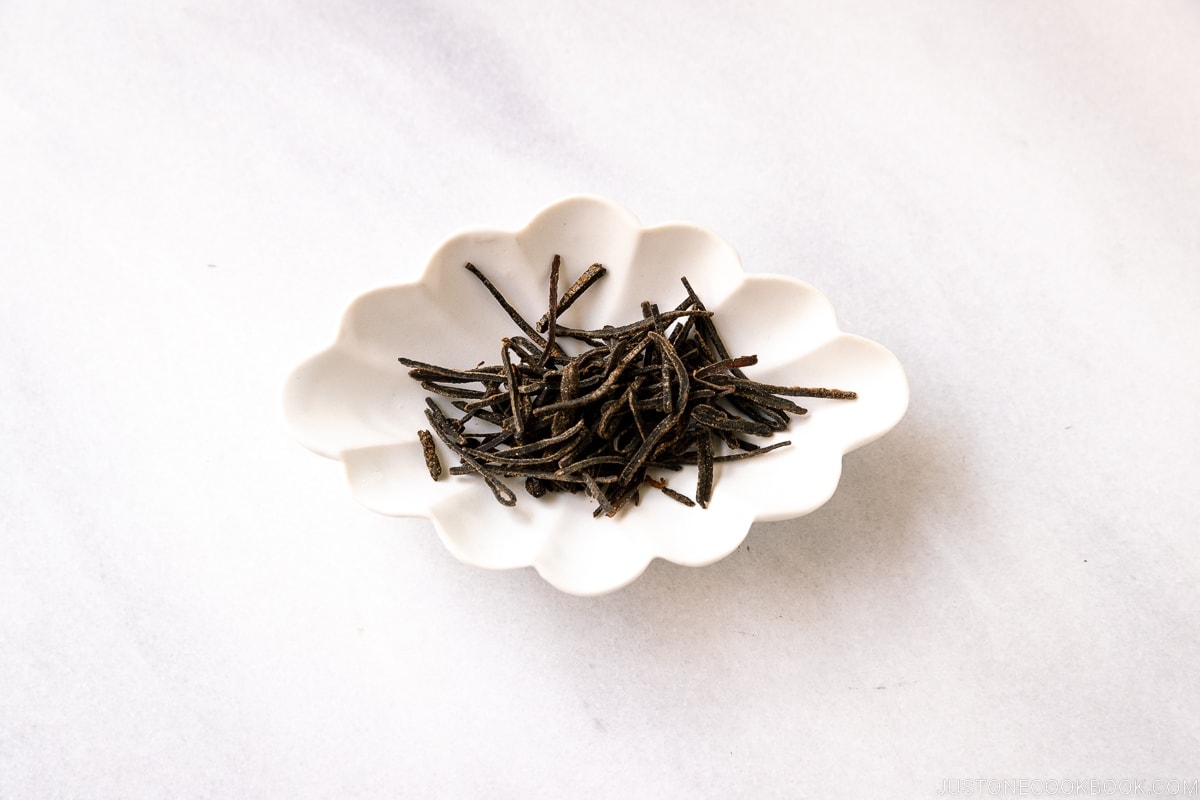
- Shio kombu – Seasoned, dried kelp strips that add salty, savory umami.
- Shiso leaves – Add a fresh, herbal aroma.
- Myoga ginger – A fragrant Japanese ginger with a refreshing, slightly sharp flavor.
- Toasted white sesame seeds – Add a nutty flavor and gentle crunch.
What is Onigiri?
Onigiri (おにぎり), also called omusubi (おむすび), is a Japanese rice ball typically shaped into a triangle, round, or cylinder. Made with Japanese short-grain rice and a variety of fillings, it’s been a beloved lunch and snack in Japan for centuries.
From traditional fillings like salted salmon and umeboshi (pickled plum) to modern combinations, onigiri is one of Japan’s most familiar comfort foods. If you’re new to making Japanese rice balls, see my Onigiri guide for the basics.
What is Shio Kombu?

Shio kombu (塩昆布) is thin strips of kombu (kelp) simmered in soy sauce and other seasonings, then dried. It has a concentrated salty, savory flavor that makes it a convenient way to add umami to rice and other dishes.
In Japan, shio kombu is commonly enjoyed with rice, but it’s also used in stir-fries, salads, and vegetable side dishes.
Where to Buy Shio Kombu
Look for shio kombu at Japanese grocery stores or online (this one or this one).
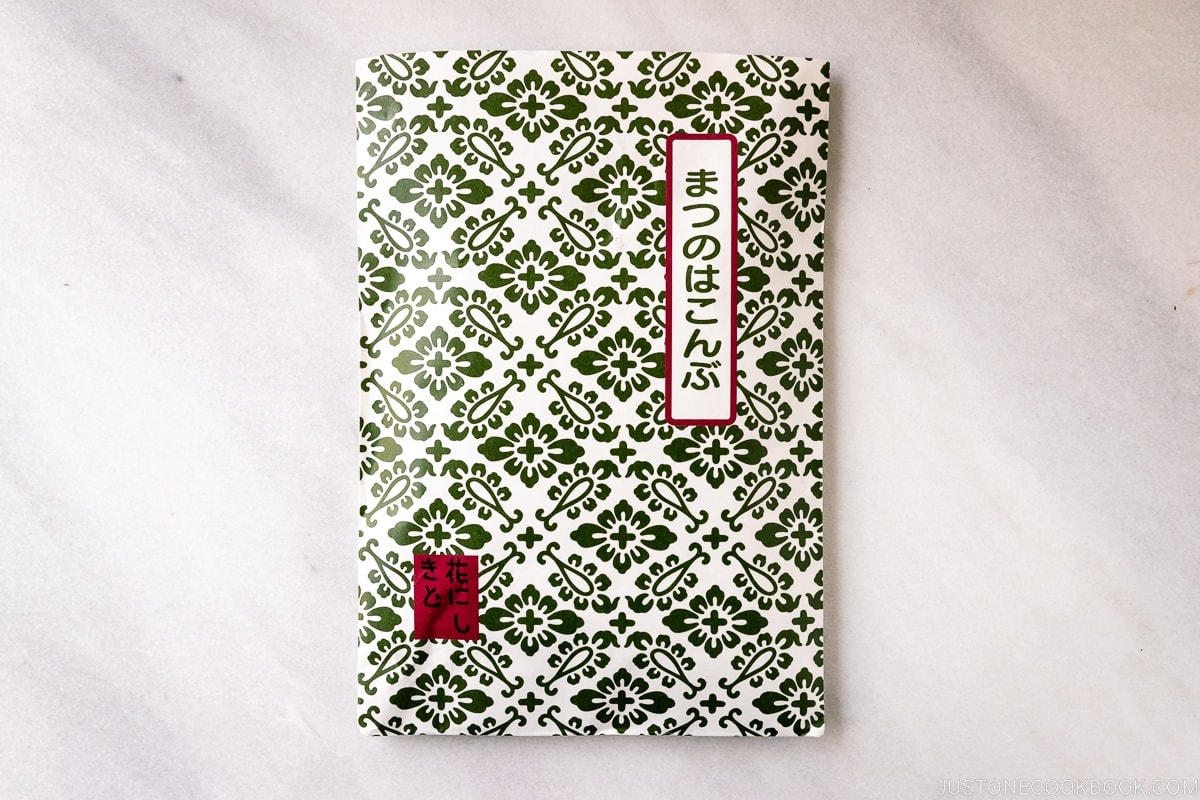
My personal favorite is Matsunoha Kombu from Hana Nishikido in Osaka. A friend once brought me a package, and I loved its delicate texture and complex flavor. It’s less salty than many other brands.
How to Make Salmon and Shio Kombu Onigiri
- Prepare the ingredients. Cook Japanese short-grain rice, flake the cooked salmon, and finely chop the shiso and myoga.
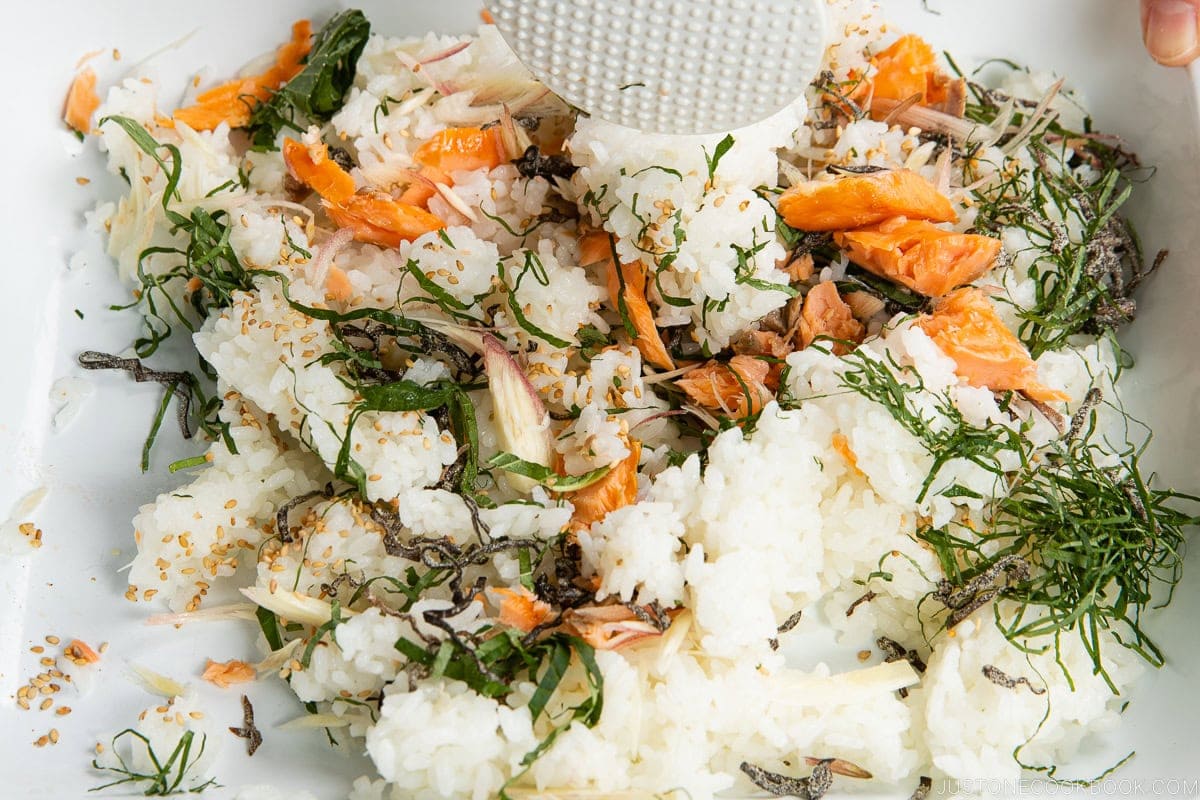
- Mix the rice. Gently combine the warm rice with salmon, shio kombu, shiso, myoga, and toasted sesame seeds. Use a slicing motion with a rice paddle to avoid mashing the grains.
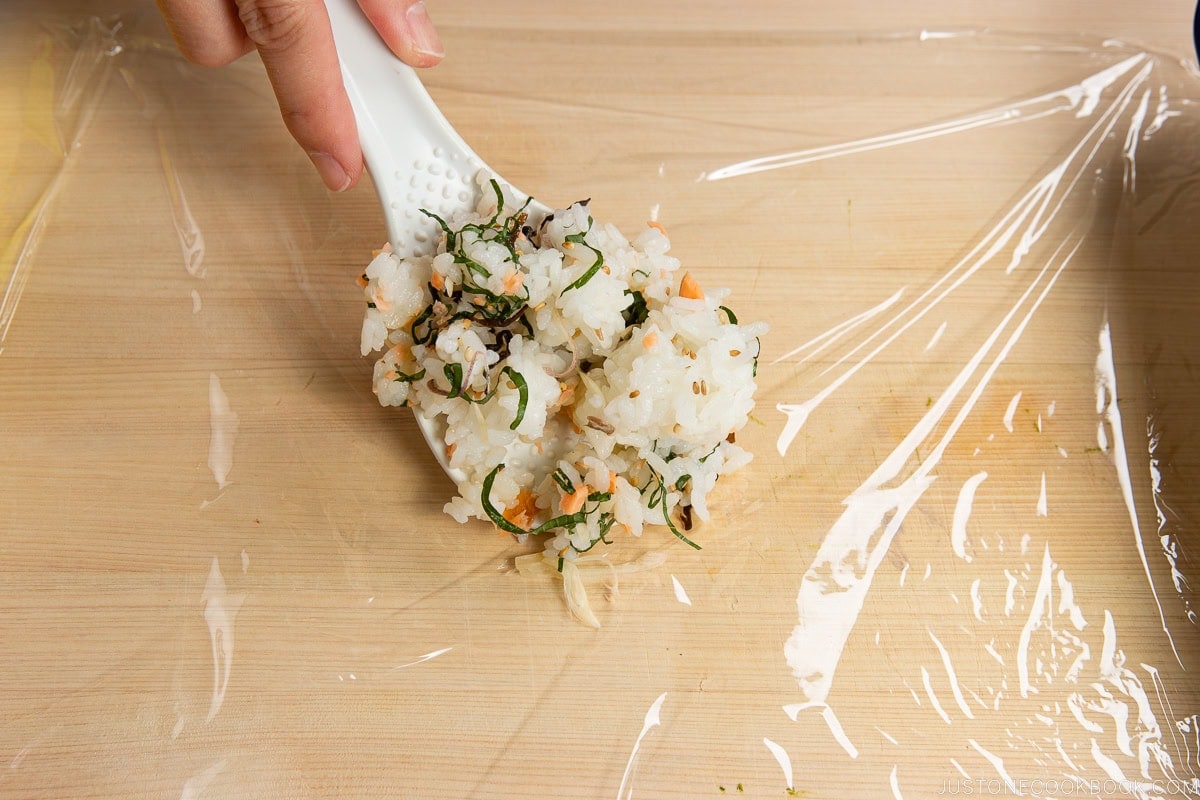
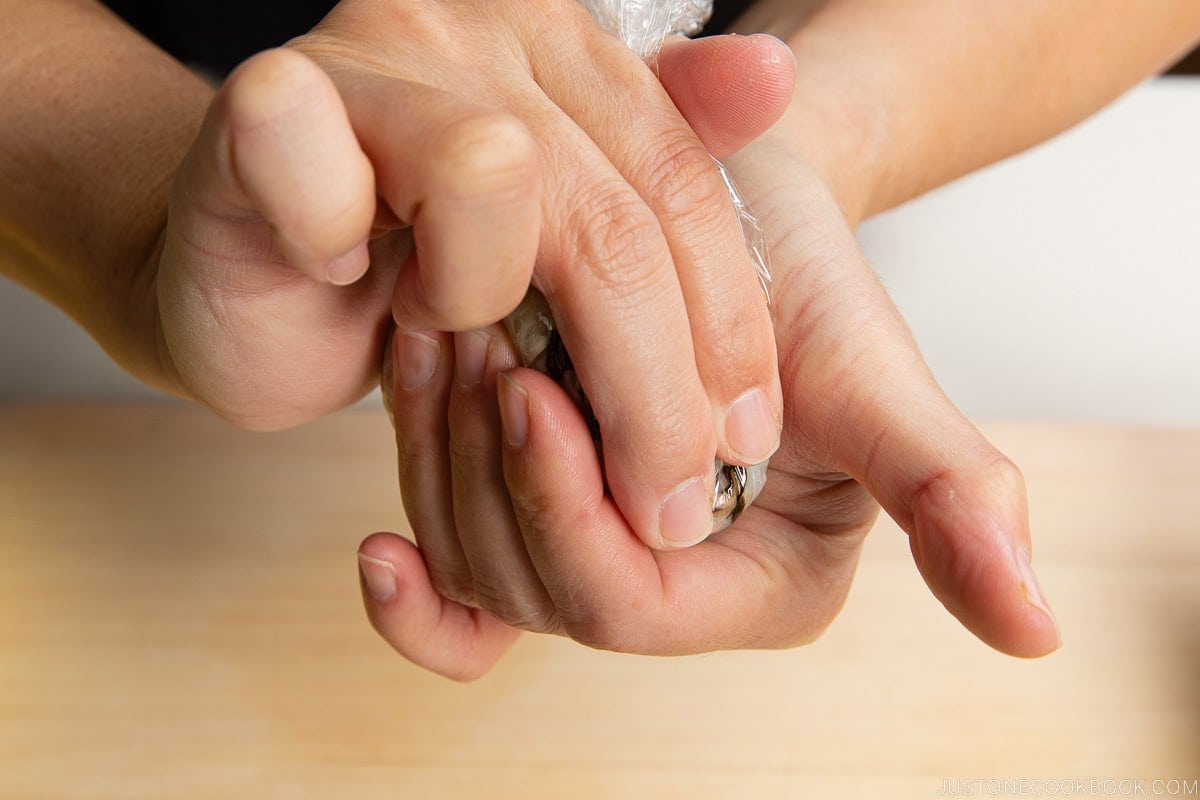
- Shape the onigiri. Wet and lightly salt your hands. Scoop up a portion of rice and gently shape it into a triangle, rotating it between your palms.


Nami’s Recipe Tips
- Use freshly cooked, warm rice. Warm Japanese short-grain rice sticks together easily and is best for shaping. Let it cool slightly so it’s comfortable to handle, but don’t use cold, hardened rice.
- Use a slicing motion when mixing. Fold the ingredients into the rice with a rice paddle rather than stirring vigorously to keep the grains intact.
- Wet and salt your hands. Dampen your palms to prevent sticking, then dip your fingertips in salt and spread it evenly over your palms. If using plastic wrap, sprinkle a little salt on it before adding the rice.
- Shape gently. Rotate the rice between your palms, pressing just enough to hold its triangular shape. Avoid squeezing too tightly, which makes the rice dense.
Make Ahead Tips
- Prepare the ingredients ahead. Cook and flake the salmon, chop the shiso and myoga, and store them separately in the refrigerator for up to 1 day.
- Shape just before serving. Mix the ingredients into the warm rice and shape the onigiri for the best flavor and texture.
- For bento lunches. Make the onigiri in the morning, let them cool promptly, and pack with an ice pack in an insulated lunch bag.
Storage Tips
I recommend enjoying these onigiri fresh. Shiso and myoga taste best when freshly prepared, and their delicate aromas fade during storage.
- Refrigerate: Wrap each onigiri tightly and refrigerate for up to 1 day. Reheat thoroughly before serving, as chilled rice becomes firm.
- Freeze: Wrap individually in plastic wrap, then place in a freezer bag for up to 1 month. For the best quality, freeze without the fresh shiso and myoga.
- Reheat: Microwave frozen onigiri, loosely covered, until steaming hot throughout. Let cool slightly before eating.
- For bento: Cool the onigiri promptly and pack with an ice pack in an insulated lunch bag. Don’t leave salmon onigiri at room temperature for more than 2 hours (1 hour above 90°F/32°C).

Variations
- Swap the salmon. Use leftover salmon you may have in the fridge. Canned salmon also works; drain it well.
- Adjust the herbs. Skip myoga if unavailable, or add extra shiso.
- Add crunch. Mix in toasted black sesame seeds or tenkasu (tempura scraps) for extra texture.
- Wrap with nori. Add a strip of toasted nori just before eating for extra flavor and crunch.
What to Serve with Salmon and Shio Kombu Onigiri
When my kids were in high school, I often packed three of these onigiri for their busy lunch breaks. They were filling, easy to eat, and didn’t require utensils!
For a more complete Japanese meal, serve them with:
- Tamagoyaki (Japanese Rolled Omelette) – A slightly sweet, savory egg dish.
- Tonjiru (Pork and Vegetable Miso Soup) – A hearty soup with pork and vegetables.
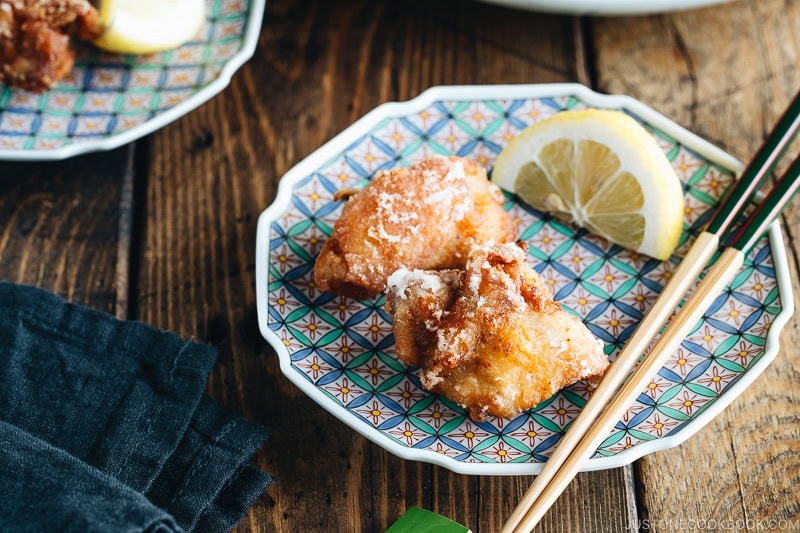
- Karaage (Japanese Fried Chicken) – Crispy, juicy Japanese fried chicken.
- Japanese Pickles (Asazuke) – A refreshing, crunchy side.



FAQ
What rice should I use to make onigiri?
I recommend Japanese short-grain white rice, which has enough natural stickiness to hold together when shaped. Rice labeled “sushi rice” works too, but don’t add any vinegar. Avoid long-grain varieties like jasmine or basmati, as they won’t hold their shape as well.
Why do my onigiri keep falling apart?
Onigiri can fall apart if the rice is too dry, has cooled too much, or contains too many fillings. I recommend shaping the rice while it’s still warm, applying gentle but firm pressure. Make sure the ingredients are evenly distributed so the rice holds together.
Can I use kombu from dashi instead of shio kombu?
Yes, it is possible. However, kombu from dashi will not have much flavor, so you have to slice it thinly and season it to make Kombu Tsukudani.
I’d love to hear how yours turned out! 💛 Please leave a star rating and comment below to share your experience. Your feedback not only supports Just One Cookbook but also helps other home cooks discover recipes they can trust.
Salmon and Shio Kombu Onigiri

Ingredients
- 3⅓ US cups cooked Japanese short-grain rice (freshly cooked or reheated from frozen; use warm rice for shaping; made from 1½ rice cooker cups [1⅛ US cups, 225 g, 270 ml] of uncooked rice)
- 4 oz cooked salmon (about ½ cup flaked; use leftover Salted Salmon, Miso Salmon, or Salmon Flakes)
- 5 shiso leaves (perilla/ooba)
- 3 myoga ginger (optional; fresh)
- 1½ Tbsp shio kombu
- 2 tsp toasted white sesame seeds
- 2 tsp Diamond Crystal kosher salt (use half the amount or the same weight for table salt) (for dipping your fingers when shaping; you may not need all of it)
Instructions
Before You Start
- Gather all the ingredients. Flake 4 oz cooked salmon into smaller pieces. Spread 3⅓ US cups cooked Japanese short-grain rice in a large bowl or tray. Let it cool slightly while preparing the remaining ingredients so it's comfortable to handle.

To Prepare the Ingredients
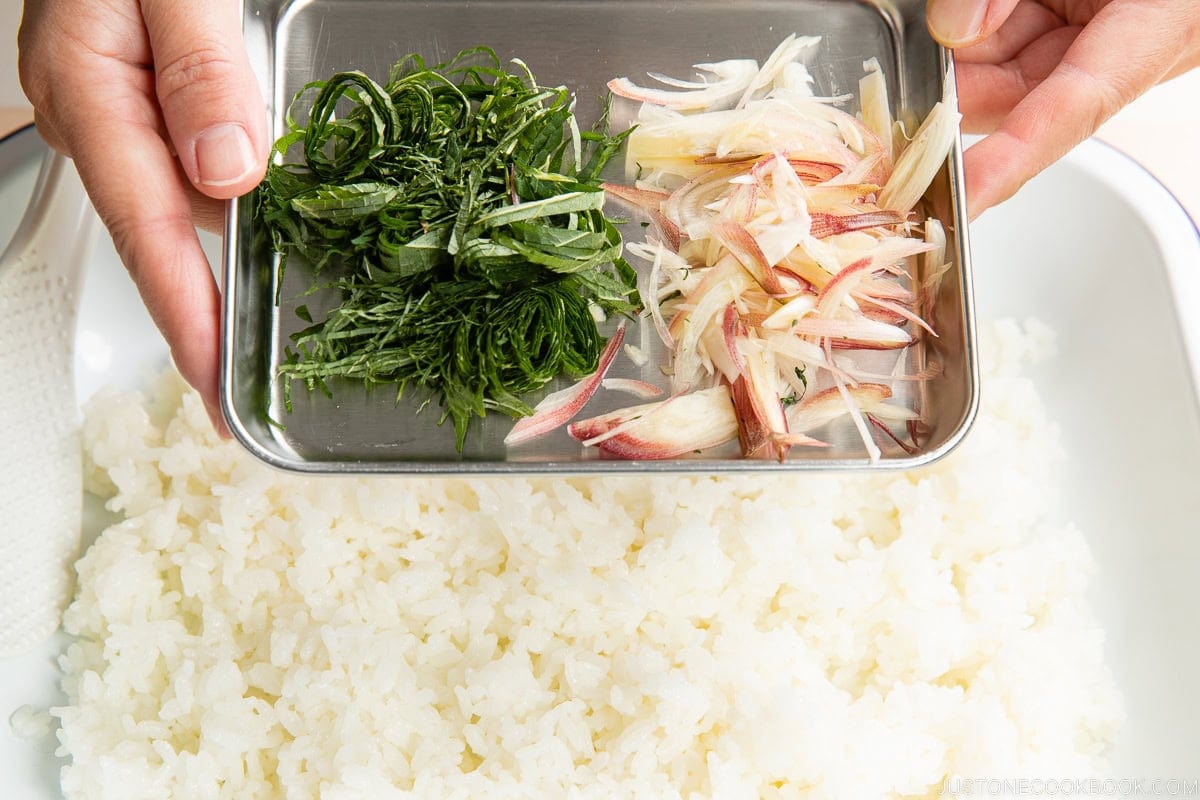
- Cut off the stems from 5 shiso leaves (perilla/ooba). Roll them up and cut into julienned strips. Gently separate the strips.

- Halve 3 myoga ginger lengthwise, then thinly slice.

- Scatter the shiso and myoga over the warm rice.

- Add 1½ Tbsp shio kombu, 2 tsp toasted white sesame seeds, and the flaked salmon.

- Gently mix with a rice paddle using a slicing motion. Avoid mashing the rice grains.

To Shape the Rice Balls with Your Hands
- Lightly wet both palms with water to prevent sticking.

- Dip 2–3 fingertips into 2 tsp Diamond Crystal kosher salt (use half the amount or the same weight for table salt). Use only as much as needed for shaping.

- Rub the salt evenly over your palms.

- Scoop about ½–¾ cup of the warm rice mixture into one hand. Curve your other hand over the rice and gently press to form a triangle.

- Rotate the rice ball between your hands, gently shaping the three corners. Turn it on its side and lightly flatten both sides.

- Press just firmly enough to hold the shape. Avoid squeezing too tightly so the rice stays fluffy.

To Shape the Rice Balls with Plastic Wrap
- This method is convenient for packing onigiri for lunch.Place a 10 × 12-inch (25 × 30-cm) sheet of plastic wrap on your work surface. Sprinkle a little salt in the center, then add a portion of rice. Gather the corners of the plastic wrap and twist to enclose the rice.

- Gently shape it into a triangle using the same technique as above.

To Serve
- Serve the onigiri warm or freshly cooled.
To Store
- Refrigerate: Wrap each onigiri tightly in plastic wrap and refrigerate for up to 1 day for the best texture.Freeze: Wrap individually, then place in a freezer bag for up to 1 month. For the best quality, freeze without fresh shiso and myoga.Reheat: Microwave until steaming hot throughout. Let cool slightly before serving.For bento: Cool promptly and pack with an ice pack in an insulated lunch bag. Keep chilled until ready to eat.
Nutrition
The nutrition facts shown are generated by an online calculator and are estimates only. Please consult a professional nutritionist for specific dietary needs.
Did you make this recipe?
Tag @justonecookbook on Instagram so we can see your delicious creation!
Editor’s Note: This post was originally published on February 8, 2023. It was updated with more helpful information on October 14, 2026.