Let’s enjoy a bowl of miso soup every day! Here is the collection of our easy and seasonal miso soup recipes, from the classic Tofu and Wakame to summertime favorite Tomato Miso Soup.
This post may contain affiliate links. Please read my disclosure policy.
In Japan, miso soup is a daily ritual—many of us enjoy it every day, sometimes twice. Because it’s made with seasonal ingredients, each bowl reflects the changing seasons and reminds us to appreciate nature’s bounty.
Whether it’s the classic Tofu and Wakame Miso Soup or a refreshing summertime Tomato and Tofu Miso Soup, I hope you’ll join me in celebrating each season with a comforting bowl—perfect for breakfast, a light lunch, or as part of your Ichiju Sansai (one soup, three dishes) dinner.
The Three Pillars of Authentic Miso Soup
Miso soup looks simple, but there’s a reason it tastes so different from one Japanese household to the next. Once you understand these three elements, you can make any variation — no recipe needed.
Dashi (出汁, Japanese Stock)
Dashi is the soul of miso soup. A good stock, whether classic Awase Dashi (kombu and katsuobushi) or a plant-based Kombu Dashi, gives the soup its umami depth. Water just can’t replicate that.
Miso Paste (味噌)
Not all miso is the same. Shiro miso (白味噌, white miso) is fermented for a shorter time, so it’s mild and slightly sweet — great for delicate, light soups. Aka miso (赤味噌, red miso) ferments longer, developing a deeper, saltier, more robust flavor. Many Japanese households keep Awase miso (合わせ味噌) on hand, which blends both for everyday balance.
Seasonal Ingredients
In Japan, miso soup follows the seasons. We add seasonal ingredients at their peak: tender takenoko (bamboo shoots) in spring, sweet kabocha squash in autumn. It’s one of the most natural ways to cook with the calendar.
Learn to make authentic, Easy Miso Soup in 10 minutes with one pot! Customize this basic recipe using what you have in the pantry or fridge for a comforting bowl of goodness with your lunch or dinner. It's a perfect mid-morning or late-night snack, too.
It‘s super easy to make authentic and homemade Japanese Miso Soup! In this recipe, I show you how to make quick and easy soup stock (dashi) from scratch, then make classic miso soup with tofu and wakame seaweed. It‘s delicious and has many health benefits.
Filled with umami, this easy Clam Miso Soup will be the newest addition to your soup lineup. The savory kombu stock pairs perfectly with the delicate essence of fresh clam stock. It's an oceanic culinary experience right in your own bowl.
This Cabbage and Onsen Tamago Miso Soup is a hearty and flavorful soup you can easily make in 15 minutes or less! We‘ll use the microwave to make the silky poached egg (onsen tamago) and speed things up, but the result is just as satisfying.
With chunks of tender potatoes, this Bacon Asparagus Miso Soup provides warm comfort on a cool spring day. A thin slice of butter adds a creamy and sweet touch to this savory miso soup! {Vegan/Vegetarian Adaptable}
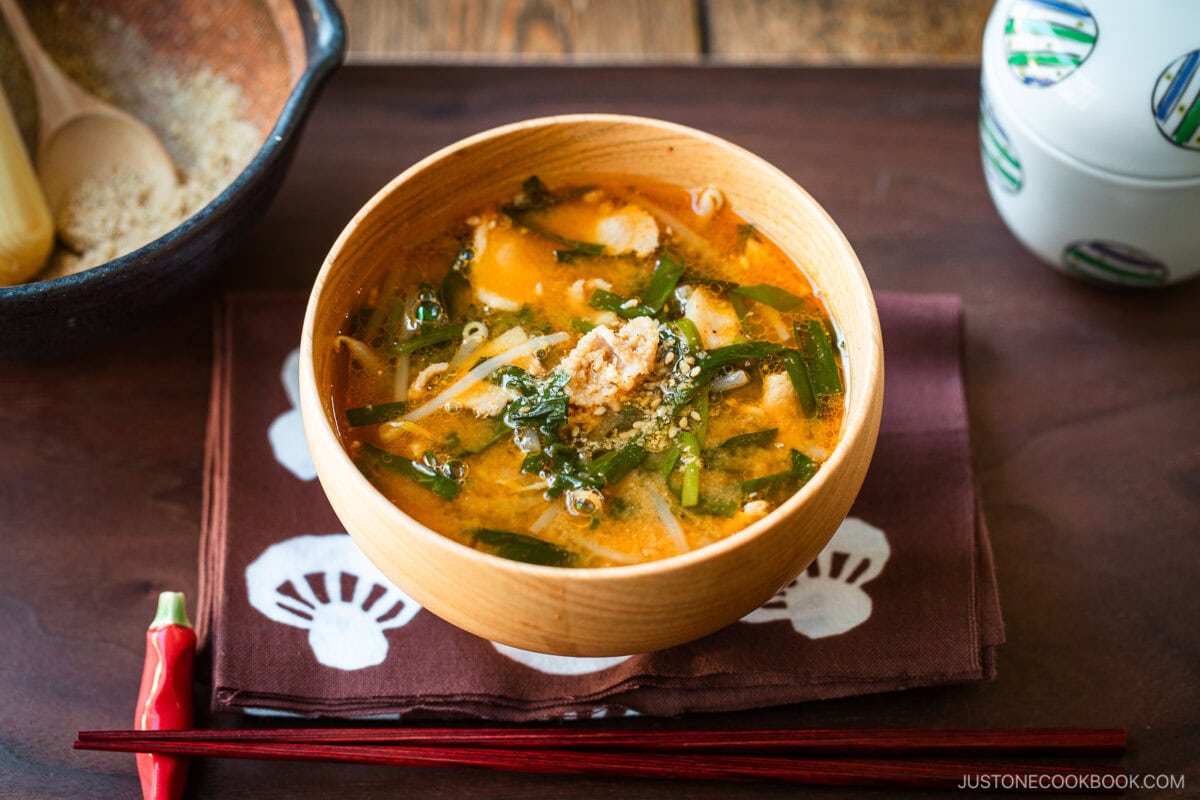
My Spicy Pork and Bean Sprout Miso Soup packs complex flavor into a 10-minute dish. Chicken stock serves as the base for rich pork belly, aromatic garlic chives, savory miso, and sweet-spicy chili paste. It's a satisfying soup for busy weeknights!
Known as Hiyajiru in Japan, this Cold Miso Soup is all that you need to nourish your body on hot summer days! It‘s deeply flavorful and includes seasonal vegetables and grilled protein of your choice, making it one of the best cold soups to enjoy. Ready in 15 minutes! {Vegan Adaptable}
This Tomato and Tofu Miso Soup combines both comfort and refreshing flavors with just a few ingredients. Here, we pair sweet cherry tomatoes and silky tofu with a kombu dashi broth and finish it with savory miso paste. This vegan-friendly miso soup is lovely alongside any Japanese breakfast, lunch, or dinner.
This Natto Miso Soup with Okra is easily one of the healthiest yet simplest soups you can make any time of the year! Despite the minimal ingredients, it is packed with good-for-your-gut and anti-inflammatory goodness. {Vegan-adaptable}
Hearty and flavorful, this Kabocha Miso Soup is filled with sweet kabocha, umami-rich mushrooms, and nutty sesame seeds. It's plant-based, easy to make, and incredibly delicious!
Originally created as Buddhist temple cuisine, Kenchinjiru (Japanese Vegetable Soup) is a clear soup cooked with root vegetables, tofu, shiitake, and kombu stock. It’s a well-balanced and flavorful soup for a meatless meal on a cold night. {Vegan}
Cozy up with a piping hot bowl of hearty Miso Soup with Yuzu Kosho. Japanese citrus pepper paste adds a refreshing, spicy kick and pairs wonderfully with this soup packed with pork belly and vegetables. {Vegan adaptable}
With a shortcut dashi stock and 15 minutes, you can make this umami-rich Miso Soup with Enoki Mushrooms and Ground Sesame. Sweet Japanese long green onion, hand-torn tofu, and ground sesame seeds add wonderful texture and flavor to the soup. {Vegan Adaptable}
A popular recipe from Hokkaido, Sanpeijiru is a wonderful salted salmon soup with a variety of hearty root vegetables cooked in a kombu dashi broth. You‘ll enjoy this delicate and tasty soup on a cold day!
Tonjiru (or butajiru) is a savory pork and vegetable miso soup that you can easily make at home. Packed with B vitamins, fiber, and minerals, this healthy Japanese dish is nourishing and comforting. You'll love it on a cold weather day!
A bowl of piping hot Daikon and Fried Tofu Miso Soup is a simple mix of comfort, nutrition, and deliciousness! In this one-pot recipe, I use a convenient dashi packet for an easy and quick way to make a flavorful Japanese soup stock. {Vegan Adaptable}
Boost the fiber and nutrients of any meal with my cozy Kale Daikon Miso Soup recipe. It's a delicious way to pair the umami-rich miso broth with the veggies in your fridge. This soup is vegan/vegetarian adaptable and ready in just 20 minutes.
Keep these in mind and your miso soup will taste like it came straight from a Japanese kitchen.
1. Never boil the miso. Boiling destroys the delicate aroma and kills the beneficial probiotics. Always dissolve the miso after turning off the heat.
2. Dissolve it properly. Never drop a clump of miso directly into the pot. Use a miso strainer or a small whisk to dissolve the paste in a ladleful of hot broth first — this gives you a silky, lump-free soup.
3. Add delicate ingredients last. Tofu, spinach, and other quick-cooking ingredients go in right before the miso. This preserves their color, texture, and nutrients.