

This post may contain affiliate links. Please read my disclosure policy.
Stir-Fried Miso Eggplant at a Glance
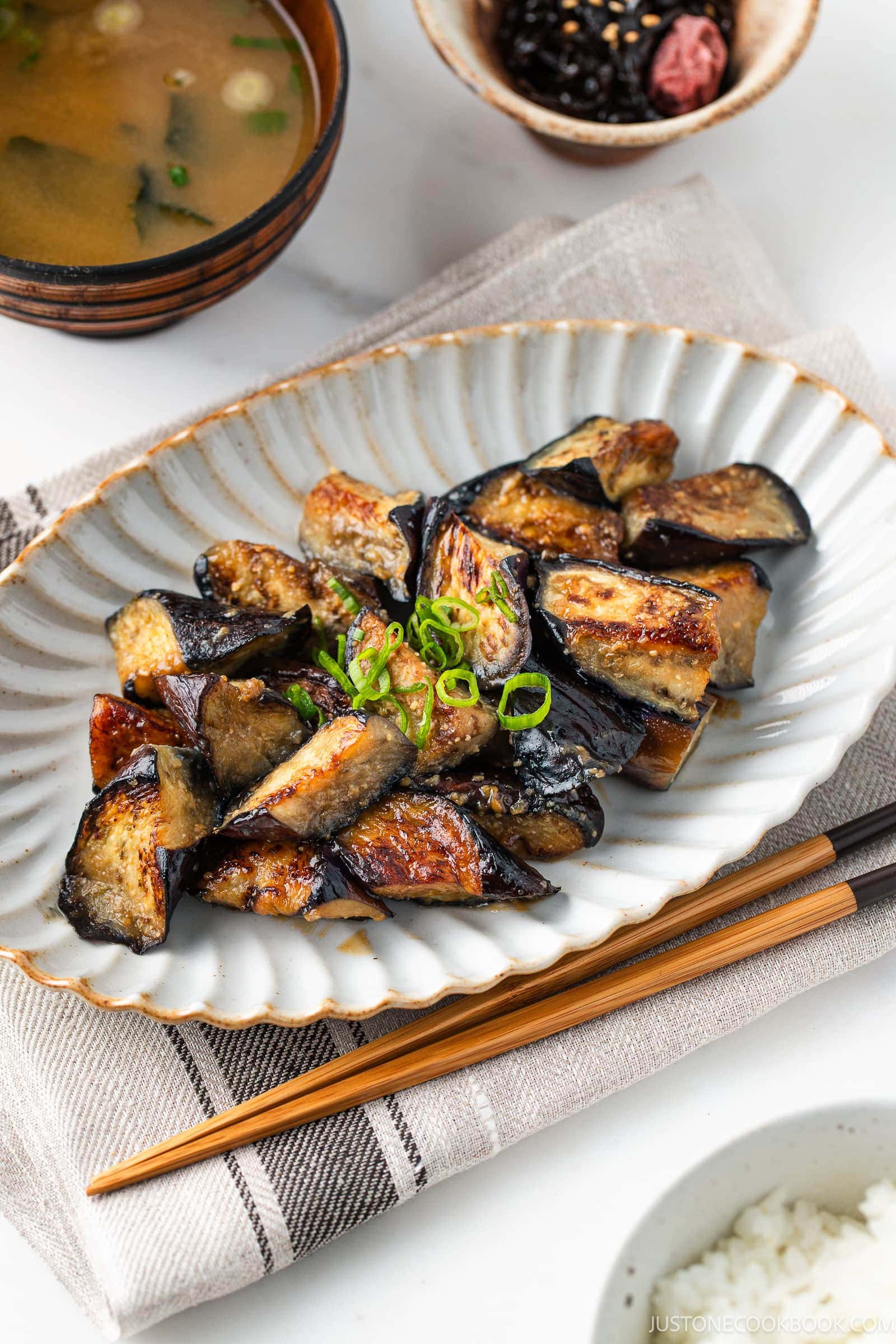
Miso Eggplant Stir-Fry is a classic home-cooked Japanese side dish. It pairs tender Japanese eggplant (nasu, 茄子, ナス) with a rich, sweet-savory miso sauce made from pantry staples. A quick sear gives the eggplant a silky texture that soaks up the deep miso flavor.
Why You’ll Love It
- Japanese or Chinese eggplant – It has thinner skin and fewer seeds than globe eggplant, so it turns tender and silky in a quick sear.
- The rangiri cut – Angled, irregular wedges have more surface area, so each piece cooks faster and picks up more of the miso sauce.
- A quick glaze – The miso sauce goes in last and cooks for only 30–60 seconds, coating the eggplant before the miso can burn.
My Recipe Story
I didn’t like eggplant growing up, and I always wondered why my mom cooked it so often. Now that I’m a mom, I’m doing the exact same thing, and my kids keep asking why I always cook eggplant. Well, they haven’t learned to love it yet, but I know the day will come. Eggplant is delicious, especially when it’s cooked right!
If you love Japanese stir-fries, try my Miso Pork and Eggplant Stir-Fry, Stir-Fry Vegetables, and Japanese Lotus Root Stir-Fry next!

Key Ingredients
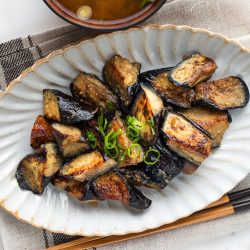
You’ll need Japanese eggplants, green onion/scallion, toasted sesame oil, and neutral oil, plus a quick sauce of miso, sake, mirin, soy sauce, and ginger.
- Japanese eggplants – Thin-skinned with few seeds, they turn tender and silky when seared. Chinese eggplants are the closest substitute, and a globe eggplant works if you keep the skin on.
- Toasted sesame oil and neutral oil – I sear in a mix of the two. Neutral oil handles the heat, and the sesame oil gives the eggplant its nutty aroma from the start.
- Miso – White miso keeps the sauce sweet and mild, while red miso makes it deeper and saltier. Any variety works, so start with the one you have.
- Sake and mirin – Sake removes harsh raw notes, while mirin adds a gentle sweetness and gives the glaze its gloss. My mirin guide covers what to use if you don’t have any.
Find the printable recipe with measurements below.
Jump to RecipeHow to Make Miso Eggplant Stir-Fry
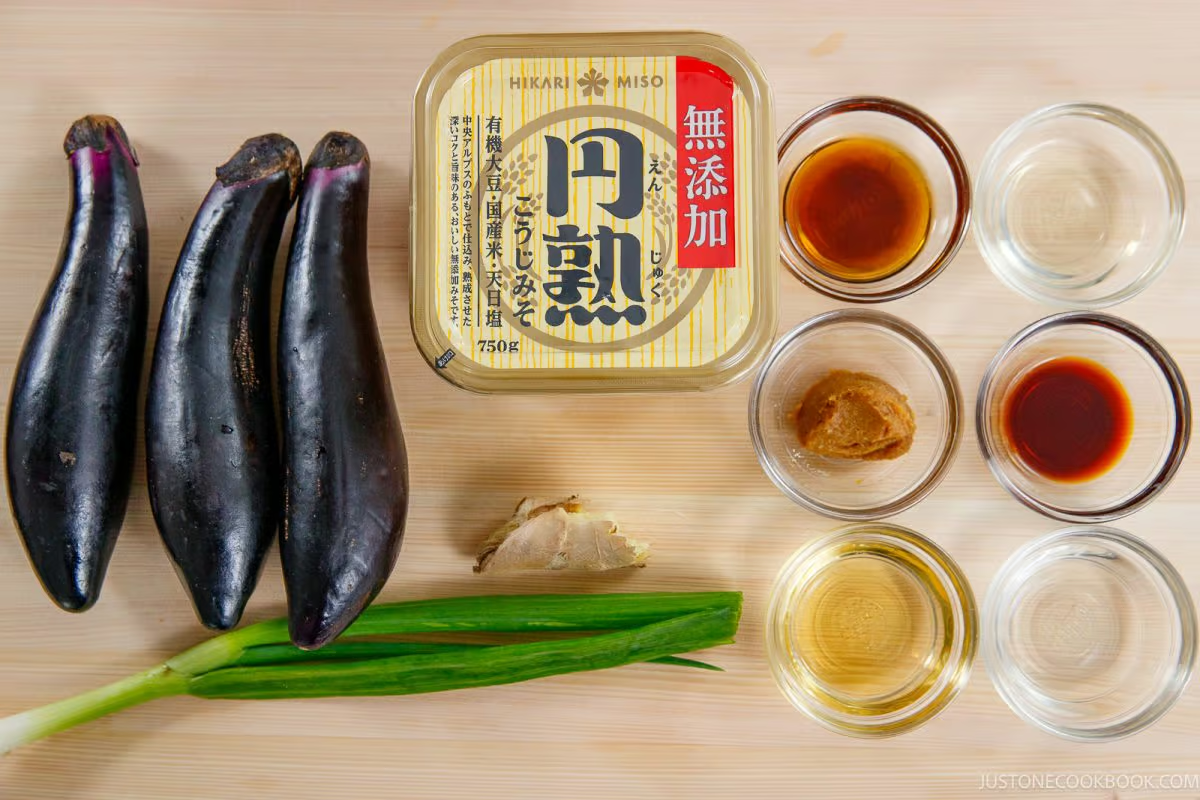
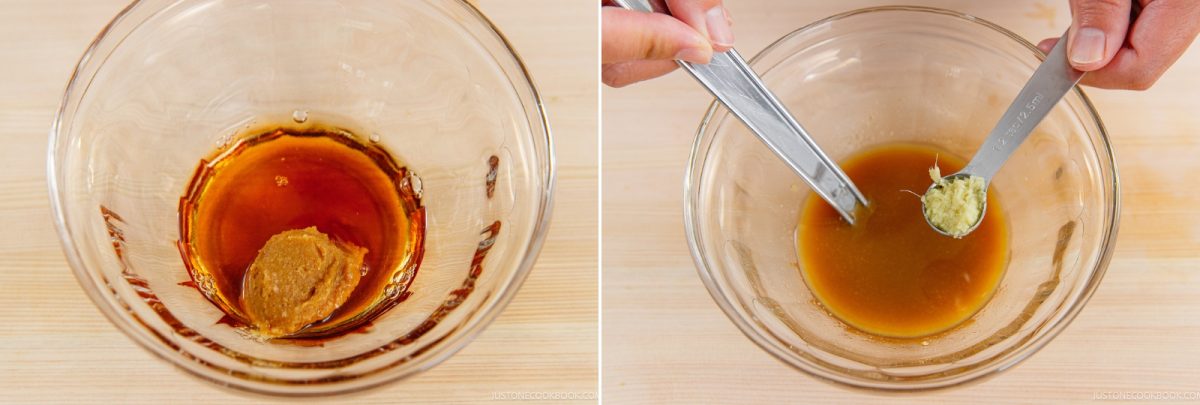
- Make the sauce. Grate the fresh ginger using a ceramic grater. Whisk it in a small bowl with the miso, sake, mirin, and soy sauce until completely smooth.
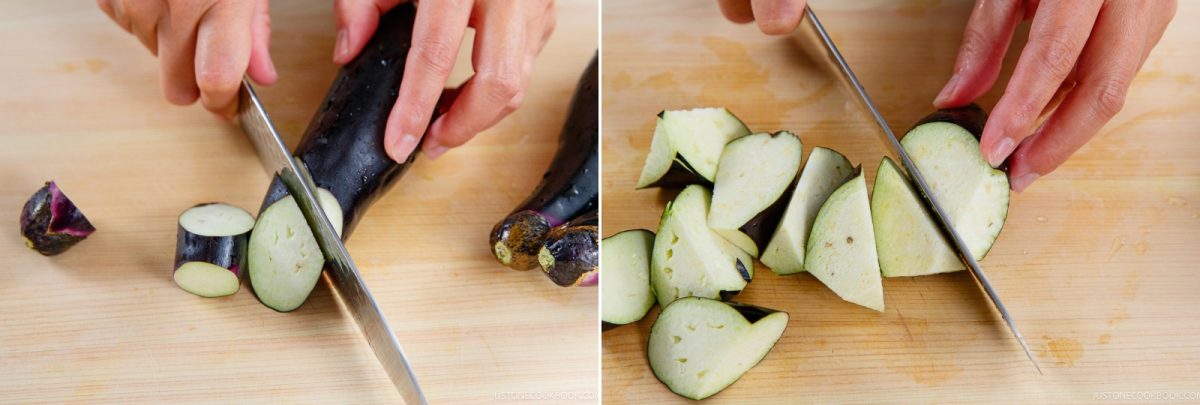
- Prep the eggplant. Cut the eggplant into bite-sized pieces using the rangiri (roll-cut) method.
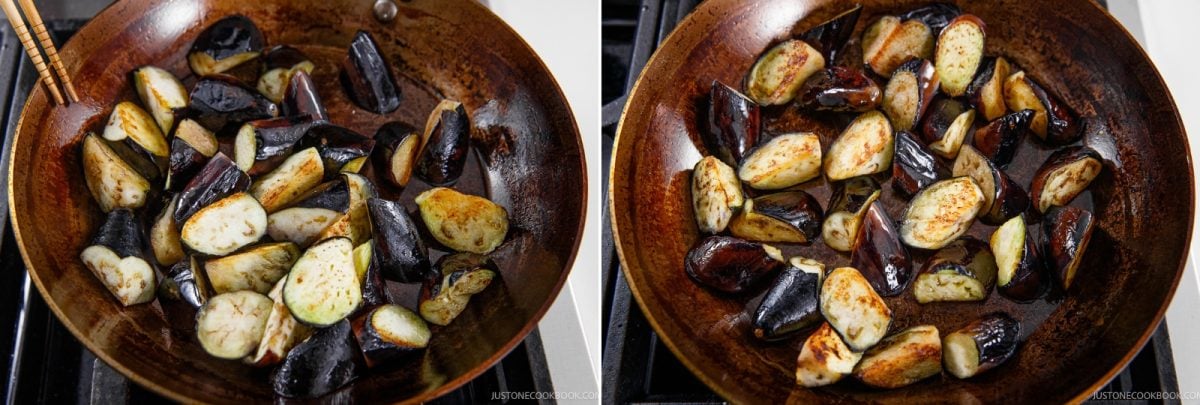
- Sear the eggplant. Heat the neutral and sesame oils in a skillet over medium heat. Sear the pieces until browned and tender, about 1½ to 3 minutes per side.
- Glaze and serve. Pour in the miso sauce and gently shake the pan to coat every piece. Cook briefly until the glaze thickens, remove from heat, and top with freshly sliced green onions.


Nami’s Recipe Tips
Here are my go-to cooking tips for tender, glazed stir-fried miso eggplant.
- Cut with the rangiri method – I roll the eggplant a quarter turn as I cut to make irregular wedges. This extra surface area helps it cook fast and absorb more sauce. Check my step-by-step Rangiri guide to master this Japanese technique.
- Don’t add more oil – The eggplant takes up the oil right away and the pan will look dry, but most of it comes back out as the eggplant cooks. Adding more at that point is what makes it greasy.
- Add the miso sauce last – Miso contains natural sugars that scorch quickly over high heat. I wait to pour in the sauce until after the eggplant is fully seared, then pull the pan from the heat as soon as it thickens.


- Keep the pan moving – I gently shake the pan while glazing to ensure every wedge gets an even coat of glaze.
- Taste the sauce before it goes in – Every miso brand is a little different in saltiness and sweetness. Taste it in the bowl and adjust with a little more mirin before it hits the pan.
Make Ahead Tips
- Whisk the sauce in advance – Mix the miso sauce up to 3 days ahead and keep it covered in the fridge. On the night itself, all that’s left is to cut and sear.
Storage and Reheating Tips
To store: Refrigerate leftovers in an airtight container for up to 3 days. Freezing is not recommended, as frozen eggplant becomes watery upon thawing.
To reheat: Warm in a skillet over medium heat for 2 minutes with a splash of water to revive the glossy glaze. Alternatively, microwave in 30-second bursts until warm, taking care not to overheat so the eggplant retains its shape.

Variations
Feel free to mix and match based on what you have on hand.
- Add protein. Add thinly sliced chicken or pork for a heartier main dish. My Miso Pork and Eggplant Stir-Fry recipe walks you through the step-by-step timing.
- Swap the miso. White miso keeps the dish sweet and mild, while red miso creates a bolder, deeper umami profile. Or mix them half-and-half (awase miso).
- Clear out the fridge. Stir-fries are forgiving, so toss in bell peppers, zucchini, onions, Tokyo negi, or Japanese mushrooms like shiitake or shimeji.
- Spice it up. Add crushed garlic for extra kick, or stir in a dab of doubanjiang or finely sliced dried red chili pepper.
- Keep it vegan. This miso sauce is naturally vegan. Just double-check that your miso doesn’t contain added dashi fish stock.
What to Serve with Miso Eggplant Stir-Fry
Add these colorful and nourishing sides to make a complete meal.
- Japanese Salted Salmon (Shiozake) – Crispy, salty salmon adds rich protein to complement the tender, sweet-savory eggplant.
- Japanese Spinach Salad – Blanched spinach dressed in a nutty sesame sauce offers a cool, refreshing contrast.
- Spicy Pork and Bean Sprout Miso Soup – A comforting, heartier soup that rounds out a satisfying weeknight dinner.
- Ume Shiso Rice – Tart pickled plum (ume) and aromatic shiso leaves cut through the richness of the miso glaze.


FAQ
Can I make this without a wok?
Yes! A large skillet works well. A carbon steel pan is the best substitute for a wok because it’s much lighter than cast iron, handles high heat, and develops a natural nonstick patina. However, any well-preheated skillet will give the eggplant a great sear.
What type of miso should I use?
White miso offers a sweeter, milder flavor from a shorter fermentation. Red miso ferments longer for a deeper, saltier umami kick. If your miso contains added dashi stock, taste your sauce first and slightly reduce the soy sauce.
Can I use a globe eggplant?
Yes. If you cannot find Japanese or Chinese eggplants, globe eggplants are a good substitute (they just have a thicker skin). Keep the skin on and cut the pieces into uniform wedges so they hold their shape without getting mushy.
I’d love to hear how yours turned out! 💛 Please leave a star rating and comment below to share your experience. Your feedback not only supports Just One Cookbook but also helps other home cooks discover recipes they can trust.
Miso Eggplant Stir-Fry
Ingredients
- 3 Japanese eggplants (15 oz, 425 g; or 2 Chinese eggplants)
- 1 green onion/scallion
- 1 Tbsp toasted sesame oil
- 1 Tbsp neutral oil
Instructions
- Gather all the ingredients.
Prepare the Aromatics
- Peel 1 inch fresh ginger and grate using a ceramic grater to yield ½ tsp grated ginger with juice. Thinly slice 1 green onion/scallion.
Mix the Miso Sauce
- In a small bowl, whisk 1 Tbsp miso, 2 Tbsp sake, 2 Tbsp mirin, 1 tsp soy sauce, and ½ tsp grated ginger until smooth.
To Prepare the Eggplant
- Cut 3 Japanese eggplants into bite-size pieces using the Japanese rangiri (rotational cut) technique.Nami's Tip: The angled rangiri cut gives each piece more surface area, so it cooks faster and picks up more of the sauce. Eggplant browns quickly once cut, so slice it right before you're ready to cook.
To Stir-Fry
- Heat a large frying pan over medium heat. Add 1 Tbsp neutral oil and 1 Tbsp toasted sesame oil, swirling to coat the surface evenly, then add the eggplant.
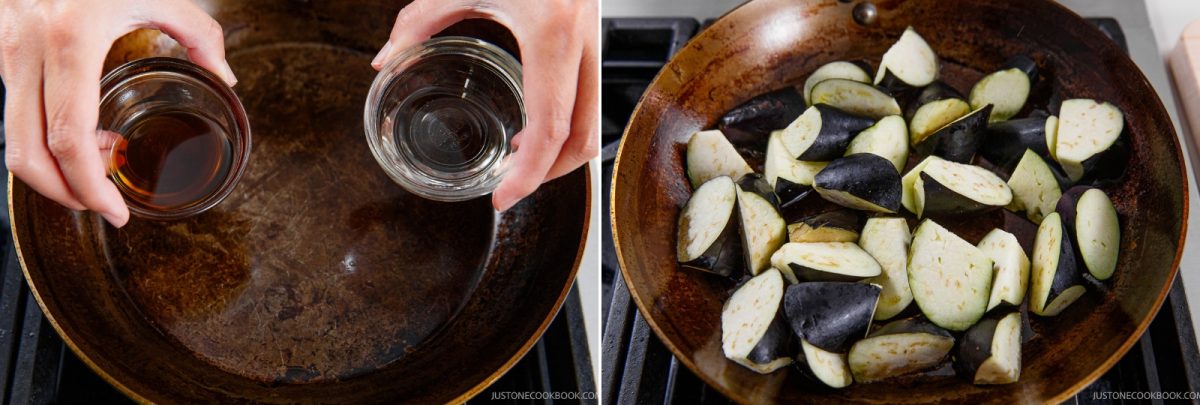
- Sear the eggplant undisturbed for 1½–3 minutes until golden brown. Flip and cook for another 1½–3 minutes until tender.
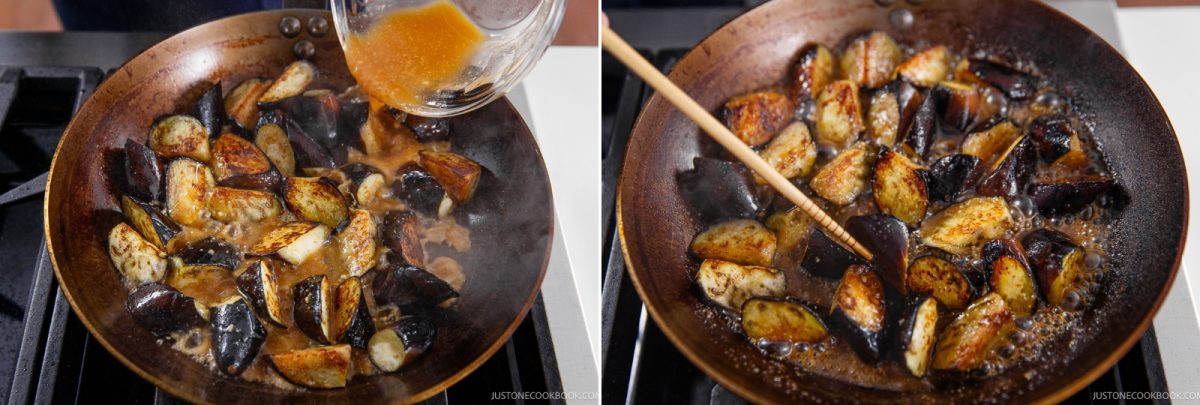
- Pour in the miso sauce and toss quickly, shaking the pan. Cook for 30–60 seconds until the sauce thickens and clings to the eggplant, then immediately remove from heat.Nami's Tip: Miso burns quickly because of its sugar content, so keep a close eye on the pan and take it off the heat as soon as the sauce thickens.
To Serve
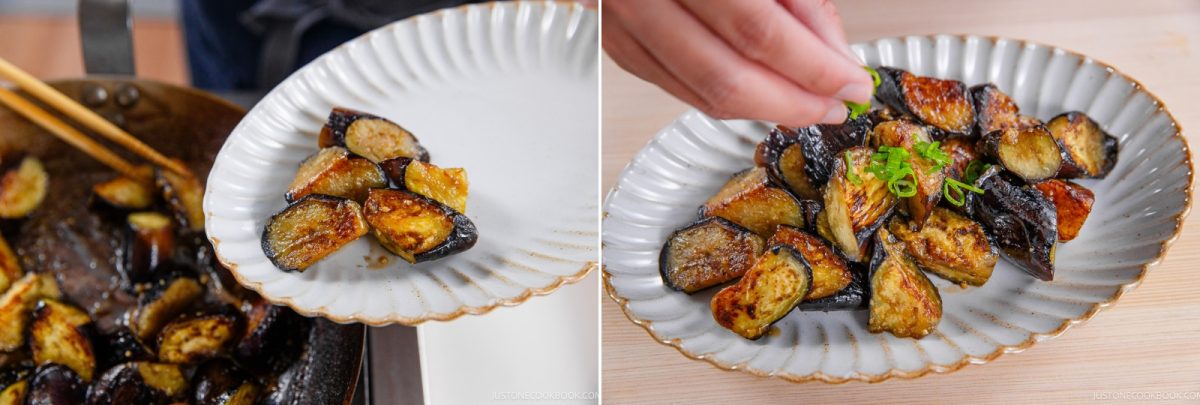
- Transfer to a plate, garnish with sliced green onion, and serve warm with hot steamed rice.
To Store
- Keep the leftovers in an airtight container and store in the refrigerator for up to 3 days. Don't freeze it, because eggplant turns watery once thawed.
Notes
- Miso: I used Hikari Miso’s Enjuku Koji Miso, but any variety works. Red miso is stronger and saltier, while white miso is lighter and milder. Miso with added dashi is saltier so adjust to taste.
- Mirin: For a sweeter sauce, replace 2 Tbsp mirin with 1 Tbsp mirin + 1 Tbsp sugar + 1 Tbsp water.
- Eggplant: Japanese eggplant or Chinese long eggplant are best, but globe (American) eggplant works too—just keep the skin on so the pieces hold their shape during stir-frying.
- Add protein. Stir in thinly sliced chicken or pork (see my Miso Pork and Eggplant Stir-Fry for guidance).
- Swap the miso. Try white, red, or a half-and-half (awase miso) for different flavor profiles.
- Clear out the fridge. Add vegetables like bell peppers, zucchini, onions, Tokyo negi, or Japanese mushrooms.
- Add heat and flavor. Stir in minced garlic, chili sauce like doubanjiang or chopped dried red chili peppers.
- Keep it vegan. Use plant-based miso made without added dashi.
Nutrition
The nutrition facts shown are generated by an online calculator and are estimates only. Please consult a professional nutritionist for specific dietary needs.
Did you make this recipe?
Tag @justonecookbook on Instagram so we can see your delicious creation!
Editor’s Note: This post was originally published on March 24, 2021, and republished on September 10, 2026, with updated expert notes and improved step-by-step instructions.