

This post may contain affiliate links. Please read my disclosure policy.
Yaki Udon at a Glance
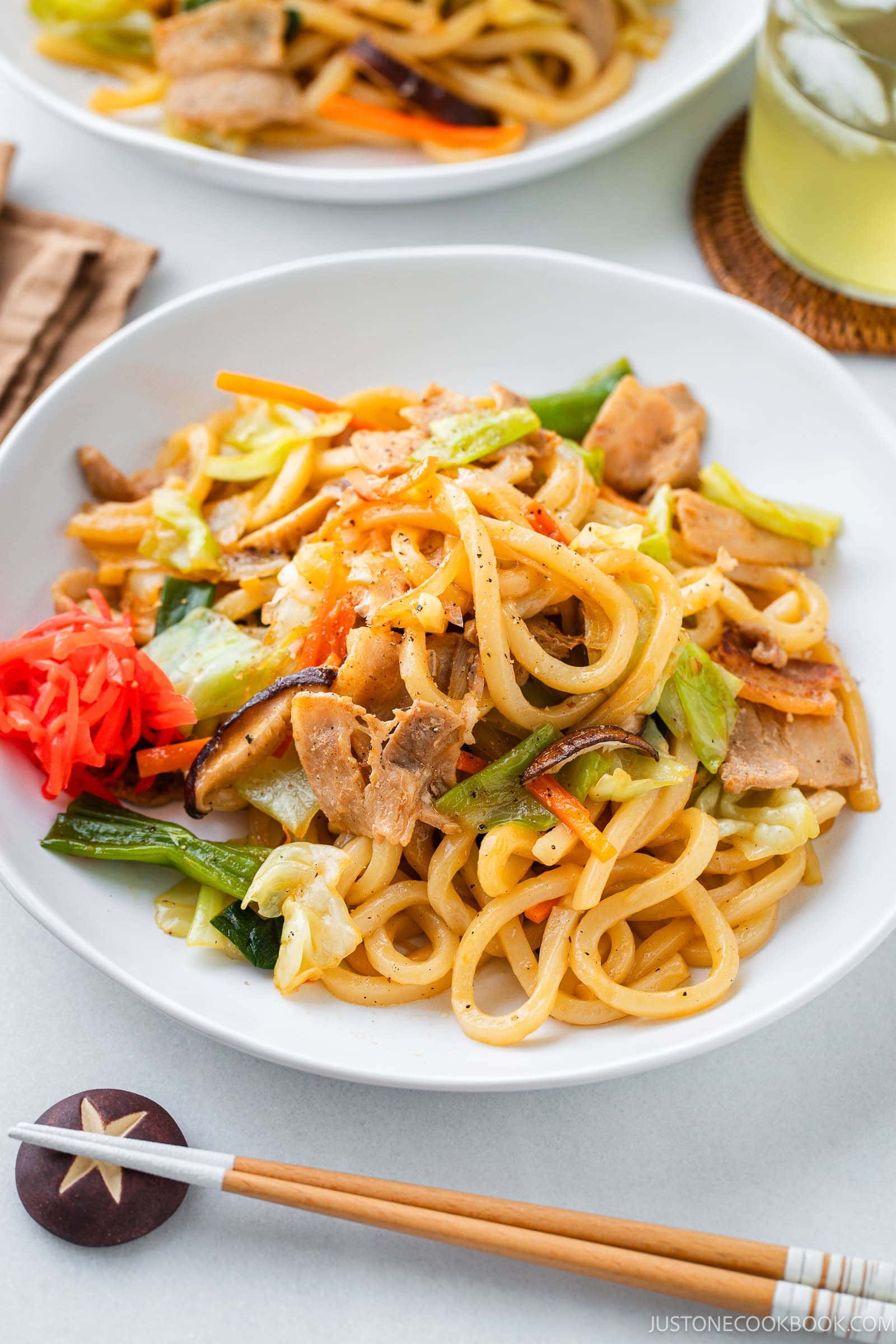
Yaki Udon (焼きうどん) is a Japanese stir-fried noodle dish made with thick, chewy udon noodles, meat, and vegetables tossed in a savory sauce. It’s a popular variation of yakisoba (焼きそば), which uses thinner wheat noodles.
Why You’ll Love It
- Authentic Japanese flavor – Unlike American versions with oyster sauce, my recipe uses soy sauce, sake, mirin, and dashi powder for a light color and delicate, savory flavor.
- Great for weeknights – Ready in just 25 minutes! Frozen udon noodles take only 30–40 seconds to loosen in boiling water.
- Flexible ingredients – Use whatever vegetables and protein you have on hand. It’s easy to make vegetarian or vegan, too.
What readers say
Erika
“So simple and delicious! I love it, and my partner loves it. Great for using whatever veggies you have in the fridge. Tastes like my mother’s cooking.”
My Recipe Story
I always keep a bag of udon in the freezer, mostly because my daughter asks for it so often. On busy nights when nobody has thought about dinner, yaki udon is usually what we end up making. A warm, comforting dinner comes together in no time.
It’s also my favorite way to use up whatever vegetables are left in the fridge. Just toss everything into the pan, and dinner is ready!
If you’re craving more udon recipes, try my Beef Udon, Udon Noodle Soup, and Curry Udon next. Cooking for one? Try my Easy Yaki Udon recipe!
Key Ingredients for Yaki Udon
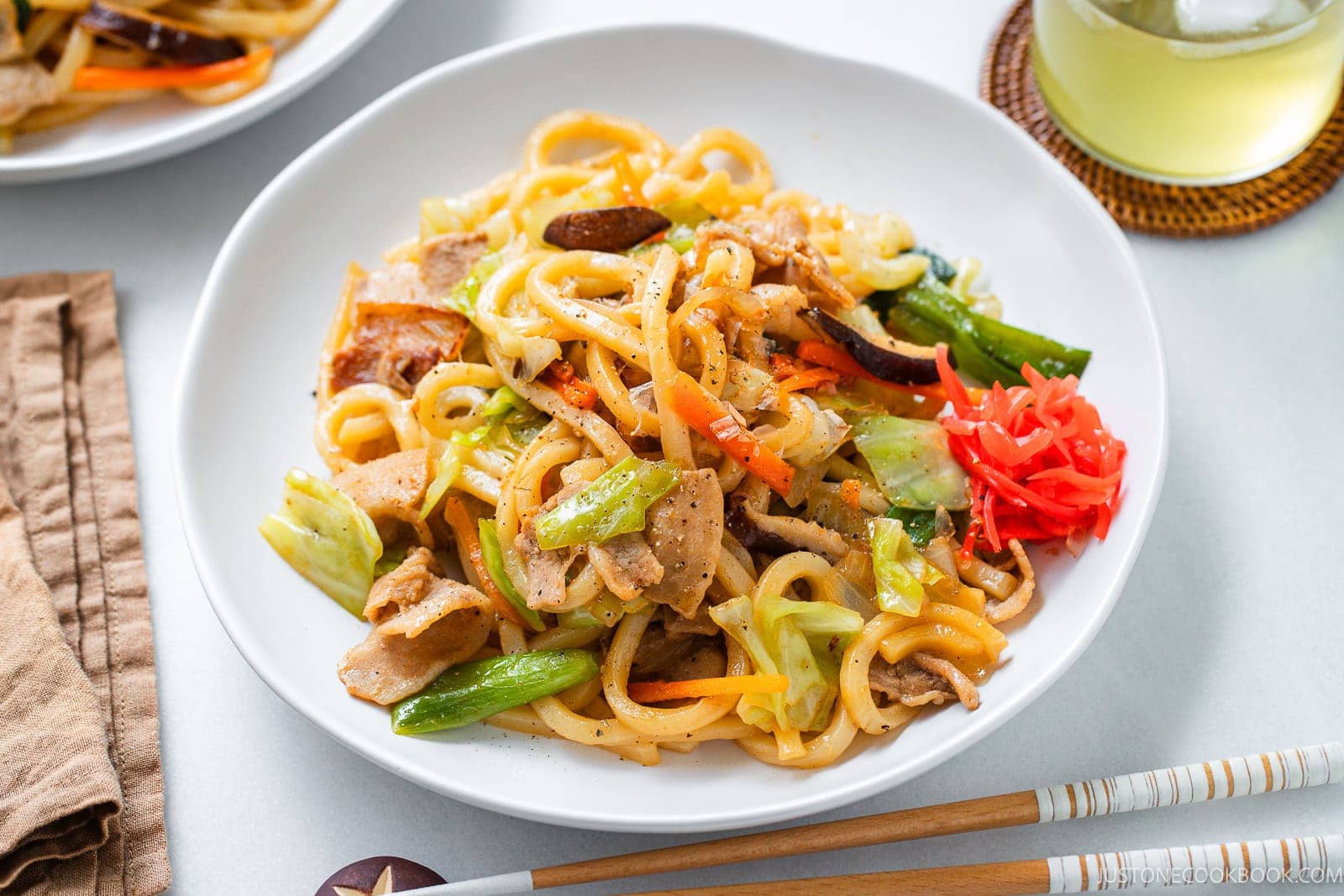
- Udon noodles – Fresh or frozen udon gives the best chewy texture. Dried udon works but is less chewy. For gluten-free, use rice noodles.
- Thinly sliced pork belly – Adds rich, savory flavor. Available at Japanese or Asian grocery stores. Substitute chicken, beef, shrimp, or tofu puffs.
- Vegetables – Cabbage, carrots, onions, and green onions add sweetness, crunch, and color.
- Shiitake mushrooms – Add earthy umami and a meaty texture. Substitute other mushrooms or skip.
- Seasoning Option A (Used in This Recipe)
- Dashi powder – Adds umami. Use kombu dashi powder or omit it for a plant-based version.
- Soy sauce, sake, and mirin (or pinch of sugar)
- Seasoning Option B (My Quick Shortcut)
- Mentsuyu – A concentrated Japanese noodle soup base that makes seasoning quick and easy. If you can’t find a bottled mentsuyu, make my Homemade Mentsuyu.
- Soy sauce
Find the printable recipe with measurements below.
Jump to RecipeHow to Make Yaki Udon
- Prepare the ingredients. Slice the vegetables and shiitake mushrooms. Cut the pork belly into bite-size pieces.
- Loosen the udon noodles. Blanch frozen udon in boiling water for 30–40 seconds, just until the strands separate. Drain well.
- Stir-fry the pork and vegetables. Cook the pork belly until no longer pink. Add the vegetables, cover, and steam for about 3 minutes.
- Add the noodles and seasonings. Toss the udon with your chosen seasoning mixture until everything is evenly coated. Adjust the seasoning to taste.
- Serve immediately. Divide among plates and garnish with optional bonito flakes and pickled red ginger.


Nami’s Recipe Tips
- Use tongs instead of chopsticks – Tongs make it easier to lift and toss the noodles without breaking them.
- Don’t overcook frozen udon – It’s already cooked, so blanch for just 30–40 seconds until the noodles loosen. Drain well to prevent a watery sauce.
- Use a large frying pan – Give the noodles room to stir-fry. Overcrowding traps moisture and makes them soggy. A wok or griddle works too.
- Steam the vegetables briefly – Cover the pan for about 3 minutes to soften the vegetables using their natural moisture. If you don’t have a lid, continue stir-frying.

Storage Tips
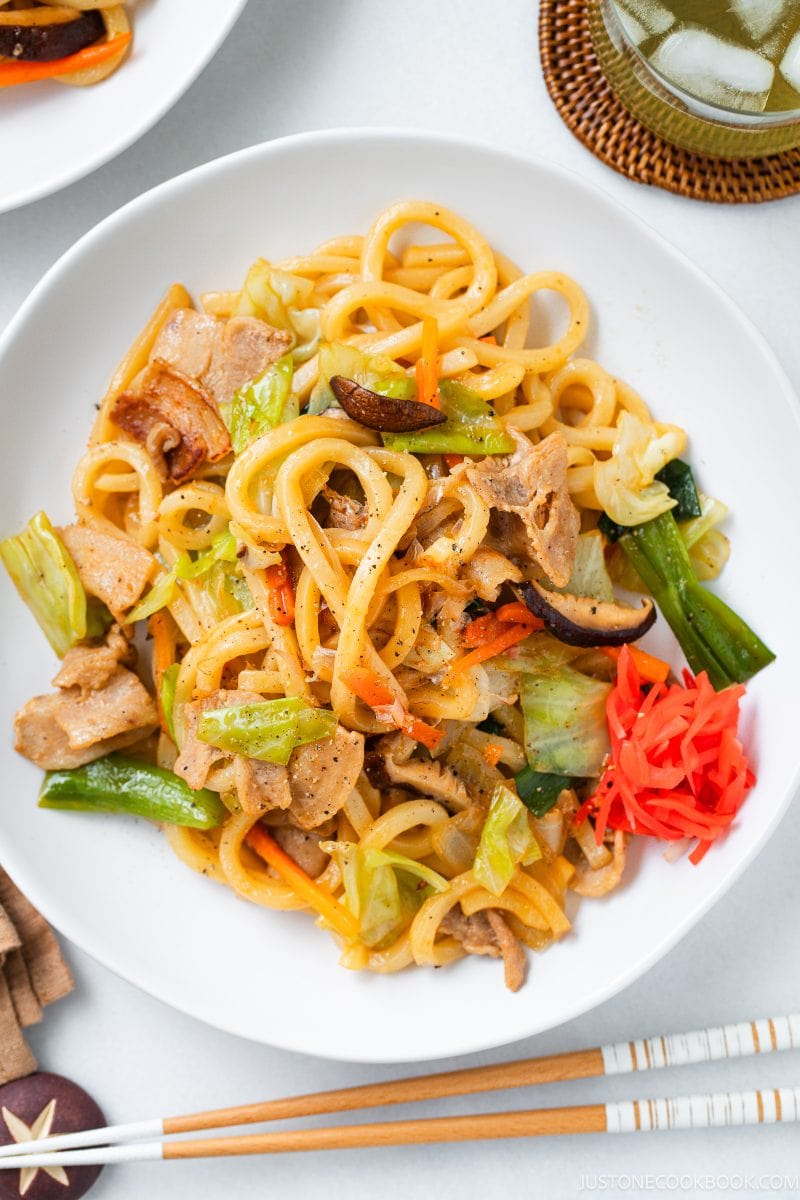
Refrigerate: Store leftovers in an airtight container for up to 3–4 days.
Freeze: Freeze in individual portions for up to 1 month. The vegetables may soften after thawing.
Reheat: Warm in a frying pan or microwave until heated through. Add a splash of water if the noodles seem dry.
Variations
- Make it vegetarian or vegan. Replace the pork with tofu puffs and add extra vegetables. Use kombu dashi powder or vegan mentsuyu.
- Swap the protein. Try chicken, thinly sliced beef, shrimp, or mixed seafood. Adjust the cooking time as needed.
- Experiment with different vegetables. Bell peppers, broccoli, bok choy, and mushrooms all work well. Choose vegetables that stay crisp when stir-fried.
What to Serve with Yaki Udon
Yaki udon is satisfying on its own, but these Japanese side dishes make a complete meal:
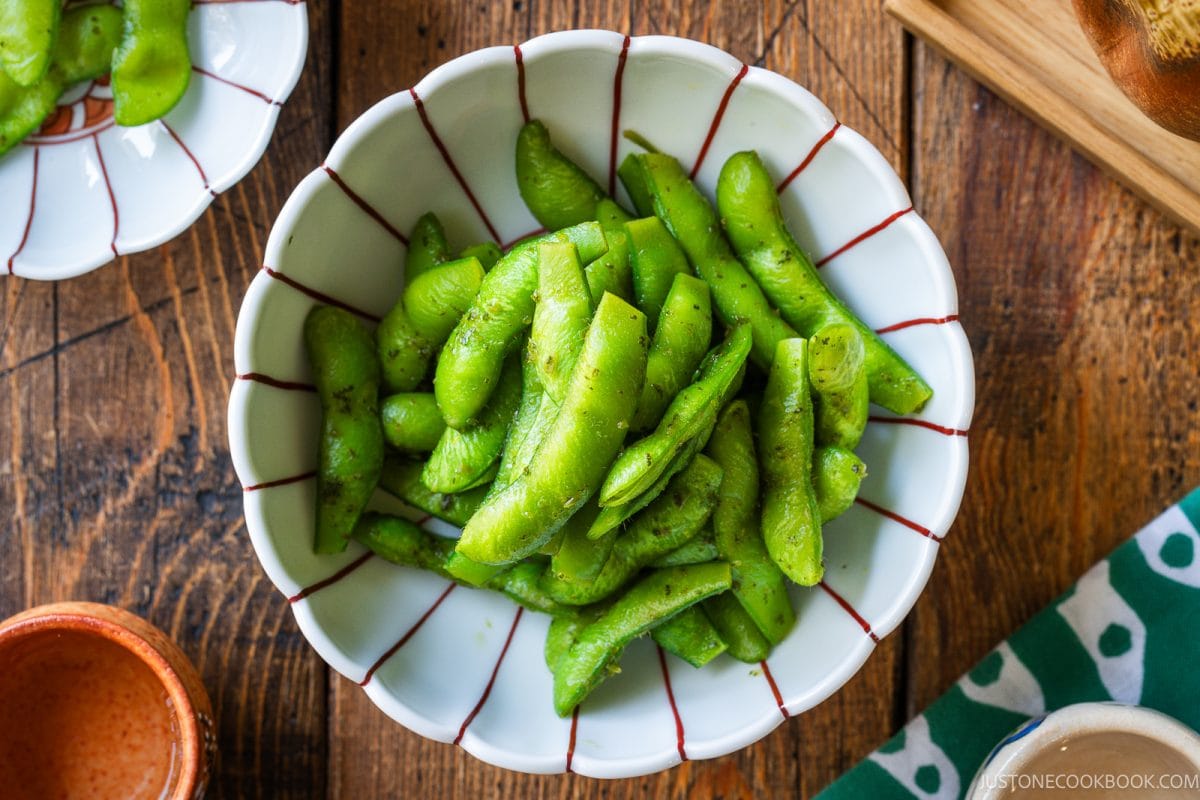
- Yuzu Kosho Edamame – A simple, protein-rich appetizer.
- Agedashi Tofu – Crispy tofu in a savory dashi broth.
- Japanese Spinach Salad with Sesame Dressing – A refreshing vegetable side.
- Homemade Miso Soup – A comforting soup to round out the meal.

FAQ
Are udon noodles gluten-free?
No. Traditional udon noodles contain wheat flour. For a gluten-free alternative, try rice noodles and use gluten-free soy sauce and seasonings.
Can I use instant udon?
Yes, but I prefer frozen udon for its chewy texture. Instant udon tends to be softer and breaks more easily.
Can I use oyster sauce or dark soy sauce?
My recipe uses a classic Japanese-style soy-based seasoning for a lighter color and delicate flavor. Some variations use oyster sauce, dark soy sauce, or garlic for a richer taste, but they’re not necessary for traditional yaki udon recipe.
I’d love to hear how yours turned out! 💛 Please leave a star rating and comment below to share your experience. Your feedback not only supports Just One Cookbook but also helps other home cooks discover recipes they can trust.
Yaki Udon (Japanese Stir-Fried Udon Noodles)

Ingredients
- ½ yellow onion (3.5 oz, 100 g)
- 2–3 leaves green cabbage (8 oz, 227 g)
- 2 inches carrot (1.8 oz, 50 g)
- 2 shiitake mushrooms (0.7 oz, 20 g)
- 2 green onions/scallions
- 6 oz thinly-sliced pork belly (or chicken, beef, seafood, or tofu puffs)
- 2 servings udon noodles (1.1 lb/500 g frozen or parboiled)
- 1 Tbsp neutral oil (for cooking)
- ⅛ tsp Diamond Crystal kosher salt (plus more to taste)
- ⅛ tsp freshly ground black pepper (plus more to taste)
For Seasoning Option A (Used in This Recipe)
- ½ tsp dashi powder (use kombu dashi powder for vegan/vegetarian or omit)
- 2 Tbsp soy sauce
- 1 Tbsp sake
- 1 tsp mirin (or a pinch of sugar)
For Seasoning Option B (My Quick Shortcut)
- 3 Tbsp mentsuyu (concentrated noodle soup base) (3× concentrated; adjust for other concentrations; or make my Homemade Mentsuyu)
- 1 tsp soy sauce
For the Garnish (Optional)
- 3 Tbsp katsuobushi (dried bonito flakes) (omit for vegan/vegetarian)
- 2 Tbsp pickled red ginger
Instructions
Before You Start
- Gather all the ingredients. Bring a large pot of water to a boil over medium heat, and prepare the rest of the ingredients while it heats.

To Prepare the Ingredients
- Thinly slice ½ yellow onion.

- Remove the tough core of 2–3 leaves green cabbage and cut into 1-inch (2.5-cm) squares.

- Peel 2 inches carrot, cut into thin slabs, then julienne into 2-inch (5-cm) strips.

- Remove the tough stems of 2 shiitake mushrooms and thinly slice the caps.

- Cut 2 green onions/scallions into 2-inch (5-cm) pieces and 6 oz thinly-sliced pork belly into 1-inch (2.5-cm) pieces.

- Blanch 2 servings udon noodles (frozen or parboiled) in boiling water for 30–40 seconds, just until the noodles loosen. Drain well and set aside. For dried udon, cook according to the package instructions.

To Stir-Fry the Yaki Udon
- Heat a large frying pan over medium heat. Add 1 Tbsp neutral oil and distribute it evenly. Add the pork belly and stir-fry.

- Season with ⅛ tsp Diamond Crystal kosher salt and ⅛ tsp freshly ground black pepper. Stir-fry until the pork is cooked through.

- Add the onion slices and stir-fry until tender.

- Add the cabbage, carrot, shiitake mushrooms, and green onions. Toss to coat with oil.

- Cover, reduce to medium-low heat, and steam for 3 minutes until the vegetables are slightly wilted.

- Increase to medium-high heat. Add the udon noodles and toss gently to combine.Nami's Tip: Use tongs to toss the noodles without breaking them.

- Add your chosen seasonings:Option A: ½ tsp dashi powder, 2 Tbsp soy sauce, 1 Tbsp sake, and 1 tsp mirin. Option B: 3 Tbsp mentsuyu (concentrated noodle soup base) and 1 tsp soy sauce.Nami's Tip: Pour the soy sauce along the hot side of the pan. Let it sizzle briefly to develop a fragrant aroma before tossing with the noodles.

- Toss until evenly coated. Taste and adjust with salt and black pepper. If liquid remains, increase the heat briefly to evaporate it.

To Serve
- Transfer to individual plates. Optionally, top with 3 Tbsp katsuobushi (dried bonito flakes) and serve with 2 Tbsp pickled red ginger.

To Store
- Store leftovers in an airtight container in the refrigerator for 3–4 days or freeze for up to 1 month.Reheat in a frying pan or microwave until hot throughout. Add a splash of water if the noodles seem dry.
Notes
Nutrition
The nutrition facts shown are generated by an online calculator and are estimates only. Please consult a professional nutritionist for specific dietary needs.
Did you make this recipe?
Tag @justonecookbook on Instagram so we can see your delicious creation!
Editor’s Note: This post was originally published in January 2011. It was republished with a new video, revised recipe, and updated content on May 2, 2022. The post was updated with more helpful success tips on October 14, 2026.
