


This post may contain affiliate links. Please read my disclosure policy.
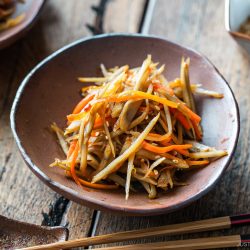
Chances are, you’ve seen kinpira gobo (金平牛蒡, きんぴらごぼう) tucked into the corner of your bento box or offered at a Japanese-style breakfast buffet. This classic Japanese side of braised burdock root is a tasty okazu, or side dish to accompany rice. It’s also very popular in Japanese home cooking!
This humble dish cooks in a flash and is perfect to meal prep ahead of time. When I make it at home, I usually prepare a big batch to keep some in the fridge for the week (it lasts 5–7 days!) and freeze the rest for busy weekday dinners. Let me show you how to make my easy Kinpira Gobo recipe that goes with almost any menu!
What is Kinpira Gobo?
Kinpira gobo is a traditional side dish of burdock root (gobo in Japanese) cut into thin matchsticks. It’s often mixed with carrot or another root vegetable as the main ingredients. They’re pan-fried and braised in sweet and savory seasonings until the gobo has a tender yet crunchy texture. It’s a great side dish with lots of fiber, too.
Kinpira (金平, きんぴら, sometimes spelled kimpira) refers to a Japanese cooking method in which you first stir-fry the ingredients in a frying pan, then simmer them with sesame oil, sugar, and soy sauce until the sauce reduces and evaporates to concentrate the flavor. The most common vegetables used for kinpira are gobo and carrot, but lotus root (renkon) is also another popular choice; I have a delicious Kinpira Renkon recipe that you can try.
What is Gobo? A Delicious Root Vegetable

Gobo or burdock root is a long and slender root vegetable that resembles a tree root. It’s roughly 20–28 inches (50–70 cm) long and weighs about 5 oz (150 g), and sometimes more. It has an earthy, distinct flavor and stays crunchy even after cooking for a long time.
It’s a very popular vegetable in Japanese cuisine that’s often featured in simmered dishes, miso soups, and stir-fries. It’s also considered a powerhouse of antioxidants and has many health-promoting properties. You can often find this root vegetable at Japanese and Asian grocery stores. Learn more about burdock root on my gobo pantry page.

Ingredients You’ll Need
- gobo (burdock root)
- carrot
- toasted sesame oil – for a savory and nutty flavor; or substitute neutral cooking oil
- sugar
- mirin
- sake
- soy sauce
- dried red chili pepper (赤唐辛子) – optional; we often include small amount of chili flakes in the dish for a bit of spice; we usually discard the chili seeds in Japanese cooking
- toasted white sesame seeds – for garnish
How to Make Kinpira Gobo
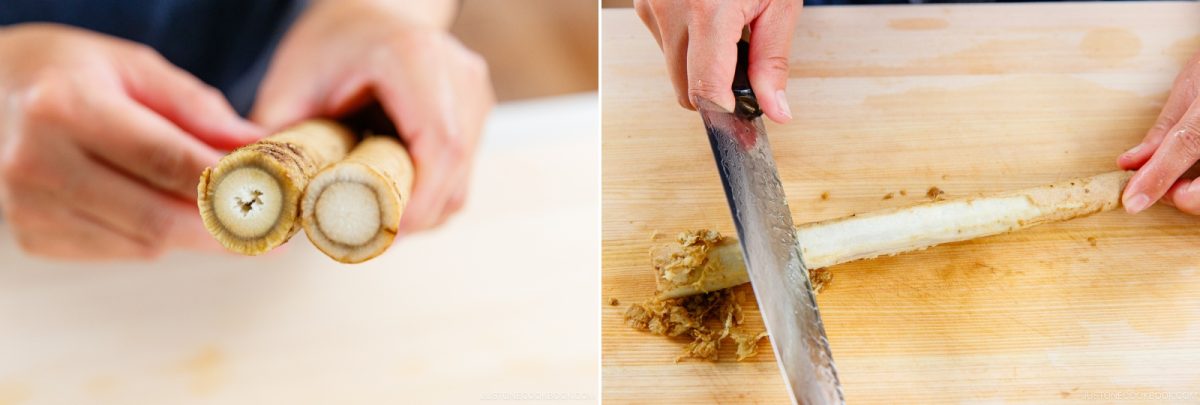
- Scrape off the gobo skin with the back of a knife. The gobo‘s flavor is right under the skin and you don‘t want to remove that with a vegetable peeler.
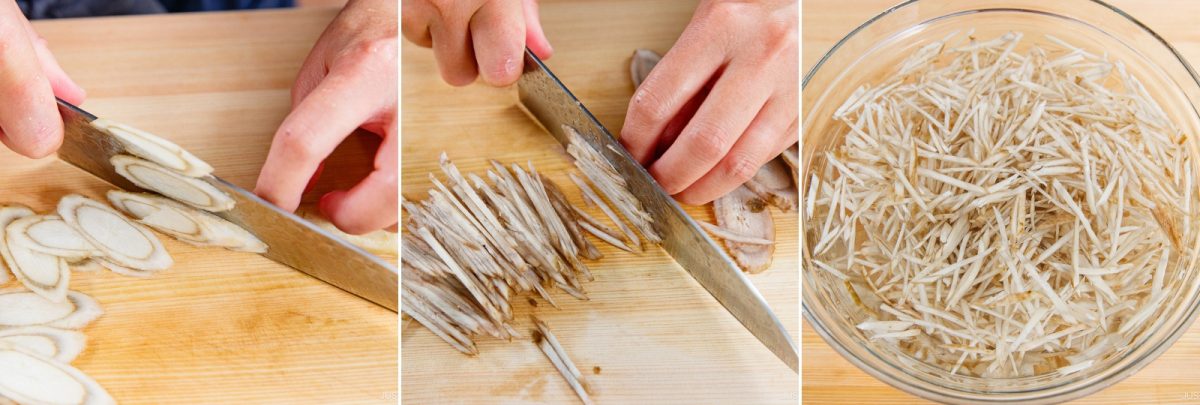
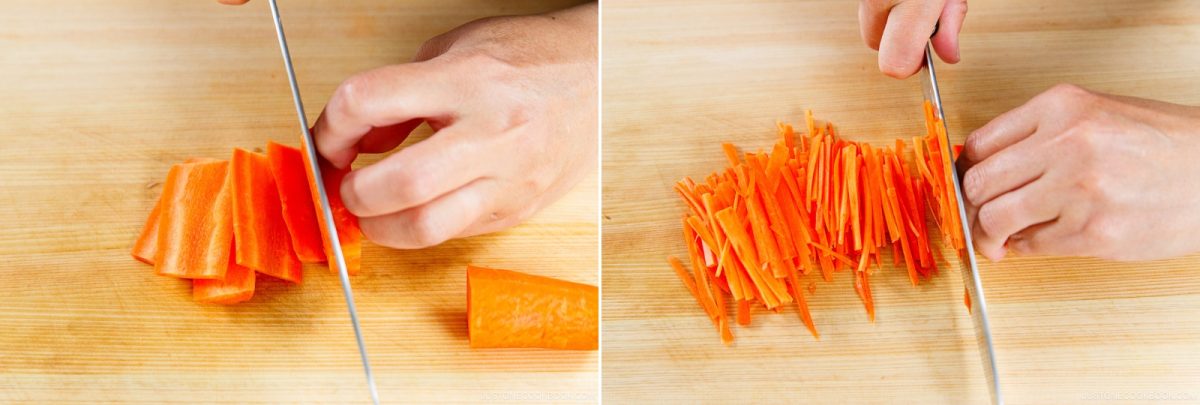
- Cut the gobo and carrot into julienned strips. It’s a bit tedious, but I always think it’s good practice to cut vegetables. The more you practice, the faster and more precise your cutting technique will be.
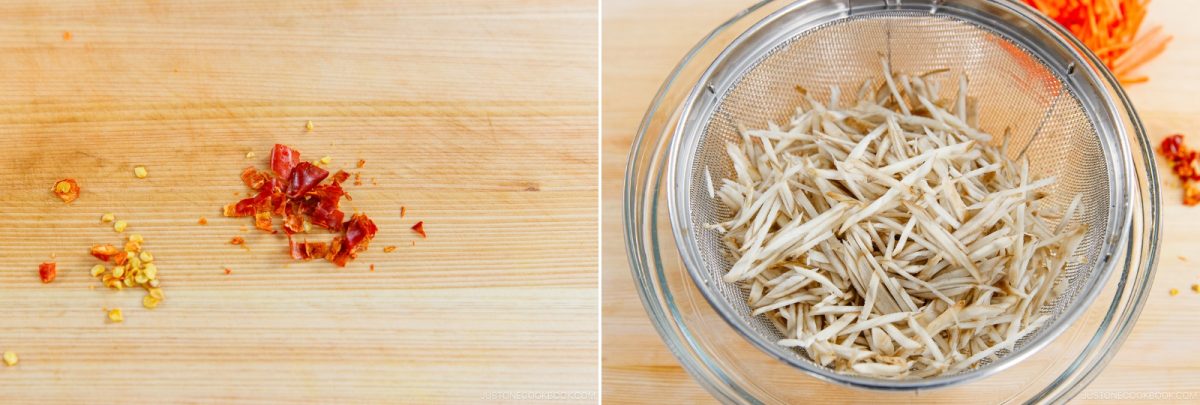
- Soak the gobo in water for 10 minutes, changing the water halfway. Rinse and drain.
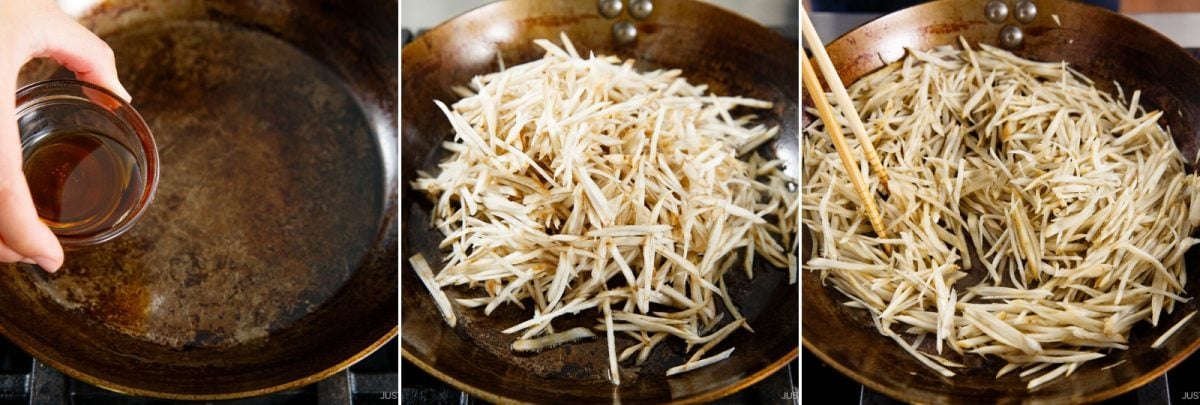
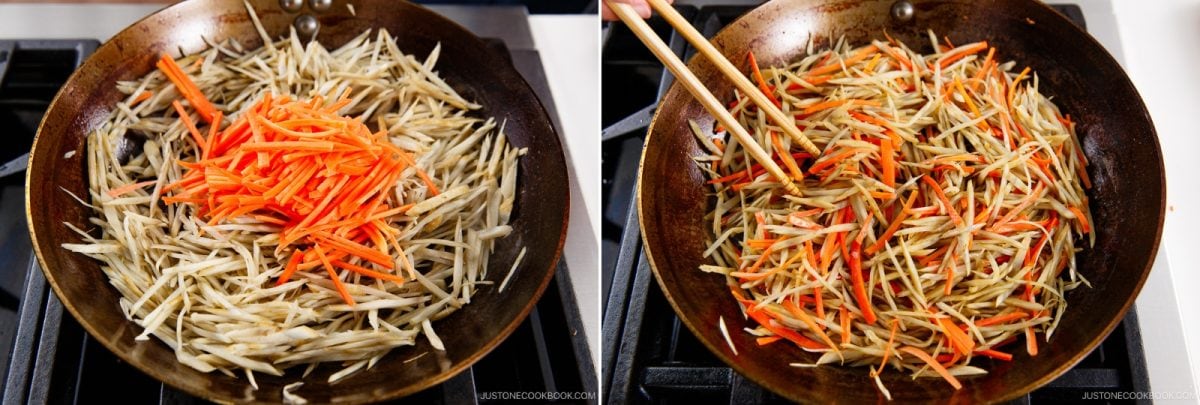
- Stir-fry the gobo first, until the texture is close to raw carrot texture. Then, add the carrot and cook until both are equally tender.
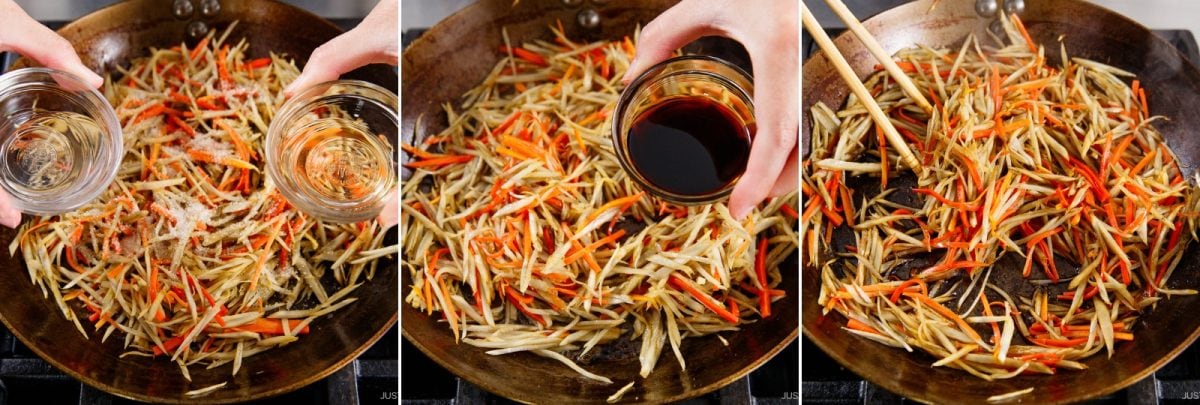
- Add the seasonings and simmer until the liquid dries out.
Helpful Cooking Tips for Kinpira Gobo
- Cut the gobo and carrot into similar shapes – Both gobo and carrot should be julienned into thin strips or matchsticks that are roughly 2 inches (5 cm) in length. Thinner strips will cook faster.
- Soak the gobo in water – It’s important to get rid of the astringency of the root vegetable and prevent it from discoloration. Change water at least once.
- Use a larger pan to stir-fry – It’s easier to stir/toss gobo in a big pan.
- Let it cool completely – If you are making the dish ahead of time for meal prepping, let it cool completely before storing it in the refrigerator or freezer.

What to Serve with Kinpira Gobo
Along with steamed rice and miso soup, you can serve this simple vegetable side together with a protein as part of an ichiju sansai Japanese meal. Here are my suggestions:
- Grilled Mackerel
- Simmered Beef with Ginger
- Garlic Miso Chicken Wings
- Simmered Kiriboshi Daikon
- Green Bean Gomaae

Wish to learn more about Japanese cooking? Sign up for our free newsletter to receive cooking tips & recipe updates! And stay in touch with me on Facebook, Pinterest, YouTube, and Instagram.
Kinpira Gobo (Braised Burdock Root)
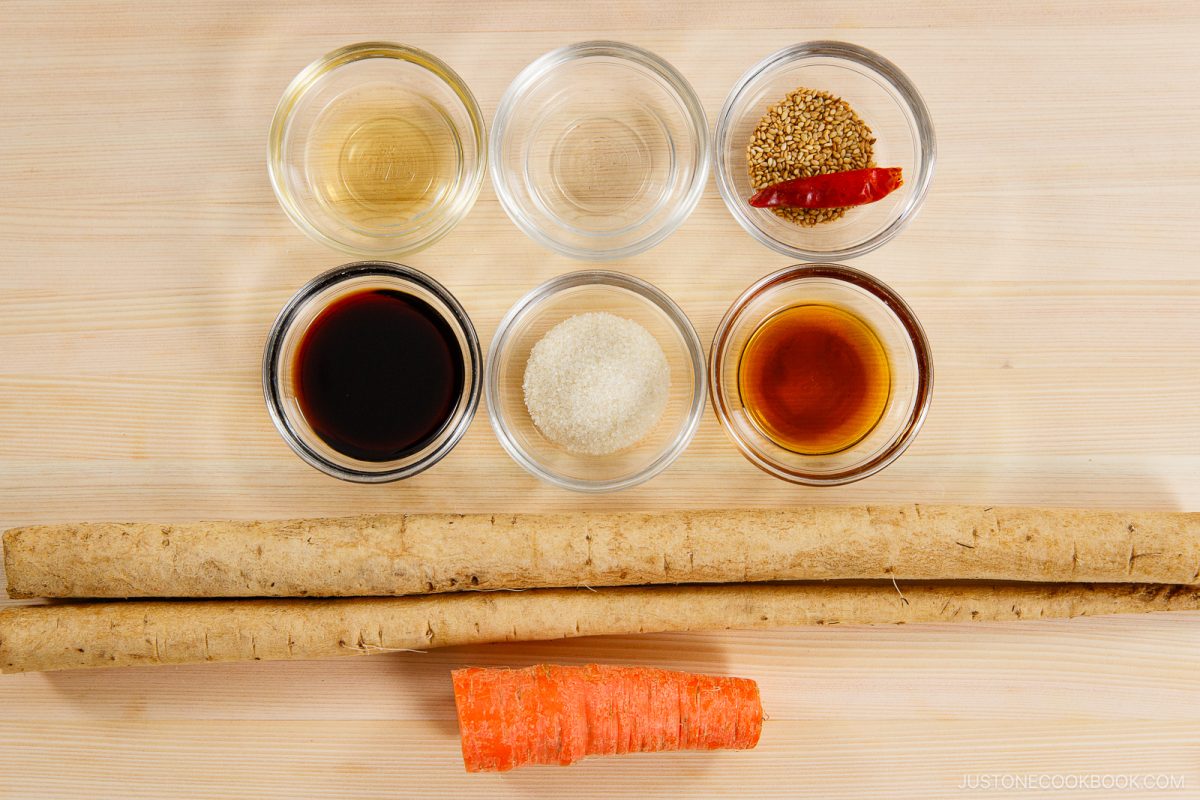
Ingredients
- 1 gobo (burdock root) (9.5 oz, 270 g)
- ⅓ carrot (2.5 oz, 70 g)
- 1½ Tbsp toasted sesame oil
For the Seasonings
For the Garnish
Instructions
- Gather all the ingredients.
To Prepare the Vegetables
- Select 1 gobo (burdock root) without dark rings, the sign of an old gobo. (I don‘t always find the freshest ones in local markets.) Scrape off the skin with the back of a knife.Nami's Tip: The gobo‘s flavor is right under the skin, so do not remove that with a vegetable peeler.
- Slice it diagonally into thin 2-inch (5-cm) slabs. Stack a few slabs at a time and cut them lengthwise into thin julienne strips. Soak them in water for 10 minutes, changing the water halfway. Nami's Tip: Thinner strips cook faster.
- Peel and cut ⅓ carrot into thin 2-inch (5-cm) slabs, then into thin julienne strips.
- Cut off the stem end of 1 dried red chili pepper and shake out the seeds. Cut it into thin rounds. Rinse the gobo under cold water and drain well.Nami's Tip: We usually discard the chili seeds in Japanese cooking. Keep them if you like it spicier.
To Cook the Ingredients
- Heat a large frying pan over medium heat. Add 1½ Tbsp toasted sesame oil, then the gobo. Stir-fry about 2–3 minutes, until halfway softened and almost tender.
- Add the carrot and stir-fry until both vegetables are tender, about 2–3 minutes.Nami's Tip: Stir-fry the gobo strips longer if they are thick, or add ¾ cup Dashi or Vegan Dashi and simmer.
- Add 1 Tbsp sugar, 1 Tbsp sake, 1 Tbsp mirin, and 1½ Tbsp soy sauce. Toss to coat the vegetables with the seasoning.
To Serve
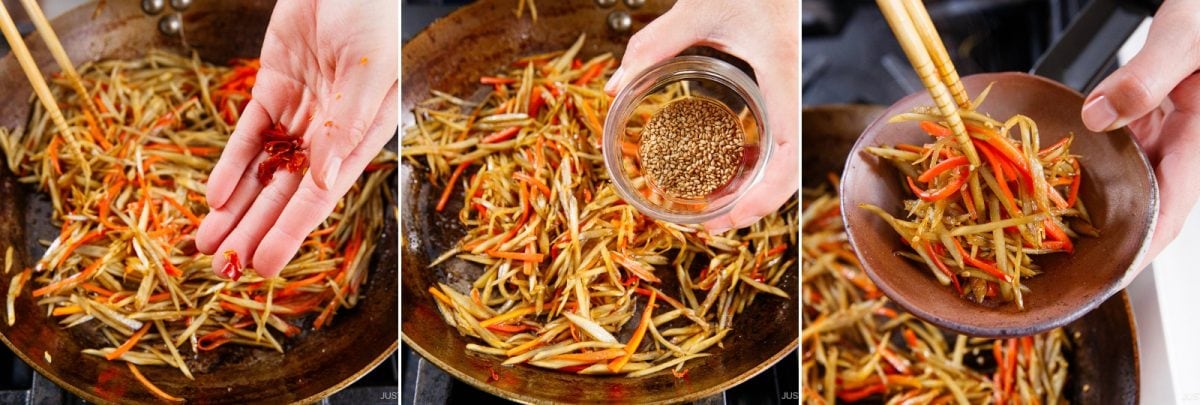
- Add the chili pepper (optional). Cook until the liquid evaporates. Sprinkle 2 tsp toasted white sesame seeds and quickly toss together. Serve in individual bowls or a large serving bowl or plate.
To Store
- Keep the leftovers in an airtight container and store in the refrigerator for up to 3–4 days or in the freezer for up to a month.
Notes
- Try lotus root. Swap in renkon for the veggies here and follow the same kinpira method and sauce for a different crunch.
- Boost the nutty flavor. Stir in extra sesame seeds right before serving for more aroma and crunch.
- Swap in Japanese seven spice. Shichimi togarashi is a spice blend that adds depth of flavor. Use it in place of the dried chili pepper.
- Add a protein. Use the same kinpira sauté-then-simmer method with thin-sliced beef or pork (belly or loin), minced chicken, chikuwa fish cakes, or fried tofu pouches (aburaage).
- Make carrots the star. Skip the burdock root and make carrot kinpira instead.
Nutrition
The nutrition facts shown are generated by an online calculator and are estimates only. Please consult a professional nutritionist for specific dietary needs.
Did you make this recipe?
Tag @justonecookbook on Instagram so we can see your delicious creation!
Editor’s Note: This post was originally published on January 5, 2012. The recipe has been updated in April 2021 and new images and the video are added in May 2021.
