


This post may contain affiliate links. Please read my disclosure policy.
Oshiruko at a Glance
Oshiruko (お汁粉) is a traditional Japanese dessert soup made with sweet red bean paste called anko (餡子) and glutinous rice flour dumplings called shiratama dango (白玉団子). We serve this beloved dish warm, typically during the colder months.
Why You’ll Love It
- Store-bought anko turns this into a 10-minute soup, with no simmering azuki beans from scratch for hours.
- Glutinous rice flour called shiratamako makes soft rice dumplings with a more refined sweetness than mochiko or pounded sweet rice.
- Fine anko paste called koshian keeps the soup smooth in the authentic Kansai (Osaka) style.
My Recipe Story
Oshiruko was a favorite wintertime dessert of mine growing up in Japan. I could never resist this comforting sweet azuki bean soup on a chilly day to warm me up! I especially loved oshiruko the way they make it in Osaka, where my mom was born and raised. These days, I whip up a cozy and nostalgic bowl with store-bought ingredients any time the craving strikes.
If you love Japanese cold-weather desserts, try my Zenzai, Taiyaki, and Candied Sweet Potatoes recipes next!

Key Ingredients
You only need sweet red bean paste, rice dumplings, water, and salt to make this sweet azuki bean soup.
- Anko (sweet red bean paste) – Use silky-smooth koshian (こしあん) for this recipe’s Kansai-style soup.
- Shiratama dango – Follow my Shiratama Dango recipe for fresh, soft dumplings—it only takes 15 minutes with glutinous rice flour (shiratamako) and water.
- Kosher salt – Optional, but I always add a pinch.
Find the printable recipe with measurements below.
Koshian: I buy it from the Japanese grocery store or Amazon for convenience. If you want to make it from scratch, see my Homemade Anko or Pressure Cooker Anko recipes.
Shiratamako: You can buy shiratamako from the Japanese grocery store on Amazon. Asian glutinous rice flour is made with long-grain rice and the result will not be the same. If you can’t get shiratamako, boil or grill kiri mochi pieces instead.
How to Make Oshiruko
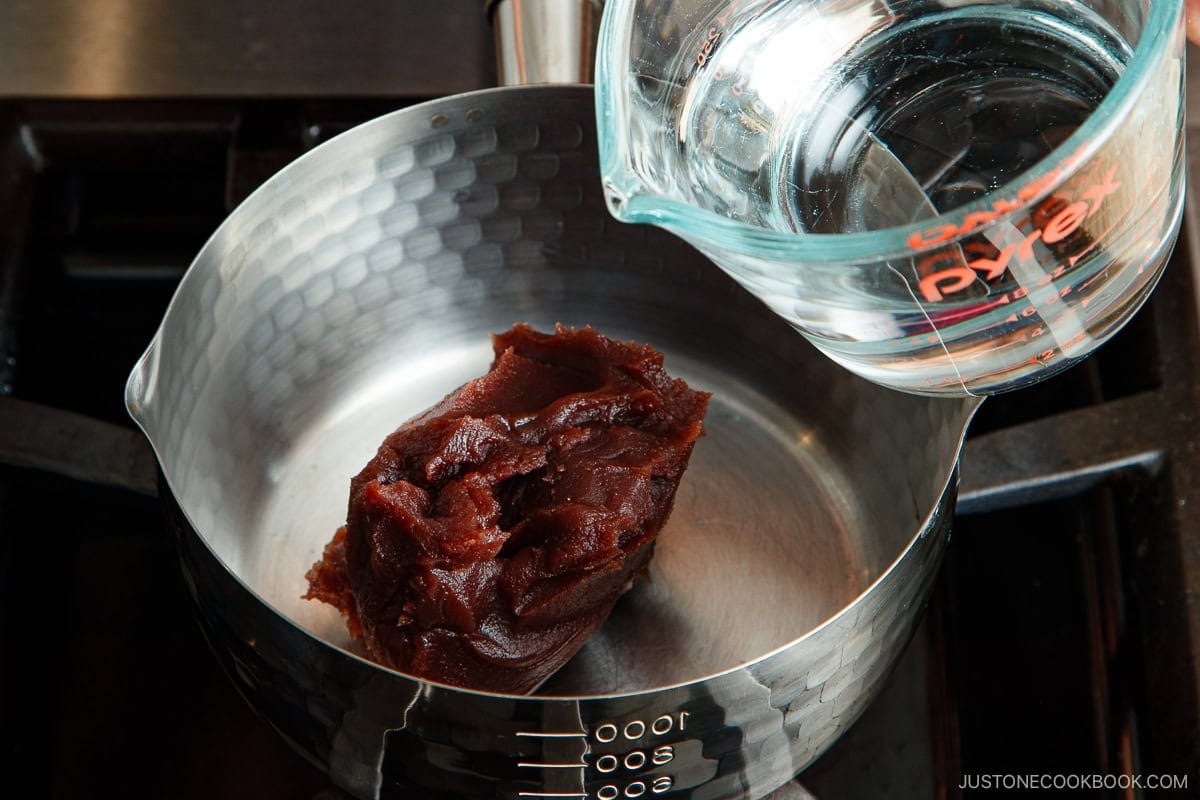
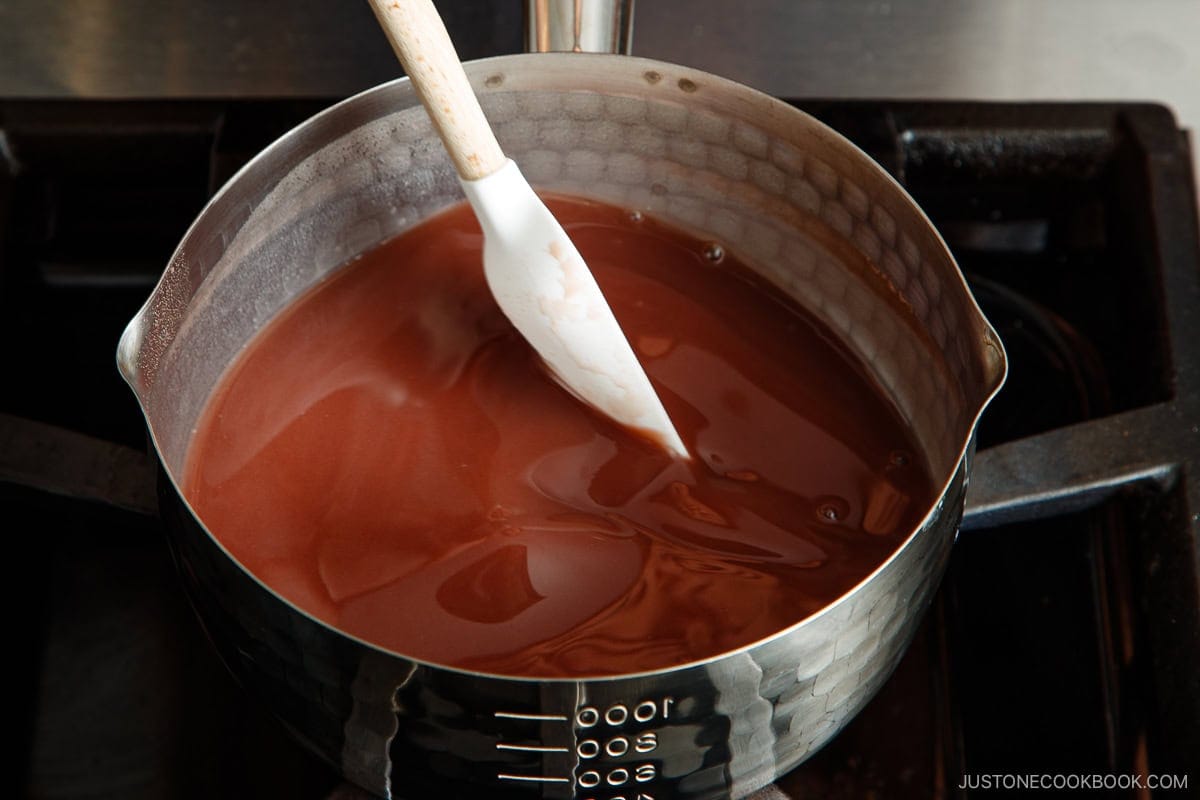
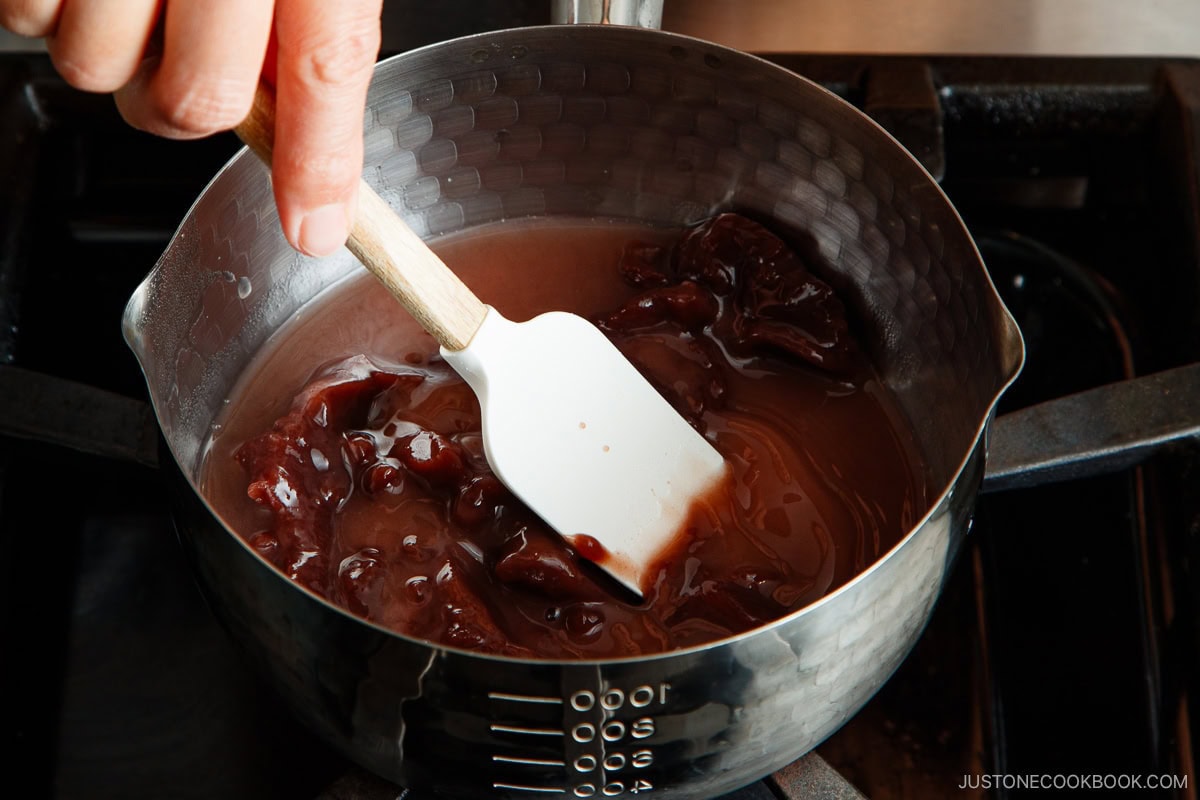
- Mix koshian and water. Mash the sweet red bean paste with water in a saucepan until dissolved. Add the rest of the water and stir.
- Heat the soup. Bring it to a simmer over medium-low heat. Cook 1–2 minutes once simmering.
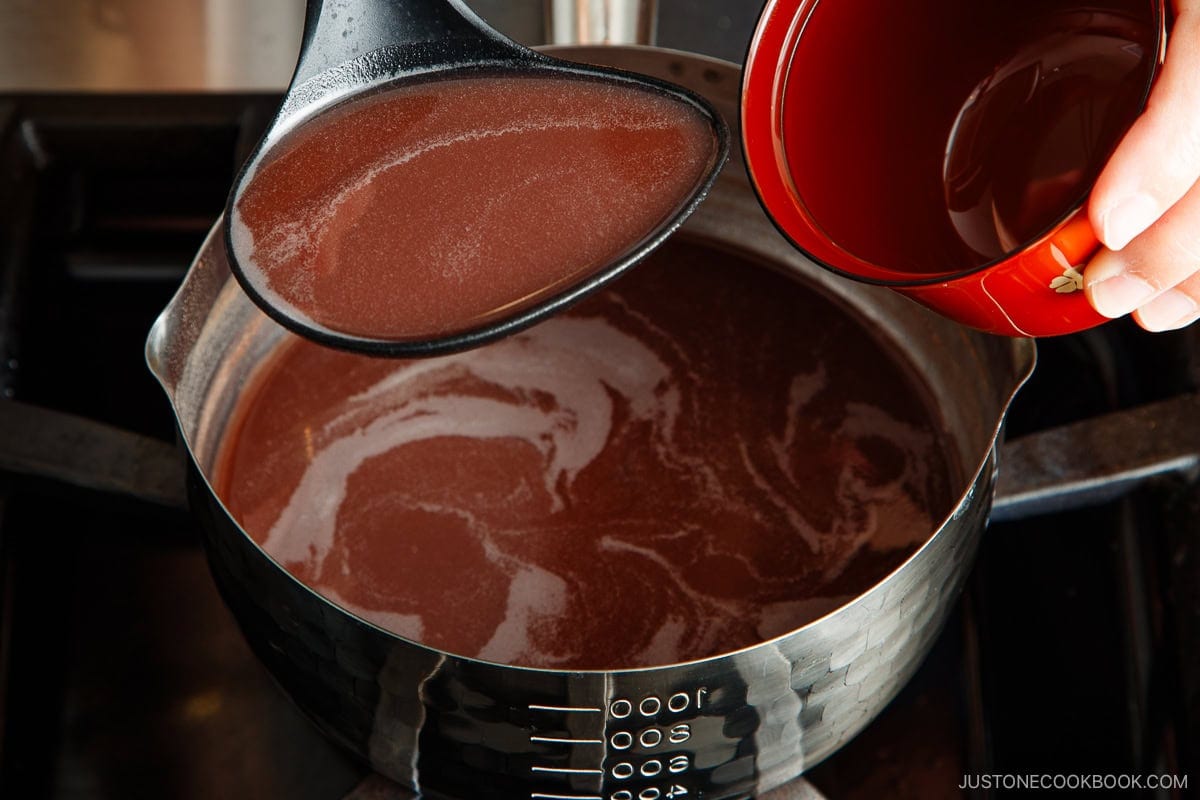
- Pour the soup into individual bowls.
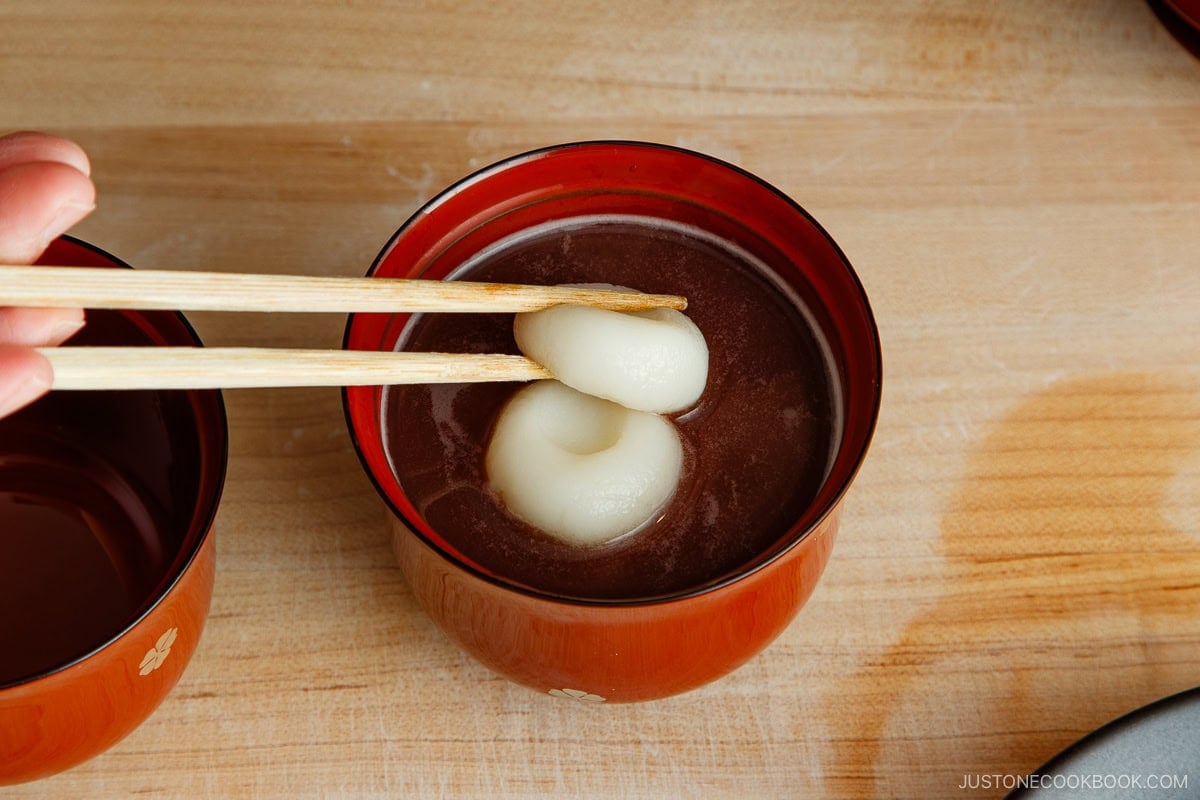
- Add the dumplings and serve. Drop five shiratama dango into each bowl and serve immediately.

Nami’s Recipe Tips
Keep these tips in mind for the best results every time.
- Dissolve the anko in half the water first – Added to a full pot, the paste breaks into lumps that won’t mash smooth. Work it into a small amount of water until no lumps remain, then add the rest.
- Make the shiratama dango fresh – Dango gets hard even at room temperature. For the best chewy texture, boil the freshly made dumplings just before serving the soup.

- Heat the soup on midium-low – The thick oshiruko can swell and erupt suddenly, so use low heat to prevent the soup from splattering over the pot.
- Salt makes the sweetness stronger – A pinch doesn’t make the soup salty. It sharpens the contrast, so the anko tastes fuller instead of flat.
Storage Tips
To store: Transfer the soup to an airtight container. Refrigerate for up to 4 days, or freeze for up to a month. Don’t refrigerate the shiratama dango. Cold speeds up starch crystallization, and they harden within a few hours. Freeze them instead, which holds their chewy texture.
To reheat: Warm the oshiruko gently on the stovetop, adding a little water to thin it. For frozen dango, put them in a heat-resistant bowl and submerge them completely in water. Microwave on high for 1–2 minutes, until soft and chewy again.
Variations
Change the texture and flavor of your soup with these options:
- Add chewy mochi pieces instead of shiratama dango. Toast or grill bite-size pieces of dried Japanese rice cake called kirimochi or use freshly made or boiled mochi rice cakes.
- Top it with Japanese flavors. Sprinkle kinako (roasted soybean flour), matcha (green tea powder), yuzu juice or zest, or kuromitsu (black sugar syrup) in wintertime. Add pickled cherry blossoms in springtime and chestnuts in autumn.
- Use chunky tsubuan anko for extra texture in the oshiruko. Use whole azuki beans to make Zenzai (ぜんざい, 善哉).
- Serve with ice cream or fruit. Make a hot-cold combo with a scoop of ice cream and a small crispy waffle on the side. For a refreshing twist, top your warm soup with your favorite chilled seasonal fruits like berries and peaches for a refreshing twist.
What to Serve with Oshiruko
In Japan, we often serve oshiruko with a salty condiment to balance out the sweetness.
- Salted kelp – Balance out the sweetness with a sprinkle of shio kombu.
- Sour condiments – A typical condiment to contrast the sweetness is umeboshi (Japanese pickled plums).
- Shiozuke (Japanese salt pickles) – Tsukemono of salt-pickled seasonal vegetables adds a crunchy texture and salty contrast to the dish.
FAQ
What is the history of oshiruko?
Oshiruko began in the early Edo period (1603–1868) as susuri dango. It was salted rather than sweet, and people ate it with sake. It turned sweet as sugar spread through Japan. Today we eat it at home and at festivals: Kagami Biraki at New Year, Setsubun in February, and Hinamatsuri in March.
What is the difference between oshiruko and zenzai?
It depends on the area of Japan! In Kansai (Osaka area), oshiruko is smooth red bean soup, and Zenzai is chunky red bean soup with whole beans. In Kanto (Tokyo area), oshiruko is any smooth or chunky red bean soup, and zenzai is dry mochi with chunky red bean paste on the side (not a soup).
I’d love to hear how yours turned out! 💛 Please leave a star rating and comment below to share your experience. Your feedback not only supports Just One Cookbook but also helps other home cooks discover recipes they can trust.
Oshiruko (Sweet Red Bean Soup)

Ingredients
- 10 pieces Homemade Shiratama Dango (Mochi Balls) (make them with my Shiratama Dango recipe, or toast rice cakes you can buy on Amazon)
- 7 oz sweet red bean paste (anko) (use fine koshian for a smooth soup. Homemade Anko recipe works too; for chunky tsubuan, see my Zenzai recipe)
- 7 fl oz water (⅞ cup; divided)
- ⅛ tsp Diamond Crystal kosher salt (use half the amount or the same weight for table salt)
Instructions
- Gather all the ingredients. Make the Shiratama Dango ahead (15 minutes), or toast kirimochi instead.Nami's Tip: Boil the dango right before you serve the soup. They harden as they cool, even at room temperature.

- Add 7 oz sweet red bean paste (anko) to a saucepan. Pour in half of the water.Nami's Tip: Why not add all the water at once? The paste breaks into lumps that won't smooth out.

- Mash the anko with a spatula until no lumps remain.

- Pour in the rest of the water and bring to a simmer over medium-low heat. Once simmering, cook for 1–2 minutes. Add a pinch of salt (optional).Nami's Tip: Thick oshiruko traps steam and can erupt, so keep the heat gentle. A pinch of salt won't make it salty. It makes the anko taste fuller.

To Serve
- Ladle the oshiruko into individual bowls. Add 5 shiratama dango to each.

- Serve immediately. We typically serve Oshiruko with shio kombu (salted kelp) to balance out the sweetness. You can buy it on Amazon.
To Store
- Transfer the soup to an airtight container. Refrigerate for up to 4 days, or freeze for up to a month. Don't refrigerate the shiratama dango. Cold hardens them within hours. Freeze them instead to keep them chewy.To reheat, warm the oshiruko gently on the stovetop, adding a little water to thin it. Cover frozen dango with water in a heat-resistant bowl and microwave on high for 1–2 minutes, until soft and chewy again.
Notes
- Mochi – swap in toasted kirimochi or fresh mochi instead of shiratama dango.
- Toppings – kinako, matcha, yuzu zest, or kuromitsu. Cherry blossoms in spring, chestnuts in autumn.
- Chunky texture – use tsubuan instead of koshian, or whole azuki beans for zenzai.
- Hot and cold – add a scoop of ice cream, or top with chilled seasonal fruit.
Did you make this recipe?
Tag @justonecookbook on Instagram so we can see your delicious creation!
Editor’s Note: This post was originally published on June 5, 2024. It was updated with clearer step-by-step instructions, extra troubleshooting guidance, and expanded storage guidance on August 31, 2026.